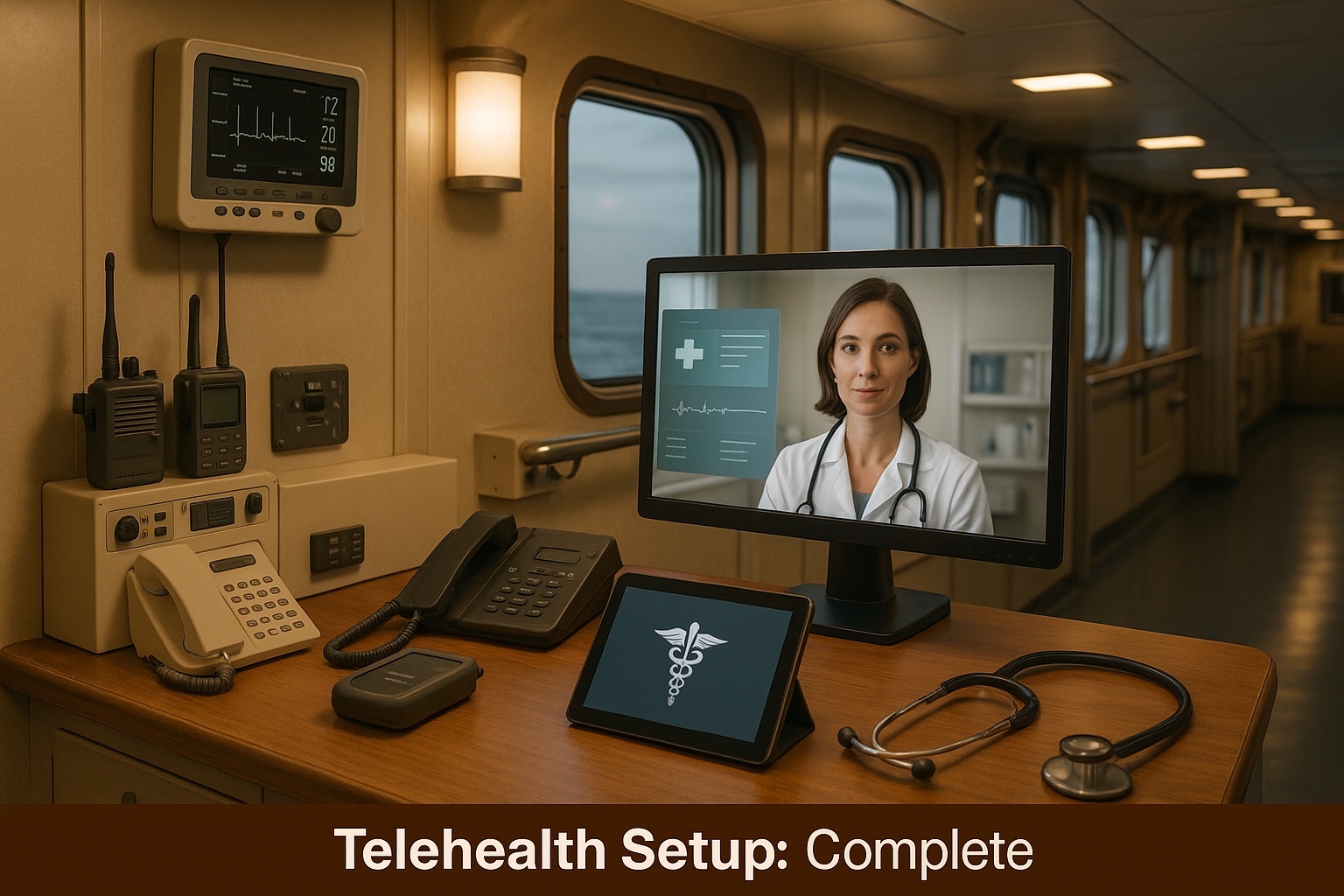

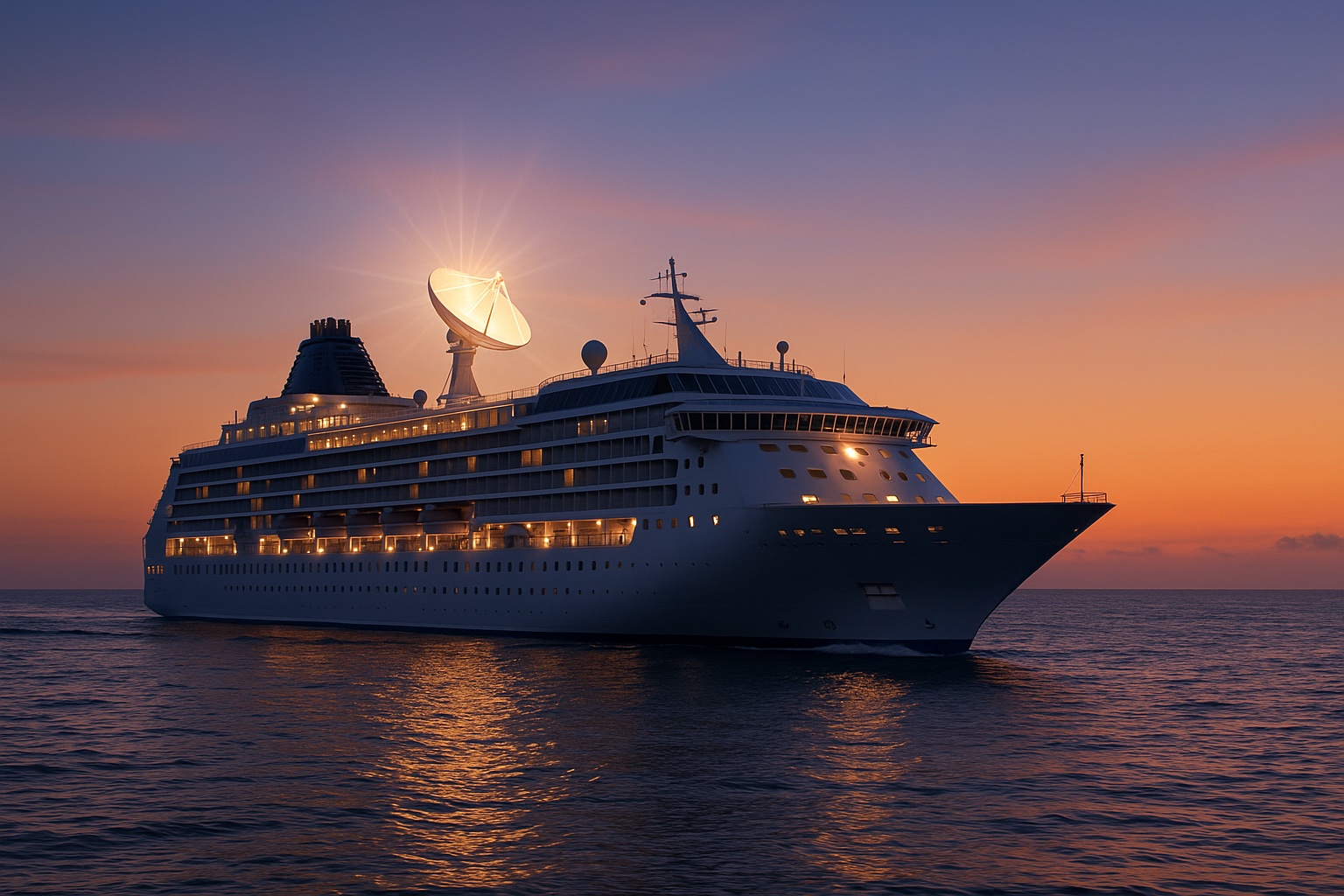
Telehealth is transforming medical care on cruise ships. By connecting onboard medical teams with shore-based specialists in real time, it ensures expert care is available even in the middle of the ocean. Here’s what you need to know:
- How It Works: High-speed satellite internet enables video consultations, teleradiology, and telecardiology. Medical data and imaging are securely transmitted to specialists onshore for immediate review.
- Challenges: Connectivity issues, limited onboard medical staff, and costly evacuations highlight the need for telehealth solutions.
- Key Provider: NT Maritime offers high-speed Starlink-powered internet (up to 220 Mbps download) and secure communication tools tailored for maritime needs.
- Benefits: Faster diagnoses, reduced evacuation costs, and improved care for passengers and crew. Telehealth also supports mental health services and chronic condition monitoring.
Telehealth is reshaping cruise ship healthcare by improving access to specialists, streamlining emergency responses, and supporting both passengers and crew in remote environments.
Technology Requirements for Telehealth at Sea
Expanding on the earlier discussion about telehealth’s advantages, this section dives into the technical essentials for delivering reliable care in maritime environments. Cruise ships face unique challenges due to their remote locations, where traditional terrestrial networks are unavailable. As a result, advanced technology becomes a lifeline, especially during medical emergencies.
Satellite Internet and Connectivity Solutions
At the heart of maritime telehealth lies high-speed, low-latency satellite internet. Without a dependable connection, even the most sophisticated medical tools and systems can’t function effectively for remote consultations.
Modern satellite technologies have revolutionized telehealth at sea. For instance, NT Maritime’s high-speed satellite internet provides the bandwidth and performance necessary for real-time consultations. This includes video calls and the rapid transmission of medical imaging data, ensuring timely and accurate diagnoses.
Bandwidth needs vary based on the service. A simple voice consultation uses minimal data, while transmitting high-quality radiographic images demands significantly more. To ensure secure communications, Virtual Private Networks (VPNs) work alongside satellite internet, maintaining HIPAA-compliant data transmission.
Leading providers like Inmarsat’s Fleet Xpress and FleetBroadband prioritize medical traffic, ensuring emergency consultations remain uninterrupted even during high-usage periods. These connectivity solutions seamlessly integrate with onboard systems, creating a comprehensive telehealth network.
Integration with Shipboard Medical Systems
For telehealth to be effective, it must seamlessly integrate with a ship’s existing medical infrastructure. This involves more than just internet access – it requires systems that automatically manage patient data, diagnostic images, and clinical notes between the ship and shore-based facilities.
One critical component is Electronic Health Records (EHR) integration. For example, if a passenger experiences chest pain mid-ocean, shore-based specialists need immediate access to their medical history, current medications, and past test results. Modern telehealth platforms ensure this information syncs automatically, enabling continuous care no matter the location.
Other systems, like PACS (Picture Archiving and Communication Systems) and RIS (Radiology Information Systems), handle medical imaging. When a ship’s X-ray machine captures an image, these systems format it for transmission and integrate it with both onboard and shore-based records. Automation plays a key role here, as DICOM gateway nodes manage incoming notifications for consultations, ensuring that medical emergencies are handled swiftly without IT delays.
To address connectivity challenges, SeaSync hybrid technology provides a critical solution. This patented system synchronizes data incrementally, allowing telehealth platforms to remain functional even with limited bandwidth. If the satellite connection drops during a session, the system continues working locally and syncs the data once the connection is restored.
NT Maritime‘s Communication Tools
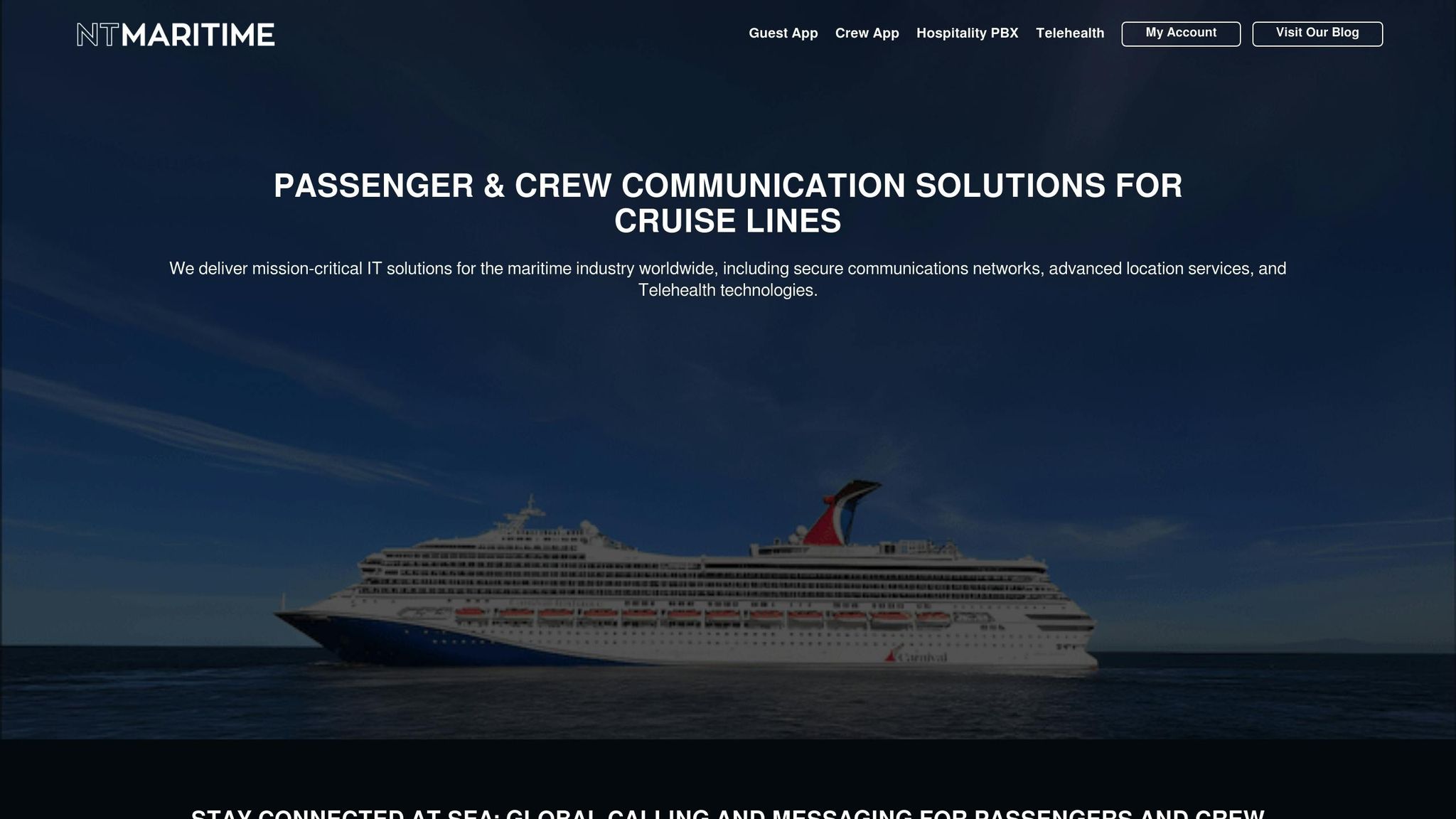
After integrating onboard systems, reliable communication tools become essential for effective telehealth. NT Maritime offers a suite of solutions tailored for maritime environments, ensuring seamless coordination between ship and shore.
The backbone of NT Maritime’s telehealth support is a secure communication network that allows HIPAA-compliant consultations. These networks enable various communication methods, including onboard calling, messaging, video calls, and voicemail. This flexibility is crucial for medical staff to connect with specialists in different scenarios.
High-quality video calls are particularly transformative. NT Maritime’s systems enable video consultations over ship WiFi, giving shore-based specialists the ability to visually assess patients and observe symptoms that might be difficult to describe verbally. These video calls integrate directly with the cruise line’s passenger management system, ensuring telehealth becomes part of the overall onboard experience.
In addition to video, secure messaging offers encrypted communication channels for sharing follow-up questions, test results, or treatment updates. This ensures patient privacy while enabling ongoing collaboration between onboard teams and shore-based experts.
NT Maritime’s tools also support both app-to-app and app-to-ship connections, providing redundancy during emergencies. If one method fails, medical staff can quickly switch to another, ensuring uninterrupted communication. With an intuitive interface, the system minimizes the need for extensive training, allowing staff to focus on patient care rather than troubleshooting.
Finally, NT Maritime’s compliance with federal and military security standards ensures these systems meet rigorous requirements, making them suitable for use across government, military, and commercial cruise operations.
Telehealth Services for Cruise Ship Emergencies
Thanks to advanced onboard connectivity, cruise ships now offer telehealth services that significantly improve emergency medical care. These services bridge the gap between the ship’s medical team and shore-based specialists, creating a 24/7 safety net no matter where the ship is located. They work hand-in-hand with the communication technologies discussed earlier.
Common Telehealth Services
Telehealth on cruise ships includes several key services:
- Teleconsultation: Real-time video or audio sessions with shore-based doctors for immediate diagnosis.
- Teleradiology: Quick transmission of X-rays for expert review.
- Telecardiology: Instant analysis of ECG results during cardiac emergencies.
- Additional Services: Telepsychiatry and teledermatology address mental health and skin conditions, while remote patient monitoring tracks chronic conditions.
Cruise lines have increasingly embraced telehealth services like telepsychiatry and teledermatology to meet the needs of passengers and crew during long voyages. These services are particularly helpful for managing stress, mental health challenges, and skin issues that can develop during extended trips.
Remote patient monitoring adds another layer of care by using devices to track vital signs such as heart rate, blood pressure, and oxygen levels. This data is sent directly to shore-based medical professionals, allowing them to catch potential health problems early and intervene before they worsen.
All of these services contribute to smoother and more effective emergency response processes.
Emergency Response Workflows
Telehealth has redefined how cruise ships handle emergencies. When a medical issue arises, the process begins with an onboard assessment, followed by a secure video consultation with a specialist. This real-time connection eliminates delays, reduces unnecessary evacuations, and ensures accurate treatment decisions.
Some systems even offer virtual cabin visits, which are particularly useful during infectious disease outbreaks. These visits allow medical teams to provide care while minimizing direct contact, helping to contain the spread of illness.
Benefits for Crew and Passengers
Telehealth doesn’t just improve emergency care – it also enhances the overall well-being of both passengers and crew.
For passengers, having access to specialists while at sea reduces delays in treatment and ensures better outcomes. Knowing that expert care is just a video call away eases anxiety and makes the cruise experience more enjoyable.
For crew members, telehealth offers continuous health monitoring and mental health support. Some systems have served over 200 cruise ships and provided care to more than 120,000 crew members worldwide. This level of support improves morale, reduces stress, and ensures that crew members stay healthy during their time at sea.
Telehealth also brings operational advantages. Platforms like NT Maritime’s telehealth system help cut down on costly medical evacuations and ship diversions. By optimizing the use of onboard medical staff and minimizing disruptions to itineraries, these services save money and improve efficiency.
Ultimately, telehealth enhances safety for everyone on board. Immediate access to specialist care – without waiting for the next port or coordinating evacuations – ensures timely, effective treatment for medical issues, reducing risks and improving outcomes.
Best Practices for Telehealth Implementation
Bringing telehealth to cruise ships requires a strong foundation of reliable technology, secure systems, and a well-prepared medical team. Building on earlier discussions about connectivity and system integration, these best practices aim to fine-tune telehealth operations for smooth and effective implementation.
Technology and Operational Protocols
Cruise ships must allocate dedicated high-speed satellite bandwidth specifically for medical communications. This ensures uninterrupted connectivity during emergencies, where delays can be critical.
To meet U.S. healthcare regulations, ensure HIPAA compliance by using encrypted VPNs for data transfer, secure storage for medical records, and conducting regular security audits. Additionally, staff should receive ongoing training on privacy protocols to maintain compliance and protect patient information.
Seamless integration with onboard medical systems is another key factor. Telehealth platforms should connect with electronic medical records (EMRs), picture archiving and communication systems (PACS), and diagnostic tools to enable automatic data sharing. Assigning dedicated satellite bandwidth for emergency consultations ensures these systems function without interference.
Regular emergency drills are essential for preparing staff to handle telehealth scenarios. Medical teams should practice using telehealth hardware and software, managing remote monitoring devices, and following established protocols to handle high-pressure situations effectively.
Optimizing Telehealth During Emergencies
Managing bandwidth becomes critical during emergencies, as multiple systems compete for limited satellite connectivity. Cruise lines should prioritize telehealth traffic over non-essential internet use and establish clear communication protocols, such as using direct phone lines or encrypted messaging for critical cases.
Hybrid technologies, like SeaSync, can help by synchronizing data in smaller increments, ensuring care continues even when connectivity is spotty.
Redundancy planning is also vital. Backup communication channels, alternative satellite providers, and onboard capabilities act as safeguards against connectivity failures. Regular system testing helps identify and address vulnerabilities before they impact patient care.
Clear escalation protocols for urgent cases are a must. Medical teams need predefined steps for contacting shore-based specialists, prioritizing critical patients, and managing multiple emergencies at once. Collaboration with telehealth vendors ensures real-time IT support is available when technical issues arise during crises.
Telehealth vs. Traditional Emergency Care Comparison
Telehealth offers unique advantages compared to traditional shipboard medical care, particularly in situations requiring specialist input and rapid decision-making:
| Feature | Telehealth Emergency Care | Traditional Shipboard Care |
|---|---|---|
| Specialist Access | 24/7 remote access to multiple specialties | Limited to onboard physician expertise |
| Response Time | Real-time consultations with shore experts | Immediate basic care; delays for complex cases |
| Data Integration | Seamless EMR/PACS connectivity | Manual, often paper-based records |
| Connectivity Requirements | High-bandwidth satellite/VPN needed | Lower connectivity requirements |
| Infection Control | Enables contactless virtual visits | Direct patient contact required |
| Cost Structure | Higher upfront tech investment; lower long-term costs | Lower tech costs; expensive evacuations |
| Scalability | One specialist can cover multiple ships | One doctor per ship limitation |
| Regulatory Compliance | Requires HIPAA, CDC, and WHO standards | Standard maritime medical regulations |
This comparison underscores telehealth’s strengths in providing specialist access, faster response times, and scalability, while also highlighting the immediate care benefits of traditional shipboard medicine, which doesn’t rely on connectivity.
To evaluate telehealth’s effectiveness, cruise lines should track metrics like response times, patient outcomes, cost savings, and satisfaction levels.
sbb-itb-bda822c
Overcoming Challenges and Future Trends
Telehealth has undeniably transformed maritime emergency care, but it’s not without its hurdles. The ability of cruise lines to address these challenges and embrace new technologies will be key to delivering effective medical care at sea.
Tackling Connectivity and Scalability Challenges
One of the biggest obstacles for telehealth on cruise ships is maintaining reliable connectivity. Remote ocean locations and unpredictable weather can wreak havoc on satellite communications, especially during critical emergencies. Traditional satellite internet often struggles to handle the heavy data loads required for real-time medical imaging or consultations involving multiple specialists.
Thankfully, hybrid technologies and dedicated medical bandwidth are helping bridge these gaps. For instance, NT Maritime’s advanced Starlink-enabled satellite networks now provide high-speed, low-latency connections that are crucial for real-time consultations and seamless data sharing. This kind of connectivity ensures that medical teams can operate effectively, even in the middle of the ocean.
Scalability is another challenge, especially as cruise lines expand their fleets. Relying on the traditional model of having one doctor per ship can quickly become impractical and expensive. Centralized specialist networks offer an alternative, allowing a single shore-based expert to support multiple ships at once. With robust backend systems and automated case routing, this model ensures fast response times, even as fleets grow. Recent implementations have shown how telehealth can scale to support over 200 cruise ships and 120,000 crew members, providing comprehensive medical and wellness services across vast operations.
These advancements in connectivity and scalability are paving the way for cutting-edge diagnostic tools and continuous patient monitoring.
Advancements in Telehealth Technologies
Artificial intelligence (AI) is revolutionizing how diagnostics are handled aboard cruise ships. AI-powered tools can analyze ECGs, radiographs, and vital signs in real time, delivering preliminary diagnoses almost instantly. This is particularly valuable when connectivity is disrupted, as these systems can flag urgent issues and recommend immediate actions without waiting for shore-based input.
Wearable health monitors are also enhancing onboard care. These devices track vital signs, detect cardiac events, and monitor respiratory patterns, automatically alerting medical staff to critical changes. By integrating wearables with telehealth platforms, cruise lines can take a proactive approach to care, often identifying potential emergencies before symptoms escalate.
Together, AI diagnostics and wearable monitors are expanding the capabilities of onboard medical teams, ensuring that even during connectivity outages, vital signs and medical imaging can still be analyzed in real time.
Centralized specialist networks are also broadening the scope of care available at sea. From telepsychiatry to teledermatology, these networks provide access to specialized expertise without requiring ship diversions or passenger evacuations.
Looking ahead, the industry is moving toward intelligent telehealth ecosystems. These integrated solutions combine telehealth with features like quarantine management and contact tracing, creating a more comprehensive approach to maritime healthcare.
NT Maritime’s Vision for the Future of Telehealth
NT Maritime is addressing the infrastructure challenges that have long hindered maritime telehealth. Their secure communication networks prioritize medical data over general internet traffic, ensuring that emergency consultations remain stable even during peak onboard usage.
Their systems support a wide range of telehealth needs, from basic voice calls to high-definition video consultations and real-time data sharing. Passengers and crew also benefit from unlimited global calling and messaging through dedicated apps optimized for ship WiFi networks.
At the heart of NT Maritime’s approach is high-speed, low-latency internet powered by advanced satellite technologies like Starlink. This infrastructure eliminates the connectivity issues that once made real-time specialist consultations unreliable. It also supports emerging technologies like AI diagnostics and continuous monitoring through wearable devices.
NT Maritime’s strategy focuses on providing scalable, secure, and seamlessly integrated telehealth solutions. Their systems are designed to align with passenger management workflows while meeting strict federal and military compliance standards, ensuring that emergency responses are both effective and privacy-conscious.
Conclusion: Transforming Cruise Line Emergency Care with Telehealth
Telehealth is reshaping how emergency care is delivered on cruise lines. By leveraging secure communication tools and high-speed satellite connections, cruise operators can now connect passengers and crew with specialist medical expertise that was once inaccessible during ocean voyages. The results speak for themselves, underscoring the importance of integrated telehealth solutions, as explained earlier.
Pilot studies have shown how effective telehealth can be for maritime emergencies. Modern platforms allow for virtual consultations directly from cabins, reducing infection risks while maintaining high-quality care. These systems are no longer experimental – they’re operational across over 200 ships, supporting 120,000 crew members.
At the core of this transformation are secure and advanced networks. NT Maritime’s satellite technology, powered by Starlink, offers download speeds of up to 220 Mbps, upload speeds of 40 Mbps, and a latency under 99 ms. This ensures stable emergency consultations, even when onboard internet usage is high. These networks are designed for secure medical data transmission, adhering to strict HIPAA standards.
Telehealth also brings practical benefits. It cuts down on costly ship diversions, speeds up access to specialists, and reduces delays in treatment. Onboard care now works in tandem with broader specialist networks, creating a seamless system.
Key Takeaways for Cruise Line Operators
For cruise line operators looking to integrate telehealth, here are the key points to consider:
- Invest in reliable telehealth infrastructure. High-speed satellite connections are essential for dependable emergency care. Partnering with providers experienced in maritime medical challenges is crucial.
- Train onboard staff thoroughly. Effective telehealth systems require well-prepared crews and clear workflows. For instance, Atlantas Ship Management’s Telemedicine Digital Plus package, rolled out across its fleet in 2023, highlights how staff training and real-time video consultations can enhance care delivery.
- Prioritize privacy and security. Systems must comply with data protection regulations through encrypted communication and secure storage. NT Maritime’s networks are specifically designed to meet these rigorous standards, ensuring reliability for emergency situations.
FAQs
How does telehealth help cruise ships respond faster to medical emergencies compared to traditional care?
Cruise ships now leverage telehealth to connect with onshore medical experts in real time, offering quicker diagnoses and treatment advice during emergencies. This approach eases the burden on the ship’s limited medical staff while ensuring both passengers and crew get expert care without unnecessary delays.
With telehealth tools, cruise lines can facilitate video consultations, securely share medical records, and even bring specialists into the conversation when required. This seamless communication not only speeds up response times but also helps improve medical outcomes during urgent situations at sea.
How is data privacy and security maintained during telehealth consultations on cruise ships?
Maintaining data privacy and security during telehealth consultations on cruise ships is a top priority. To achieve this, cruise lines use secure communication networks and implement end-to-end encryption for video calls and messaging. These measures ensure sensitive information stays protected. Plus, they comply with privacy regulations like HIPAA, which sets strict standards for handling personal health data.
On top of that, advanced IT solutions, such as those from NT Maritime, play a critical role. These systems include secure access controls, constant system monitoring, and regular updates to tackle potential security gaps. Together, these efforts not only safeguard passenger and crew data but also provide a hassle-free, confidential telehealth experience.
How do cruise ships maintain reliable telehealth services while operating in remote ocean regions?
Cruise ships operate in remote areas, making reliable connectivity a challenge. However, advanced communication solutions are bridging this gap to deliver dependable telehealth services. NT Maritime focuses on building secure, high-speed communication networks specifically designed for maritime settings. These networks support uninterrupted video calls, messaging, and real-time medical consultations, even during lengthy voyages across the ocean.
With the integration of modern telehealth technologies, cruise lines can offer passengers and crew access to quality healthcare from virtually anywhere. This not only boosts onboard safety but also provides peace of mind for everyone on board.