

How Scalable Networks Improve Ship Connectivity

Modern ships demand reliable connectivity for safety, efficiency, and crew welfare. However, maritime environments present unique challenges:

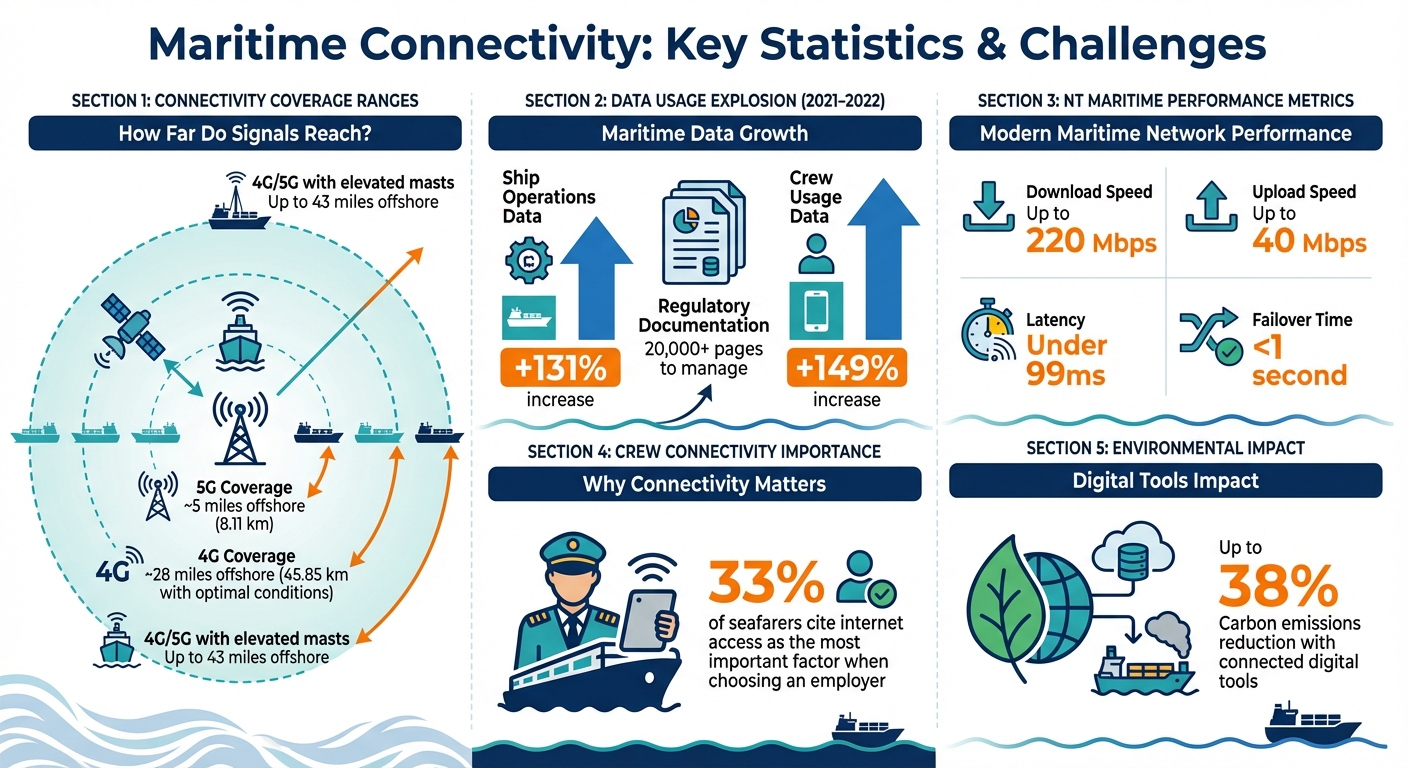
  • Limited terrestrial coverage: 5G signals fade ~5 miles offshore; 4G reaches ~28 miles.
  • Satellite issues: High latency and limited bandwidth.
  • Growing data needs: Ship operations and crew usage increased by 131% and 149% (2021-2022).
  • Regulatory pressures: Ships must manage increasing operational data to meet over 20,000 pages of regulations.

Scalable networks address these problems by combining technologies:

  • Hybrid connectivity: Integrates 5G, satellite (LEO, MEO, GEO), and vessel-to-vessel relays.
  • Network slicing: Prioritizes critical operations over less urgent traffic.
  • Edge computing: Processes data onboard, reducing satellite dependency.
  • Modular designs: Allow cost-effective upgrades without overhauling systems.

NT Maritime leads with solutions offering:

  • Speeds up to 220 Mbps (download) and 40 Mbps (upload).
  • Latency under 99ms.
  • Crew welfare tools like video calling and Telehealth.

Key takeaway: Scalable networks transform ships into connected hubs, ensuring efficient operations, better crew experiences, and compliance with modern demands.
Maritime Connectivity Statistics: Network Coverage, Data Growth, and Performance Metrics

Maritime Connectivity Statistics: Network Coverage, Data Growth, and Performance Metrics

Marlink

Assessing Current Ship Connectivity Needs

Before upgrading any ship’s connectivity, start by documenting all existing onboard assets. This means taking stock of every piece of connectivity hardware, from satellite terminals to Wi-Fi access points. Your inventory should include VSAT (GEO) systems, newer LEO constellations like Starlink or OneWeb, and L-Band safety backups such as FleetBroadband or Iridium Certus. Don’t overlook terrestrial components like 4G/5G cellular setups, which, when paired with marine-grade antennas and signal boosters, are vital for coastal operations. These systems typically provide coverage up to 19 miles offshore, but with higher masts, this range can extend to 43 miles. A thorough inventory of all hardware types will lay the groundwork for a scalable connectivity strategy.

Inventory Network Components

Go beyond basic hardware and include specialized maritime systems that handle critical data. This means cataloging systems such as AIS (Automatic Identification System), GNSS (Global Navigation Satellite System), GMDSS (Global Maritime Distress and Safety System) equipment, Dynamic Positioning computers, industrial Ethernet switches, routers, and ship gateways that connect various systems. High-bandwidth devices like radars, cameras, and LiDAR sensors generate large files, which can put significant strain on your network’s transmission capacity. Additionally, emerging technologies such as unmanned surface vehicles (USVs), autonomous underwater vehicles (AUVs), and tethered UAVs may act as mobile relays or data collectors.

During your audit, pay close attention to antenna heights. Raising mast height is one of the simplest and most effective ways to extend the range of non-satellite connections. Also, identify any single points of failure – like a lone router or gateway – that could disrupt connectivity for the entire vessel.

Classify Applications and Traffic

Once your inventory is complete, assess how each asset supports different network demands. Divide traffic into four main categories: Operational (navigation and safety), Business (machinery analytics and logistics), Situational Awareness (sensor data), and Crew/Passenger welfare. Safety-critical data, such as GMDSS communications, should take top priority, followed by low-latency control and business applications. Crew and passenger traffic generally operates on a "best effort" basis unless specific retention goals require otherwise. Welfare services, such as NT Maritime’s Telehealth and onboard calling, are increasingly important, with 33% of seafarers now citing internet access as the most important factor when choosing an employer.

Set Scalability Goals

Establish clear objectives for bandwidth, latency, and resilience to meet both current and future demands. For example, autonomous ship operations require latency under 0.5 milliseconds to support real-time collision avoidance. High-throughput ship-to-shore uplink connections – ranging from 1 to 10 Mbps – are critical for transmitting sensor data, high-definition video for remote surveys, and situational awareness feeds. Your network should also be capable of switching between active and standby links (e.g., LTE to satellite) in under one second to avoid service interruptions. Additionally, ensure compliance with updated Maritime Labour Convention (MLC) requirements, which mandate internet access for seafarers.

As Neil Giles, Chief Technology Officer at Petredec Pte. Limited, explains: "The ultimate goal is to provide [crews] with the same level of connectivity that they get at home".

Designing a Scalable Onboard Network Architecture

Creating a network that can grow and adapt to the ever-changing demands of maritime environments requires a thoughtful and flexible design. By combining modular frameworks, hybrid connectivity, and onboard technology, ships can achieve reliable and efficient communication systems.

Use a Modular Network Design

A modular network structure divides the ship’s system into three layers: access, distribution, and core. This setup allows for seamless upgrades or expansions in specific areas without disrupting the entire network. Introducing an abstraction layer between OSI Layers 2 and 3 makes it possible to reroute, duplicate, or prioritize traffic across cellular, satellite, and Wi-Fi networks without interrupting active sessions. This ensures uninterrupted application performance, even when the network switches from LTE to VSAT mid-session.

Software-Defined Networking (SDN) takes this modularity further by replacing traditional hardware with programmable software. This flexibility allows adjustments to radio frequencies and modulation in real time, adapting to changing maritime conditions. For example, a Multi-RAT Gateway (MRGW) can handle multiple Radio Access Technologies, enabling dynamic traffic management between LTE, 5G, and VSAT based on current availability. Additionally, modern 5G systems use "splits" between the Radio Access Network (RAN) and the core, allowing lightweight user planes to operate onboard while centralizing control functions.

Integrate Hybrid Connectivity Solutions

Combining satellite, cellular, and Wi-Fi mesh technologies creates a robust network with redundancy and automated failover capabilities. A centralized gateway can monitor real-time wireless metrics – like RSRP and RSRQ – and automatically select the best connection based on location and signal quality. For example, in coastal areas, 4G at 700 MHz can cover distances up to 45.85 km from shore, while 5G at 3.5 GHz offers higher bandwidth but typically covers only about 8.11 km. Bonding multiple WAN sources, such as Starlink and LTE, boosts speed and ensures high availability. If the primary connection fails, a backup can take over in less than a second.

For vessels navigating open waters, a multi-hop architecture can extend 5G coverage by using other ships as relays. This approach reduces reliance on costly satellite bandwidth while maintaining connectivity, especially for fleets following the same routes. Chris Sepp, Vice President of IT at Atlas Corp. (Seaspan), highlights that breaking the perception of maritime connectivity as bandwidth-limited opens the door to scalable digital solutions for fleets with over 200 vessels. NT Maritime also uses hybrid connectivity to sustain crew welfare services.

Plan for Onboard Wireless and Edge Computing

Wi-Fi mesh networks onboard distribute satellite or mobile connections throughout the ship, supporting crew welfare, passenger needs, and IoT devices like sensors and beacons. Edge computing, which processes data locally on the ship, reduces reliance on satellite or cloud connections. This setup is critical for real-time applications like AI-driven navigation and IoT-enabled engines, minimizing latency for safety systems and engine monitoring.

Modern edge infrastructure uses modular nodes, making it easy to upgrade RAM, CPU, or storage without disrupting operations. Zero-Touch Provisioning (ZTP) simplifies deployment, allowing non-technical crew members to plug in hardware that configures itself via the cloud, cutting installation time by up to 90%. Running communication gateways as virtual machines enhances compatibility and ensures consistent performance from shore-based labs to onboard edge clusters. This approach also prepares the network for future advancements, such as 6G or additional Low Earth Orbit (LEO) satellite constellations.

Feature Function Onboard Wireless Role
Edge Computing Local data processing & storage Connects devices & distributes data
Connectivity Operates autonomously (offline) Links users/IoT to backhaul
Scalability Modular hardware upgrades Expands mesh & increases access points
Benefit Zero latency for critical systems Improves crew welfare & IoT mobility

Implementing Security, QoS, and Reliability in Scalable Networks

In scalable networks, it’s essential to secure critical systems and maintain performance, even during failures. For maritime environments, downtime isn’t just inconvenient – it can jeopardize safety and disrupt operations. By integrating security measures, Quality of Service (QoS), and redundancy from the outset, networks can grow without sacrificing reliability. Let’s explore how to implement these elements to create a resilient maritime network.

Prioritize Traffic with QoS Policies

Certain types of traffic, like telehealth video calls, need to take priority over routine updates. That’s where QoS comes in – it determines which data packets get transmitted first, reducing packet loss, jitter, and latency during peak usage. By categorizing traffic (e.g., VoIP, video, telemetry), the network ensures critical services maintain high performance, even when bandwidth is stretched.

Use 802.1Q CoS tagging for Layer 2 and DSCP markings for Layer 3 to classify and prioritize traffic based on importance. Scheduling algorithms can further optimize performance: reserve Strict Priority for emergency traffic while using Weighted Round Robin (WRR) for general traffic to balance resources. Abstraction layers can also reroute or prioritize traffic seamlessly across satellite, cellular, and Wi-Fi interfaces without interrupting active sessions.

PCP Value Priority Traffic Type Recommended Use Case
7 7 (Highest) Network Control Routing protocols and network management
6 6 Internetwork Control Critical network signaling
5 5 Voice (VO) VoIP; Telehealth voice calls (<10ms latency)
4 4 Video (VI) Real-time surveillance; Telehealth video (<100ms latency)
3 3 Critical Applications Shared Situational Awareness (SSA) data
0 1 (Lowest) Best Effort General internet and non-critical updates

Source: IEEE recommendations for Priority Code Point (PCP)

For the most critical functions, like routing protocols, assign the highest priority (PCP 7). Telehealth voice calls should use PCP 5, while video traffic like surveillance or telehealth video calls can be prioritized at PCP 4. Routine internet browsing or background updates should remain at the lowest priority (PCP 0).

Build Redundancy into the Network

Redundancy is key to avoiding single points of failure. A hierarchical network design – divided into Core, Distribution, and Access layers – ensures predictable traffic patterns and simplifies troubleshooting. Redundant Layer 3 interconnections can recover from failures in as little as 60–200 milliseconds.

Technologies like EtherChannel or 802.3ad combine multiple physical links into a single logical path, boosting resilience. To further enhance reliability, terminate links on separate hardware. For endpoint connectivity, use redundancy protocols like HSRP or GLBP, which can converge in under a second.

Additional safeguards include redundant power supplies, CPUs, and supervisor engines. Stateful Switchover (SSO) and Non-Stop Forwarding (NSF) technologies maintain Layer 3 forwarding during supervisor failures, typically recovering in 1–3 seconds. For backhaul connectivity, combine multiple technologies like satellite (LEO/MEO/GEO), 5G/LTE, and vessel-to-vessel relays. Bandwidth bonding can aggregate these connections, ensuring both failover and increased throughput. Backup links can take over in less than a second if the primary connection fails.

Avoid daisy-chaining fixed-configuration switches, which can create routing issues. Instead, use stacking technologies like VCStack or StackWise, or deploy modular chassis to reduce complexity. For the fastest failover performance, rely on hardware-based link failure detection rather than software timers.

Enforce Security and Compliance Standards

While redundancy ensures connectivity, robust security safeguards your network from threats. Maritime networks face unique cybersecurity challenges due to their operation in international waters, connections to multiple networks, and the mix of operational technology (OT), crew systems, and passenger services they host. Traditional perimeter-based defenses are no longer enough. Instead, adopt a Zero Trust Architecture to protect resources regardless of their location.

"Zero trust assumes there is no implicit trust granted to assets or user accounts based solely on their physical or network location (i.e., local area networks versus the internet) or based on asset ownership."

NT Maritime’s systems align with federal and military cybersecurity guidelines to reinforce these principles. Network segmentation plays a critical role by isolating essential maritime operations from other traffic. For example, separate LANs can be used for business systems (e.g., email, PMS), crew services (prepaid internet), and M2M/custom services (e.g., ECDIS, VDR). This ensures that a compromised device cannot access critical navigation or engine control systems. Role-Based Access Control (RBAC) further limits access to sensitive areas, granting permissions only to authorized personnel.

To secure data in transit, use Virtual Private Networks (VPNs) between vessels and shore, protecting communications across various WAN links (VSAT, cellular, satellite). For remote access to OT systems, deploy secure firewalls and robust remote access solutions to safeguard both port and ship infrastructure.

Comply with NIST SP 800-207 standards to protect individual resources rather than entire network segments. As remote users and cloud-based assets grow in number, this approach becomes increasingly critical. Automate failover processes using network management devices capable of switching between hardware and multiple WAN links (VSAT, 4G/5G, L-band) without manual intervention, eliminating single points of failure. Lastly, ensure compliance with NIS2 standards to maintain comprehensive visibility and security across all industrial network components.

Scaling and Monitoring the Network Over Time

Once your network is up and running, the focus shifts to maintaining its performance, scaling operations effectively, and integrating emerging technologies. The demand for maritime data continues to grow, and without vigilant monitoring and adaptable infrastructure, networks can quickly become overwhelmed.

Centralized Monitoring and Management

Centralized platforms streamline fleet connectivity by offering a single dashboard to manage everything. These systems provide real-time insights into data usage, hardware performance, and SIM connectivity. They also enable automated traffic management. For instance, Multi-RAT Gateways (MRGW) can dynamically switch between LTE and VSAT networks based on current channel conditions, ensuring each application gets the best possible connection.

A notable example comes from January 2023, when researchers from Gachon University and SyncTechno Inc. tested an MRGW on the Korean Autonomous Surface Ship (KASS) testbed near Ulsan, South Korea. The system seamlessly switched between LTE and VSAT networks within one second of detecting a disconnection, maintaining uninterrupted real-time video streaming. This was achieved using REST APIs and SNMP for wireless monitoring, verified through the DX Ocean remote monitoring platform.

Centralized systems also bring significant cost savings. Techniques like Delta Synchronization reduce data usage by transmitting only the changes in files. High-quality connectivity enables shoreside technicians to troubleshoot remotely, cutting down on expensive physical interventions.

Chris Sepp, Vice President of IT at Atlas Corp. (Seaspan), explains: "All of our ships are deployed to generate revenue. We don’t have the luxury of having regular physical access to them in drydock, so the majority of shoreside interventions need to be performed remotely".

This kind of centralized management provides the foundation for scaling your network in a data-driven way.

Use Metrics and Automation for Scaling

Making informed decisions starts with tracking the right metrics. Key indicators like latency (measured in milliseconds), jitter, packet loss, throughput (Mbps), and total data consumption help you stay ahead of potential issues. For example, Starlink’s maritime plans, which range from 50 GB to 2 TB, require careful monitoring to avoid overage fees or throttled speeds. Metrics also ensure that critical tools, such as ERP systems or video conferencing, continue to perform well even during times of high usage.

Metric Category Key Parameters Purpose
Performance Latency (ms), Jitter (ms), Packet Loss (%) Maintain stability for real-time apps like VoIP and video
Utilization Throughput (Mbps), Load per Carrier Optimize hybrid network routing
Consumption Total Data (GB/TB), Usage per User/App Control costs and prevent throttling
Reliability Uptime (%), Signal Strength (dB) Ensure SLA compliance and link stability

Automation is another game-changer. In November 2025, Northern Marine Group, a division of Stena, cut its fleet software compliance time by 92%, reducing it from six months to just two weeks. Led by DevSecOps Manager Scott Mungall, the team replaced manual CD-mailing with the Resilio Platform‘s automated data distribution over VSAT. This enabled multi-gigabyte updates to reach vessels even in low-bandwidth regions like the Indian Ocean.

Automation also supports proactive scaling by setting thresholds for CPU, memory, and storage usage. These thresholds can trigger alerts or even auto-scaling before performance suffers. SD-WAN orchestration further enhances efficiency by routing traffic based on application priority and link quality, ensuring critical services always get the best connection.

By leveraging these tools and metrics, you can ensure your network remains scalable and resilient.

Future-Proof with Modular Upgrades

To keep up with changing demands, modular upgrades make it easy to expand your network without overhauling the entire system. Node-based clusters combine compute, storage, and networking into units that can be added incrementally as capacity needs grow. Software-Defined Infrastructure (SDI) adds another layer of flexibility by abstracting hardware, allowing resources to be dynamically allocated across the fleet without relying on cloud services. This approach eliminates the need for costly system replacements – new nodes simply integrate into the existing setup.

Tools like Terraform and Ansible automate provisioning, ensuring consistent configurations across multiple vessels and reducing the risk of manual errors. Zero-touch provisioning takes this a step further, allowing for hardware replacements or network expansions without requiring on-site IT staff. Standardizing hardware and software across the fleet simplifies troubleshooting, reduces training time, and speeds up deployment through pre-configured templates.

Tore Morten Olsen, President of Maritime at Marlink, highlights: "The maritime industry is on the brink of a technological step change, driven by low Earth orbit (LEO) satellite connectivity, cloud-based platforms, and artificial intelligence".

With modular designs, your network can easily adapt to new technologies, whether that’s next-generation satellite systems, 5G-Advanced, or AI-powered applications, without starting from scratch.

Conclusion

The importance of scalable networks in maritime operations cannot be overstated – they drive efficiency, enhance crew well-being, and provide a competitive edge. Recent trends highlight this shift: between June 2021 and June 2022, crew-related data usage skyrocketed by 149%, while business application usage grew by 131%. These numbers reveal how ships are transforming into hubs of connectivity, reshaping life and work at sea.

Scalable network architectures play a key role in optimizing voyages, cutting down port waiting times, and reducing fuel consumption. Connected sensors further enhance operations by enabling predictive maintenance, which prevents costly equipment failures before they occur. Additionally, digital tools integrated into these networks can significantly lower carbon emissions – by as much as 38% – helping the maritime sector meet IMO 2030 goals. For seafarers, connectivity is no longer a luxury but a necessity. In fact, 33% of seafarers now prioritize internet access over pay and leave when choosing an employer, underscoring its role in crew retention.

NT Maritime’s communication solutions are at the forefront of this transformation. Offering secure, high-speed internet (up to 220 Mbps download and 40 Mbps upload with latency under 99ms) and integrated communication systems, their technology supports both commercial and government/military needs. These solutions enable everything from crew video calls with loved ones to real-time HD surveillance and telemedicine services. With NT Maritime, vessels are equipped to tackle today’s challenges while preparing for tomorrow’s opportunities.

FAQs

How do scalable networks improve connectivity and crew well-being on ships?

Scalable networks transform ship connectivity by seamlessly integrating satellite, LTE, and land-based links, delivering fast, dependable, and cost-efficient internet access. This means crew members can enjoy smooth video calls, streaming services, and social media, making life onboard more connected and comfortable.

Beyond personal use, these networks play a critical role in supporting essential services like telehealth consultations, real-time weather updates, and cloud-based tools, all of which enhance safety and operational efficiency. NT Maritime takes this a step further by providing secure, unified communication systems that adapt to fleet size, ensuring both crew well-being and operational priorities are met.

How does edge computing enhance ship connectivity?

Edge computing transforms ship connectivity by handling data processing directly on the vessel. This approach reduces the need to depend on high-latency satellite links. Tasks such as AI-powered navigation, predictive maintenance, and passenger services can be managed locally, which helps cut delays, saves bandwidth for essential communications, and keeps sensitive data securely onboard.

By pairing edge computing with flexible network setups, ships can maintain critical services like crew communication, onboard calls, and telehealth applications – even when shore-based cloud connections are disrupted. It also enables real-time decisions for improving fuel efficiency, optimizing routes, and enhancing safety systems. NT Maritime incorporates edge-enabled infrastructure into its offerings, ensuring ships have dependable, high-speed internet and communication tools, no matter the conditions.

What are the benefits of hybrid connectivity for ship communication networks?

Hybrid connectivity blends satellite networks – such as LEO, GEO, and L-Band – with terrestrial 4G/5G cellular connections. This setup allows vessels to automatically select the most efficient and cost-effective network available at any given moment. By dynamically switching or dividing traffic between networks, it ensures a stable connection without interrupting user activity.

Near shore, this system reduces latency by prioritizing faster cellular signals. Once the vessel moves into open waters, it seamlessly transitions to satellite networks. This not only keeps costs down by favoring cheaper options when possible but also guarantees consistent internet access. For ship operators, this means smoother video calls, reliable crew-to-shore communication, and continuous telemetry for navigation and safety systems.

NT Maritime leverages hybrid connectivity to deliver secure, high-speed internet, onboard calling, and integrated communication services – keeping passengers and crew connected regardless of their location.

Top 7 Maritime Communication Systems in 2025

The maritime industry in 2025 relies on advanced communication systems to ensure safety, efficiency, and connectivity for ships across the globe. These systems integrate modern technologies like satellite internet, 5G, and IoT to support navigation, weather updates, emergency alerts, and onboard communication for both crew and passengers. Here’s a quick summary of the top systems shaping maritime communication today:

  1. NT Maritime Integrated Communication Platform: Offers high-speed internet (220 Mbps download, 40 Mbps upload), onboard calling, video, and telehealth services with strong security measures.
  2. Satellite-Based Maritime Internet Systems: Provides global coverage using geostationary and LEO satellites, with speeds up to 100 Mbps and low latency for real-time operations.
  3. Cruise Line Communication Platforms: Combines satellite, cellular, and onboard WiFi for uninterrupted passenger and crew connectivity, with integrated safety features.
  4. Government and Military Communication Solutions: Focuses on secure, mission-critical communication with strict compliance to federal standards.
  5. 5G and Cellular Maritime Networks: Enhances vessel-to-shore communication with faster speeds, lower latency, and seamless integration with shipboard systems.
  6. Global Maritime Distress and Safety Systems (GMDSS): Ensures emergency communication across sea areas using modernized satellite and digital technologies.
  7. Software-Defined Radios and IoT Communication: Flexible systems supporting multiple protocols, IoT integration, and real-time monitoring for predictive maintenance.

These systems address the growing demands of the maritime industry by providing reliable, secure, and efficient communication solutions, paving the way for safer and more connected operations.

Quick Comparison:

System Key Features Speed/Latency Coverage Integration Focus Security Standards
NT Maritime Platform High-speed internet, telehealth 220 Mbps/99 ms Onboard WiFi Passenger management, safety Encrypted, multi-layer auth
Satellite Internet Global coverage, LEO & GEO satellites 100 Mbps/20-40ms (LEO) Global (incl. polar) IT infrastructure End-to-end encryption
Cruise Line Platforms Hybrid satellite/cellular/WiFi Dynamic Coastal & open sea Safety, passenger services Network segmentation
Gov/Military Solutions Mission-critical, secure comms Varies Classified routes Classified data handling Federal compliance
5G Maritime Networks Low latency, high bandwidth 5G speeds Coastal & near-shore Remote diagnostics, cargo Zero-trust, geofencing
GMDSS Emergency communication, updated tech Varies Sea Areas A1-A4 Safety systems, AIS IMO/SOLAS compliance
SDR & IoT Systems Multi-protocol, IoT-enabled Varies Coastal & open sea Predictive maintenance, ECDIS AES-256 encryption

These technologies are reshaping maritime communication, ensuring better safety, efficiency, and connectivity for diverse maritime operations.

The Future of Marine Communications: Harnessing Advanced Technologies

1. NT Maritime Integrated Communication Platform

NT Maritime

NT Maritime’s platform brings together all communication needs for cruise ships, government vessels, and military ships. It’s designed to provide dependable, flexible, and secure connectivity at sea, improving both operations and the experience for passengers.

The system supports onboard calling, messaging (including group chats and ship-to-app communication), video calls, and voicemail. These features adapt effortlessly to the size of the vessel, ensuring smooth operations and enhanced communication for everyone onboard.

Coverage and Connectivity

Using the ship’s WiFi, the platform ensures consistent coverage throughout the vessel. It also provides high-speed internet with download speeds up to 220 Mbps, upload speeds up to 40 Mbps, and latency under 99 ms. This level of connectivity supports real-time operations and keeps passengers connected.

Integration with Shipboard Systems

A standout feature of the platform is how it integrates with onboard systems. It works seamlessly with passenger management systems to automate notifications, handle emergency communications, and send personalized messages. Additionally, telehealth capabilities allow for efficient medical consultations and monitoring while at sea.

Security and Compliance Standards

Security is a top priority. The platform employs encrypted channels, multi-layer authentication, and secure transmission protocols to safeguard sensitive information. It meets strict federal and military standards, ensuring communications remain protected at all times.

2. Satellite-Based Maritime Internet Systems

Satellite-based maritime internet has become the backbone of modern vessel connectivity, offering dependable communication links across the vast expanse of the world’s oceans. By using low Earth orbit (LEO) and geostationary satellites, these systems deliver broadband-level speeds that support everything from crew communication and passenger entertainment to the seamless transmission of critical operational data.

This technology fills the connectivity gap where traditional networks fall short.

Coverage and Connectivity

Satellite systems offer global coverage, ensuring vessels stay connected no matter where they are on the ocean. Unlike terrestrial networks that lose signal beyond coastal areas, satellite connectivity ensures consistent service whether a ship is 10 miles or 1,000 miles from shore.

This coverage spans from polar regions to equatorial waters, making it indispensable for vessels navigating international routes. Ships in remote areas, such as the mid-Pacific or Southern Ocean, rely entirely on satellite links for communication.

  • Geostationary satellites: Positioned 22,236 miles above Earth, these satellites cover wide areas but experience higher latency.
  • LEO satellite constellations: Orbiting much closer – between 340 and 1,200 miles – LEO satellites provide lower latency but require a larger number of satellites to maintain uninterrupted service as they move across the sky.

Bandwidth and Latency

Satellite internet speeds vary based on the technology and service tier:

  • Download speeds: Range from 1 Mbps to over 100 Mbps.
  • Upload speeds: Range from 512 Kbps to 20 Mbps.

Latency differs significantly between satellite types:

  • Geostationary satellites: Latency typically falls between 500-700 milliseconds, which can affect real-time applications.
  • LEO satellites: Latency is much lower, around 20-40 milliseconds, making activities like video calls and voice communication far more practical.

Integration with Shipboard Systems

Modern satellite internet systems integrate seamlessly with onboard IT infrastructure. They connect through standard networking equipment, allowing vessels to extend their internal networks to include satellite connectivity without requiring major upgrades.

  • Automatic failover systems: These ensure uninterrupted service by switching between satellite providers or beams if one connection fails, maintaining critical communication during outages or equipment issues.
  • Quality of Service (QoS) management: Critical communications, such as safety messages and operational data, are prioritized over less essential traffic like passenger entertainment, ensuring vital functions remain unaffected during peak usage.
  • Network management tools: These allow crews to monitor data usage and allocate bandwidth efficiently, optimizing performance.

This level of integration enhances both safety and operational efficiency, setting the stage for more advanced capabilities.

Security and Compliance Standards

Maritime satellite systems are designed with robust security features to protect sensitive data:

  • End-to-end encryption: Ensures secure data transmission between vessels and onshore facilities, meeting international security standards.
  • Authentication protocols: Prevent unauthorized access to the satellite connection, with multi-factor authentication adding extra protection for administrative controls.
  • Regulatory compliance: These systems meet International Maritime Organization (IMO) regulations, flag state requirements, and SOLAS (Safety of Life at Sea) standards for emergency communications.

Additionally, audit trails and logging keep detailed records of network activity. These logs help operators demonstrate compliance with data protection rules and assist in security investigations when needed.

3. Cruise Line Communication Platforms

Cruise line communication platforms are designed to tackle the dual challenges of connectivity and safety for ships carrying thousands of passengers and crew. Modern cruise ships rely on integrated systems to ensure smooth operations, guest satisfaction, and effective emergency communication.

These platforms aim to deliver critical messaging while also maintaining high-quality service for recreational use.

Coverage and Connectivity

Cruise lines utilize hybrid connectivity systems that combine satellite, near-shore cellular networks, and onboard WiFi. This setup ensures uninterrupted service, no matter where the ship is located.

Near coastal areas like the Caribbean or Mediterranean, terrestrial networks can supplement satellite connections, boosting service quality. However, during long ocean crossings, ships rely heavily on satellite systems to maintain communication over extended periods.

Another key feature is shore-to-ship connectivity, which goes beyond basic internet access. Passengers can use their personal devices to make calls, thanks to international routing that mimics land-based dialing. This level of connectivity not only enhances convenience but also lays the foundation for more advanced system integration.

Integration with Shipboard Systems

Reliable network coverage allows for deep integration with onboard systems. Communication platforms connect directly with passenger management and hotel systems, streamlining operations and enabling real-time updates.

These platforms also play a critical role in safety and security. During emergencies or safety drills, they can broadcast instructions in multiple languages and coordinate crew actions in real time. This integration improves operational efficiency while enhancing the guest experience, aligning with modern maritime communication expectations.

Bandwidth and Latency

Dynamic bandwidth management ensures that mission-critical data is prioritized, while latency is minimized for real-time communication needs.

Bandwidth is carefully allocated to meet the demands of passenger internet use, crew communication, operational data transfers, and onboard entertainment. During peak usage times, traffic shaping techniques help distribute access fairly among users.

Many platforms employ edge computing to cache frequently accessed content onboard. This reduces reliance on satellite links and improves response times. Quality of Service protocols further guarantee that emergency communications are prioritized, even during high-demand periods.

This optimized data flow also supports the rigorous security measures outlined below.

Security and Compliance Standards

Cruise line communication platforms adhere to strict security standards to protect passenger data and ensure maritime safety. They comply with international data protection regulations, including those governing European and U.S. markets.

Network segmentation is a common practice, isolating passenger communications from crew operations and critical ship systems. This reduces the risk of unauthorized access. Advanced firewalls and continuous monitoring further safeguard the network by detecting and blocking suspicious activity.

To protect sensitive information, strong encryption protocols are used during data transmission. Ongoing compliance monitoring ensures that all communications meet maritime regulations, facilitating smooth audits during port inspections. These measures help maintain secure and efficient connections, which are vital for passenger and crew safety.

4. Government and Military Communication Solutions

As digital advancements reshape industries, government and military communication systems are no exception. These solutions are designed to handle mission-critical communications while maintaining the highest levels of security to safeguard classified information. To meet strict federal requirements, they must achieve certifications like the Cybersecurity Maturity Model Certification (CMMC) and secure a spot on the Department of Defense Information Network Approved Products List (DODIN APL). These certifications ensure not only data protection but also compliance with stringent federal standards, making these systems dependable for essential operations.

5. 5G and Cellular Maritime Networks

The maritime industry is embracing 5G and cellular networks to enhance vessel-to-shore communication and improve onboard operations. These networks are transforming how ships interact with shore facilities and manage onboard systems, creating a more connected and efficient maritime environment.

Bandwidth and Latency

5G networks in maritime settings bring faster speeds and significantly lower latency. This means crews can communicate in real time, receive instant navigation updates, and access critical weather data for timely decision-making. The combination of higher bandwidth and reduced delays ensures smoother operations, even in demanding conditions.

Coverage and Connectivity

Maritime cellular networks are designed to extend coverage far beyond the coastline. Advanced base station setups and network configurations, such as virtual network segmentation, ensure that essential communications are prioritized. These systems also integrate seamlessly with existing cellular networks, allowing vessels to maintain reliable connectivity as they transition from coastal waters to the open sea.

Integration with Shipboard Systems

5G technology integrates seamlessly with onboard systems, enabling features like remote diagnostics, automated cargo tracking, and edge computing. This integration allows for real-time monitoring and management of key vessel functions, optimizing performance and unifying data from onboard sensors and systems. These capabilities enhance both operational efficiency and decision-making processes.

Security and Compliance Standards

To protect communications, 5G maritime networks use advanced encryption and authentication protocols tailored specifically for maritime needs. These measures align with international guidelines and often employ a zero-trust model, requiring constant verification of users and devices. Additionally, geofencing technology restricts data access based on a vessel’s location, adding an extra layer of security in sensitive areas.

6. Global Maritime Distress and Safety Systems (GMDSS)

The Global Maritime Distress and Safety System (GMDSS) is the internationally required emergency communication framework for ships navigating international waters. Its primary purpose is to ensure vessels can send out distress alerts, receive critical maritime safety updates, and stay in contact with rescue coordination centers across the globe.

This system combines various communication technologies, including satellites, terrestrial radio frequencies, and digital selective calling (DSC). In recent years, the International Maritime Organization (IMO) has been working to modernize GMDSS by incorporating digital technologies to improve efficiency and reduce response times.

Coverage and Connectivity

The GMDSS divides the oceans into four specific sea areas, each defined by its communication coverage capabilities:

  • Sea Area A1: Covers coastal waters within the range of VHF radio, typically up to 20-30 nautical miles from the shore.
  • Sea Area A2: Extends coverage to medium frequency (MF) radio, reaching approximately 100-150 nautical miles offshore.
  • Sea Area A3: Includes regions covered by geostationary satellite systems, providing communication far beyond the range of terrestrial systems.
  • Sea Area A4: Encompasses polar regions where geostationary satellites are less effective, requiring alternative communication methods.

Each area demands specific equipment configurations. For instance, ships operating in Sea Area A3 must be equipped with Inmarsat terminals and MF/HF radios to ensure reliable emergency communication. To enhance coverage, particularly in polar regions, GMDSS now incorporates Low Earth Orbit (LEO) satellite constellations, which also help minimize communication delays – critical in emergencies.

Integration with Shipboard Systems

Modern GMDSS equipment is designed to work seamlessly with a ship’s bridge systems and navigation tools. For example:

  • Digital Selective Calling (DSC) controllers link directly with GPS systems, enabling automated distress signals with precise location data.
  • Emergency Position Indicating Radio Beacons (EPIRBs) automatically activate during emergencies, transmitting rescue signals on the 406 MHz frequency with location accuracy up to 100 meters.

Additionally, GMDSS integrates with automatic identification systems (AIS) and voyage data recorders, forming a comprehensive safety network. In distress situations, these systems can simultaneously relay critical information – such as vessel details, crew data, and situational updates – to rescue coordination centers.

Search and Rescue Transponders (SARTs) have also been upgraded to include AIS functionality. This enhancement allows rescue vessels and aircraft to detect distress signals more easily, improving response coordination and reducing the time required for rescues.

Security and Compliance Standards

GMDSS operations are governed by strict standards set by the International Telecommunication Union (ITU) and the IMO’s SOLAS Convention. These regulations specify requirements for equipment certifications, operator licensing, and routine system testing to ensure reliability during emergencies.

To secure distress communications, GMDSS employs protocols like authentication codes and encryption to verify legitimate distress calls and prevent false alarms that could waste valuable rescue resources. Ships are also required to:

  • Conduct monthly equipment tests and maintain battery systems.
  • Undergo annual inspections by certified technicians.
  • Keep detailed logs of equipment performance, repairs, and any failures.

As GMDSS evolves, cybersecurity has become a key focus. Modern updates address vulnerabilities in satellite communication links, ensuring emergency systems remain protected from interference or malicious attacks.

Crew training is another critical component. Under the STCW Convention, radio operators must meet specific competency standards and complete periodic refresher courses to maintain their certifications. This ensures that in emergencies, crew members can operate GMDSS systems effectively and confidently.

7. Software-Defined Radios and IoT Communication

Building on advanced satellite and cellular networks, Software-Defined Radio (SDR) technology is transforming maritime connectivity by combining flexible communication protocols with IoT capabilities. SDRs replace traditional fixed hardware with programmable software, making maritime communication systems more adaptable. This flexibility allows real-time integration with IoT sensors to monitor engine performance, cargo conditions, and other critical metrics, enabling quicker decision-making and predictive maintenance.

SDRs have introduced a level of versatility that wasn’t possible with older systems. These modern radios can handle multiple communication protocols – VHF, UHF, HF, and satellite frequencies – eliminating the need for separate radio systems. This not only reduces equipment costs but also simplifies operations on the ship’s bridge. Since the system is software-based, updates and modifications can be implemented without replacing hardware, ensuring the technology stays current.

Coverage and Connectivity

SDR systems provide seamless connectivity, adapting from coastal cellular networks to open-ocean satellite systems, and even creating mesh networks among vessels. In coastal waters, SDRs prioritize high-speed data transmission through cellular and terrestrial networks. As vessels move into open ocean areas, the system automatically switches to satellite communication, requiring no manual input from the crew.

Mesh networking is another game-changer. Ships equipped with compatible SDR systems can form temporary, self-healing communication networks when within range of each other. This extends coverage and creates backup communication pathways, which is especially valuable for fleet operations where constant coordination is essential for safety and efficiency.

IoT connectivity through SDR platforms is equally impressive. These systems can operate across multiple frequency bands simultaneously. For instance, Low-Power Wide-Area Network (LPWAN) protocols like LoRaWAN efficiently handle sensor data from hundreds of IoT devices on large vessels. At the same time, higher-bandwidth connections manage tasks like video surveillance, navigation data, and crew communications. The system intelligently prioritizes and routes data through the most suitable channels based on bandwidth and urgency.

Integration with Shipboard Systems

SDR and IoT systems integrate seamlessly with existing maritime technology, enhancing the functionality of shipboard systems. For example, Electronic Chart Display and Information Systems (ECDIS) can receive real-time weather and navigation updates via SDR networks. Meanwhile, IoT sensors continuously monitor vital ship systems such as ballast tanks, fuel levels, and refrigeration units.

Bridge management systems gain significant advantages from SDR integration. Communication protocols can be updated remotely to meet new international regulations or to add features tailored to specific routes. This ensures that vessels operate efficiently and comply with regional requirements.

One practical application of this technology is in cargo monitoring systems. For temperature-sensitive cargo, wireless sensors connected to the ship’s SDR network provide continuous monitoring. If temperature deviations occur, alerts are sent to both the ship’s crew and shore-based managers, enabling immediate corrective actions. This capability is particularly crucial for shipments like pharmaceuticals and perishable foods, where temperature control is critical.

In the engine room, IoT sensors linked to SDR networks enable predictive maintenance. Devices like vibration sensors, temperature monitors, and oil analysis systems send data in real time, identifying potential equipment failures weeks in advance. This data is automatically shared with maintenance teams onshore, allowing them to prepare parts and resources before the vessel’s next port call.

As these systems expand in functionality, robust security measures ensure the technology remains resilient against cyber threats.

Security and Compliance Standards

Maritime SDR and IoT systems must adhere to International Telecommunication Union (ITU) regulations, which govern radio frequency usage and interference prevention. The software-defined nature of SDRs simplifies compliance, as updates can be implemented through software changes rather than hardware replacements. This adaptability is critical as maritime communication regulations evolve to address cybersecurity challenges.

To protect sensitive data, modern SDR systems incorporate advanced encryption protocols. The Advanced Encryption Standard (AES-256) is widely used to secure cargo manifests, navigation plans, and crew communications. Meanwhile, IoT sensor data is encrypted using lightweight protocols that balance security with the power constraints of battery-operated devices.

Network segmentation is another key security feature. Critical safety communications, such as GMDSS emergency protocols, operate on dedicated frequencies that are isolated from other shipboard data traffic. This separation is enforced through both software and physical network configurations, ensuring compliance with international safety standards.

Regular firmware updates and security patches are essential for safeguarding SDR and IoT systems. These updates can be automatically downloaded and installed when the vessel has reliable connectivity, such as in port or via satellite. However, updates affecting safety-critical systems require manual verification and testing before deployment to ensure reliability.

The Maritime Cybersecurity Framework, established by the International Maritime Organization, mandates regular security assessments for SDR and IoT systems. These assessments evaluate encryption strength, access controls, and network segmentation to prevent cyber attacks. Compliance documentation must also be maintained and made available during port state inspections, reinforcing the industry’s commitment to operational safety and reliability.

Feature Comparison and Benefits

When evaluating systems, it’s essential to look at factors like bandwidth, latency, coverage, integration, and overall operational advantages. Breaking these elements down helps highlight the importance of choosing a solution tailored to specific needs.

For instance, NT Maritime’s integrated platform offers impressive performance: 220 Mbps download speeds, 40 Mbps upload speeds, and latency under 99 ms. Beyond speed, it provides a secure network, seamless passenger management tools, and telehealth services, all while meeting regulatory requirements. This makes it a comprehensive option for maritime operations.

Other platforms cater to distinct priorities. Some focus on boosting coastal speeds using cellular or 5G technology. Others prioritize satellite-based connectivity to ensure reliable service in remote areas. There are also solutions designed specifically for secure communication, ideal for critical operations.

One key consideration is integration capability. Platforms that combine multiple functions into a single system can significantly simplify operations and reduce costs, making them a smart choice for businesses aiming to streamline their technology stack.

Conclusion

The analysis above underscores the transformative impact of advanced communication systems on maritime operations. From NT Maritime’s platform delivering speeds of 220 Mbps to the cutting-edge GMDSS networks, these technologies have become the backbone of global maritime infrastructure.

For cruise lines, high-speed internet and integrated systems not only streamline operations but also elevate guest experiences and improve crew connectivity. Meanwhile, shipping companies, government agencies, and military operations rely on secure, reliable networks for effective coordination and the protection of critical information.

The fusion of satellite technology, 5G networks, and software-defined radios is opening up new possibilities for the maritime sector. Organizations that prioritize building robust communication infrastructures are positioning themselves to leverage emerging technologies, paving the way for advancements like improved analytics and autonomous vessels.

As we approach 2025, the pace of digital transformation continues to pick up. These systems are laying the groundwork for safer, more efficient, and highly connected maritime operations, enhancing security and performance across all areas of the industry.

FAQs

How do maritime communication systems work with onboard technology to enhance ship operations?

Maritime communication systems are built to integrate smoothly with onboard technology, boosting efficiency, safety, and connectivity. By 2025, advancements in AI and IoT are expected to transform operations, enabling systems to collaborate more effectively. For example, satellite communication modules can sync with navigation and safety systems, providing real-time data sharing and more informed decision-making.

Emerging technologies like dynamic adaptive routing (DAR) will also play a key role. This technology allows ships to automatically switch between networks – such as 5G or low-Earth orbit (LEO) satellites – ensuring optimal performance while keeping costs under control. These advancements will help vessels stay connected and functional, even in remote waters, paving the way for smoother and more reliable maritime operations.

What security measures protect sensitive data in maritime communication systems?

By 2025, maritime communication systems are set to incorporate stronger security measures to protect sensitive information. Key advancements will include end-to-end encryption to block unauthorized access, intrusion detection systems to spot and counter cyber threats, and adherence to international standards such as IMO regulations to uphold data privacy and operational reliability.

On top of that, these systems will employ multi-factor authentication and real-time monitoring to tackle the increasingly complex cyber risks facing the maritime sector. These upgrades aim to safeguard data while ensuring maritime operations continue smoothly and efficiently.

How does the Global Maritime Distress and Safety System (GMDSS) provide reliable emergency communication in remote ocean regions?

The Global Maritime Distress and Safety System (GMDSS) plays a critical role in ensuring reliable emergency communication for ships navigating remote ocean regions. It achieves this by integrating advanced technologies like satellite communication and Digital Selective Calling (DSC). These tools operate seamlessly across MF/HF and VHF radio frequencies, allowing vessels to send distress alerts quickly and efficiently, even in the most isolated areas.

By utilizing a combination of communication methods, the GMDSS ensures that ships, rescue coordination centers, and nearby vessels can stay connected during emergencies. This robust setup is specifically designed to enhance maritime safety and deliver immediate assistance, regardless of a vessel’s distance from shore.