
Cruise ships now rely on real-time data to manage fleets effectively, replacing outdated methods like post-voyage reports. Operators use live metrics to track fuel usage, passenger spending, safety, and vessel performance, enabling quick decisions on routing, maintenance, and staffing. Advanced systems integrate onboard sensors with shore-based platforms, providing insights that help reduce costs, improve safety, and maximize revenue.
Key takeaways:
- Efficiency: Real-time dashboards monitor fuel consumption, engine health, and schedules, improving decision-making.
- Cost Savings: Smarter routing and predictive maintenance lower fuel expenses and prevent breakdowns.
- Revenue Boost: Centralized POS systems and live spending data allow dynamic pricing and targeted promotions.
- Safety: Continuous monitoring ensures compliance and faster emergency responses.
- Connectivity: Satellite systems like NT Maritime’s Starlink enable seamless ship-to-shore data flow.
Modern cruise operations depend on robust connectivity and integrated platforms to transform raw data into actionable insights, making fleets more agile and profitable.
SmartOps: The Ultimate Fleet Management Software for Maritime Operations
How Real-Time Data Systems Work
How Real-Time Data Systems Work in Cruise Fleet Management
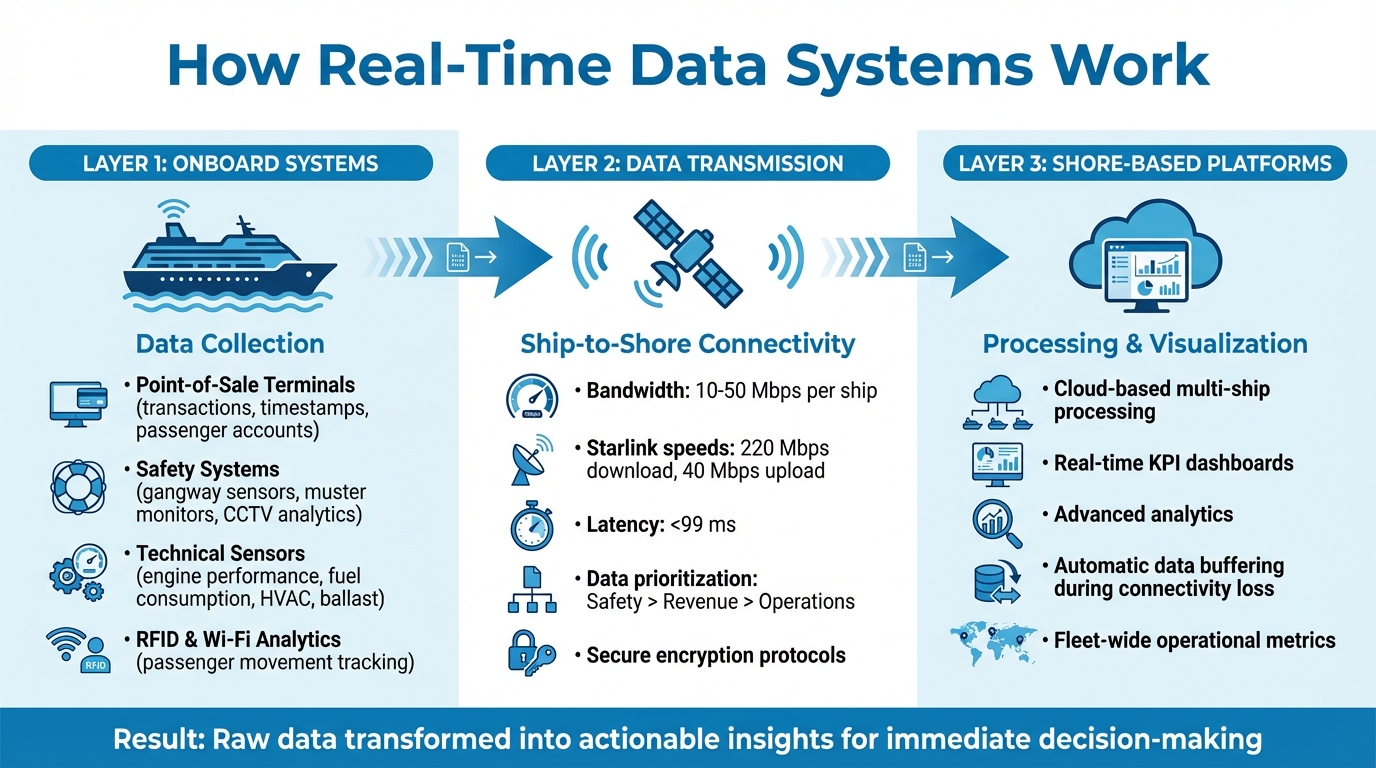
Real-time fleet management relies on three key components: onboard systems, communication networks for data transmission, and shore-based platforms for processing and visualization. These layers work together to transform raw data into actionable insights for fleet managers. Let’s break down how each piece contributes to this process.
Onboard Systems and Sensors
Cruise ships are equipped with onboard systems that collect a wide range of data, covering operations, safety, and passenger activities. For example:
- Point-of-sale terminals track every transaction, whether it’s a drink at the bar or a spa booking. They capture details like items purchased, timestamps, and passenger account information.
- Safety systems use gangway control sensors and muster station monitors to track passenger counts, while CCTV systems with occupancy analytics monitor movement throughout the ship.
- Technical sensors gather real-time data on engine performance, fuel consumption, HVAC systems, and ballast stability.
These systems work together to provide a comprehensive view of ship operations. For instance, RFID and Wi-Fi analytics can map passenger movement, while integrated systems deliver up-to-the-minute sales and mechanical data. Once collected, this information needs to be transmitted to shore quickly and reliably, requiring advanced connectivity solutions.
Data Transmission and Connectivity
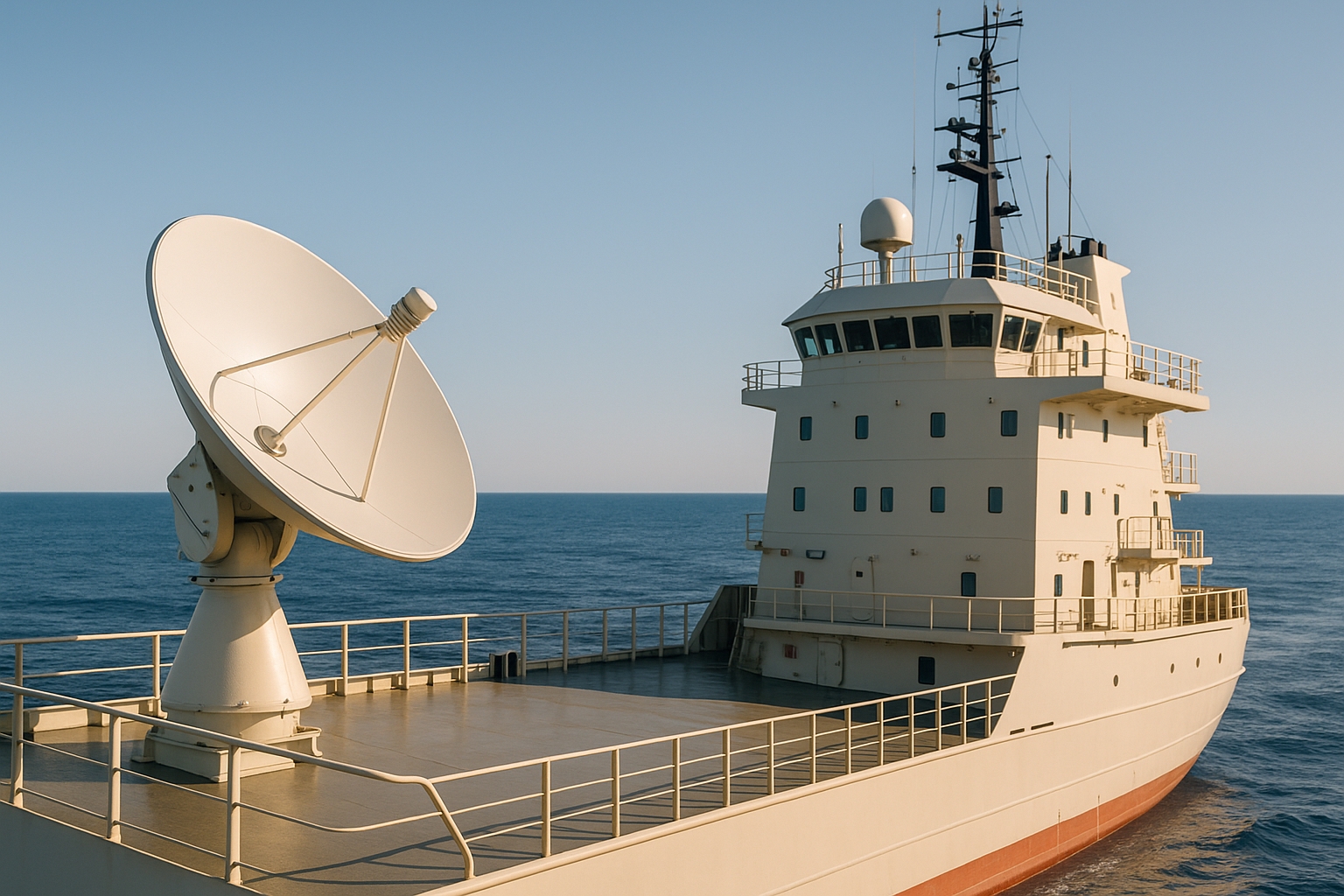
Transferring data from ship to shore hinges on high-bandwidth satellite systems. These systems, designed for reliability, use high-throughput satellites with redundancy to maintain constant connectivity. While operational data like noon reports and passenger counts require minimal bandwidth, larger data sets – such as real-time video feeds or business intelligence dashboards – demand significantly more, often between 10 and 50 Mbps per ship.
Services like NT Maritime’s Starlink provide download speeds of up to 220 Mbps, upload speeds of 40 Mbps, and latency under 99 ms, ensuring smooth and efficient data transmission. Data is compressed and prioritized, with safety and revenue-critical information taking precedence. To protect sensitive information, secure encryption protocols are used during transmission. Once the data reaches shore, it’s processed and visualized for real-time decision-making.
Shore-Based Data Platforms
Cloud-based platforms onshore process and display data from multiple ships simultaneously. These platforms are designed to handle automatic data transfers, real-time key performance indicators, and advanced analytics. Even when connectivity is temporarily lost, onboard systems buffer the data and resend it in the correct sequence once the connection is restored. This ensures that shore teams always have access to the most current operational metrics, even in areas with weaker coverage.
Using Real-Time Data to Monitor Fleet Performance
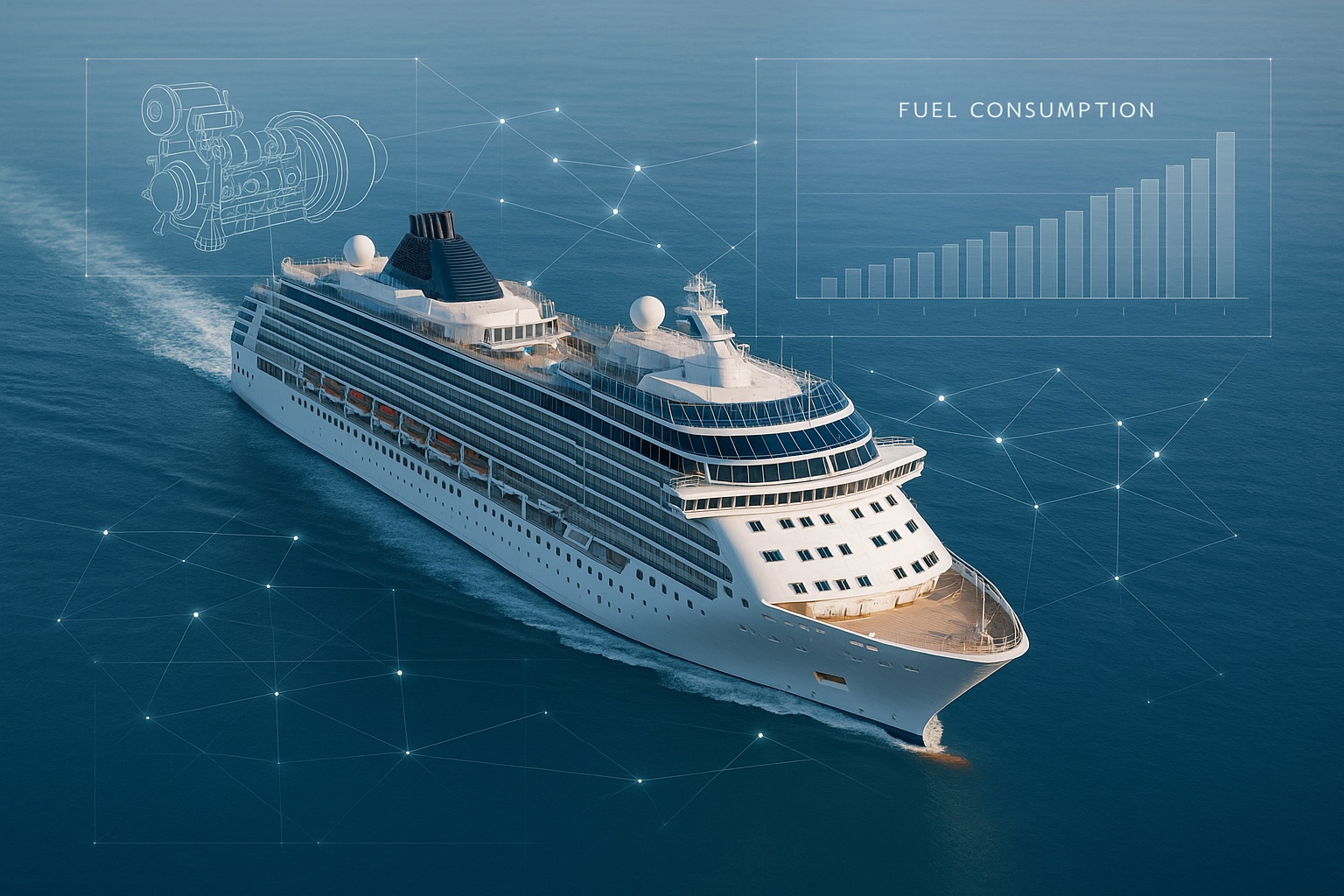
Real-time data allows cruise operators to make quick, informed decisions. Fleet-wide monitoring dashboards bring together live data from navigation systems, engine sensors, and business platforms into a single, easily accessible interface for shore teams. These dashboards provide a near real-time overview of each vessel’s position, speed, fuel usage, engine performance, maintenance needs, and regulatory compliance. This setup not only enables operators to compare vessels and identify irregularities but also helps streamline operations across the entire fleet. By connecting onboard sensors with cloud-based dashboards, raw data is transformed into actionable insights.
Fleet-Wide Monitoring Dashboards
A well-designed dashboard offers live updates on vessel positions, weather conditions, and system statuses through color-coded indicators. Each ship is represented with a summary of key metrics, such as fuel consumption per nautical mile, adherence to schedules, emission levels, and revenue performance. Alerts for abnormal fuel use, engine issues, or safety concerns are prominently displayed, helping operators quickly prioritize and address problems.
Users can dive deeper into specific vessel details through intuitive tabs like Operations, Technical, Fuel & Emissions, and Commercial, which provide in-depth information without repeating fleet-level data. These dashboards should be accessible via web and mobile platforms and tailored to specific roles, ensuring technical, nautical, and revenue teams see the most relevant data for their responsibilities.
Key Performance Indicators for Fleet Management
Dashboards become even more effective when paired with clear, measurable KPIs that allow for precise performance comparisons across the fleet. Key metrics to monitor include fuel consumption per nautical mile, speed versus target, schedule adherence, hotel load in kilowatts per guest, and emissions intensity. Tracking CO₂ emissions per nautical mile and monitoring the progress of the Carbon Intensity Indicator (CII) rating are also critical for meeting environmental goals.
For technical teams, important KPIs include engine load factors, key temperature and pressure readings (such as jacket water, exhaust gas, and lube oil), vibration levels, alarm trends, mean time between failures, and the ratio of planned versus unplanned maintenance. Benchmarking these metrics across similar ships and itineraries can highlight best practices and identify underperforming vessels. To ensure consistency, it’s essential to standardize KPI definitions and document them in a fleet KPI handbook.
Detecting Problems and Preventing Breakdowns
Tracking KPIs in real time plays a crucial role in spotting potential issues early. Continuous monitoring of parameters like temperature, pressure, vibration, and power usage helps detect deviations from normal operating conditions before they escalate.
Modern systems take this a step further by using automated alerts and work orders to address issues during scheduled maintenance, minimizing the risk of breakdowns. When patterns suggesting potential failures emerge, the system generates priority notifications and drafts work orders, enabling inspections or part replacements to be scheduled at convenient times, such as during port stops or drydock periods. By integrating with spare-part and purchasing systems, these tools ensure that necessary components are ordered and ready, reducing unplanned downtime and avoiding costly disruptions.
Increasing Revenue with Real-Time Data
Real-time data opens the door to immediate revenue opportunities. By tracking what passengers are buying, where they’re spending, and which services aren’t performing as expected, cruise operators can make quick adjustments to pricing, promotions, and inventory. Shifting from post-cruise reports to live revenue management ensures every sailing can maximize its revenue potential. This data-driven approach works hand-in-hand with the operational insights discussed earlier.
Centralized Point-of-Sale Systems
A centralized point-of-sale (POS) system ties together all revenue-related touchpoints across the ship – bars, specialty restaurants, shops, spas, and casinos – into one seamless network. Transactions sync instantly with shore-based platforms, giving headquarters a real-time view of sales, per-guest spending, and venue performance across the fleet. Pricing changes and promotions can be rolled out fleetwide without the need for manual updates on each individual ship, ensuring consistency across all operations.
Shore teams benefit from this system by gaining insights into stock levels, restocking needs, and potential anomalies. For example, they can track stock-on-hand by SKU, stock cover days, and variances between theoretical and actual inventory. If an unexpected spike in high-value items occurs, it could flag issues like shrinkage or mis-rings. Operators can also monitor out-of-stock incidents per venue and make mid-cruise adjustments, such as substituting items, redistributing stock, or tweaking menus. This minimizes both lost sales and unnecessary waste.
Tracking Passenger Spending Patterns
Real-time revenue platforms aggregate transactions – across dining, bars, excursions, spas, casinos, and retail – by guest profiles and cabin numbers. This creates a detailed view of per-guest and per-cabin spending. By analyzing this data through filters like age group, cabin type, loyalty tier, and itinerary length, cruise operators can identify their most profitable customer segments and spot untapped opportunities. For instance, guests who book premium dining early or those with heavy spa usage on sea days represent unique revenue opportunities compared to first-time cruisers with low excursion participation.
Dashboards offer actionable insights by tracking spending patterns by guest, venue, and day. For example, operators might notice lower bar revenue on formal nights or reduced spa bookings on port days. Combining POS data with cabin and booking details, loyalty history, onboard activity data (like show attendance and reservations), and even location-based signals from Wi-Fi can paint a more complete picture of passenger behavior. By correlating activities such as event attendance and venue dwell time with subsequent purchases, operators can pinpoint which events or locations drive sales. This information allows for smarter scheduling, staffing, and even dynamic pricing strategies that align with real-time demand.
Adjusting Prices and Promotions in Real-Time
Dynamic pricing enables cruise operators to adjust rates for specialty services based on factors like current demand, booking pace, time to sailing, and guest segmentation. For example, if a specialty restaurant isn’t meeting its booking targets 24 hours before a sea day, the system can automatically lower prices or create bundled offers for specific cabins. Similarly, high-demand spa slots on a sea day can be priced higher or reserved for premium guest segments.
Real-time data also enables automated promotions tailored to live conditions. A slow period in a lounge might trigger a two-for-one cocktail promotion for guests on the same deck or within a specific loyalty tier. If shore excursion bookings are lagging for the next port, last-minute discounts can be sent to guests without existing reservations. These offers can be delivered through various digital channels, with rules in place to prevent over-messaging or conflicting promotions. To measure success, operators can track metrics like revenue uplift, conversion rates, and operational impacts. Running A/B tests across different ships or sailings can further refine the timing and design of these promotions, ensuring they resonate with guests and drive results.
sbb-itb-bda822c
Improving Safety and Compliance with Real-Time Data
Real-time data is revolutionizing how cruise operators handle safety and meet regulatory standards. It’s not just about streamlining operations – it’s about creating a safer, more reliable environment for passengers and crew. By enabling constant data flow between ship and shore, operators can track individuals, automate compliance tasks, and maintain a clear view of emergencies as they unfold. These systems cut down on manual processes, reduce the chance of human error, and ensure quick, effective responses when timing is critical.
Safety Operations and Crew Coordination
Imagine having real-time visibility into the exact number of passengers and crew onboard, their locations, and their muster status during drills or emergencies. That’s precisely what these systems provide. Onboard technology syncs passenger and crew data with shore-based platforms, allowing instant verification of headcounts during critical moments like abandon ship drills or emergencies. No more relying on outdated manual logs or radio calls – everything is updated and accessible in real time. Shore teams can access the same data, enabling them to coordinate with external emergency services and guide onboard teams effectively.
Integrated communication tools – like onboard calling, messaging, and video conferencing – further enhance coordination. When combined with passenger tracking and location services, these tools allow for faster decision-making and more efficient crisis management. Emergencies that once took hours to address can now be handled in minutes. Beyond emergencies, this level of integration ensures routine safety checks are seamless and keeps fleet managers informed through operational dashboards that combine safety metrics with other key performance indicators.
Automating Regulatory Compliance and Reporting
Staying compliant with regulations can be a headache, but real-time data platforms simplify the process. These systems automatically gather and compile compliance documents, such as safety drill records, environmental reports, and operational data. By pulling information from sensors, navigation tools, and third-party compliance programs, they create centralized, audit-ready reports. This eliminates the need for manual spreadsheets, reduces errors, and ensures fleets remain compliant without constant micromanagement.
Operators also receive automated alerts for expiring certifications, upcoming inspections, or overdue maintenance tasks. By maintaining up-to-date records of certifications, crew training, and safety inspections, fleets are always prepared for audits. Over the past five years, cruise fleets worldwide have implemented over 25 planned maintenance system (PMS) and point-of-sale (POS) software rollouts, showcasing the growing reliance on real-time data for compliance and operational efficiency. These automated systems also ensure that safety protocols are current, enhancing readiness for unexpected crises.
Emergency Response and Situational Awareness
When emergencies strike, access to real-time data can make all the difference. Continuous monitoring of passenger locations, ship stability, environmental conditions, and crew status provides critical insights for both onboard and shore teams. This data helps assess risks quickly and coordinate an effective response. For example, platforms can notify crews of navigational hazards or emerging stability issues, ensuring nautical safety remains a top priority.
Shore teams benefit from live data feeds, which allow them to monitor passenger counts, crew updates, and ship conditions in real time. This enables them to allocate resources, manage communication, and coordinate with external emergency services. During a general emergency, shore-based personnel can track muster station occupancy and provide timely updates or instructions to the ship, improving overall response efforts. Telehealth technologies also play a vital role, offering remote medical consultations and monitoring when onboard medical resources are limited. These capabilities ensure that decisions made under pressure are informed and effective, supporting the safety of everyone onboard.
Building Communication Infrastructure for Reliable Data Flow
Real-time maritime operations depend on a strong communication network that seamlessly connects ships to shore. This infrastructure – comprising satellite links, onboard networks, and redundant connectivity systems – ensures uninterrupted data flow for telemetry, safety, and revenue-critical systems around the clock. Without dependable bandwidth and uptime, even the most advanced fleet management platforms are rendered ineffective the moment a ship loses connection. Let’s explore how satellite technology, redundancy, and hybrid networks form the backbone of these operations.
Satellite Connectivity and Bandwidth Requirements
Satellite connectivity is the lifeline for cruise ships operating in remote waters. While GEO satellite systems provide broad coverage with higher latency, LEO constellations are better suited for low-latency applications like video-based remote support and telehealth services.
"In 2025, NT Maritime offers Starlink connectivity to cruise operators, providing high-speed, low-latency performance. This satellite internet supports real-time data sharing for fleet management and enables seamless communication for passengers and crew, including app-to-app calling, video calls, and integrated messaging over ship WiFi."
- NT Maritime website, 2025
Operators need to evaluate bandwidth requirements for various applications, ranging from telemetry and maintenance data to passenger internet usage. Data streams should be classified by importance: safety-critical data (e.g., navigation or engine alarms), mission-critical data (e.g., fleet KPIs or emissions reports), and best-effort traffic (e.g., passenger browsing). To ensure adequate capacity, operators must estimate baseline demand per ship, enforce contention policies that prioritize safety and operational traffic, and test these plans on pilot vessels.
Network Redundancy and Hybrid Connectivity Models
To maintain uninterrupted data flow, redundancy is key. Ships should deploy at least two independent satellite links, such as GEO VSAT paired with L-band or LEO systems, along with 4G/5G modems for nearshore operations. An SD-WAN can dynamically reroute traffic based on the health of each link, ensuring critical data always takes the most reliable path.
Hybrid connectivity models combine multiple network paths under a single management system. For instance, a ship might use GEO VSAT for routine telemetry and crew internet, add LEO capacity during high-demand periods or low-latency needs, maintain L-band as a constant channel for safety communications, and rely on 4G/5G near shore for high-bandwidth updates like chart downloads or software patches at a lower cost. Onboard, segmented and redundant LANs should separate operational systems, business networks, and passenger internet, secured with firewalls and access controls. Critical systems should also connect through dual core switches with redundant power supplies and diverse cabling to prevent single points of failure.
How NT Maritime Supports Fleet Communication Needs

NT Maritime provides high-speed maritime internet and secure communication networks tailored to the unique demands of cruise operations. Their solutions, designed to integrate satellite and hybrid connectivity models, ensure ships remain reliably connected. These systems enable real-time, encrypted data exchange, safeguarding operations against cyber threats while meeting compliance standards.
Beyond connectivity, NT Maritime offers unified communication tools for passengers and crew. These include onboard calling, messaging, video calls, and voicemail – all running on the same secure network infrastructure used for fleet management. This streamlined approach reduces complexity while ensuring that operational data, crew coordination, and passenger services benefit from a reliable and high-bandwidth communication backbone.
Conclusion
Real-time data has become a game-changer for cruise fleet management, offering operators key advantages that directly impact their bottom line. By using integrated platforms, fleets can achieve better operational efficiency through smarter routing, enhanced safety and compliance via continuous monitoring and automated reporting, and higher revenue thanks to centralized point-of-sale systems that enable dynamic pricing and personalized promotions. These improvements often result in a quick return on investment, driven by noticeable savings in fuel costs, fewer incidents, and increased per-passenger spending.
For mid-size fleets, the financial impact is substantial. Real-time tracking and analytics can save millions annually by enabling proactive maintenance, which minimizes unplanned downtime, and by optimizing labor allocation. Onboard, real-time hospitality data allows headquarters to instantly adjust offers and inventory, reducing waste while boosting sales. Take, for example, a mid-size cruise line that implemented real-time fleet monitoring and POS synchronization across a dozen ships. The result? A double-digit increase in onboard retail revenue during key sailings, plus real-time alerts that helped shore-based experts prevent a machinery failure, avoiding costly downtime.
None of this would be possible without reliable connectivity. Advances in low-earth-orbit satellite technology and hybrid connectivity models now make continuous, real-time synchronization feasible across entire fleets. This shift transforms outdated end-of-day batch uploads into seamless, cloud-connected operations. Companies like NT Maritime provide the secure communication networks, high-speed internet, and integrated voice, messaging, and video tools necessary to support these data flows and ensure uninterrupted coordination between crew and passengers.
For operators looking to take the next step, the path forward is clear. Start by auditing current shipboard systems and connectivity to identify gaps between batch and real-time operations. Focus on high-impact areas – like fleet-wide performance dashboards, maintenance monitoring, or centralized POS systems – for quick, measurable wins. Test real-time platforms on a small group of ships to validate data accuracy and crew workflows before expanding fleet-wide. Finally, ensure alignment across IT, marine operations, and commercial teams with shared performance metrics. Adopting these real-time systems is no longer optional – it’s essential to staying competitive in the ever-evolving cruise industry.
FAQs
How do cruise ships protect data during real-time communication?
Cruise ships take significant measures to protect data during real-time communication by utilizing secure communication systems and cutting-edge IT solutions. These measures include encryption protocols to shield sensitive information, strict access controls to limit who can view or modify data, and secure transmission channels to ensure privacy during exchanges.
For instance, many maritime communication providers develop systems that focus on both data protection and consistent connectivity. This dual focus helps block unauthorized access while ensuring smooth operations for passengers, crew, and fleet management alike.
How do satellite systems support cruise ship operations?
Satellite systems are essential for keeping cruise ships connected to shore-based operations, no matter how remote their location. They enable real-time data sharing crucial for navigation, fleet coordination, and safety monitoring, ensuring everything runs smoothly.
These systems also improve communication for both passengers and crew by providing dependable onboard calling, messaging, and internet access. By supporting these critical functions, satellite systems play a key role in maintaining the efficiency and safety of cruise ship operations.
How does real-time data help keep passengers safe on cruise ships?
Real-time data is a game-changer when it comes to keeping passengers safe on cruise ships. It enables quick communication and smooth coordination among crew members, which means emergencies can be addressed faster. This swift response helps reduce risks and ensures the safety and well-being of everyone onboard.
Beyond emergencies, real-time data also plays a key role in health management. It supports efforts like contact tracing and managing access to certain areas, which can help stop illnesses from spreading. By using these technologies, cruise operators can provide a safer, more secure experience for both passengers and crew.