
Cyber Risk Assessment for Ship IT Systems

Cybersecurity risks in the maritime industry are growing as ships increasingly depend on interconnected IT and OT systems for navigation, propulsion, communication, and cargo handling. These systems improve efficiency but also expose vessels to potential cyberattacks, which can disrupt operations, compromise safety, and lead to financial losses or regulatory penalties.

Key points covered in this guide:

  • Rising Cyber Threats: Ships face risks like ransomware, GPS spoofing, phishing, and outdated systems.
  • Regulations: Compliance with IMO Resolution MSC.428(98) and U.S. Coast Guard standards is mandatory.
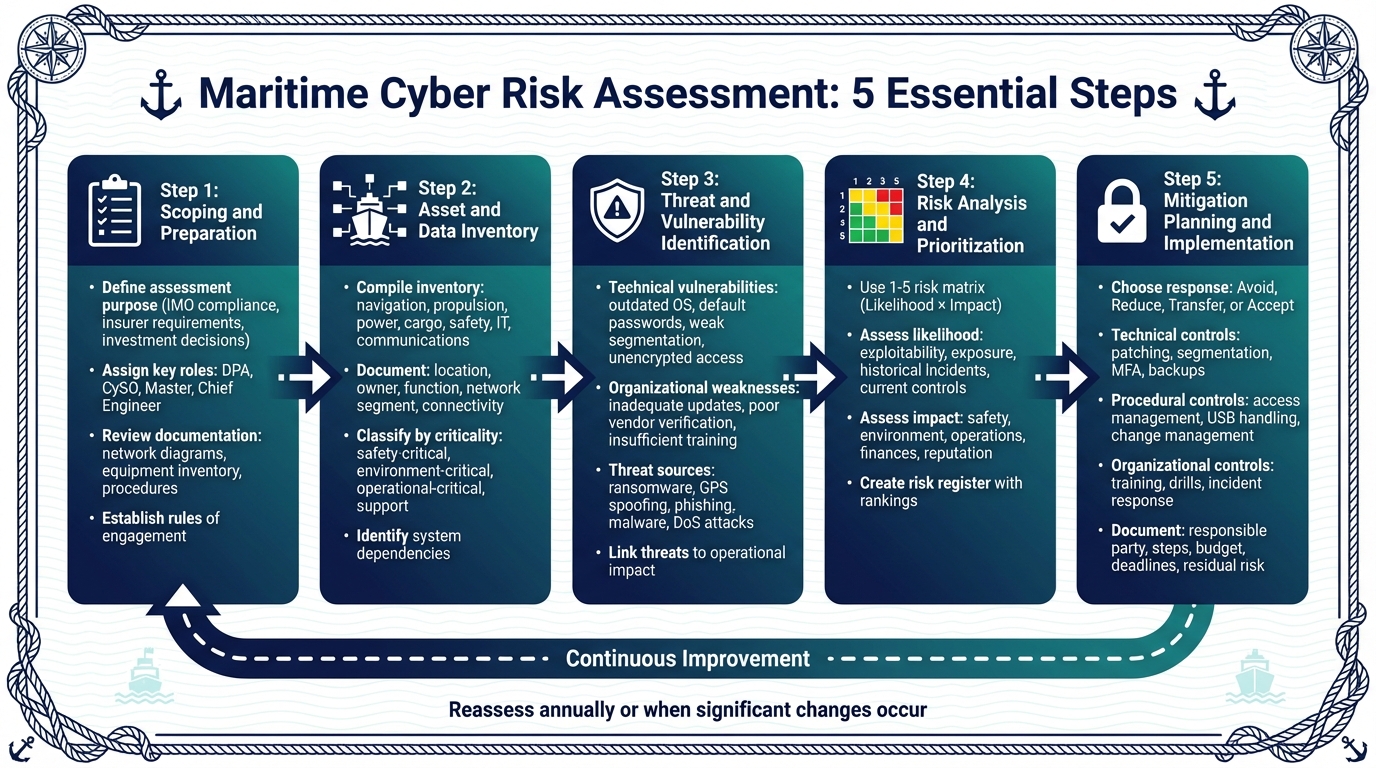
  • Risk Assessment Steps: Define scope, inventory assets, identify vulnerabilities, analyze risks, and plan mitigations.
  • Mitigation Strategies: Use tools like network segmentation, secure remote access, multi-factor authentication, and crew training.
  • Governance and Compliance: Maintain a cyber risk register, conduct regular audits, and ensure fleet-wide consistency.

This guide provides practical steps to identify, prioritize, and reduce cyber risks, ensuring safer and more compliant maritime operations.

Understanding Maritime Cyber Risks

Ship IT and OT Systems Overview

Modern ships rely on two key types of systems: Information Technology (IT) and Operational Technology (OT). IT systems manage data processing, communication, and administrative tasks, while OT systems control and monitor physical processes. These processes include navigation tools like ECDIS, GPS, AIS, and radar, as well as propulsion, steering, power management, cargo handling, and safety equipment .

The challenge arises from the increasing interconnection between these systems. For instance, route planning done on office IT networks can directly feed into navigation displays on the ship’s bridge. Similarly, shore-based teams might monitor machinery performance remotely. According to the International Maritime Cyber Security Organisation (IMCSO), ten critical OT infrastructure categories – including navigation, propulsion, and safety systems – require thorough evaluation. When IT and OT networks share infrastructure or data paths, vulnerabilities in one can cascade into the other. For example, malware originating on an administrative laptop could infiltrate safety-critical systems if proper network segmentation isn’t in place .

Modern ships also connect to external networks through satellite communications, terrestrial links in port, USB drives, remote diagnostic connections, and even crew Wi-Fi. Each of these access points introduces potential risks if not properly secured . The complexity of these systems is compounded by the fact that ships often have dozens of interconnected control systems that must operate smoothly while staying secure. While IT-OT integration improves functionality, it also creates multiple avenues for cyberattacks.

Common Cyber Threats to Ships

Maritime vessels face a range of cyber threats that can disrupt operations or jeopardize safety. One of the most alarming is ransomware, where attackers encrypt critical systems and demand payment to restore them. This could disable essential systems like navigation or propulsion, forcing vessels to halt operations .

GPS spoofing and jamming are particularly dangerous at sea. Attackers can broadcast false GPS signals, leading ships to miscalculate their position and potentially stray into restricted or hazardous waters. Similarly, manipulation of AIS data can create confusion about vessel locations and movements, complicating collision avoidance . Phishing attacks, often targeting crew members and shore staff, aim to steal credentials and gain access to sensitive systems.

Other threats include malware introduced via USB drives or email attachments, denial-of-service attacks that overwhelm shipboard or shore systems, and unauthorized remote access to OT systems. Many vessels still rely on outdated IT and OT systems, which often run on older operating systems that are difficult to patch. Weak access controls, default passwords, poor network segmentation, and limited logging capabilities further exacerbate these vulnerabilities .

The consequences of these vulnerabilities are severe. Cyber incidents can lead to navigation failures, propulsion or steering issues, cargo and ballast system malfunctions, disrupted port schedules, safety system failures, financial losses, environmental harm, and damage to a company’s reputation . Additionally, the involvement of multiple stakeholders – such as shipowners, operators, charterers, port authorities, and vendors – can create accountability gaps, making it unclear who is responsible for cybersecurity.

Regulatory and Compliance Requirements

Given the risks, robust compliance frameworks are critical. The International Maritime Organization (IMO) established Resolution MSC.428(98), which mandates that cyber risks be addressed as part of Safety Management Systems (SMS). Compliance with this requirement has been mandatory since January 1, 2021 .

In the U.S., the Maritime Transportation Security Act (MTSA) of 2002 requires maritime facilities to conduct Facility Security Assessments that include identifying cybersecurity vulnerabilities . The U.S. Coast Guard’s Maritime Cybersecurity Assessment and Annex Guide (MCAAG) provides a structured approach to identifying and mitigating cybersecurity risks, integrating cyber considerations into physical security planning.

Industry organizations like BIMCO, ICS, CLIA, INTERTANKO, and INTERCARGO have developed "Guidelines on Cyber Security Onboard Ships" to help meet IMO requirements. These guidelines cover areas such as risk assessment, network architecture, access control, incident response, and crew training. Additionally, classification societies like DNV and ABS offer their own methodologies for cyber risk management. The IMCSO has recently introduced a standardized cybersecurity assessment methodology that helps stakeholders like insurers and port authorities create consistent risk profiles across vessels.

These frameworks provide vessel operators with tools to navigate a complex compliance environment, where flag states, port authorities, charterers, and insurers may impose additional requirements beyond IMO standards.

Update on maritime cybersecurity threats and mitigation methods

How to Conduct a Cyber Risk Assessment

5-Step Maritime Cyber Risk Assessment Process

5-Step Maritime Cyber Risk Assessment Process

Scoping and Preparation

Start by defining the purpose of your assessment. Are you aiming to meet IMO standards, satisfy insurer requirements, or guide investment decisions? Clarify which vessels, operational phases (like at sea, in port, or in dry dock), and domains (such as navigation, propulsion, cargo handling, passenger services, crew communications, and shore links) will be included in your scope .

Next, assign responsibilities to key personnel. This might include the Designated Person Ashore (DPA), Cybersecurity Officer (CySO), ship’s master, chief engineer, and IT/OT vendors. According to the U.S. Coast Guard’s Maritime Cybersecurity Assessment and Annex Guide (MCAAG), the CySO plays a central role in coordinating the assessment .

Review all relevant documentation – network diagrams, equipment inventories, safety management procedures, class and flag requirements, and past incident reports or audits . Establish clear rules of engagement for the assessment. These should detail what can be tested, testing schedules, data handling protocols, and reporting formats, ensuring minimal operational impact. Following these steps not only makes the process repeatable across a fleet but also helps reduce disruptions . Once prepared, document your assets to create a comprehensive map of your cyber environment.

Asset and Data Inventory

Compile a detailed inventory of all onboard systems, including navigation, propulsion, power, cargo, safety, IT, and crew and passenger communication systems . For each system, note its location, owner, function, network segment, connectivity (including remote access), data it processes, and any backup or redundancy features .

Classify these assets by their criticality – whether they are safety-critical, environment-critical, operational-critical, or support-related. Identify dependencies, such as how an ECDIS (Electronic Chart Display and Information System) relies on GPS and accurate time sources. If passenger and crew communications share infrastructure with operational systems, detail how they are segregated. This could range from strict firewall rules to logical VLANs with varying levels of access control .

Keep this inventory updated as a controlled document, with versioning and periodic reviews as required by maritime cyber guidelines . For example, the CRASH methodology has demonstrated scalability by assessing 24 distinct cyber risks for an Integrated Navigation System with 25 components. With a well-maintained inventory, you can move on to identifying vulnerabilities.

Threat and Vulnerability Identification

Leverage a variety of resources to identify potential threats. These can include historical maritime incidents, vendor advisories, vulnerability databases, and frameworks like MITRE ATT&CK . Look for technical vulnerabilities such as outdated operating systems, default passwords, weak network segmentation, unencrypted remote access, missing patches, shared accounts, and improper USB use on bridge systems .

Don’t overlook organizational and procedural weaknesses, like inadequate update protocols, poor vendor access verification, insufficient crew training, or weak personnel management practices . Tie each identified threat to its potential operational impact, such as loss of propulsion, voyage delays, cargo damage, or service interruptions .

Risk Analysis and Prioritization

Use a 1–5 risk matrix to evaluate and rank risks by their likelihood and impact . Likelihood can be assessed by examining factors like the exploitability of vulnerabilities, exposure to external networks, historical incidents in similar fleets, and the effectiveness of current controls (e.g., patch management, system hardening, and crew training) .

Assess the impact of each risk on safety, the environment, operations, finances, and reputation. Predefined criteria, such as "loss of propulsion", "voyage delays exceeding 24 hours", or "regulatory non-compliance", can help guide this process. Record and rank each risk in a risk register, ensuring that each entry is linked to the relevant assets, threats, and vulnerabilities, along with a clear rationale for its score .

Mitigation Planning and Implementation

Based on the risks identified, create a mitigation plan that aligns with compliance requirements. For each high or medium risk, determine an appropriate course of action: avoid (change processes to eliminate the risk), reduce (implement controls), transfer (e.g., through insurance or contracts), or accept (with documented justification) .

Choose controls that align with maritime cyber best practices. These may include technical measures like patching, network segmentation, multi-factor authentication, secure remote access, and backups; procedural measures like access management, USB/media handling, and change management; and organizational measures like training, drills, and incident response plans .

When planning mitigations, consider the unique constraints of ship operations, such as limited bandwidth, restrictions on modifying OT systems, and crew workload . For each mitigation, document the responsible party, required steps, budget, deadlines, and the residual risk rating .

For communication-related risks – such as segregating passenger and crew services, securing remote access, or managing telehealth traffic – solutions like those offered by NT Maritime can be invaluable. Their services include secure communication networks, traffic segregation, encryption, and access controls, which address vulnerabilities in these areas . Documenting these measures as part of your corrective action plan not only demonstrates risk reduction but also strengthens your vessel’s overall security posture while meeting maritime cybersecurity standards.

Tools and Best Practices for Risk Mitigation

Reference Frameworks for Maritime Cybersecurity

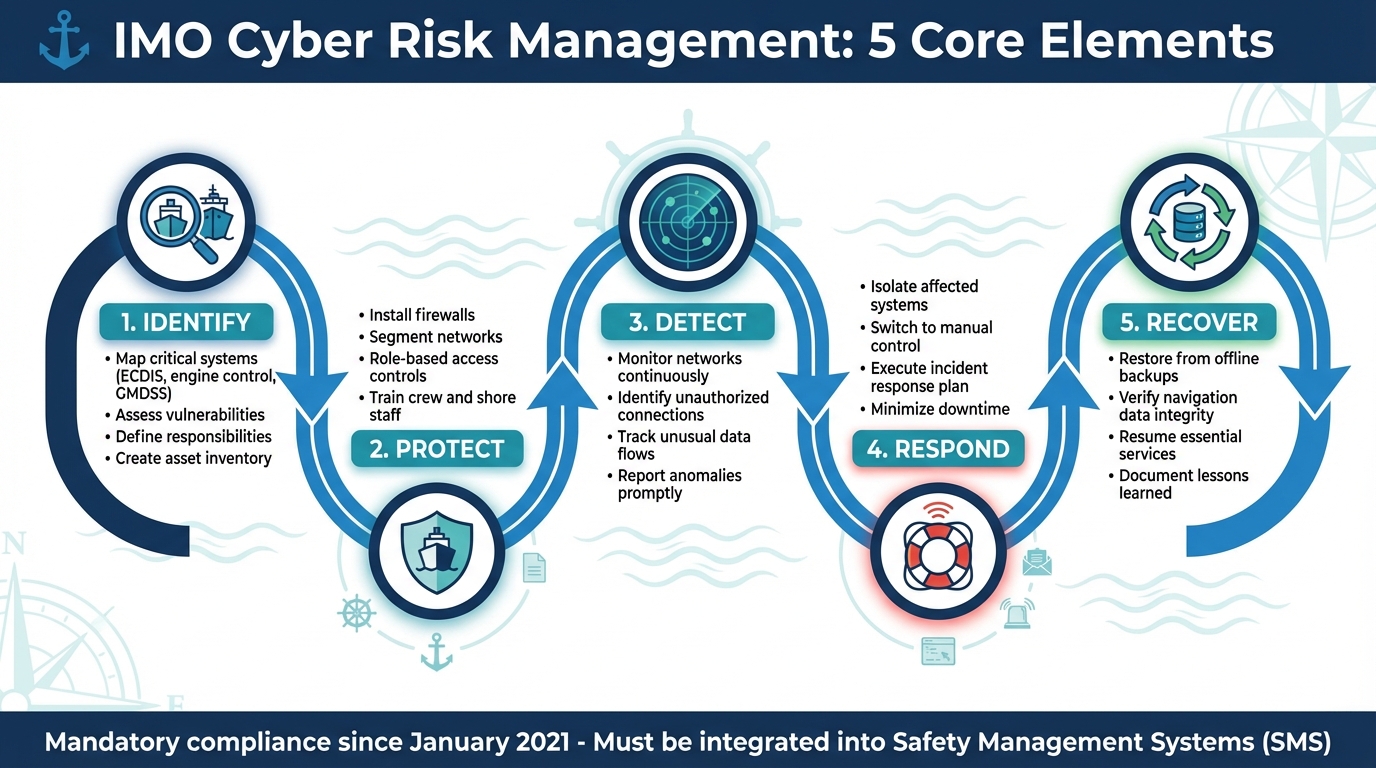
To establish a strong cybersecurity foundation, ship operators should align their programs with recognized frameworks that address both IT and operational technology (OT). The International Maritime Organization (IMO) Guidelines on Maritime Cyber Risk Management (MSC-FAL.1/Circ.3) offer high-level guidance structured around key functions: identify, protect, detect, respond, and recover. Additionally, Resolution MSC.428(98) mandates integrating this guidance into Safety Management Systems under the ISM Code.

The NIST Cybersecurity Framework (CSF) provides a clear structure for organizing existing policies into a cohesive cybersecurity program, which is also applicable in maritime settings. For U.S.-flagged vessels and facilities, the U.S. Coast Guard Maritime Cybersecurity Assessment and Annex Guide (MCAAG) lays out a step-by-step approach for identifying cyber-enabled systems, pinpointing vulnerabilities, and developing remediation plans tailored to Facility Security Assessments and Plans.

Industry-specific resources like the "Cyber Security Onboard Ships" guidelines from ICS and BIMCO translate these broader frameworks into actionable shipboard measures. These include creating asset inventories, monitoring communication links, and conducting regular threat assessments. These frameworks collectively set the stage for implementing the technical and procedural safeguards outlined below.

Technical and Procedural Controls

With a solid framework in place, ship operators can focus on deploying layered technical and procedural defenses. Network segmentation is a must – separating operational/bridge systems, corporate networks, crew zones, and passenger areas using VLANs and firewalls ensures better control and containment. Implement multi-factor authentication (MFA) and assign unique credentials for remote access and administrative functions, steering clear of shared or generic accounts.

For endpoint security, use tools like antivirus software, firewalls, and application whitelisting. Data in transit should always be encrypted, using technologies such as VPNs and TLS. Establish centralized logging and monitoring by collecting logs from critical systems like firewalls, servers, and OT devices. If in-house resources are limited, consider outsourcing to a Security Operations Center (SOC) or managed detection service.

Backup strategies are equally important – maintain offline or hardened backups of critical systems and configurations, and test restoration processes regularly. On the procedural side, conduct cyber awareness training tailored to shipboard roles. This should cover key topics like phishing, proper handling of USB drives, and incident reporting.

Document and enforce access control and change management policies for IT and OT systems. These policies should outline how configuration changes are approved, recorded, and, if necessary, rolled back. Finally, integrate cyber scenarios into emergency drills and incident response plans. Examples include handling navigation data loss, ransomware attacks on business systems, or disruptions to satellite communications.

Secure Communication Platforms

Passenger and crew communication networks can be a vulnerable entry point for cyberattacks if not properly secured. These networks should be logically and physically separated from ship OT and critical IT systems. Routing between these zones must be tightly controlled, with no direct trust relationships. Any necessary data exchange should occur through secure, monitored interfaces.

Maritime communication platforms simplify the management of security controls, logging, and policies for passenger, crew, and operational communications. These platforms should offer encrypted voice, messaging, and video services between ship and shore. They should also support central identity management, enforce strong password policies, and implement role-based access control. Additionally, bandwidth and access policies should prioritize operational communications over high-volume passenger traffic to ensure mission-critical systems remain unaffected.

For instance, NT Maritime provides secure onboard communication solutions tailored for cruise lines and government or military operations. Their services include encrypted app-to-app calling, app-to-ship PBX calls, ship PBX-to-app calls, app-to-off-ship calls, and integrated messaging and video over ship Wi-Fi. These features allow users to securely connect using their own devices, ensuring reliable and real-time communication while protecting against cyber threats.

When specialized services like Telehealth are involved, additional privacy and security measures – such as handling protected health information – must be incorporated into the network design. Collaborating with maritime-specific providers ensures that security controls and support procedures align with the unique risks faced by cruise, government, or military vessels. Securing communication platforms is a critical part of a layered defense strategy, safeguarding not just ship operations but also the broader network ecosystem.

Governance, Compliance, and Continuous Improvement

Documenting and Reporting Cyber Risk Assessments

Creating a formal cyber risk register is a must for staying audit-ready. Each entry in this register should include essential details: the asset, associated threats, vulnerabilities, existing controls, planned mitigation efforts, the responsible party, target dates, and the residual risk level.

It’s important to maintain controlled records at both the ship and company levels. For vessels and facilities regulated in the U.S., a cyber annex should be added to your Safety Management System or Facility/Vessel Security Plan. This annex should align with Coast Guard requirements outlined in the Maritime Cybersecurity Assessment and Annex Guide (MCAAG). The annex should cover key areas such as its scope, roles (e.g., Company Security Officer and Ship Security Officer), an overview of assets, risk assessment summaries, preventive measures, incident response protocols, business continuity strategies, training requirements, and links to related checklists. Since IMO Resolution MSC.428(98) mandates that cyber risks be addressed under the ISM Code and verified during audits starting January 1, 2021, this documentation is no longer optional – it’s a regulatory requirement. This thorough documentation also serves as the foundation for fleet-wide evaluations.

Fleet-Wide Implementation and Oversight

Once assessments are documented, fleet-level oversight ensures consistency across all vessels. By standardizing risk criteria, scoring methods, and asset categories, individual ship assessments become comparable, enabling effective fleet-wide management. Consolidate ship registers into a centralized dashboard to identify systemic issues – like outdated navigation software across multiple vessels – and rank ships by residual risk. This approach helps prioritize budget allocation and technical support.

A cyber governance committee – including representatives from legal, insurance, operations, and IT/OT teams – should meet quarterly to review fleet-wide risks, incidents, and compliance. This ensures cyber risks are treated as critical safety and business concerns, not just technical challenges.

To establish a fleet-wide minimum cyber baseline, implement mandatory measures such as hardening, logging, backups, and access controls. Verify compliance through internal audits, third-party assessments, and technical checks like vulnerability scans and configuration reviews. If you’re using specialized maritime IT and communication providers like NT Maritime for secure onboard networks and high-speed connectivity, include their performance and security practices in your risk evaluations. This should cover service-level agreements for incident response and updates to communication platforms.

Periodic Reassessment and Improvement

Regular reassessments are key to keeping up with changing threats and regulations. Maritime guidelines suggest reviewing cyber risk assessments at least once a year or whenever significant changes occur, such as system upgrades, network modifications, regulatory updates, or major cyber incidents. For U.S.-regulated vessels and facilities, updates to Coast Guard guidance, MTSA requirements, or critical Navigation and Vessel Inspection Circulars (NVICs) should also trigger a review of your cyber annex and related procedures.

Track key metrics like unresolved critical vulnerabilities, average time to remediation, crew training completion rates, and the frequency of backup and recovery tests. These metrics should be reviewed by senior management to showcase ongoing improvements. Establish a structured lessons-learned process to capture insights from incidents, near-misses, drills, and external threat reports. Use these insights to update policies, the cyber annex, and training materials.

Technical monitoring is also essential. This includes log collection and review for critical systems, intrusion detection for key networks, regular vulnerability scans, and periodic penetration testing – all tailored to the unique constraints of maritime operations. Together, these efforts ensure that ship IT/OT cyber risk management remains aligned with evolving threats and regulatory demands.

Conclusion

Cyber risk assessment isn’t just a good practice – it’s a necessity for running safe, compliant, and efficient ship operations. With the International Maritime Organization (IMO) requiring cyber risk management under the ISM Code and the U.S. Coast Guard enforcing minimum cybersecurity standards, these assessments have become mandatory. Considering that over 90% of global trade relies on shipping, even a single cyber incident can send shockwaves through international supply chains.

This guide provides a clear, step-by-step approach: define the scope, inventory assets, pinpoint vulnerabilities, assess risks, and create mitigation plans to allocate resources wisely. Whether you choose to adopt frameworks like IMCSO’s Cyber Risk Registry, CRASH, or methodologies from classification societies, the secret to success lies in consistency. Using standardized risk criteria, maintaining well-documented risk registers, and assigning clear ownership ensures your efforts align with a broader cyber resilience strategy.

Particular focus should be placed on communication and network security. Ship-to-shore connectivity, remote access systems, crew Wi-Fi, and passenger services are critical for operations but also present tempting targets for cyberattacks. Solutions like NT Maritime’s encrypted networks, role-based access controls, and integrated communication tools are designed to keep these systems secure while supporting mission-critical operations. These measures not only safeguard against threats but also ensure the smooth functioning of essential maritime activities.

FAQs

What’s the difference between IT and OT systems on ships?

IT systems aboard ships are built to handle tasks like communication, entertainment, and administrative operations for both passengers and crew. Their primary focus is on maintaining connectivity, managing data, and improving the overall user experience.

On the other hand, OT systems are dedicated to the ship’s critical operations, such as navigation, propulsion, safety mechanisms, and cargo management. These systems emphasize real-time control and safety because they directly impact the physical processes and essential functions that keep the ship running smoothly.

The main difference between the two lies in their roles: IT systems manage data and communication needs, while OT systems are tasked with ensuring the ship’s core operations run safely and efficiently.

What steps can ships take to protect against GPS spoofing risks?

Ships can tackle GPS spoofing risks by adopting several protective measures. Using multi-layered authentication helps ensure the integrity of GPS signals, while anti-spoofing algorithms can identify and block questionable activities. To further strengthen security, GPS data should be cross-checked with backup navigation systems such as inertial navigation. Keeping an eye out for unusual signal patterns is also key. Additionally, providing regular training for crew members on recognizing and responding to spoofing attempts plays a crucial role in maintaining safe and secure operations.

What are the key steps to comply with IMO Resolution MSC.428(98) for ship IT systems?

To meet the requirements of IMO Resolution MSC.428(98), start by performing a detailed cyber risk assessment to pinpoint any weak spots in your ship’s IT systems. Use the results to put in place strong cybersecurity measures like firewalls, secure access controls, and encryption protocols.

It’s also crucial to have a well-defined incident response plan in place so your team can handle cyber threats swiftly and efficiently. Keep all systems up to date with regular patches to guard against new vulnerabilities. On top of that, focus on using secure communication protocols for critical IT systems to protect sensitive data and ensure smooth operations.

By following these steps, you’ll strengthen your maritime IT systems’ security and stay aligned with the resolution’s standards for safe operations at sea.

Maritime IT Security Checklist for Ships

Modern ships are no longer just vessels – they’re complex digital environments vulnerable to cyber threats. From navigation systems to crew communications, weak cybersecurity can lead to serious risks like navigation errors, ransomware attacks, and compromised cargo systems. Here’s how you can strengthen your ship’s IT defenses:

  • Inventory and Assess Risks: Catalog all IT and OT systems, document vulnerabilities, and prioritize critical systems like navigation and engine controls.
  • Segment Networks: Separate IT from OT systems and isolate crew and passenger networks to limit breaches.
  • Access Controls: Use multi-factor authentication, role-based permissions, and monitor access attempts to secure critical systems.
  • System Hardening: Disable unnecessary services, update passwords, and restrict USB access to minimize vulnerabilities.
  • Patch Management: Regularly update software and test patches to address known weaknesses.
  • Encryption and Secure Communications: Protect data with encryption and use secure protocols like VPNs for ship-to-shore communication.
  • Monitoring and Incident Response: Implement tools to detect anomalies, maintain logs, and establish clear response plans for cyber incidents.
  • Crew Training: Educate crew on phishing, secure passwords, and cyber hygiene to reduce human error.

Webinar: Onboard cybersecurity – Key insights and best practices

Asset Inventory and Risk Assessment

To effectively protect your ship’s digital systems, it’s essential to start with a clear asset inventory and a thorough risk assessment. By mapping out every connected device, you can take targeted steps to strengthen security and guard against cyber threats.

Modern ships rely on interconnected systems, which unfortunately makes them vulnerable. Everything from bridge navigation tools to internet-enabled appliances in the galley can serve as potential entry points for cyberattacks.

Identifying and Documenting IT and OT Assets

Begin by conducting a detailed walkthrough to catalog all IT and OT (Operational Technology) assets aboard the vessel. This inventory should include IT systems like computers, servers, and communication devices, as well as OT systems such as engine controls and cargo-handling equipment.

For each system, document key details: the manufacturer, model, software version, network connections, and its primary function. Pay close attention to devices that bridge IT and OT environments since these hybrid systems often act as weak points, enabling attackers to move from administrative systems to critical operational networks.

Don’t overlook any device, no matter how small. Creating a visual network diagram can be particularly helpful. This diagram should map out how systems are interconnected, including external connections like satellite communications, port facility networks, and shore-based management systems. Such a visual representation can reveal vulnerabilities in your network’s architecture and highlight areas that require immediate attention.

This comprehensive mapping lays the groundwork for a focused and effective risk assessment.

Risk Assessment Procedures

With your asset inventory complete, the next step is to evaluate the vulnerabilities of each system and the impact a breach could have. The IMO Guidelines on Maritime Cyber Risk Management (MSC-FAL.1-Circ.3-Rev.3) offer a structured approach for tackling this process. The guidelines recommend identifying, analyzing, assessing, and addressing risks through mitigation, avoidance, transfer, or acceptance.

Assess each system’s likelihood of being targeted and the potential consequences of a successful attack. For example, a GPS system might be a frequent target for spoofing attempts, and if compromised, could result in navigation errors or even collisions. On the other hand, a crew entertainment system might be easier to breach but poses minimal operational risk. Focus on systems that are critical to vessel safety, cargo security, or environmental protection, such as engine controls, ballast systems, and fire safety equipment.

To guide your risk assessment, use established frameworks. The NIST Framework for Improving Critical Infrastructure Cybersecurity provides practical guidelines tailored to the maritime sector. Similarly, the MITRE ATT&CK Framework can help craft a detailed and customized risk management strategy.

Document your findings in a risk register. This register should outline vulnerabilities, potential impacts, and mitigation strategies for each identified risk. Not only does this serve as a roadmap for implementing security measures, but it also helps justify cybersecurity investments to decision-makers. Risk mitigation should be an ongoing process, supported by best practices, detailed evaluations, and continuous monitoring.

Regularly review and update your asset inventory and risk assessment – at least once a year or whenever new equipment is installed or existing systems are modified. With technology evolving so rapidly, yesterday’s assessment may already be outdated. Keeping these documents current ensures that your ship’s cybersecurity defenses remain aligned with the latest threats and vulnerabilities. These efforts also pave the way for implementing advanced security measures like network segmentation and system hardening.

Network Segmentation and Access Controls

After identifying your ship’s digital assets and pinpointing their vulnerabilities, the next step is creating barriers to limit breaches and ensuring only authorized personnel can access critical systems. Network segmentation and access controls are key strategies that work together to mitigate risks and prevent unauthorized access.

Think of network segmentation like the bulkheads on a ship: just as bulkheads contain flooding, segmented networks limit the spread of cyber breaches. This setup also lays the groundwork for advanced measures like system hardening and strict access management.

Setting Up Network Segmentation

To implement effective network segmentation, start by dividing your ship’s systems into distinct zones based on their purpose and security needs. A critical step is separating Operational Technology (OT) systems from Information Technology (IT) networks.

For example, navigation systems, engine controls, cargo management, crew networks, and passenger services should each operate within their own isolated segments. Navigation equipment like GPS, radar, and electronic charts should have a dedicated segment, while engine controls, ballast systems, and fire safety mechanisms each require their own zones.

Passenger and crew networks must also remain isolated from operational systems. Passenger Wi-Fi, for instance, should be completely separate from any critical ship functions. Crew networks can be segmented further, granting access only to systems relevant to specific roles.

When setting up these segments, use dedicated cables and switches for critical systems whenever possible. If that’s not feasible, implement VLANs with strict firewall rules. Firewalls should block all inter-segment traffic by default, allowing only essential communications. For instance, the bridge may need access to engine status updates, but there’s no reason for passenger entertainment systems to communicate with engine controls.

Shore-to-ship communications demand special care. Establish a demilitarized zone (DMZ) for systems interacting with shore-based operations. This buffer zone protects internal networks from external threats.

Lastly, document your network architecture thoroughly. Clearly outline which systems can communicate, why those connections exist, and how they’re secured. This documentation will prove invaluable for troubleshooting and security audits.

Implementing Access Controls

Once your network is segmented, the next layer of defense is access control – restricting who can access specific zones and systems. This step is essential for minimizing exposure and ensuring secure operations.

Start by deploying multi-factor authentication (MFA) for all critical systems. MFA requires users to verify their identity using at least two factors: something they know (like a password), something they have (like a token or mobile device), or something they are (like a fingerprint or facial recognition).

"Restricting system access solely to shipping parties and deploying strong authentication methods, like two-factor authentication, can effectively prevent cybersecurity threats." – Virtuemarine

Use role-based access control (RBAC) to assign permissions based on job functions. For example, a deck officer might need access to navigation systems, but not to engineering controls, while an engineer would only require access to systems relevant to their role. Following the principle of least privilege, grant each crew member only the access they need to perform their duties.

"Every employee should have the minimum necessary access to systems and information required to do their job." – Tideworks

Physical security is equally important. Lock server rooms, network closets, and terminals, and maintain access logs to track unauthorized entry attempts. Administrative privileges deserve special attention – restrict their use and monitor them closely.

"Special attention must be paid to privileged access and to avoiding overusing it, as very often attacks are aimed towards taking over an administrator’s role." – EY Poland

When granting third-party access to vendors, port authorities, or service providers, create temporary accounts with limited permissions. Avoid sharing permanent credentials, and monitor external users’ activities. Set automatic session timeouts to log users out after inactivity, and for highly sensitive systems, require re-authentication for critical actions even during active sessions.

Finally, monitor and log all access attempts, both successful and failed. Unusual patterns – like repeated login failures or access attempts from unexpected locations – can signal potential security threats. This is especially important given that fewer than half of maritime professionals believe their organizations are adequately addressing cyber risks.

Conduct regular access reviews, at least quarterly, to ensure permissions remain appropriate as crew roles change. Remove access promptly for crew members who leave the vessel or no longer require it. Staying proactive in managing access is critical to maintaining a secure operational environment.

System Hardening and Patch Management

Once your network is segmented and access controls are in place, the next step is to secure your systems and keep them updated. System hardening involves configuring your onboard IT and OT systems to minimize vulnerabilities, while patch management ensures any weaknesses are addressed before attackers can exploit them.

"To effectively mitigate against attacks, ship crews should implement measures as part of a comprehensive Vessel Hardening Plan." – Maritime Mutual

These measures build on your segmented network defenses, adding another layer of protection to onboard systems. The goal is to ensure every system is prepared to withstand potential cyber threats.

System Hardening Steps

System hardening is all about turning default system settings into secure configurations that are less vulnerable to attacks. Here’s how to do it:

  • Disable unnecessary services: Many systems come with default services that aren’t needed for everyday operations but can serve as entry points for attackers. For example, if a navigation workstation doesn’t require file sharing, disable that feature. The same goes for unused remote desktop services, web servers, or database services.
  • Restrict USB and removable media access: USB devices are a common way for malware to spread on ships. Block unauthorized USB devices, scan all removable media before use, or even disable USB ports entirely on critical systems like engine control workstations.
  • Configure individual firewalls: Don’t rely solely on network-level firewalls. Each system – whether a workstation or server – should have its own firewall configured to block unnecessary connections. For instance, a cargo management system should only communicate with specific port systems and internal databases.
  • Replace default credentials and disable unused accounts: Change all default usernames and passwords immediately, including for system services and administrative interfaces. Use strong, unique passwords and avoid terms related to maritime operations that attackers might guess.
  • Standardize security settings: Create configuration templates for all systems to ensure consistent protection. This makes it easier to maintain security and quickly spot any system that deviates from the standard.
  • Enable automatic screen locks and session timeouts: Set systems to lock after 10–15 minutes of inactivity, requiring a password to resume. This prevents unauthorized access when crew members step away from their stations.

Patch Management Procedures

While system hardening reduces vulnerabilities, keeping systems updated ensures that known weaknesses are addressed. Regular patching is one of the most effective ways to prevent cyberattacks, as many breaches exploit vulnerabilities that patches could have fixed. However, the maritime environment adds unique challenges, like limited connectivity and operational constraints.

  • Schedule regular updates: Plan updates around your ship’s operational needs. Major patches can be applied during port stays when internet connectivity is stable, and downtime is less disruptive. For critical security fixes, have a process in place for emergency updates, even at sea.
  • Prioritize patches by risk: Focus on security updates for internet-facing systems and critical operational technology first. Less urgent updates, like feature enhancements, can wait for scheduled maintenance windows.
  • Test patches before deployment: Use a controlled environment to test patches and ensure they won’t interfere with essential operations or specialized maritime software. A test system that mirrors your configurations is ideal for this.
  • Maintain a software inventory: Keep a detailed list of all software and firmware on your ship, from operating systems to specialized maritime applications. This helps you track what needs updating.
  • Work with equipment vendors: Many maritime systems, like navigation or engine management, require vendor-specific updates. Stay in regular contact with vendors to ensure you receive timely security patches.
  • Document patching activities: Keep records of what updates were applied, when, and any issues encountered. This is essential for troubleshooting and audit compliance.
  • Plan for offline patch deployment: Download updates while in port and distribute them locally using removable media or a local network. Make sure to scan all distribution media for malware before use.
  • Address older systems: Some maritime equipment runs on outdated operating systems or proprietary software that isn’t frequently updated. Work with vendors to understand their update cycles and implement additional security measures for these systems.
  • Prepare rollback procedures: Sometimes, patches can disrupt critical operations. Have a plan in place to revert updates quickly if needed, and test these rollback procedures during non-critical periods.

Encryption and Secure Communications

Once you’ve established hardened systems and segmented networks, the next step is safeguarding the data flowing through your maritime systems. Encryption ensures sensitive information is accessible only to authorized users, while secure communication protocols protect data as it travels – whether between your ship and the shore or within onboard networks.

The US Coast Guard’s final rule on "Cybersecurity in the Marine Transportation System" highlights the importance of deploying encryption to maintain the confidentiality of sensitive data and safeguard IT and OT traffic integrity. From passenger credit card details to crew records and operational data, ships handle a wealth of information that cybercriminals actively target. Encryption not only protects data during transmission but also works hand-in-hand with secure protocols to strengthen ship-to-shore communications.

Data Encryption and Secure Protocols

The backbone of secure maritime communications lies in selecting and implementing reliable encryption protocols. Secure options like SSL/TLS and VPNs ensure that any data – whether it’s updating cargo manifests or facilitating crew emails – is encrypted and protected. Virtual Private Networks, in particular, create encrypted tunnels for ship-to-shore communications. Even if satellite transmissions are intercepted, the data remains unreadable. Additional defenses, such as firewalls and intrusion detection systems, provide further security layers.

Protecting Passenger and Crew Data

Encryption protocols aren’t just for data in transit – they also play a vital role in safeguarding sensitive passenger and crew information. For instance, passenger data, including payment details for onboard purchases or internet usage, should be encrypted both during transmission and when stored. Payment information must use industry-standard encryption before being sent to payment processors, and databases storing this data should restrict access to essential personnel only.

Crew communications also require strong protections. Secure platforms that encrypt voice calls, text messages, and file transfers are crucial. NT Maritime‘s secure network solutions exemplify this, offering encrypted communication tools to maintain crew privacy and operational security.

System logs, which often contain sensitive information, should also be encrypted and stored securely. Access to these logs must be limited to privileged users. Applying the principle of least privilege ensures that each crew member can only access the information necessary for their role. Additionally, user accounts should be promptly deactivated or revoked when crew members finish their contracts or change positions. For critical IT and OT systems, separate credentials should be maintained to prevent a single compromised account from exposing multiple systems.

For vessels working with government or military personnel, stricter encryption standards may be required to meet federal compliance and secure higher security classifications.

Regular Security Assessments

To maintain robust encryption and data protection measures, regular security assessments are essential. Vulnerability testing, including penetration testing, can help identify and address weak points. These assessments should be scheduled after major system updates or when introducing new passenger services that handle sensitive information. By staying proactive, you can ensure your encryption strategies remain effective against evolving threats.

Monitoring, Logging, and Incident Response

Once your encryption and secure communication systems are in place, the next step is keeping a close eye on your ship’s IT environment. Continuous monitoring and effective logging are key to spotting potential threats before they escalate into major problems. Without this oversight, even the most secure systems can fall victim to undetected breaches.

Maritime vessels face unique challenges when it comes to monitoring. Intermittent connectivity and limited bandwidth make real-time threat detection tricky. To address this, ships often store logs locally and sync them with central systems when a connection is available. This makes having strong local incident response capabilities even more important.

Centralized Monitoring and Logging

A centralized monitoring system is essential for tracking IT and OT (Operational Technology) activities, even in the middle of the ocean. Security Information and Event Management (SIEM) tools tailored for maritime use can collect logs from key systems like navigation equipment, communication tools, passenger Wi-Fi, and crew devices.

Your monitoring approach should go beyond simple rule-based alerts. Focus on anomaly detection – unusual patterns in network traffic, unexpected access attempts, or abnormal data transfers are often the first signs of trouble. For instance, if a crew member’s account suddenly accesses navigation systems outside their scope of work, this should raise immediate red flags.

Log retention is another critical aspect, especially in maritime settings where investigations may span multiple voyages. Store key security logs for at least 90 days locally, and sync them to shore-based systems for long-term storage when possible. Important logs include user authentication attempts, system configuration changes, network activity summaries, and alerts from security tools.

Real-time monitoring should prioritize high-impact systems like navigation controls, engine management, and safety equipment. Payment systems and crew communication platforms also need close attention due to the sensitive information they handle.

To strengthen your defenses, consider network traffic analysis tools. These tools establish a baseline for your ship’s normal network behavior and alert you to deviations – whether it’s malware, unauthorized access, or data leaks. This proactive approach ensures you’re not just reacting to known threats but also catching unknown ones.

These measures provide a solid base for an effective incident response plan.

Incident Response Planning

With monitoring in place, the next step is preparing for swift action when a security event occurs. A well-thought-out incident response plan ensures your crew can act quickly, even if expert support from shore is hours away. The plan must address the unique constraints of maritime operations, such as limited bandwidth, communication blackouts, and the need to maintain essential ship functions during an incident.

The first phase of incident response is detection and classification. Define criteria to distinguish between routine system issues and actual security incidents. For example, a failed login attempt might require minimal action, whereas a suspected malware infection demands immediate attention.

Containment procedures are critical but must be handled carefully to avoid compromising vessel safety. Unlike land-based systems, ship systems are often interconnected in ways that directly impact operations. Your plan should outline which systems can be safely isolated and which require alternative containment strategies, such as heightened monitoring or restricted access.

Communication protocols during an incident are especially important in maritime environments. Establish clear procedures for contacting your shore-based security team, including backup methods like satellite phones in case internet connectivity is lost. Assign specific crew members to handle external communications to prevent confusion during high-pressure situations.

Recovery procedures should focus on restoring key systems in order of priority. Navigation and safety systems come first, followed by communication tools and passenger services. Document recovery steps in detail so that any crew member can follow them if expert help isn’t immediately available.

Post-incident review is more complicated at sea, as evidence must often be preserved across multiple time zones and jurisdictions. Create clear procedures for securing digital evidence, documenting incident timelines, and working with maritime authorities when regulatory compliance is involved.

Your incident response team should include both technical and operational staff. The bridge crew needs to know how security issues might affect navigation, while engineers should understand how cyber events could impact propulsion or power systems. Regular tabletop exercises can help everyone stay prepared and confident in their roles.

Finally, make sure all incident response procedures are documented in offline formats. This ensures they remain accessible even if your ship’s critical systems are compromised. Having a physical or offline copy of the plan can make all the difference in a crisis.

Crew Training and Security Awareness

When it comes to cybersecurity, the crew’s vigilance is the first line of defense. A single click on a phishing email or a poorly chosen password can compromise critical onboard IT systems. With frequent crew rotations and varying levels of technical knowledge, having a well-structured and targeted training program is not just helpful – it’s essential. While technical measures like network segmentation and system hardening are vital, they work best when paired with a crew that understands and actively supports cybersecurity efforts.

Maritime operations come with unique challenges. A cyberattack could disrupt navigation systems or engine controls, making a well-prepared crew the cornerstone of safety and operational continuity.

Training Program Development

Building an effective cybersecurity training program starts with recognizing the different roles onboard. Bridge officers, engine room staff, and hospitality crew each interact with distinct systems and face unique cyber risks. Tailoring the training to these roles ensures relevance and effectiveness. For instance, phishing prevention should be a top priority, as it remains one of the most common threats in maritime operations.

Key training elements include teaching the crew how to create strong, unique passwords and secure any personal devices connected to ship networks. For those handling sensitive passenger or operational data, clear guidelines on data management are crucial. This includes defining sensitive information, explaining secure storage practices, and detailing proper disposal methods for both digital and physical records.

Research from USENIX SOUPS highlights that phishing detection skills can decline within six months, emphasizing the need for regular training refreshers every four months.

"Annual cyber awareness training is critical to inform personnel of cyber risks and how to spot common adversary tactics, such as suspicious email addresses or links designed to trick them into giving attackers network access."

  • Lauryn Williams, Deputy Director and Senior Fellow in the Strategic Technologies Program at the Center for Strategic and International Studies

To cater to different learning preferences and schedules, use a mix of training methods. Self-paced video modules, discussions during shift briefings, and security tips in crew newsletters can all reinforce important concepts. Hands-on exercises, like simulated phishing tests, give crew members practical experience in identifying suspicious communications without real-world consequences.

Proper documentation is another critical component, particularly for regulatory compliance. Under 33 CFR 101.650(d), training records must explicitly list the topics covered. Cybersecurity training can also be integrated into existing Vessel Security Plans (VSP) or Facility Security Plans (FSP), making it a seamless part of the overall security framework.

Once the foundational training is complete, consistent awareness efforts are needed to keep these skills sharp.

Maintaining Security Awareness

Initial training is just the beginning. To stay ahead of evolving cyber threats, crews need continuous reinforcement. Regular updates on new attack methods and periodic refresher courses – ideally every four months – help keep cybersecurity knowledge fresh without overwhelming the team.

Tabletop exercises tailored to maritime scenarios are particularly effective. For example, teams can practice responding to a malware infection while ensuring navigation remains unaffected or managing a suspected data breach during port operations. Mixing delivery methods – such as interactive workshops combined with online modules – can also help maintain engagement and ensure the training sticks.

Maritime Cybersecurity Standards Compliance

Navigating the maze of maritime cybersecurity regulations means tackling overlapping frameworks with clear, actionable strategies. As cyber threats grow more sophisticated, regulatory bodies have rolled out standards covering everything from risk assessments to incident reporting. The real challenge lies in not just understanding these rules but also applying them effectively without disrupting operations.

The maritime sector operates in a distinct regulatory environment where international standards overlap with national laws. Ships crossing international waters must comply with global frameworks while also meeting the specific requirements of flag states and port authorities. This dual responsibility demands precise planning and meticulous record-keeping, which align with the technical controls discussed earlier.

Key Standards and Guidelines

Several key standards shape cybersecurity practices in the maritime industry.

The International Maritime Organization (IMO) sets the foundation with its cybersecurity resolution, which integrates cyber risk management into Safety Management Systems. The U.S. Coast Guard builds on this, offering guidance to help operators translate these principles into practical actions, focusing on embedding cybersecurity into existing safety protocols. The NIST Cybersecurity Framework, with its five core functions – Identify, Protect, Detect, Respond, and Recover – serves as a flexible tool for maritime cybersecurity, aiding in asset management, threat monitoring, and response planning.

Other important guidelines include ISO/IEC 27001 and the EU’s Network and Information Systems Directive. These standards provide a unified approach to bolstering cyber resilience onboard and establish protocols for timely incident reporting.

Documentation and Audits

Effective compliance extends beyond adopting frameworks – it hinges on robust documentation and regular audits.

Keeping detailed, up-to-date records is crucial for proving compliance, supporting insurance claims, and demonstrating due diligence. This includes maintaining updated risk assessments, policy documents, and training records. Policies should clearly define cybersecurity responsibilities for both crew members and shore-based staff, evolving as technology and threats change. Additionally, maintaining logs of cybersecurity incidents – covering detection methods, response actions, and lessons learned – is vital for meeting reporting requirements.

Regular audits are another cornerstone of compliance. These audits assess both technical measures and procedural adherence, identifying weaknesses before they become major problems. Cybersecurity is also gaining attention during Port State Control inspections, so operators need to prepare standardized documentation packages for easy access during reviews.

Taking a proactive approach to documentation – such as scheduling periodic reviews – helps keep records accurate and up to date. This minimizes compliance risks, reduces the chances of operational disruptions, and safeguards against regulatory penalties.

Conclusion

Building a solid maritime IT security framework is essential for safeguarding vital vessel operations while keeping up with ever-changing regulatory demands. With modern ship systems so deeply interconnected, even a single vulnerability can lead to operational chaos, financial setbacks, and potential regulatory fines.

A well-structured checklist simplifies cybersecurity tasks into clear, actionable steps. It brings together critical elements – from managing assets to responding to incidents – into a unified strategy. These steps lay the foundation for a dynamic and adaptable security framework that can handle the ever-evolving landscape of cyber threats.

Key measures like encryption and secure communication ensure data remains intact, while monitoring and logging systems help detect threats quickly. On top of that, crew training addresses the human factor – often the weakest link – by making sure everyone on board understands their role in maintaining security.

As regulations grow more detailed, such as the IMO’s cybersecurity resolution and the NIST framework, vessels that follow a checklist approach are better equipped to adapt without scrambling to meet last-minute demands. This proactive strategy not only ensures compliance but also streamlines operations.

When cybersecurity becomes an integral part of daily routines, it doesn’t just meet regulatory needs – it boosts efficiency. Automated systems lighten the crew’s workload, and clear response plans minimize downtime when issues arise. The result? A smoother, more secure operation.

Investing in maritime IT security pays off in numerous ways. It ensures operational continuity, reduces regulatory headaches, and can even lower insurance costs. Most importantly, it protects what matters most: the safety of the crew, the cargo, and the marine environment. By integrating these steps into everyday practices, you’ll be setting the stage for secure and uninterrupted vessel operations.

FAQs

What are the biggest cybersecurity risks for ships today, and how can they be prevented?

Modern ships are increasingly vulnerable to a range of cybersecurity threats, including AI-driven attacks, ransomware, malware, cyber espionage, and GNSS signal interference. These threats don’t just stop at IT systems – they can also compromise operational systems, putting navigation, communication, and onboard processes at risk.

To tackle these challenges, ships need to implement strong safeguards. This includes enforcing strict access controls, deploying firewalls and encryption tools, and performing regular security audits. Following established maritime cybersecurity standards, such as those from the U.S. Coast Guard and IMO, is also essential. Beyond compliance, taking proactive steps like incident reporting, planning for resilience, and providing ongoing crew training can help address emerging threats and maintain security across all operations at sea.

What is network segmentation, and how does it improve cybersecurity for ships?

Network segmentation involves breaking a ship’s network into smaller, isolated sections to strengthen cybersecurity defenses. The idea is simple: by keeping critical systems – like navigation and operational networks – separate from less secure ones, such as crew or guest Wi-Fi, you limit the spread of potential cyber threats.

To get started, focus on segmenting networks that handle less sensitive data first. Tools like firewalls, VLANs (Virtual Local Area Networks), or software-defined networking (SDN) can help create these distinct sections. Pair these tools with strict access controls to manage who can interact with each segment. This layered approach not only reduces vulnerabilities but also enhances threat detection. Plus, it aligns with maritime cybersecurity standards, helping to ensure a safer and more secure environment for ship operations.

Why is crew training essential for maritime IT security, and what should it cover?

Crew training plays a vital role in maritime IT security by preparing crew members to spot and handle cyber threats effectively. This preparation helps minimize the chances of operational disruptions, financial setbacks, and harm to the ship’s reputation.

A strong training program should emphasize cybersecurity awareness, identifying cyber risks specific to onboard systems, understanding security protocols, and adopting safe digital practices. Regular updates and assessments are crucial to keeping the crew ready to tackle new and emerging threats. Creating a mindset of security awareness among crew members is essential for safeguarding maritime operations against cyber risks.