
Ultimate Guide to Maritime Emergency Voice Systems

Reliable communication saves lives at sea. Maritime emergency voice systems ensure ships can send distress signals, coordinate rescues, and manage crises effectively. These systems include VHF and HF radios, satellite communication tools, sound-powered phones, and public address systems, all designed to function even during power outages. They comply with strict global safety standards like SOLAS, ensuring redundancy and independent power sources.

Key points to know:

  • VHF/HF radios: Short and long-range communication tools with distress alert features.
  • Satellite systems: Global coverage for remote areas.
  • Sound-powered phones: Operate without electricity for emergencies.
  • Regulations: SOLAS, U.S. Coast Guard, and FCC ensure system reliability.
  • Modern advancements: Integrated platforms now combine voice, video, and telehealth for faster response.

These systems are critical for handling fires, medical emergencies, security threats, and more. Regular testing, crew training, and proper maintenance ensure they work when needed most. Investing in these tools means better coordination, faster rescue efforts, and safer outcomes during maritime emergencies.

Core Technologies in Maritime Emergency Voice Systems

VHF and HF Radios

VHF radios, or Very High Frequency radios, are a cornerstone of short-range maritime emergency communication. They typically cover distances of 5–20 miles, depending on factors like antenna height and environmental conditions. Channel 16 (156.800 MHz) is the international frequency for distress, safety, and general calling, and it’s continuously monitored by the U.S. Coast Guard. For longer distances, HF (High Frequency) radios step in, capable of transmitting over hundreds or even thousands of miles – making them crucial for open ocean operations. Both VHF and HF radios are equipped with Digital Selective Calling (DSC), a feature that automates distress alerts by transmitting vessel identification and GPS coordinates, significantly cutting down response times.

The U.S. Coast Guard handles over 20,000 distress calls annually through these systems. However, only one HF voice distress frequency (4125 kHz) is actively monitored within the continental U.S., with additional coverage in Alaska and Guam. These radio systems form the backbone of maritime communication, setting the stage for other advanced tools.

Satellite Communication Systems

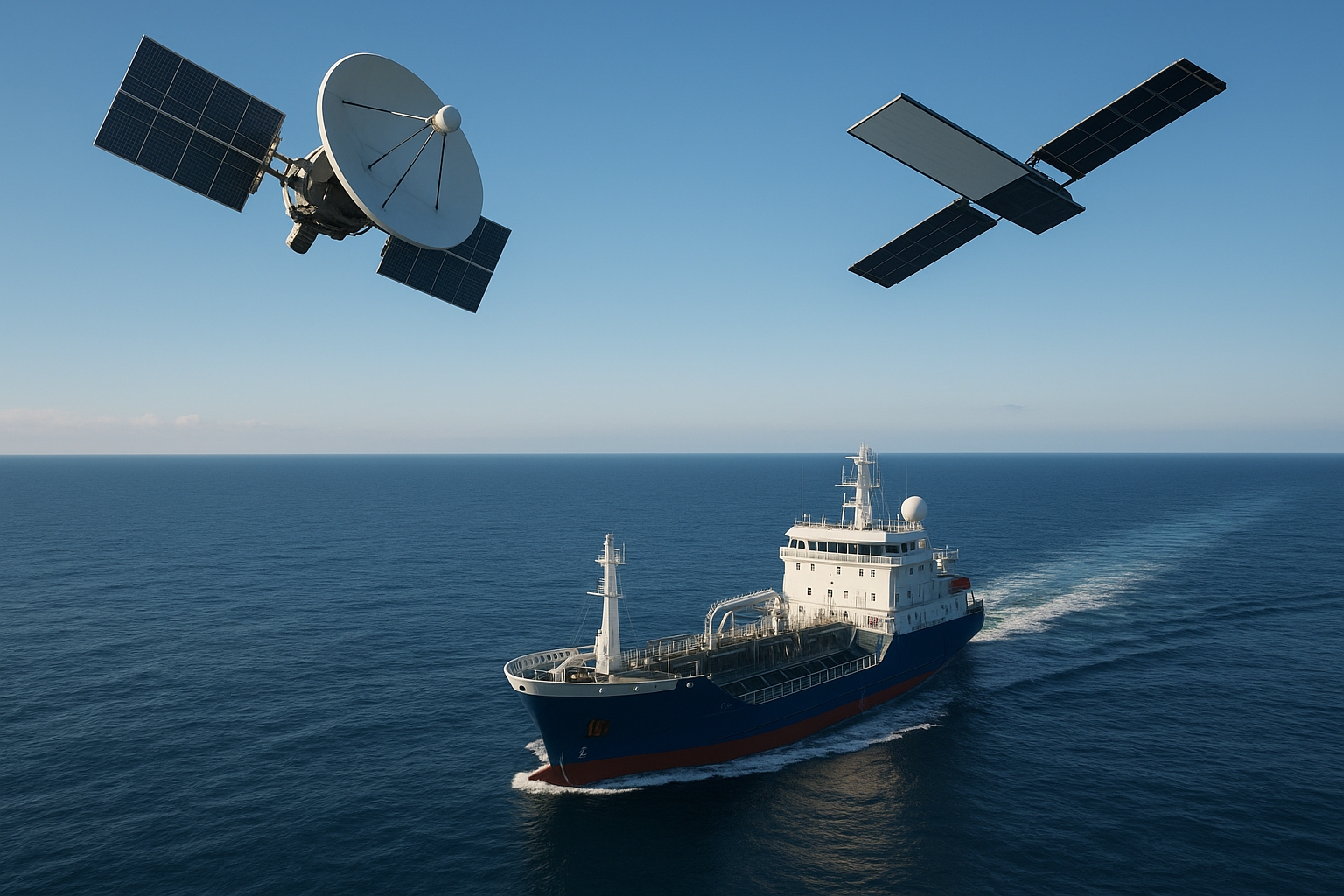
Satellite communication systems extend coverage far beyond what traditional radios can reach, making them indispensable for vessels operating in remote or polar regions. Since 2018, these systems have seen over 15% annual growth, reflecting their increasing importance in maritime operations.

Companies like NT Maritime leverage advanced satellite technologies, including Starlink, to provide high-speed, low-latency voice communications. This capability supports clear Voice over IP (VoIP) calls for emergencies and routine connectivity alike.

For federal and military use, satellite systems ensure secure, real-time communication that’s critical for mission success. Unlike VHF and HF radios, satellites operate independently of terrestrial infrastructure, making them a reliable option even in areas with limited radio coverage. This global reach and reliability make satellite systems an essential layer in maritime communication, especially for transmitting distress signals and coordinating with shore-based responders.

Internal Onboard Communication Tools

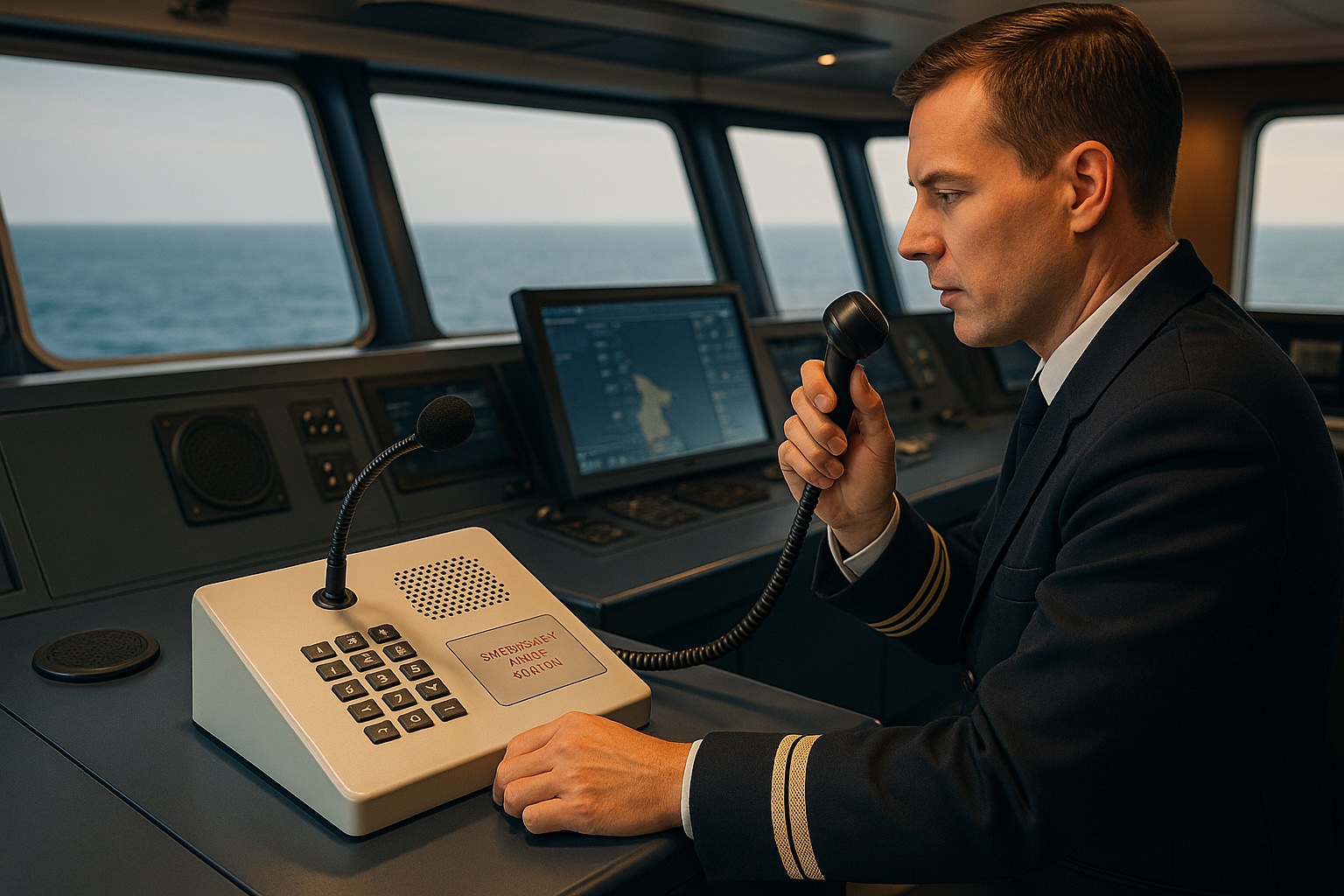
Onboard communication tools play a vital role in maintaining internal coordination during emergencies. Public Address (PA) systems, for instance, are designed to broadcast crucial instructions across a ship. These systems must meet IEC 60849 standards to guarantee clear audio, redundancy, and seamless integration with fire detection and alarm systems.

Sound-powered telephones are another key tool. They don’t rely on external power, ensuring communication remains functional during power outages.

Modern vessels often use integrated communication platforms that combine various technologies. NT Maritime’s solutions, for example, enable app-to-app calling, ship PBX integration, messaging, and video calls over onboard WiFi networks, allowing crew members to use their personal devices for secure, coordinated communication.

For noisy areas, communication stations should be equipped with sound-reducing booths to comply with regulations.

Technology Range Power Independence Key Emergency Features
VHF Radio 5–20 miles Ship power required Channel 16 monitoring, DSC alerts
HF Radio 100s–1,000s miles Ship power required Long-range DSC, global coverage
Satellite Systems Global Ship power/battery backup Voice/data anywhere, encrypted communication
Sound-Powered Phones Ship-wide No external power needed Reliable communication during power outages
PA Systems Ship-wide Ship power/battery backup Mass notifications, zone-specific alerts

"Ship emergency communication system"

Regulatory Standards and Compliance

Maritime emergency voice systems are built and operated within strict regulatory frameworks to ensure vessels can communicate effectively during critical situations. These regulations impact every detail, from the choice of equipment to how it’s installed, ensuring the systems function reliably when needed most. A key component of these frameworks is the SOLAS Convention, which lays out the international guidelines for emergency communication.

SOLAS Requirements for Emergency Communication

The Safety of Life at Sea (SOLAS) Convention serves as the cornerstone of international maritime communication protocols. It requires vessels to have dependable emergency communication systems, such as VHF, MF, and HF radios equipped with Digital Selective Calling (DSC), satellite Emergency Position Indicating Radio Beacons (EPIRBs), and backup power supplies to ensure functionality during emergencies.

A critical aspect of SOLAS is redundancy. Ships must have multiple methods of sending distress signals, typically using different technologies like VHF, MF/HF radios, and satellite EPIRBs. This ensures that if one system fails, others can still operate. Additionally, these systems must be able to function independently of the ship’s main power source, often relying on reserve energy like battery backups.

Modern vessels often integrate various communication tools – radio, satellite, and onboard systems – into a single platform. Companies like NT Maritime provide solutions that align with SOLAS requirements, offering systems that support DSC, EPIRB integration, and standardized communication protocols.

U.S. Coast Guard and FCC Guidelines
U.S. Coast Guard

In addition to international regulations, U.S. standards set forth by the Coast Guard and the Federal Communications Commission (FCC) impose additional requirements. The U.S. Coast Guard enforces regulations like 46 CFR 113.30, which outline specific standards for emergency communication systems on U.S.-flagged vessels. These systems must operate independently of the ship’s main electrical system, include separate circuits for talking and calling, and be installed in key areas such as the bridge, engine room, and fire control stations.

Strict installation standards ensure that communication stations remain accessible and protected during emergencies. For example, cabling in high-risk areas must meet fire resistance standards, and equipment must withstand environmental hazards. In particularly noisy or hazardous areas, features like soundproof booths or visual alarms are often added to improve usability.

The FCC also plays a vital role by requiring that all maritime radios used for emergency communication be type-approved and licensed. Since June 1999, all new radios must include DSC capability. Operators are required to obtain licenses and program their radios with a Maritime Mobile Service Identity (MMSI). VHF-FM Channel 16 serves as the internationally recognized distress frequency, which all vessels must monitor unless actively communicating.

To enforce compliance, the U.S. Coast Guard inspects thousands of vessels annually. Penalties for non-compliance can include fines, vessel detention, loss of certification, and heightened liability in the event of an incident.

IMO Standard Marine Communication Phrases

To overcome language barriers and ensure clear communication, the International Maritime Organization (IMO) developed the Standard Marine Communication Phrases (SMCP). This standardized vocabulary is critical for multinational crews, enabling clear and unambiguous transmission of distress calls, safety instructions, and coordination messages.

SMCP training is now a mandatory part of crew certification. Regular drills and training sessions ensure that crew members can use these phrases effectively, even under pressure. Many modern communication systems now incorporate SMCP protocols, further streamlining onboard and external communication.

Regulation Key Requirements Compliance Focus
SOLAS GMDSS equipment, redundancy, power independence International vessels, system reliability
USCG (46 CFR 113.30) System independence, strategic placement, fire safety U.S.-flagged vessels, installation standards
FCC (47 CFR Part 80) Equipment licensing, MMSI programming, operator permits U.S. maritime radio operations
IMO SMCP Standardized phrases, crew training, clear communication All international voyages

Design and Maintenance Best Practices

Ensuring emergency voice systems are well-designed and properly maintained is crucial for effective communication during maritime emergencies. A reliable system depends on redundancy, smart equipment placement, and consistent upkeep. Strategic station locations and robust protocols can make all the difference when seconds count.

Where to Place Communication Stations

Emergency communication stations should be installed in key areas across the vessel to ensure rapid access when needed. The bridge, as the central command hub, must have immediate access to systems like VHF radios, satellite phones, and internal announcement tools. Additional stations should be placed in critical locations such as the engine room, steering gear room, fire control station, and radar room, providing multiple access points during emergencies.

Fire control stations deserve particular attention, as they often act as coordination hubs during crises. Ensure these stations are equipped with easily accessible communication tools.

Outdoor equipment must be protected using NEMA or IP-rated enclosures, with isolation switches that can be operated directly from the bridge. For vessels operating in harsh conditions, it’s essential to position stations in areas shielded from salt spray, extreme temperatures, and mechanical vibrations. Placement should also account for vessel stability during heavy rolling or pitching to maintain functionality in all circumstances.

System Redundancy and Power Independence

A reliable emergency communication system must have independent power sources. These systems should operate separately from the vessel’s main electrical grid, with dedicated connections to the emergency bus and backup battery systems. Separate circuits for talk and call functions are critical to ensure that a single failure doesn’t compromise the entire system. Additionally, communication wiring should avoid high-risk areas like machinery rooms and galleys. If routing through such areas is unavoidable, fire-resistant cables must be used.

Backup handheld radios add another layer of redundancy. These portable devices should be strategically distributed throughout the vessel and regularly tested to ensure batteries are charged and systems are operational. Emergency communication systems must also meet the requirement of running for at least six hours on backup power, as mandated by SOLAS/GMDSS regulations.

Once redundancy and independent power are in place, regular testing is essential to confirm the system’s readiness.

Regular Testing and Crew Training

Even the most robust systems are only as effective as their maintenance and the crew’s ability to use them. Emergency communication systems should be tested monthly, with more frequent checks during high-risk voyages. Factory Acceptance Testing (FAT) ensures equipment meets standards before leaving the manufacturer, while Site Acceptance Testing (SAT) verifies functionality after installation.

Testing protocols should mimic real-life emergencies, assessing communication clarity, backup power transitions, and the functionality of visual indicators. Conduct monthly emergency drills to evaluate crew proficiency and system performance. These drills should emphasize the use of standardized phrases and proper emergency procedures. Regular practice not only keeps the crew prepared but also helps identify potential system issues early.

Detailed logs of testing, maintenance, and training activities are essential for both compliance and reliability. These records can highlight patterns that might indicate emerging problems and serve as proof of regulatory adherence during inspections.

Modern tools, like integrated platforms from NT Maritime, simplify maintenance by automating routine tests and providing real-time system monitoring. Such solutions streamline upkeep and help ensure all components remain operational and aligned with regulatory standards.

Modern Solutions and Integrated Systems

Advancements in design and maintenance have paved the way for integrated systems that improve emergency response at sea. Modern vessels now rely on unified communication platforms that bring together voice, messaging, video, and telehealth tools into one streamlined interface. This eliminates the need for switching between devices or channels during critical moments, fundamentally changing how crews handle emergencies.

Unified Communication Platforms for Maritime

Unified communication platforms merge various communication channels into a single, efficient system, enabling crews to respond to emergencies with greater speed and accuracy. By centralizing communication, these platforms minimize delays and reduce the risk of miscommunication when time is of the essence.

Take, for instance, a ship’s medical officer. They can simultaneously video call shore-based doctors, send updates to the bridge, and broadcast alerts to the crew – all through one system. This level of integration not only speeds up response times but also ensures that everyone involved stays on the same page.

Beyond speed, these platforms enhance situational awareness by consolidating all communication activities in one place. Emergency coordinators can monitor multiple channels, track the progress of responses, and maintain detailed logs for compliance and analysis. Features like real-time record-keeping ensure that all communications are documented, aiding in post-incident reviews and meeting regulatory requirements.

Modern cruise ships highlight the effectiveness of these systems, using them to send simultaneous alerts and conduct video consultations during emergencies. By streamlining communication, these platforms complement existing safety equipment, making overall response efforts more efficient.

NT Maritime‘s Role in Emergency Communication
NT Maritime

NT Maritime has developed integrated communication solutions tailored for maritime emergencies. Their systems work alongside traditional emergency protocols, boosting coordination between onboard teams and shore-based responders. These platforms include encrypted networks designed to meet the rigorous standards of cruise lines, government vessels, and military operations.

The company’s solutions offer a range of onboard communication features like calling, video calling, messaging, and voicemail, all optimized for seamless use over ship WiFi. These tools enable app-to-app communication and integrate with ship PBX systems, ensuring rapid internal coordination during crises.

A standout feature is NT Maritime’s telehealth capabilities, which allow medical staff to consult with shore-based specialists in real time. High-quality video transmission supports visual assessments and critical decision-making, even in the middle of the ocean.

The company also leverages high-speed satellite connectivity, ensuring reliable communication for video consultations and data-sharing, no matter how remote the location. For government and military vessels, NT Maritime offers additional layers of security with encrypted channels to protect sensitive information, meeting federal standards for mission-critical operations.

Emerging technologies are set to transform maritime emergency communication further. AI-powered systems are already being developed to detect distress signals, prioritize alerts based on urgency, and route calls to the right responders automatically. These systems can monitor onboard sensors and communication channels, identifying potential emergencies and initiating response protocols without human input.

Satellite technology is also advancing rapidly, with low-earth orbit (LEO) constellations delivering higher bandwidth, lower latency, and global coverage. This ensures consistent communication for telehealth and emergency coordination, even in the most remote areas.

Another exciting development is the use of wearable communication devices for crew members. These devices offer hands-free communication, transmit location data, and even monitor vital signs, helping detect distress before situations escalate.

Real-time language translation is becoming a key feature, allowing multinational crews and international rescue teams to communicate seamlessly. This is especially valuable during global operations where language barriers can complicate response efforts.

As systems grow more sophisticated, cybersecurity remains a critical focus. Future platforms will include advanced threat detection to ensure secure and uninterrupted communication during emergencies, even under cyber threats.

Industry reports show that over 90% of newbuild vessels now come equipped with integrated communication platforms supporting voice, data, and video. This widespread adoption underscores the importance of unified systems in enhancing maritime safety. These advancements continue to raise the bar for emergency response capabilities at sea.

Conclusion: Safety Through Reliable Communication

Maritime emergency voice systems are the cornerstone of safety at sea, enabling vessels to connect with rescue services and coordinate life-saving responses when every second matters. The combination of advanced technologies, strict regulatory standards, and proven best practices creates a safety net that safeguards crews and passengers across the globe.

A layered communication setup is critical. By integrating VHF, HF, and satellite systems, redundancy is built into the network, ensuring that if one channel falters, others are ready to carry vital distress signals. This multi-tiered approach significantly enhances reliability during emergencies.

Regulatory compliance is another pillar of system dependability. Standards like SOLAS, U.S. Coast Guard mandates, and FCC guidelines don’t just set baseline requirements; they ensure that emergency systems remain operational even when primary components fail. Features such as dedicated emergency channels further strengthen crisis management capabilities.

These regulations have a tangible impact on maritime safety. Data shows that vessels equipped with DSC technology and satellite EPIRBs experience quicker response times and higher survival rates. Additionally, the adoption of the Global Maritime Distress and Safety System (GMDSS) has led to a marked decrease in maritime casualties.

Unified communication platforms are also transforming emergency response. By integrating voice, messaging, video, and even telehealth services, these systems streamline coordination among crew members, medical teams, and rescuers, reducing delays and confusion during critical moments.

Routine maintenance and crew training are equally essential. Many equipment failures stem from misconfigurations or a lack of familiarity rather than technical faults. Regular system checks and crew drills not only ensure operational readiness but also help vessels meet regulatory standards more effectively.

Emerging advancements, such as low-earth orbit satellite networks and AI-driven emergency detection, promise to enhance global connectivity and response efficiency. Yet the fundamental principle remains unchanged: reliable emergency voice communication is the lifeline that ensures distress signals reach the right people at the right time, regardless of conditions or location.

Investing in dependable emergency voice systems is an investment in saving lives. It builds a resilient communication framework that enables swift rescues, protects valuable assets, and ensures the safe return of crews and passengers.

FAQs

What is the difference between VHF and HF radios, and when should each be used during maritime emergencies?

VHF (Very High Frequency) and HF (High Frequency) radios play distinct roles in maritime communication, particularly during emergencies.

VHF radios are best suited for short-range communication, typically covering distances of 20–30 miles. They excel in ship-to-ship or ship-to-shore communication and are highly dependable for line-of-sight transmissions. These radios are the go-to choice for distress signals in coastal waters, where their coverage is most effective.

HF radios, on the other hand, are built for long-range communication, capable of transmitting across hundreds or even thousands of miles. They rely on ionospheric reflection to carry signals over vast distances, making them indispensable for vessels operating far offshore or in remote regions where VHF signals can’t reach.

In essence, VHF radios are ideal for local emergencies and nearshore operations, while HF radios are essential for long-distance communication in open waters or international scenarios.

How do modern unified communication systems improve emergency response on ships compared to older technologies?

Modern unified communication systems are transforming how emergency responses are handled on ships by bringing together multiple communication tools into one cohesive platform. Unlike older setups, these advanced systems offer real-time voice, video, and messaging capabilities, enabling quicker and more efficient coordination when it matters most.

By simplifying communication among crew members, passengers, and onshore teams, these systems help minimize delays and improve overall awareness of the situation. Key features like automated alerts, secure networks, and reliable connectivity are crucial for maintaining safety and meeting maritime regulations. These advancements greatly enhance the ability to handle emergencies with speed and precision.

How can maritime emergency voice systems stay compliant with SOLAS and U.S. Coast Guard regulations?

To ensure that maritime emergency voice systems meet the standards set by SOLAS (Safety of Life at Sea) and the U.S. Coast Guard, there are a few important practices to keep in mind:

  • Stay informed on regulations: Keep up with the latest updates to SOLAS and U.S. Coast Guard rules. These guidelines often change to reflect advancements in safety measures and technology.
  • Inspect systems regularly: Perform routine tests and maintenance checks on emergency voice systems. This ensures they function properly and meet the necessary performance requirements.
  • Train the crew: Make sure all crew members know how to operate emergency voice systems efficiently and understand the regulatory requirements.
  • Use approved equipment: Install communication systems that meet or exceed the technical specifications set by SOLAS and the U.S. Coast Guard.

By following these steps, maritime operators can not only stay compliant but also enhance the safety of passengers and crew during critical situations.

Ultimate Guide to Satellite Bandwidth for Maritime IT

Satellite bandwidth is the backbone of modern maritime communication, enabling vessels to stay connected far from shore. With over 38,000 ships now equipped with broadband systems, the demand for reliable, high-speed connectivity at sea has grown significantly. Here’s what you need to know:

  • What It Is: Satellite bandwidth refers to the data capacity leased for communication between ships and satellites. It supports internet, voice calls, navigation, and more.
  • Why It Matters: It ensures safety (distress signals, weather updates), improves efficiency (fleet tracking, fuel monitoring), and enhances crew and passenger experience (Wi-Fi, entertainment).
  • Key Technologies: VSAT systems (Ku-, Ka-, C-bands), LEO satellites (low latency, faster speeds), and phased-array antennas are commonly used.
  • Bandwidth Allocation: Ships can choose shared or dedicated bandwidth, balancing cost and performance based on their needs.
  • Future Trends: LEO satellites are revolutionizing connectivity, with bandwidth capacity expected to grow sevenfold by 2034.

This guide dives into how satellite bandwidth works, its importance, and how to choose the right solution for your vessel.

How Do Maritime Vessels Communicate? – VSAT Systems Explained

Satellite Technologies and Bandwidth Allocation Methods

Maritime vessels rely on three main satellite technologies to maintain connectivity, each tailored to different operational needs and vessel types. Understanding these technologies, along with the methods used to allocate bandwidth, is crucial for making smart connectivity choices. Let’s break down the essentials.

Satellite Technologies Used in Maritime IT

VSAT systems are the backbone of maritime communications, operating across Ku-, Ka-, and C-bands. Each band serves specific needs:

  • Ku-band is popular among commercial vessels for its balance of cost and broad global coverage.
  • Ka-band delivers faster speeds, ideal for high-bandwidth activities like passenger Wi-Fi and video streaming.
  • C-band stands out for its reliability in harsh weather, making it a go-to for vessels in challenging environments.

LEO (Low Earth Orbit) constellations have revolutionized maritime connectivity. With latency as low as 20–40 milliseconds, they enable near real-time applications. By Q2 2025, over 26,000 ships were using LEO broadband services, with some providers offering download speeds up to 220 Mbps and upload speeds around 40 Mbps [4].

Phased-array antennas represent cutting-edge technology, dynamically tracking multiple satellites to ensure uninterrupted connectivity as vessels move through different coverage zones [4].

The choice of satellite technology often hinges on the vessel’s purpose:

  • Cruise ships lean toward LEO networks for high-speed passenger internet.
  • Cargo vessels typically use VSAT systems for cost-effective operations.
  • Military and government vessels often rely on C-band for secure and dependable connectivity.

Many vessels now adopt multi-orbit strategies, combining geostationary (GEO) and LEO systems to ensure backup connectivity and optimize performance in real time [4]. This approach ensures that connectivity aligns with operational demands, a principle also reflected in how bandwidth is allocated.

How Bandwidth Gets Allocated

Beyond choosing the right satellite technology, efficiently allocating bandwidth is key to optimizing performance. Maritime networks primarily use two approaches for bandwidth distribution, each with its own trade-offs.

Point-to-point technologies create dedicated links between a vessel and a satellite. This setup ensures consistent performance, making it ideal for mission-critical applications.

Point-to-multipoint technologies share bandwidth among multiple vessels within a satellite beam. While more cost-effective, performance can vary based on network congestion and demand.

The choice between shared and dedicated bandwidth significantly impacts both costs and service quality:

  • Shared bandwidth pools resources among users, offering an affordable option but with potential slowdowns during peak usage.
  • Dedicated bandwidth reserves capacity for a single vessel, guaranteeing stable performance for tasks like telemedicine or real-time monitoring, though it comes at a higher price.

Here’s a quick comparison of allocation methods:

Allocation Method Performance Cost Best For
Point-to-Point Dedicated Consistent High Mission-critical operations, large vessels
Point-to-Multipoint Shared Variable Low–Medium General communications, smaller vessels
Hybrid Approach Balanced Medium–High Mixed operational needs

The bandwidth game is rapidly changing. NGSO capacity, particularly from LEO satellites, is expected to grow from 286 Gbps in 2024 to 2 Tbps by 2034 – a sevenfold increase. This surge in capacity is driving down costs while improving performance across all allocation methods. Operators must weigh factors like user needs, application demands, route reliability, and data requirements to find the most effective and economical solution. The goal? To match current operational priorities while preparing for what’s next.

How to Maximize Bandwidth Usage at Sea

Getting the most out of satellite bandwidth while at sea requires a mix of technical fine-tuning, smart traffic management, and properly configured hardware. Maritime professionals can adopt a variety of methods to enhance connectivity, ensuring smooth operations and reliable communication – whether for critical tasks or day-to-day needs.

Methods to Improve Bandwidth Performance

One effective approach is adaptive coding and modulation (ACM), a technology that adjusts signal parameters in real time based on current link conditions. This is particularly useful in overcoming challenges like weather disruptions, as it helps maintain optimal throughput even when signal quality fluctuates.

Another tool is TCP acceleration, which tackles the inherent latency of satellite communications. By optimizing the transport protocol, it speeds up data transfers, making it especially effective for latency-sensitive applications such as video calls and real-time monitoring.

Then there’s HTTP prefetching, which anticipates user needs by loading web content ahead of time. This reduces perceived delays and works well for applications that consume a lot of bandwidth, such as streaming or large data transfers.

For example, a cruise line using HTS-enabled Ka-band VSAT saw a 50% increase in available bandwidth and a 30% reduction in latency after implementing these strategies. This allowed them to support reliable video streaming and telemedicine services for both passengers and crew.

Additionally, High Throughput Satellites (HTS) with spot beam technology offer a significant performance boost. These systems provide higher capacity and lower latency, making them ideal for handling the data-heavy demands of modern maritime operations.

These technical improvements set the stage for efficient traffic management, which is crucial for maintaining consistent connectivity.

Network Traffic Management and Segmentation

Once performance enhancements are in place, managing network traffic becomes the next priority. Smart traffic management ensures that critical applications always have the bandwidth they need. By segmenting the network and prioritizing traffic, operators can allocate resources to essential functions and prevent congestion.

For instance, traffic prioritization can ensure that navigation systems and safety communications take precedence over recreational internet use. This guarantees that vital operations remain unaffected, even during periods of heavy network demand.

A commercial shipping fleet demonstrated the effectiveness of this approach by implementing network segmentation and traffic prioritization. Even during peak passenger internet usage, the fleet maintained uninterrupted operational communications, highlighting how proper traffic management can balance competing demands.

Another component of traffic management is backup connectivity options. These systems provide redundancy through automatic failover mechanisms, switching to alternative satellite links or cellular networks when needed. Dynamic bandwidth allocation further enhances flexibility by adjusting resources in real time based on changing requirements.

Hardware Setup and Environmental Factors

The right hardware setup is essential for maximizing performance. Proper antenna installation and alignment are critical, as they ensure a clear line of sight to satellites. This becomes even more important on moving vessels, where surrounding structures and constant motion can disrupt signals.

Stabilized antennas play a key role here. These systems automatically adjust to maintain alignment with satellites, even as ships roll, pitch, or change course. For example, commercial vessels often rely on 1 to 1.5-meter stabilized Ku-band VSAT antennas, while smaller vessels use Ultra Small Aperture Terminals (USATs) for more cost-effective connectivity.

Additionally, marine-rated equipment is designed to withstand the harsh conditions at sea, including saltwater corrosion, high humidity, and extreme temperatures ranging from -20°F to 140°F. Such equipment typically features corrosion-resistant materials and sealed enclosures to protect against environmental damage, ensuring reliable performance in any weather.

To minimize downtime, remote diagnostics and updates allow technicians to troubleshoot and maintain systems without being physically present. Routine maintenance, including firmware updates and checks on antenna alignment and connection security, helps prevent issues before they arise.

Finally, it’s important to monitor environmental factors like weather and sea conditions, as these can heavily impact satellite signals. Operators should plan communication activities during favorable conditions and rely on backup systems to maintain connectivity during severe weather, ensuring uninterrupted service even in challenging circumstances.

How to Choose the Right Satellite Bandwidth Solution

Finding the right satellite bandwidth solution means balancing performance, cost, and your vessel’s specific operational needs. With NGSO (primarily LEO) capacity expected to dominate the market – growing from 85% in 2024 to 98% by 2034 – maritime operators are rethinking how they approach connectivity. Here’s a breakdown of the key factors to consider when aligning your connectivity needs with your operational priorities.

What to Look for in Satellite Bandwidth Options

When evaluating satellite bandwidth options, focus on the features that align with your vessel’s unique requirements.

Start with performance metrics like download/upload speeds, latency, and coverage. For example, a cruise ship catering to thousands of passengers will need a solution vastly different from what a small cargo vessel requires.

  • Latency: This is critical for real-time functions like video calls or telemedicine. LEO systems, with latency as low as 20–40 ms, are a game-changer compared to the 600+ ms typical of GEO satellites. These systems are ideal for time-sensitive applications [4].
  • Coverage: Your route dictates your coverage needs. While global coverage is essential for vessels on worldwide routes, regional solutions may work for coastal or ferry operations. LEO and multi-orbit solutions now offer near-global coverage, even in polar and remote ocean regions [4].
  • Hardware: Equipment requirements can vary. LEO systems often need sophisticated electronically steered antennas, while GEO VSAT typically uses traditional stabilized parabolic antennas. Factors like deck space, power availability, and installation complexity should influence your decision [4].
  • Security: For federal and military operations, robust encryption and cybersecurity are non-negotiable. Your solution must ensure secure data exchange for critical missions.
  • Service Integration: Seamless integration with onboard systems – like passenger management platforms or ship PBX – can enhance functionality. Features such as app-to-app calling and integrated WiFi messaging are valuable for both crew and passengers.

It’s also important to assess peak performance and reserve capacity. For example, a global cruise line opted for a C-band VSAT system on flagship vessels to ensure uninterrupted connectivity, despite higher hardware costs. Meanwhile, for regional ferries, they chose Ku-band spot-beam services with smaller antennas to strike a balance between performance and cost.

Satellite Technology Comparison

Understanding the strengths and limitations of different satellite technologies can help you make an informed choice:

Technology Data Rates Latency Coverage Hardware Requirements Best Use Cases
GEO VSAT Moderate to High 600+ ms Global (except polar regions) Stabilized parabolic antennas Backup connectivity, legacy systems, non–time-critical operations
LEO (e.g., Starlink) High (100+ Mbps) 20–40 ms Near-global, including polar areas Electronically steered/flat panel antennas Real-time operations, crew/passenger internet, IoT applications
MEO Very High (Gbps) 100–150 ms Regional/global Advanced tracking systems High-throughput enterprise applications

LEO systems, like Starlink, are rapidly gaining traction, with over 26,000 ships now using LEO broadband services. These systems provide speeds of up to 220 Mbps for downloads and 40 Mbps for uploads, with low latency – perfect for data-heavy, real-time applications [4].

While GEO VSAT is still relevant for backup connectivity and areas not fully covered by LEO systems, its market share is shrinking as NGSO solutions expand. Many operators are adopting multi-orbit strategies, combining GEO, MEO, and LEO technologies to ensure both reliability and enhanced performance.

The cost landscape is also shifting. In 2025, service revenues reached $1.27 billion for GEO VSAT and $745 million for LEO broadband [4]. With advancing technology, the total cost of ownership is dropping, and flexible contracts tailored to specific needs are helping operators manage budgets more effectively.

To choose the right solution, match your vessel type, route, and operational demands with the appropriate satellite technology. Cruise lines, for instance, need high bandwidth and low latency to handle large numbers of users, while federal and military operations may prioritize security and reliability. Looking ahead, scalability is crucial – NGSO bandwidth is expected to grow sevenfold, from 286 Gbps in 2024 to 2 Tbps by 2034, ensuring your investment can meet future data demands.

NT Maritime‘s Bandwidth Management Solutions

NT Maritime

NT Maritime provides tailored bandwidth management and communication solutions specifically designed to meet the unique challenges of maritime environments. Serving a $3.2 billion market with over 38,300 vessels relying on VSAT and LEO broadband services [4], the company delivers tools that enhance connectivity and operational efficiency at sea.

NT Maritime’s Communication and Bandwidth Services

NT Maritime offers high-speed internet with download speeds of up to 220 Mbps, upload speeds of 40 Mbps, and latency under 99 ms. This level of connectivity supports everything from crew communications to demanding applications like real-time video conferencing and telemedicine.

At the core of NT Maritime’s offerings are secure communication networks. These networks support a wide range of tools for both passengers and crew, including onboard calling, messaging, video calls, and voicemail systems. What makes NT Maritime stand out is their seamless integration of these services – passengers can access connected communication systems that are fully integrated with onboard management tools.

Passengers benefit from unlimited onboard calls and messages via a dedicated app, which also enables group messaging and photo sharing, creating a connectivity experience comparable to land-based vacations. The bring-your-own-device (BYOD) feature allows passengers to use their own smartphones and tablets over the ship’s WiFi, eliminating the need for specialized equipment.

For healthcare needs, NT Maritime’s Telehealth solutions offer remote medical consultations, real-time health monitoring, and secure transmission of medical data. These services ensure timely care for both emergencies and routine medical needs.

For government and military operations, NT Maritime provides secure communication systems designed to withstand cyber threats. These systems meet FIPS (Federal Information Processing Standards) and other maritime cybersecurity requirements, ensuring encrypted, reliable communication for mission-critical operations. These secure networks enable real-time data sharing while maintaining the highest levels of security.

How NT Maritime Improves Maritime IT Operations

NT Maritime enhances IT operations by optimizing bandwidth through dynamic allocation and real-time traffic management, ensuring critical functions remain uninterrupted even in challenging conditions.

Their approach includes traffic prioritization, network segmentation, and dynamic bandwidth allocation. Essential applications like navigation systems, safety communications, and Telehealth services are prioritized, while recreational internet and entertainment services are allocated bandwidth based on availability. This Quality of Service (QoS) model ensures smooth operation across all systems without congestion.

With real-time monitoring and analytics, NT Maritime keeps a constant eye on network performance. Their systems can detect potential bottlenecks before they disrupt operations, automatically reallocating resources or notifying IT staff to address issues. This proactive strategy minimizes downtime and ensures reliable service, even during periods of high demand.

A key strength of NT Maritime’s solutions is their ability to integrate seamlessly with existing shipboard infrastructure. Their systems support standard interfaces, allowing easy integration without the need for extensive modifications. This reduces installation complexity and limits operational disruptions during deployment.

Cruise lines using NT Maritime’s services report higher passenger satisfaction, thanks to reliable high-speed internet and communication tools. Government vessels benefit from secure, compliant networks that support critical missions and real-time data sharing. For crew members, access to video calls and messaging alleviates isolation during long voyages, improving morale and retention.

NT Maritime also employs redundant network designs to ensure service continuity. By using multiple satellite connections and backup protocols, they maintain connectivity even during adverse weather or equipment failures. This level of reliability is particularly important for vessels operating in remote areas where alternative communication options are limited.

Beyond connectivity, NT Maritime’s solutions contribute to operational efficiencies. Features like real-time weather and traffic data for optimized routing, predictive maintenance alerts, and fuel consumption monitoring help reduce costs. These capabilities directly enhance return on investment for vessel operators, with many reporting noticeable reductions in operational expenses through improved connectivity and data-driven decision-making. By maximizing satellite bandwidth, NT Maritime supports smoother and more efficient maritime IT operations.

Key Points About Satellite Bandwidth for Maritime IT

Over the last two decades, the maritime industry has seen incredible progress in satellite connectivity. Data speeds have skyrocketed, now reaching up to 128 Mbps and beyond. Compare that to the early Fleet 77 systems, which offered only minimal connectivity – this transformation has made satellite bandwidth indispensable for modern maritime operations.

The maritime satellite communications market has grown to an impressive $3.2 billion, fueled by global adoption. In Q1 2025 alone, 5,000 new vessels were equipped with broadband systems, showcasing the rapid pace of technological integration [4].

Non-geostationary satellite systems (NGSO), especially low Earth orbit (LEO) satellites, are now leading the market. These systems have surged from 85% market share in 2024 to a projected 98% by 2034. Why the shift? LEO satellites offer distinct advantages: lower latency, greater bandwidth, and enhanced global coverage – capabilities that traditional geostationary satellites just can’t match.

That said, bandwidth planning is essential for maritime operations. Ships must carefully balance bandwidth usage to meet operational needs, provide for crew welfare, and offer passenger services – all while keeping costs under control. Tailoring bandwidth allocation to the specific needs of each vessel type is key.

Advanced network management tools play a critical role here. Features like quality of service (QoS), traffic prioritization, and network segmentation ensure that vital communication channels remain uninterrupted.

The growing integration of IoT devices and cloud platforms is another major driver of bandwidth demand. From weather routing to predictive maintenance, vessels increasingly depend on real-time data exchange, making reliable satellite connectivity essential for smooth operations.

Looking ahead, multi-orbit connectivity is emerging as the next big step for maritime IT. By combining GEO, MEO, and LEO satellite networks, vessels can achieve maximum uptime and performance [4]. To stay ahead, maritime professionals need to invest in advanced shipboard antennas, implement strong traffic management systems, and work with providers who understand the complexities of maritime environments.

The future of maritime satellite bandwidth is bright. With NGSO bandwidth capacity expected to grow from 286 Gbps in 2024 to 2 Tbps by 2034, the industry is poised for groundbreaking innovations. This rapid growth underscores the importance of being proactive in bandwidth planning to keep pace with the demands of modern maritime technology.

FAQs

How can I decide if my vessel needs shared or dedicated satellite bandwidth?

Choosing between shared and dedicated satellite bandwidth boils down to your vessel’s communication needs and how you use data.

Shared bandwidth is a budget-friendly option, perfect for vessels with lighter data demands. It’s suitable for activities like browsing the internet or making occasional video calls. However, since the bandwidth is shared among multiple users, speeds can dip during busy times.

On the flip side, dedicated bandwidth offers steady, reliable speeds, making it the go-to choice for vessels with heavy data requirements. This is especially critical for cruise ships, government vessels, or operations that depend on essential systems like Telehealth or live video conferencing. While it’s more expensive, dedicated bandwidth ensures uninterrupted connectivity, which is vital for mission-critical tasks.

To decide, assess your vessel’s specific needs – consider the number of users, types of applications, and your budget. Not sure where to start? A maritime IT provider like NT Maritime can guide you toward the best solution for your operations.

What are the advantages of using a multi-orbit approach for maritime satellite connectivity?

A multi-orbit strategy taps into the strengths of various satellite orbits – geostationary (GEO), medium Earth orbit (MEO), and low Earth orbit (LEO) – to deliver dependable and efficient maritime connectivity. By combining these orbits, it ensures uninterrupted coverage, even in the most remote areas, utilizing the unique advantages each orbit offers.

For instance, GEO satellites are known for their wide coverage and stable connections, making them perfect for consistent communication needs. On the other hand, LEO satellites excel in providing lower latency and faster speeds, which are crucial for tasks like video calls or real-time monitoring. By integrating these orbit types, maritime operations can enjoy improved performance, greater adaptability, and dependable connectivity, even in the challenging conditions of open waters.

How can I maintain reliable satellite communication during bad weather at sea?

Reliable satellite communication during tough weather conditions hinges on using the right equipment, smart system setup, and vigilant monitoring. Start by choosing top-tier antennas and modems built to withstand rough seas and harsh weather. These devices are designed to keep connections stable, even in challenging environments like storms.

You can also manage bandwidth effectively by focusing on critical communications and reducing non-essential data usage when the weather takes a turn. Regular maintenance and inspections of your satellite equipment are essential to catch and fix issues caused by wear and tear before they disrupt service. For a more resilient setup, explore advanced maritime IT systems that include redundancy and failover features, ensuring your connection stays intact no matter the conditions.

VSAT vs Starlink for Ships: Full Comparison

Choosing between VSAT and Starlink for maritime internet depends on your vessel’s needs. VSAT offers broad global coverage and proven reliability, while Starlink provides faster speeds and lower latency, especially near coastal regions. Here’s a quick breakdown:

  • VSAT: Reliable for global routes, with slower speeds (1–50 Mbps) and high latency (600+ ms). Costs include $10,000–$60,000 for equipment and $500–$2,000 monthly fees.
  • Starlink: Faster (100–350 Mbps), lower latency (20–40 ms), and more affordable upfront ($2,500–$10,000). Coverage is growing but limited in polar and remote waters.

Quick Comparison

Feature VSAT Starlink
Latency 600+ ms 20–40 ms
Speed 1–50 Mbps 100–350 Mbps
Coverage Near-global Expanding, limited in some areas
Cost (Equipment) $10,000–$60,000 $2,500–$10,000
Monthly Fees $500–$2,000+ $250–$500

For cruise ships, Starlink’s speed is ideal, but VSAT remains a dependable backup. Cargo vessels often rely on VSAT for its reliability on major routes. Yachts may prefer Starlink for affordability near coasts, with VSAT for global travel.

A hybrid approach – using both systems – is often the best solution for uninterrupted connectivity.

Starlink

VSAT for Maritime Communication

VSAT has been a key player in maritime satellite communication since it debuted in 1986. Over the years, this technology has transformed from a specialized solution into a critical service that enhances crew connectivity and boosts operational efficiency for global shipping. Below, we’ll explore how VSAT works, its features, and the costs involved in maritime applications.

How VSAT Works

VSAT relies on geostationary (GEO) satellites stationed roughly 22,369 miles (36,000 km) above the Earth’s equator. These satellites stay aligned with Earth’s rotation, forming a stable communication link between vessels and ground-based networks. Data is transmitted from the ship to the satellite and then to a ground station, where it connects to the internet or private networks.

A stabilized antenna on the vessel continuously tracks the satellite, ensuring a steady connection even at speeds of up to 30 knots. This precise tracking is why VSAT is known for its high reliability. The system includes two main components: the Above Deck Unit, which houses the dish, tracking mechanism, and protective radome, and the Below Deck Unit, which contains the modem, router, and control systems.

VSAT Features and Capabilities

Maritime VSAT provides coverage anywhere with a clear view of the sky, making it suitable for international shipping routes, cruises, and offshore operations. Depending on the equipment and service plan, it can deliver data speeds ranging from 4 kbit/s to 16 Mbit/s.

One of VSAT’s standout strengths is its reliability, with uptime rates often exceeding 99.9%. Service Level Agreements (SLAs) ensure minimum speeds and predictable costs, helping operators manage their budgets effectively.

VSAT operates across three primary frequency bands, each with its own characteristics:

  • C-band (4–8 GHz): Known for its resilience in heavy rain, though it offers lower data speeds.
  • Ku-band (12–18 GHz): A popular choice that balances affordability and coverage, though rain can affect its performance.
  • Ka-band (26.5–40 GHz): Offers faster speeds, making it ideal for data-heavy applications, but its coverage can be less consistent under certain conditions.

However, VSAT does have its challenges. The distance to GEO satellites introduces a latency of about 250 milliseconds, with additional delays of 300 to 500 milliseconds due to protocol processing. These limitations are worth considering alongside its many advantages.

VSAT Costs and Installation

VSAT technology comes with a notable price tag. Basic systems start at around $10,000, while advanced setups can cost over $60,000. Installation typically adds another $5,000 to $10,000 to the total expense.

The size of the antenna plays a major role in both performance and cost. Most maritime VSAT antennas measure between 30 and 47 inches in diameter, while larger C-band systems can reach up to 94 inches. Bigger antennas generally offer better signal strength and faster data rates but require more deck space and structural support.

Monthly service fees usually range from $500 to $2,000 or more, depending on the data plan and SLA. Additionally, annual maintenance costs – covering routine inspections, software updates, and minor repairs – typically fall between $500 and $1,500.

Introduced in 2022, Starlink Marine leverages a network of low Earth orbit (LEO) satellites to reshape maritime communication. Unlike traditional VSAT systems that depend on far-off geostationary satellites, Starlink’s LEO setup brings a new level of efficiency to the table.

Starlink satellites orbit much closer to Earth – around 340 miles – compared to the roughly 22,000-mile distance of geostationary satellites used by VSAT. This proximity enables faster connections. Vessels connect to the nearest satellite, which then relays data through a network of ground stations, or gateways. As satellites move across the sky, the system ensures uninterrupted service by automatically switching connections through a process called handover.

The terminals use phased array antennas, which electronically adjust their beams to track satellites. Their flat-panel design minimizes wind resistance, making them well-suited for maritime conditions. These features are key to Starlink’s performance, which stands out in several areas.

Starlink delivers lower latency, making it ideal for real-time tasks like video conferencing and VoIP calls on ships. Download and upload speeds can vary depending on location and network conditions, but they often surpass those of traditional systems.

The network is continually growing, now covering many major shipping routes. However, coverage in polar regions remains limited for now. Local regulations in certain territorial waters may require terminals to deactivate temporarily, leading to occasional service interruptions. Additionally, heavy rain can sometimes weaken signal strength.

Starlink offers a compact terminal that’s quick to install and more affordable in terms of both hardware and labor compared to conventional maritime satellite systems. The terminal’s design allows for easy mounting, which reduces setup time and expenses.

Equipped with integrated GPS and gyroscopic stabilization, the system automatically adjusts to maintain optimal positioning, ensuring reliable performance even in rough seas. For added flexibility, vessel operators can pause connectivity when it’s not needed, which can help manage costs effectively.

When deciding between VSAT and Starlink for maritime communication, the difference in performance becomes clear when you look at key metrics. The core distinction lies in the satellite technology – VSAT relies on geostationary satellites (GEO), while Starlink operates with low Earth orbit (LEO) satellites. This fundamental difference has a big impact on performance.

Performance Comparison

The positioning of the satellites is a major factor in the performance gap. VSAT’s GEO satellites are positioned much farther from Earth compared to Starlink’s LEO satellites, which significantly reduces the signal travel time for Starlink.

Latency is where the difference really stands out. Starlink offers latencies between 20–40 milliseconds in most maritime regions and can reach up to about 100 milliseconds in more remote areas. On the other hand, VSAT systems typically experience latencies of 600 milliseconds or more. When it comes to download speeds, Starlink consistently delivers between 100–350 Mbps, often exceeding 200 Mbps. In contrast, VSAT usually provides speeds ranging from 1–10 Mbps, with premium plans offering up to 50 Mbps.

Here’s a quick comparison of these performance metrics:

Performance Metric Starlink Marine Traditional VSAT
Latency 20–40 ms (up to 100 ms in remote areas) 600+ ms
Download Speed 100–350 Mbps 1–50 Mbps

Coverage and Geographic Limitations

Understanding where each technology performs best is essential for effective route planning. These coverage characteristics, combined with earlier performance differences, highlight patterns that influence connectivity reliability across various ocean regions.

VSAT’s Broad Coverage

VSAT systems offer near-global coverage through geostationary satellites, making them a reliable choice along heavily trafficked maritime routes. With consistent service across vast areas, VSAT can provide connectivity virtually anywhere on Earth, as long as the satellite remains in view.

Starlink leverages a low Earth orbit (LEO) satellite network to reach remote locations. While the network is expanding with additional satellite launches, some gaps remain. Areas such as polar regions and certain international waters still experience limited coverage. Additionally, regulatory hurdles can impact Starlink’s availability in specific ports or territorial waters.

Regional and Physical Challenges

Both technologies require a clear sky view, which can be disrupted in crowded ports or confined anchorages. For instance, connectivity may falter when vessels are docked near larger ships or in tight spaces.

VSAT shines on traditional maritime routes, particularly those with high commercial traffic, offering dependable service between major ports. This makes it an ideal option for cargo ships following predictable paths. Starlink, on the other hand, is better suited for remote areas where conventional satellite systems often struggle, though its availability in less-frequented ocean regions is still inconsistent due to its ongoing deployment.

For operations in polar regions, both technologies face hurdles. VSAT’s geostationary satellites are limited by their positioning, making coverage in these areas more challenging. Starlink’s LEO satellites hold promise for improved polar connectivity as the network continues to grow, though its current service in these regions remains limited.

For maritime operators, choosing the right communication system is crucial to ensuring smooth operations at sea. Each technology comes with its own strengths and weaknesses, so understanding these is key to making the best decision for your vessel’s needs.

VSAT has long been a reliable option, offering consistent connectivity along major shipping routes thanks to its well-established infrastructure. On the downside, it comes with higher latency, which can be a challenge for real-time applications like video calls or live monitoring. Additionally, the upfront costs for installation and equipment are significant, and its slower data speeds may struggle with bandwidth-heavy activities.

Starlink, on the other hand, shines with its low latency, enabling activities like video streaming, online gaming, and real-time communication that feel similar to land-based internet. It also has a lower initial cost, making advanced connectivity more accessible. However, Starlink isn’t without its challenges. It has coverage gaps in international waters and polar regions, which could lead to service interruptions. Regulatory hurdles in territorial waters can also complicate compliance, and its limited track record in maritime settings means there’s less experience with long-term troubleshooting.

Technology Key Advantages Primary Disadvantages
VSAT Reliable connectivity, global coverage, established support systems High latency, expensive setup, slower data speeds
Starlink Low latency, fast speeds, affordable upfront costs Limited coverage in remote waters, regulatory issues, less maritime experience

Weather conditions also play a role in performance. VSAT’s geostationary satellites generally provide stable signals during storms, while Starlink’s multiple satellite connections help reduce weather-related disruptions.

When it comes to maintenance, VSAT systems often require professional technicians for repairs, which might mean a trip to port for major fixes. Starlink’s simpler hardware is easier to troubleshoot, though finding replacement parts in remote areas can be tricky. VSAT providers typically offer customizable packages with features like priority traffic routing, while Starlink sticks to straightforward pricing plans, which can appeal to smaller operators.

Another consideration is longevity. VSAT systems are known for their durability, with many operating effectively for years. Starlink, though rapidly expanding its satellite network, may require more frequent updates to keep up with its evolving technology. These differences can significantly impact long-term investment decisions.

Best Technology by Vessel Type

Each type of vessel comes with its own set of connectivity needs, shaped by factors like operational demands, passenger expectations, and budget constraints. Here’s a closer look at which maritime communication technology works best for various vessel types.

Cruise Ships and Passenger Vessels

Cruise ships have some of the highest connectivity requirements due to the sheer number of passengers expecting fast, reliable internet. These vessels need systems that can handle large bandwidth loads seamlessly.

In areas where Starlink is available, its low latency and high-speed internet can deliver a service comparable to what passengers experience on land. Cruise ships often use Starlink as their primary option for high-speed connectivity, with VSAT serving as a backup in regions where Starlink coverage is limited.

Cargo Vessels and Commercial Ships

For commercial shipping, reliability and cost-efficiency are key. These vessels rely on connectivity for essential tasks like navigation, weather updates, crew communication, and operational reporting.

VSAT remains a trusted choice for these ships, offering dependable service on major shipping routes and backed by global support networks at many ports. Its predictable costs and proven reliability make it ideal for mission-critical operations. However, for coastal cargo vessels operating closer to shore, Starlink may be a practical alternative. Its simpler setup and lower upfront costs are appealing, though its coverage is not yet suited for transoceanic routes.

Private Yachts and Leisure Vessels

Private yachts often seek a balance between performance and affordability when it comes to connectivity. Many yacht owners, especially those cruising in coastal waters or popular destinations, choose Starlink for its low latency and easy installation. Unlike VSAT, Starlink doesn’t require professional installation, making it a convenient option for many yacht owners.

For luxury superyachts that demand global coverage, VSAT is often the go-to choice. While it comes with higher costs and a more complex setup, it ensures reliable connectivity no matter where the vessel travels.

Vessel Type Recommended Technology Primary Considerations
Cruise Ships Starlink (with VSAT backup) High bandwidth demands
Cargo/Commercial VSAT Reliability and global coverage
Private Yachts Starlink (coastal) / VSAT (global) Cost-performance balance

Weather conditions can also influence connectivity choices. For instance, commercial vessels on tight schedules benefit from VSAT’s consistent performance during bad weather. On the other hand, recreational yacht owners might accept occasional weather-related interruptions in exchange for better day-to-day internet performance.

Conclusion

When deciding between VSAT and Starlink, it all comes down to the specific needs of your vessel and its operations. Each technology has its strengths, designed to address different aspects of maritime connectivity.

VSAT stands out for its global coverage and dependable performance, making it a go-to option for commercial and remote operations. While the upfront installation costs may be higher, its robust infrastructure and reliable support networks ensure consistent service, which can make it a worthwhile investment for global routes.

Starlink, on the other hand, offers low latency, impressive speeds, and simpler installation, making it ideal for vessels operating in coastal or regional areas. With its rapid network expansion and competitive pricing, Starlink is making high-speed maritime internet more accessible than ever.

For many operators, a hybrid approach works best: leveraging Starlink for high-speed connectivity where available and relying on VSAT as a backup for extended coverage. This strategy is particularly popular among cruise operators, as it combines the strengths of both systems to maintain uninterrupted service while optimizing performance.

Ultimately, the choice between these two technologies depends on your vessel’s operational scope and budget. Coastal operations may benefit more from Starlink’s cost and speed advantages, while global routes often require VSAT’s reliability and reach. It’s also worth considering the total cost of ownership rather than just the initial setup costs, as VSAT’s predictable pricing and established support can offer better long-term value for commercial fleets.

As maritime communications continue to evolve, it’s important to reassess your setup periodically. Both VSAT and Starlink are advancing rapidly, and staying flexible will help you adapt to future improvements. The best choice is one that meets your current needs while leaving room for upgrades as these technologies grow.

FAQs

When weighing VSAT against Starlink for maritime communication, there are a few critical aspects to keep in mind:

  • Speed and latency: Starlink often delivers faster speeds and lower latency, making it a strong option for activities like video calls or live-streaming. VSAT, while slower, remains dependable for tasks that don’t require real-time responsiveness.
  • Coverage: VSAT boasts global reach, even in remote waters, whereas Starlink’s coverage is still growing and might have gaps in certain regions.
  • Equipment and installation: Starlink’s hardware is generally smaller and easier to install, contrasting with the larger, more complex antennas needed for VSAT systems.
  • Cost considerations: Look at both upfront expenses (hardware and installation) and ongoing service charges. Starlink tends to be more affordable overall, though VSAT might be a better match for specific operational demands.

Ultimately, the decision should match your vessel’s communication needs, budget, and travel routes to ensure seamless and effective connectivity while at sea.

Using VSAT and Starlink together creates a powerful hybrid communication system that enhances connectivity for vessels. VSAT offers dependable, worldwide coverage via satellite networks, while Starlink delivers high-speed, low-latency internet in its coverage zones. By combining these two technologies, ships gain the advantage of VSAT’s extensive reach and Starlink’s faster speeds, ensuring reliable communication even in remote areas.

This setup is especially valuable for maritime operations that depend on uninterrupted internet access – whether for navigation, crew welfare, or passenger services. It also provides the flexibility to switch between networks based on factors like availability, performance, or cost, making it a versatile and efficient solution for today’s maritime communication challenges.

Using Starlink while navigating international waters comes with its own set of regulatory hurdles due to differing laws and agreements across countries. Although Starlink is built to provide global coverage, maritime operators must adhere to international regulations, such as those established by the International Telecommunication Union (ITU). On top of that, vessels operating close to a nation’s territorial waters may need to meet specific local licensing requirements.

To ensure compliance, it’s a good idea to consult legal or regulatory experts who can help verify that your Starlink usage aligns with the relevant rules – particularly when traveling through multiple jurisdictions. Keeping up-to-date with changes in maritime communication regulations can also help you sidestep potential complications.

Top 7 Maritime Communication Systems in 2025

The maritime industry in 2025 relies on advanced communication systems to ensure safety, efficiency, and connectivity for ships across the globe. These systems integrate modern technologies like satellite internet, 5G, and IoT to support navigation, weather updates, emergency alerts, and onboard communication for both crew and passengers. Here’s a quick summary of the top systems shaping maritime communication today:

  1. NT Maritime Integrated Communication Platform: Offers high-speed internet (220 Mbps download, 40 Mbps upload), onboard calling, video, and telehealth services with strong security measures.
  2. Satellite-Based Maritime Internet Systems: Provides global coverage using geostationary and LEO satellites, with speeds up to 100 Mbps and low latency for real-time operations.
  3. Cruise Line Communication Platforms: Combines satellite, cellular, and onboard WiFi for uninterrupted passenger and crew connectivity, with integrated safety features.
  4. Government and Military Communication Solutions: Focuses on secure, mission-critical communication with strict compliance to federal standards.
  5. 5G and Cellular Maritime Networks: Enhances vessel-to-shore communication with faster speeds, lower latency, and seamless integration with shipboard systems.
  6. Global Maritime Distress and Safety Systems (GMDSS): Ensures emergency communication across sea areas using modernized satellite and digital technologies.
  7. Software-Defined Radios and IoT Communication: Flexible systems supporting multiple protocols, IoT integration, and real-time monitoring for predictive maintenance.

These systems address the growing demands of the maritime industry by providing reliable, secure, and efficient communication solutions, paving the way for safer and more connected operations.

Quick Comparison:

System Key Features Speed/Latency Coverage Integration Focus Security Standards
NT Maritime Platform High-speed internet, telehealth 220 Mbps/99 ms Onboard WiFi Passenger management, safety Encrypted, multi-layer auth
Satellite Internet Global coverage, LEO & GEO satellites 100 Mbps/20-40ms (LEO) Global (incl. polar) IT infrastructure End-to-end encryption
Cruise Line Platforms Hybrid satellite/cellular/WiFi Dynamic Coastal & open sea Safety, passenger services Network segmentation
Gov/Military Solutions Mission-critical, secure comms Varies Classified routes Classified data handling Federal compliance
5G Maritime Networks Low latency, high bandwidth 5G speeds Coastal & near-shore Remote diagnostics, cargo Zero-trust, geofencing
GMDSS Emergency communication, updated tech Varies Sea Areas A1-A4 Safety systems, AIS IMO/SOLAS compliance
SDR & IoT Systems Multi-protocol, IoT-enabled Varies Coastal & open sea Predictive maintenance, ECDIS AES-256 encryption

These technologies are reshaping maritime communication, ensuring better safety, efficiency, and connectivity for diverse maritime operations.

The Future of Marine Communications: Harnessing Advanced Technologies

1. NT Maritime Integrated Communication Platform

NT Maritime

NT Maritime’s platform brings together all communication needs for cruise ships, government vessels, and military ships. It’s designed to provide dependable, flexible, and secure connectivity at sea, improving both operations and the experience for passengers.

The system supports onboard calling, messaging (including group chats and ship-to-app communication), video calls, and voicemail. These features adapt effortlessly to the size of the vessel, ensuring smooth operations and enhanced communication for everyone onboard.

Coverage and Connectivity

Using the ship’s WiFi, the platform ensures consistent coverage throughout the vessel. It also provides high-speed internet with download speeds up to 220 Mbps, upload speeds up to 40 Mbps, and latency under 99 ms. This level of connectivity supports real-time operations and keeps passengers connected.

Integration with Shipboard Systems

A standout feature of the platform is how it integrates with onboard systems. It works seamlessly with passenger management systems to automate notifications, handle emergency communications, and send personalized messages. Additionally, telehealth capabilities allow for efficient medical consultations and monitoring while at sea.

Security and Compliance Standards

Security is a top priority. The platform employs encrypted channels, multi-layer authentication, and secure transmission protocols to safeguard sensitive information. It meets strict federal and military standards, ensuring communications remain protected at all times.

2. Satellite-Based Maritime Internet Systems

Satellite-based maritime internet has become the backbone of modern vessel connectivity, offering dependable communication links across the vast expanse of the world’s oceans. By using low Earth orbit (LEO) and geostationary satellites, these systems deliver broadband-level speeds that support everything from crew communication and passenger entertainment to the seamless transmission of critical operational data.

This technology fills the connectivity gap where traditional networks fall short.

Coverage and Connectivity

Satellite systems offer global coverage, ensuring vessels stay connected no matter where they are on the ocean. Unlike terrestrial networks that lose signal beyond coastal areas, satellite connectivity ensures consistent service whether a ship is 10 miles or 1,000 miles from shore.

This coverage spans from polar regions to equatorial waters, making it indispensable for vessels navigating international routes. Ships in remote areas, such as the mid-Pacific or Southern Ocean, rely entirely on satellite links for communication.

  • Geostationary satellites: Positioned 22,236 miles above Earth, these satellites cover wide areas but experience higher latency.
  • LEO satellite constellations: Orbiting much closer – between 340 and 1,200 miles – LEO satellites provide lower latency but require a larger number of satellites to maintain uninterrupted service as they move across the sky.

Bandwidth and Latency

Satellite internet speeds vary based on the technology and service tier:

  • Download speeds: Range from 1 Mbps to over 100 Mbps.
  • Upload speeds: Range from 512 Kbps to 20 Mbps.

Latency differs significantly between satellite types:

  • Geostationary satellites: Latency typically falls between 500-700 milliseconds, which can affect real-time applications.
  • LEO satellites: Latency is much lower, around 20-40 milliseconds, making activities like video calls and voice communication far more practical.

Integration with Shipboard Systems

Modern satellite internet systems integrate seamlessly with onboard IT infrastructure. They connect through standard networking equipment, allowing vessels to extend their internal networks to include satellite connectivity without requiring major upgrades.

  • Automatic failover systems: These ensure uninterrupted service by switching between satellite providers or beams if one connection fails, maintaining critical communication during outages or equipment issues.
  • Quality of Service (QoS) management: Critical communications, such as safety messages and operational data, are prioritized over less essential traffic like passenger entertainment, ensuring vital functions remain unaffected during peak usage.
  • Network management tools: These allow crews to monitor data usage and allocate bandwidth efficiently, optimizing performance.

This level of integration enhances both safety and operational efficiency, setting the stage for more advanced capabilities.

Security and Compliance Standards

Maritime satellite systems are designed with robust security features to protect sensitive data:

  • End-to-end encryption: Ensures secure data transmission between vessels and onshore facilities, meeting international security standards.
  • Authentication protocols: Prevent unauthorized access to the satellite connection, with multi-factor authentication adding extra protection for administrative controls.
  • Regulatory compliance: These systems meet International Maritime Organization (IMO) regulations, flag state requirements, and SOLAS (Safety of Life at Sea) standards for emergency communications.

Additionally, audit trails and logging keep detailed records of network activity. These logs help operators demonstrate compliance with data protection rules and assist in security investigations when needed.

3. Cruise Line Communication Platforms

Cruise line communication platforms are designed to tackle the dual challenges of connectivity and safety for ships carrying thousands of passengers and crew. Modern cruise ships rely on integrated systems to ensure smooth operations, guest satisfaction, and effective emergency communication.

These platforms aim to deliver critical messaging while also maintaining high-quality service for recreational use.

Coverage and Connectivity

Cruise lines utilize hybrid connectivity systems that combine satellite, near-shore cellular networks, and onboard WiFi. This setup ensures uninterrupted service, no matter where the ship is located.

Near coastal areas like the Caribbean or Mediterranean, terrestrial networks can supplement satellite connections, boosting service quality. However, during long ocean crossings, ships rely heavily on satellite systems to maintain communication over extended periods.

Another key feature is shore-to-ship connectivity, which goes beyond basic internet access. Passengers can use their personal devices to make calls, thanks to international routing that mimics land-based dialing. This level of connectivity not only enhances convenience but also lays the foundation for more advanced system integration.

Integration with Shipboard Systems

Reliable network coverage allows for deep integration with onboard systems. Communication platforms connect directly with passenger management and hotel systems, streamlining operations and enabling real-time updates.

These platforms also play a critical role in safety and security. During emergencies or safety drills, they can broadcast instructions in multiple languages and coordinate crew actions in real time. This integration improves operational efficiency while enhancing the guest experience, aligning with modern maritime communication expectations.

Bandwidth and Latency

Dynamic bandwidth management ensures that mission-critical data is prioritized, while latency is minimized for real-time communication needs.

Bandwidth is carefully allocated to meet the demands of passenger internet use, crew communication, operational data transfers, and onboard entertainment. During peak usage times, traffic shaping techniques help distribute access fairly among users.

Many platforms employ edge computing to cache frequently accessed content onboard. This reduces reliance on satellite links and improves response times. Quality of Service protocols further guarantee that emergency communications are prioritized, even during high-demand periods.

This optimized data flow also supports the rigorous security measures outlined below.

Security and Compliance Standards

Cruise line communication platforms adhere to strict security standards to protect passenger data and ensure maritime safety. They comply with international data protection regulations, including those governing European and U.S. markets.

Network segmentation is a common practice, isolating passenger communications from crew operations and critical ship systems. This reduces the risk of unauthorized access. Advanced firewalls and continuous monitoring further safeguard the network by detecting and blocking suspicious activity.

To protect sensitive information, strong encryption protocols are used during data transmission. Ongoing compliance monitoring ensures that all communications meet maritime regulations, facilitating smooth audits during port inspections. These measures help maintain secure and efficient connections, which are vital for passenger and crew safety.

4. Government and Military Communication Solutions

As digital advancements reshape industries, government and military communication systems are no exception. These solutions are designed to handle mission-critical communications while maintaining the highest levels of security to safeguard classified information. To meet strict federal requirements, they must achieve certifications like the Cybersecurity Maturity Model Certification (CMMC) and secure a spot on the Department of Defense Information Network Approved Products List (DODIN APL). These certifications ensure not only data protection but also compliance with stringent federal standards, making these systems dependable for essential operations.

5. 5G and Cellular Maritime Networks

The maritime industry is embracing 5G and cellular networks to enhance vessel-to-shore communication and improve onboard operations. These networks are transforming how ships interact with shore facilities and manage onboard systems, creating a more connected and efficient maritime environment.

Bandwidth and Latency

5G networks in maritime settings bring faster speeds and significantly lower latency. This means crews can communicate in real time, receive instant navigation updates, and access critical weather data for timely decision-making. The combination of higher bandwidth and reduced delays ensures smoother operations, even in demanding conditions.

Coverage and Connectivity

Maritime cellular networks are designed to extend coverage far beyond the coastline. Advanced base station setups and network configurations, such as virtual network segmentation, ensure that essential communications are prioritized. These systems also integrate seamlessly with existing cellular networks, allowing vessels to maintain reliable connectivity as they transition from coastal waters to the open sea.

Integration with Shipboard Systems

5G technology integrates seamlessly with onboard systems, enabling features like remote diagnostics, automated cargo tracking, and edge computing. This integration allows for real-time monitoring and management of key vessel functions, optimizing performance and unifying data from onboard sensors and systems. These capabilities enhance both operational efficiency and decision-making processes.

Security and Compliance Standards

To protect communications, 5G maritime networks use advanced encryption and authentication protocols tailored specifically for maritime needs. These measures align with international guidelines and often employ a zero-trust model, requiring constant verification of users and devices. Additionally, geofencing technology restricts data access based on a vessel’s location, adding an extra layer of security in sensitive areas.

6. Global Maritime Distress and Safety Systems (GMDSS)

The Global Maritime Distress and Safety System (GMDSS) is the internationally required emergency communication framework for ships navigating international waters. Its primary purpose is to ensure vessels can send out distress alerts, receive critical maritime safety updates, and stay in contact with rescue coordination centers across the globe.

This system combines various communication technologies, including satellites, terrestrial radio frequencies, and digital selective calling (DSC). In recent years, the International Maritime Organization (IMO) has been working to modernize GMDSS by incorporating digital technologies to improve efficiency and reduce response times.

Coverage and Connectivity

The GMDSS divides the oceans into four specific sea areas, each defined by its communication coverage capabilities:

  • Sea Area A1: Covers coastal waters within the range of VHF radio, typically up to 20-30 nautical miles from the shore.
  • Sea Area A2: Extends coverage to medium frequency (MF) radio, reaching approximately 100-150 nautical miles offshore.
  • Sea Area A3: Includes regions covered by geostationary satellite systems, providing communication far beyond the range of terrestrial systems.
  • Sea Area A4: Encompasses polar regions where geostationary satellites are less effective, requiring alternative communication methods.

Each area demands specific equipment configurations. For instance, ships operating in Sea Area A3 must be equipped with Inmarsat terminals and MF/HF radios to ensure reliable emergency communication. To enhance coverage, particularly in polar regions, GMDSS now incorporates Low Earth Orbit (LEO) satellite constellations, which also help minimize communication delays – critical in emergencies.

Integration with Shipboard Systems

Modern GMDSS equipment is designed to work seamlessly with a ship’s bridge systems and navigation tools. For example:

  • Digital Selective Calling (DSC) controllers link directly with GPS systems, enabling automated distress signals with precise location data.
  • Emergency Position Indicating Radio Beacons (EPIRBs) automatically activate during emergencies, transmitting rescue signals on the 406 MHz frequency with location accuracy up to 100 meters.

Additionally, GMDSS integrates with automatic identification systems (AIS) and voyage data recorders, forming a comprehensive safety network. In distress situations, these systems can simultaneously relay critical information – such as vessel details, crew data, and situational updates – to rescue coordination centers.

Search and Rescue Transponders (SARTs) have also been upgraded to include AIS functionality. This enhancement allows rescue vessels and aircraft to detect distress signals more easily, improving response coordination and reducing the time required for rescues.

Security and Compliance Standards

GMDSS operations are governed by strict standards set by the International Telecommunication Union (ITU) and the IMO’s SOLAS Convention. These regulations specify requirements for equipment certifications, operator licensing, and routine system testing to ensure reliability during emergencies.

To secure distress communications, GMDSS employs protocols like authentication codes and encryption to verify legitimate distress calls and prevent false alarms that could waste valuable rescue resources. Ships are also required to:

  • Conduct monthly equipment tests and maintain battery systems.
  • Undergo annual inspections by certified technicians.
  • Keep detailed logs of equipment performance, repairs, and any failures.

As GMDSS evolves, cybersecurity has become a key focus. Modern updates address vulnerabilities in satellite communication links, ensuring emergency systems remain protected from interference or malicious attacks.

Crew training is another critical component. Under the STCW Convention, radio operators must meet specific competency standards and complete periodic refresher courses to maintain their certifications. This ensures that in emergencies, crew members can operate GMDSS systems effectively and confidently.

7. Software-Defined Radios and IoT Communication

Building on advanced satellite and cellular networks, Software-Defined Radio (SDR) technology is transforming maritime connectivity by combining flexible communication protocols with IoT capabilities. SDRs replace traditional fixed hardware with programmable software, making maritime communication systems more adaptable. This flexibility allows real-time integration with IoT sensors to monitor engine performance, cargo conditions, and other critical metrics, enabling quicker decision-making and predictive maintenance.

SDRs have introduced a level of versatility that wasn’t possible with older systems. These modern radios can handle multiple communication protocols – VHF, UHF, HF, and satellite frequencies – eliminating the need for separate radio systems. This not only reduces equipment costs but also simplifies operations on the ship’s bridge. Since the system is software-based, updates and modifications can be implemented without replacing hardware, ensuring the technology stays current.

Coverage and Connectivity

SDR systems provide seamless connectivity, adapting from coastal cellular networks to open-ocean satellite systems, and even creating mesh networks among vessels. In coastal waters, SDRs prioritize high-speed data transmission through cellular and terrestrial networks. As vessels move into open ocean areas, the system automatically switches to satellite communication, requiring no manual input from the crew.

Mesh networking is another game-changer. Ships equipped with compatible SDR systems can form temporary, self-healing communication networks when within range of each other. This extends coverage and creates backup communication pathways, which is especially valuable for fleet operations where constant coordination is essential for safety and efficiency.

IoT connectivity through SDR platforms is equally impressive. These systems can operate across multiple frequency bands simultaneously. For instance, Low-Power Wide-Area Network (LPWAN) protocols like LoRaWAN efficiently handle sensor data from hundreds of IoT devices on large vessels. At the same time, higher-bandwidth connections manage tasks like video surveillance, navigation data, and crew communications. The system intelligently prioritizes and routes data through the most suitable channels based on bandwidth and urgency.

Integration with Shipboard Systems

SDR and IoT systems integrate seamlessly with existing maritime technology, enhancing the functionality of shipboard systems. For example, Electronic Chart Display and Information Systems (ECDIS) can receive real-time weather and navigation updates via SDR networks. Meanwhile, IoT sensors continuously monitor vital ship systems such as ballast tanks, fuel levels, and refrigeration units.

Bridge management systems gain significant advantages from SDR integration. Communication protocols can be updated remotely to meet new international regulations or to add features tailored to specific routes. This ensures that vessels operate efficiently and comply with regional requirements.

One practical application of this technology is in cargo monitoring systems. For temperature-sensitive cargo, wireless sensors connected to the ship’s SDR network provide continuous monitoring. If temperature deviations occur, alerts are sent to both the ship’s crew and shore-based managers, enabling immediate corrective actions. This capability is particularly crucial for shipments like pharmaceuticals and perishable foods, where temperature control is critical.

In the engine room, IoT sensors linked to SDR networks enable predictive maintenance. Devices like vibration sensors, temperature monitors, and oil analysis systems send data in real time, identifying potential equipment failures weeks in advance. This data is automatically shared with maintenance teams onshore, allowing them to prepare parts and resources before the vessel’s next port call.

As these systems expand in functionality, robust security measures ensure the technology remains resilient against cyber threats.

Security and Compliance Standards

Maritime SDR and IoT systems must adhere to International Telecommunication Union (ITU) regulations, which govern radio frequency usage and interference prevention. The software-defined nature of SDRs simplifies compliance, as updates can be implemented through software changes rather than hardware replacements. This adaptability is critical as maritime communication regulations evolve to address cybersecurity challenges.

To protect sensitive data, modern SDR systems incorporate advanced encryption protocols. The Advanced Encryption Standard (AES-256) is widely used to secure cargo manifests, navigation plans, and crew communications. Meanwhile, IoT sensor data is encrypted using lightweight protocols that balance security with the power constraints of battery-operated devices.

Network segmentation is another key security feature. Critical safety communications, such as GMDSS emergency protocols, operate on dedicated frequencies that are isolated from other shipboard data traffic. This separation is enforced through both software and physical network configurations, ensuring compliance with international safety standards.

Regular firmware updates and security patches are essential for safeguarding SDR and IoT systems. These updates can be automatically downloaded and installed when the vessel has reliable connectivity, such as in port or via satellite. However, updates affecting safety-critical systems require manual verification and testing before deployment to ensure reliability.

The Maritime Cybersecurity Framework, established by the International Maritime Organization, mandates regular security assessments for SDR and IoT systems. These assessments evaluate encryption strength, access controls, and network segmentation to prevent cyber attacks. Compliance documentation must also be maintained and made available during port state inspections, reinforcing the industry’s commitment to operational safety and reliability.

Feature Comparison and Benefits

When evaluating systems, it’s essential to look at factors like bandwidth, latency, coverage, integration, and overall operational advantages. Breaking these elements down helps highlight the importance of choosing a solution tailored to specific needs.

For instance, NT Maritime’s integrated platform offers impressive performance: 220 Mbps download speeds, 40 Mbps upload speeds, and latency under 99 ms. Beyond speed, it provides a secure network, seamless passenger management tools, and telehealth services, all while meeting regulatory requirements. This makes it a comprehensive option for maritime operations.

Other platforms cater to distinct priorities. Some focus on boosting coastal speeds using cellular or 5G technology. Others prioritize satellite-based connectivity to ensure reliable service in remote areas. There are also solutions designed specifically for secure communication, ideal for critical operations.

One key consideration is integration capability. Platforms that combine multiple functions into a single system can significantly simplify operations and reduce costs, making them a smart choice for businesses aiming to streamline their technology stack.

Conclusion

The analysis above underscores the transformative impact of advanced communication systems on maritime operations. From NT Maritime’s platform delivering speeds of 220 Mbps to the cutting-edge GMDSS networks, these technologies have become the backbone of global maritime infrastructure.

For cruise lines, high-speed internet and integrated systems not only streamline operations but also elevate guest experiences and improve crew connectivity. Meanwhile, shipping companies, government agencies, and military operations rely on secure, reliable networks for effective coordination and the protection of critical information.

The fusion of satellite technology, 5G networks, and software-defined radios is opening up new possibilities for the maritime sector. Organizations that prioritize building robust communication infrastructures are positioning themselves to leverage emerging technologies, paving the way for advancements like improved analytics and autonomous vessels.

As we approach 2025, the pace of digital transformation continues to pick up. These systems are laying the groundwork for safer, more efficient, and highly connected maritime operations, enhancing security and performance across all areas of the industry.

FAQs

How do maritime communication systems work with onboard technology to enhance ship operations?

Maritime communication systems are built to integrate smoothly with onboard technology, boosting efficiency, safety, and connectivity. By 2025, advancements in AI and IoT are expected to transform operations, enabling systems to collaborate more effectively. For example, satellite communication modules can sync with navigation and safety systems, providing real-time data sharing and more informed decision-making.

Emerging technologies like dynamic adaptive routing (DAR) will also play a key role. This technology allows ships to automatically switch between networks – such as 5G or low-Earth orbit (LEO) satellites – ensuring optimal performance while keeping costs under control. These advancements will help vessels stay connected and functional, even in remote waters, paving the way for smoother and more reliable maritime operations.

What security measures protect sensitive data in maritime communication systems?

By 2025, maritime communication systems are set to incorporate stronger security measures to protect sensitive information. Key advancements will include end-to-end encryption to block unauthorized access, intrusion detection systems to spot and counter cyber threats, and adherence to international standards such as IMO regulations to uphold data privacy and operational reliability.

On top of that, these systems will employ multi-factor authentication and real-time monitoring to tackle the increasingly complex cyber risks facing the maritime sector. These upgrades aim to safeguard data while ensuring maritime operations continue smoothly and efficiently.

How does the Global Maritime Distress and Safety System (GMDSS) provide reliable emergency communication in remote ocean regions?

The Global Maritime Distress and Safety System (GMDSS) plays a critical role in ensuring reliable emergency communication for ships navigating remote ocean regions. It achieves this by integrating advanced technologies like satellite communication and Digital Selective Calling (DSC). These tools operate seamlessly across MF/HF and VHF radio frequencies, allowing vessels to send distress alerts quickly and efficiently, even in the most isolated areas.

By utilizing a combination of communication methods, the GMDSS ensures that ships, rescue coordination centers, and nearby vessels can stay connected during emergencies. This robust setup is specifically designed to enhance maritime safety and deliver immediate assistance, regardless of a vessel’s distance from shore.