

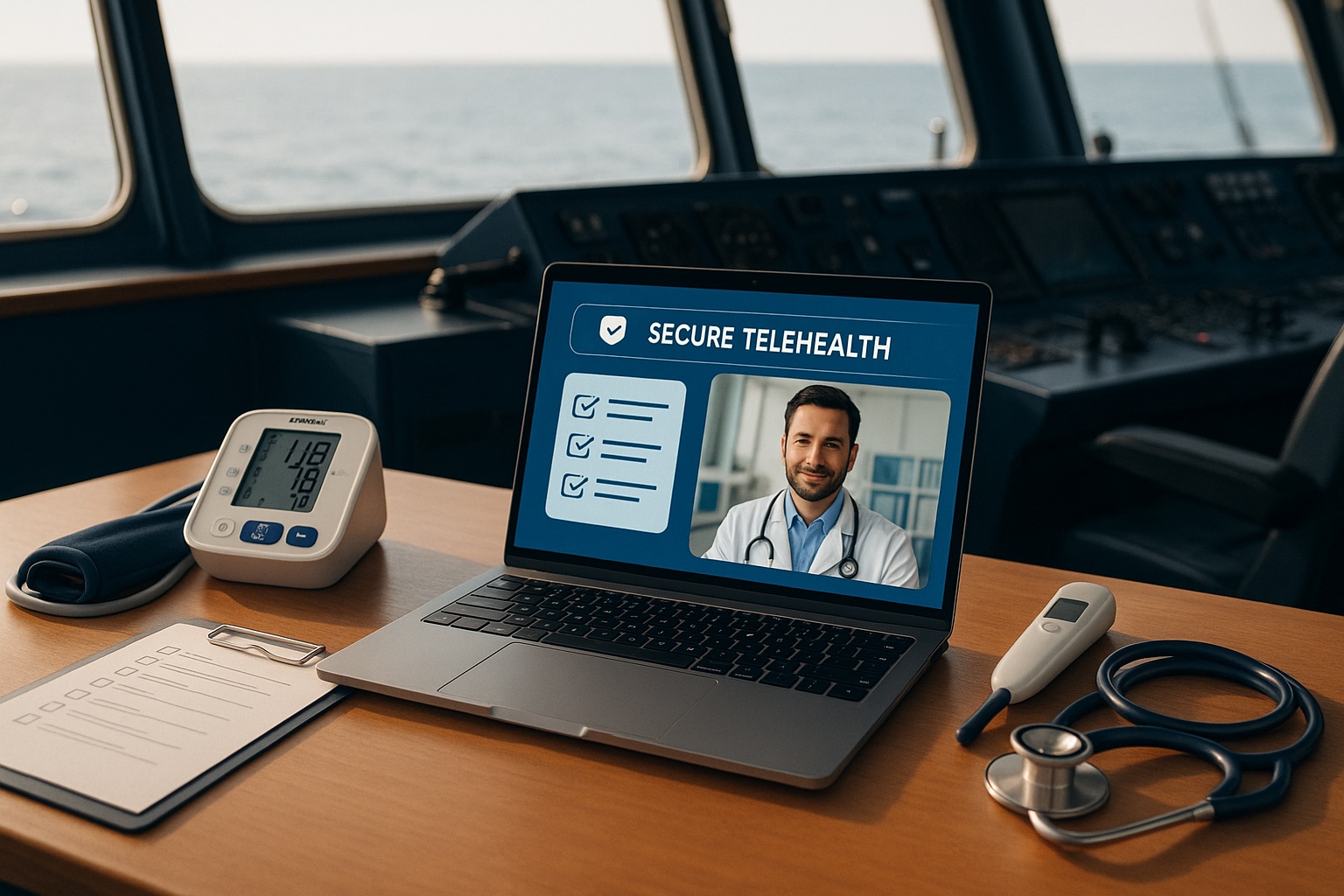
Maritime telehealth connects ships to healthcare providers for real-time medical support, but compliance with regulations is critical to avoid penalties and ensure crew safety. Operators must meet international and U.S. laws, like HIPAA, Maritime Labour Convention (MLC) 2006, and GDPR, while addressing cybersecurity risks and maintaining proper medical documentation. Key steps include:
- Regulations: Follow MLC, IMO, HIPAA, and GDPR rules for secure medical care and data handling.
- Technology: Use encrypted video platforms, electronic health records (EHRs), and satellite communications.
- Cybersecurity: Implement encryption, multi-factor authentication, and breach protocols.
- Training: Ensure staff are trained in telehealth tools, data privacy, and emergency procedures.
- Audits: Conduct regular compliance checks and maintain audit trails for at least six years.
Staying compliant requires robust systems, trained personnel, and continuous monitoring of evolving regulations. The right tools and processes not only protect patient data but also improve operational reliability.
Telemedical service procedure as per ALRS volume for shipboard medical emergency
Key Telehealth Compliance Regulations
Maritime telehealth operates under a complex web of international and national regulations. Navigating these rules is crucial for ensuring legal compliance, protecting crew members, and reducing liability risks.
International Maritime Regulations
The Maritime Labour Convention (MLC) 2006 serves as the foundation for global maritime telehealth standards. Covering over 1.2 million seafarers worldwide, it sets minimum requirements for medical care at sea, increasingly emphasizing telehealth solutions to connect crews with qualified healthcare providers. Additionally, International Maritime Organization (IMO) standards require vessels to carry appropriate medical equipment and ensure crews have timely access to medical advice, often facilitated by telemedicine platforms. As a result, telehealth systems must meet stringent demands, including 24/7 availability, reliable connectivity in challenging environments, and proper medical record management.
U.S. Federal and State Telehealth Laws
U.S.-flagged vessels must adhere to both international standards and additional federal regulations. Key requirements include:
- HIPAA Compliance: Governs the secure handling and transmission of patient data.
- DEA Regulations: Oversee the prescribing of controlled substances via telehealth.
- Medicare Rules: Impact vessels serving Medicare-eligible passengers or crew members.
Cross-state licensing adds another layer of complexity. Providers typically need licenses in the state where the patient is located during treatment. However, federal exceptions and the Interstate Medical Licensure Compact can simplify this process. Starting April 1, 2025, providers must document video capabilities, patient location, and the reasoning for using audio-only services. Additionally, state-specific rules may require distinct standards for patient consent, recordkeeping, and technology use, making it essential for maritime operators to adapt protocols as vessels move between jurisdictions.
Data Privacy and Cybersecurity Standards
For U.S. operations, HIPAA compliance is non-negotiable. This includes end-to-end encryption, secure data storage, and breach notification protocols. For vessels operating in European waters or involving EU citizens, GDPR imposes similarly strict privacy measures.
Non-compliance can lead to severe consequences, including hefty fines, legal action, and reputational damage. The FTC’s Health Breach Notification Rule also mandates timely consumer notifications in case of data breaches. Companies like NT Maritime offer secure communication platforms with encrypted, real-time data exchange, designed to meet these rigorous standards – especially critical for federal and military operations.
Emerging technologies bring additional transparency requirements. Providers must disclose the use of AI-driven tools, ensuring these meet clinical and security standards through certifications and audits. Increased oversight from regulatory bodies like the Office of Inspector General further underscores the importance of regular compliance audits to stay ahead of evolving rules.
The table below outlines key compliance requirements across various regulatory frameworks:
| Regulation Type | Key Requirements | Applicability |
|---|---|---|
| MLC 2006 / IMO | Medical care, credentialing, secure records | International (all vessels) |
| U.S. Federal/State Laws | Licensing, DEA regulations, Medicare, coding/billing | U.S.-flagged vessels |
| HIPAA / GDPR | Data privacy, cybersecurity, staff training | U.S./International |
| Safer Seas Act (2024) | Video surveillance, signage, reporting | U.S. vessels (10+ overnight) |
Required Telehealth Technologies and Communication Systems
To ensure effective telehealth compliance in marine environments, operators need a solid foundation of technology that aligns with regulatory standards. This means deploying reliable telehealth tools and communication systems tailored for maritime use.
Core Telehealth Tools
Key tools for telehealth include:
- Secure video conferencing platforms: These must be HIPAA-compliant and capable of functioning even with fluctuating connectivity.
- Electronic Health Records (EHR) systems: Designed to sync with shore-based facilities while supporting offline operations when needed.
- Remote diagnostic equipment: Built to withstand the challenging conditions of marine environments.
- Vital sign monitoring devices: These should integrate smoothly with EHR systems for seamless data management.
These tools are essential for providing round-the-clock access to remote medical professionals. They should also be portable and easy to use, especially during emergencies. Additionally, compatibility with the vessel’s existing communication systems and power infrastructure is non-negotiable.
Once the tools are in place, maintaining consistent and reliable connectivity becomes the next priority.
Reliable Communication Networks
Satellite connectivity forms the backbone of telehealth operations at sea, linking vessels to shore-based medical facilities. Modern satellite systems, such as Starlink, deliver impressive performance with download speeds reaching up to 220 Mbps, upload speeds up to 40 Mbps, and latency under 99 ms. This capability supports smooth video consultations and real-time data sharing.
Backup systems, like VSAT or 4G/5G networks, are essential to ensure communication continuity if the primary system goes down.
Integration with the ship’s IT infrastructure is another critical factor. Telehealth platforms must work seamlessly within the vessel’s network setup, which includes secure Wi-Fi, crew management systems, and safety protocols. Providers like NT Maritime specialize in solutions that align telehealth technologies with onboard communication systems, ensuring dependable connectivity and support.
Regular system testing and proactive bandwidth management are vital to pinpoint connectivity issues and prioritize medical communications during high-demand periods.
Cybersecurity Measures
Strong connectivity must be paired with robust cybersecurity measures to safeguard sensitive medical data. Key steps include:
- End-to-end encryption and multi-factor authentication: These ensure secure data transmission and compliance with HIPAA for U.S. operations and GDPR for international waters.
- Regular penetration testing and vulnerability scans: These help identify and address potential security gaps before they can be exploited.
- Incident response protocols: Clear guidelines for containment, regulatory notifications, and recovery processes minimize downtime during a breach.
Ongoing staff training on cybersecurity best practices is equally critical, reinforcing the security of sensitive medical information and ensuring compliance with regulatory standards. Regular updates and vigilance help protect both patient data and operational integrity.
Clinical Protocols and Medical Documentation
Building on reliable telehealth technologies and strong cybersecurity measures, having clear clinical protocols and accurate medical documentation is crucial for ensuring compliance in maritime telehealth operations. These practices not only help deliver consistent care but also meet regulatory requirements across various jurisdictions.
Telehealth Consultation Protocols
Standardized consultation procedures provide a structured approach to delivering medical care remotely. Start each consultation by confirming the patient’s identity and obtaining informed consent for data use. Use triage protocols to prioritize cases and establish clear steps for involving specialists or arranging emergency evacuations. Key details to document include the locations of the patient and provider, consultation duration, communication methods, discussion points, risk evaluations, and any diagnostic tests performed. On cargo vessels without onboard healthcare staff, it’s essential to train at least two crew members in operating telehealth systems to assist with remote consultations effectively.
Medical Recordkeeping Standards
Managing electronic health records (EHRs) securely and ensuring they are accessible to authorized personnel is a cornerstone of compliance. For U.S. operations, HIPAA-compliant platforms with strong encryption and secure login protocols are mandatory. International operations must also align with the regulations of the vessel’s flag state and port states. During emergencies, real-time updates to medical records are vital, allowing multiple providers to access up-to-date patient information simultaneously. To prevent data loss during connectivity issues, offline-capable EHR systems and robust backup procedures are essential. Additionally, regulatory bodies are paying closer attention to telehealth documentation and billing practices, making meticulous recordkeeping even more critical.
Training and Credentialing
Thorough training and proper credentialing are key to maintaining compliance and ensuring high-quality care in maritime telehealth. Credentialing should include verifying active medical licenses, completing telehealth-specific training, and participating in ongoing education. This training should cover operating telehealth equipment, managing EHRs, safeguarding patient privacy, and responding to emergencies. Certifications must be regularly updated to keep pace with advancing technology and changing regulations. Crew members assisting with telehealth should also be trained in equipment setup, secure data handling, and basic emergency procedures. Maintaining detailed records of all training sessions, certification renewals, and competency evaluations not only demonstrates compliance but also supports continuous quality improvement. Properly credentialed teams enhance patient safety, which remains a top priority in maritime healthcare.
sbb-itb-bda822c
Compliance Monitoring and Continuous Improvement
Adhering to regulatory standards and keeping pace with technological protocols is just the starting point for telehealth operations in maritime settings. To stay compliant, continuous monitoring is essential. The regulatory landscape is always evolving, and new security threats emerge regularly. Without proper systems in place, even small oversights can escalate into serious violations, jeopardizing both patient safety and operational integrity.
Routine Compliance Audits
Regular audits are a cornerstone of any successful maritime telehealth program. Conducting these reviews quarterly ensures that regulatory requirements – like HIPAA, international maritime regulations, and internal company policies – are consistently met. These audits should cover key areas such as telehealth documentation, secure data transmission protocols, and staff training records.
Maintaining digital audit trails is equally important. These records should document telehealth activities, system changes, and data access logs. To meet HIPAA requirements, operators should retain these records for at least six years, ensuring they are readily available for inspections.
A notable example of the benefits of systematic auditing comes from the U.S. Coast Guard. In 2024, they introduced annual HIPAA training and routine telehealth audits for clinic staff. This initiative led to a 15% reduction in compliance violations and an improvement in patient experience metrics. Their program also included technology troubleshooting training and standardized telehealth orientation procedures, with results tracked through quality metrics and usage reports.
Common compliance gaps uncovered during audits include poor documentation of telehealth sessions, insufficient staff training, and incomplete audit trails. Addressing these issues often requires adopting electronic health record (EHR) systems, implementing regular training programs, and using automated tools to log user actions without manual input.
These audits also pave the way for testing system upgrades, ensuring any new implementations meet compliance standards.
Pilot Testing and Feedback
Introducing new telehealth systems without testing can lead to operational hiccups and compliance risks. Pilot testing on a smaller scale – such as deploying systems on a handful of vessels – helps identify potential challenges under real-world maritime conditions. This approach allows operators to address issues like satellite communication reliability and data security before rolling out the systems across the entire fleet.
Feedback from crew members and healthcare providers during pilot testing is invaluable. Surveys, interviews, and incident reports can shed light on usability and reliability issues that may not emerge during lab testing. For example, if multiple vessels report connectivity problems during emergency consultations, operators can enhance satellite systems before full implementation.
This feedback should focus on practical compliance concerns, such as difficulties accessing patient records during emergencies, secure data transmission problems, or challenges in documenting consultations. When systems are difficult to use, staff may resort to workarounds that compromise compliance, so addressing these issues is critical.
By incorporating lessons learned from pilot testing into training programs, system updates, and compliance checklists, operators can ensure smoother deployments. This iterative process not only strengthens compliance but also boosts system reliability across the fleet.
Once systems are refined and deployed, robust incident reporting and regular policy updates help maintain compliance over time.
Incident Reporting and Policy Updates
Quick reporting of system failures or security breaches is essential for minimizing risks. Reports should include details like the time of the incident, the nature of the issue, affected systems, and the immediate response taken.
Incident response protocols should clearly outline steps for containment, investigation, notification of affected parties, and, when necessary, regulatory reporting. Regular drills and training ensure crew members know how to respond effectively and report incidents promptly. This rapid response approach protects patient safety and reduces compliance risks.
Policies should be updated at least annually or whenever significant changes occur – whether in regulations, technology, or operational procedures. Immediate policy reviews might be triggered by new telehealth laws, changes to HIPAA requirements, or insights from incident reports and audits. For instance, the Office of Inspector General has recently increased its focus on telehealth compliance, particularly in areas like coding, billing, and documentation practices, making regular updates even more critical.
Continuous monitoring adds another layer of protection. Real-time tracking of system performance, user activity, and data access patterns can help detect potential compliance risks early. Automated alerts, for example, can notify operators of unusual activity or possible security breaches, enabling swift corrective actions.
NT Maritime offers a robust example of continuous monitoring in action. Their integrated systems provide real-time tracking of telehealth performance and secure communication networks. With automated logging capabilities and system performance monitoring, these solutions help maritime operators maintain compliance while ensuring secure data transmission across satellite networks. This dual focus on compliance and operational reliability is essential for the unique challenges of maritime environments.
Using Checklists and Tables for Compliance Verification
Checklists and comparison tables are excellent tools for breaking down the complexities of telehealth regulations into manageable steps. They help maritime operators systematically address compliance requirements across various jurisdictions, ensuring no critical details are missed. These tools not only simplify the process but also ensure consistency in meeting maritime telehealth standards.
Checklist for Regulatory Compliance
A thoughtfully crafted checklist can help navigate the intricate demands of telehealth regulations. Each item should be specific enough to confirm completion while covering all necessary regulatory aspects. Drawing from both international and U.S. frameworks, effective checklists provide clear, actionable steps for compliance.
Key items to include might involve verifying that telehealth platforms comply with HIPAA security standards, confirming that staff have completed role-specific training, and ensuring business associate agreements are in place with technology vendors. Documentation should have its own section, detailing the proper logging of telehealth encounters, secure storage of electronic protected health information, and maintenance of audit trails for at least six years.
Cybersecurity measures deserve particular attention in these checklists. Operators need to confirm the use of encrypted communications, conduct regular vulnerability assessments, and establish reliable data backup procedures. These steps are increasingly important as cyberattacks on healthcare providers, including telehealth platforms, continue to rise.
Recent guidance from the Office of Inspector General has emphasized telehealth compliance, particularly in areas like coding, billing, and documentation practices. Checklists should also include verification of provider credentialing for each jurisdiction, confirmation of payer coverage for telehealth services, and documentation of patient consent for remote consultations. Each completed item should be dated and signed to create a reliable audit trail.
Comparison Table for Compliance Requirements
Comparison tables are a practical way to highlight differences in regulatory requirements across jurisdictions. They allow operators to quickly identify overlaps between international maritime regulations and U.S. federal guidelines, as well as any additional state-specific steps that may be required.
For instance, a table might compare licensing requirements, showing how flag state mandates differ from U.S. state licensing and CMS regulations. It could also contrast technology standards, outlining differences between IMO secure communications requirements, HIPAA standards, and state-specific telehealth mandates. Here’s an example:
| Requirement Type | International Maritime | U.S. Federal (Medicare) | State/Commercial Payers |
|---|---|---|---|
| Licensing | Flag state, IMO | State license, CMS | State license |
| Technology Standards | Secure comms, IMO | HIPAA, CMS | HIPAA, state-specific |
| Documentation | Medical logs, IMO | Detailed encounter logs | Varies by payer |
| Coding/Billing | N/A | POS codes, modifiers | Varies by payer |
| Credentialing | Flag state, IMO | By proxy, CMS | State, payer-specific |
Documentation requirements often differ significantly between jurisdictions. For example, Medicare mandates specific place of service codes and modifiers, while commercial payers may follow entirely different standards. These tables should be updated regularly to reflect any regulatory changes, ensuring compliance efforts remain current.
Evaluating Telehealth Technology Platforms
When choosing telehealth technology platforms, operators must adopt a systematic approach to evaluation. Comparison tables can help assess platforms based on features, costs, and maritime-specific capabilities. Important criteria include HIPAA compliance, compatibility with satellite communication networks, robust encryption, and offline functionality – especially critical for maritime operations where connectivity can be unpredictable.
Other factors to consider include integration with medical devices, user training requirements, vendor support quality, and total cost of ownership. Some platforms may appear cost-effective initially but require extensive training or lack the support needed for maritime settings.
NT Maritime’s integrated communication systems serve as a strong benchmark for these evaluations. Their secure communication networks and telehealth technologies are designed specifically for maritime environments, offering features like real-time performance tracking and automated logging to meet compliance needs. When evaluating other platforms, operators should compare features such as satellite compatibility, cybersecurity measures, and overall reliability to ensure they align with maritime requirements.
Finally, ensure the vendor’s compliance with maritime regulations. Not all telehealth platforms are equipped to handle the unique challenges faced by maritime operators. It’s essential to verify that vendors can support compliance across multiple jurisdictions. Additionally, scalability is a key consideration – platforms that work well on a few vessels may not perform as effectively during larger deployments.
Conclusion: Maintaining Maritime Telehealth Compliance
Ensuring compliance in maritime telehealth is an ongoing process that demands vigilance and a willingness to adapt. The unique challenges of the maritime environment – like unreliable connectivity and ever-changing regulations – make this a particularly complex task.
At the heart of successful compliance are three key components: a strong technological foundation, active regulatory monitoring, and regular system updates. These elements work together to protect patient data and maintain seamless operations.
Technology plays a crucial role here. Tools like encrypted communication networks and HIPAA-compliant platforms are vital for meeting both U.S. and international standards. With cyberattacks on the rise, robust cybersecurity measures are no longer optional – they’re essential.
Keeping up with regulatory changes is equally important. Oversight agencies are paying closer attention to areas like coding, billing, and documentation. Staying updated with guidelines from the International Maritime Organization, CMS, and state regulations is a must to avoid compliance gaps.
Some maritime telehealth programs have already shown how effective compliance can lead to tangible results. Take, for example, a commercial shipping company that implemented encrypted video consultations and conducted routine audits. This approach not only reduced medical evacuations by 30% but also boosted crew satisfaction [2, 5]. This case demonstrates how compliance isn’t just about meeting legal requirements – it can directly enhance crew well-being and operational efficiency. Achieving such results also highlights the importance of ongoing staff training and regular system evaluations.
Continuous staff training and credentialing are critical as both technology and regulations evolve. Without them, even the best systems can fall short.
The maritime telehealth landscape is changing rapidly. Operators who establish clear protocols for audits, incident reporting, and continuous improvement will be better equipped to adapt while maintaining compliance.
Companies like NT Maritime are setting an example with their integrated communication systems tailored specifically for maritime needs. Their secure networks and telehealth technologies offer features like automated logging and real-time performance tracking, helping operators navigate compliance across multiple jurisdictions while ensuring reliable medical care at sea.
Building a sustainable telehealth program requires a proactive approach. By combining dependable technology, ongoing training, and diligent regulatory monitoring, operators can safeguard crew health and meet all legal requirements. For detailed steps, refer to the regulatory compliance checklist provided earlier in this guide.
FAQs
What are the key U.S. and international regulations maritime telehealth systems must follow, and how do they differ?
Maritime telehealth systems must navigate a complex web of U.S. and international regulations to ensure they operate safely, securely, and effectively. In the U.S., compliance with HIPAA (Health Insurance Portability and Accountability Act) is non-negotiable. This law safeguards patient data and ensures secure communication of health information. On the global stage, maritime operators are often required to follow IMO (International Maritime Organization) standards, which focus on vessel safety and operational protocols. Additionally, if these systems handle the data of European Union citizens, they must comply with the GDPR (General Data Protection Regulation) to protect privacy.
The key distinction between these regulations lies in their focus. U.S. laws like HIPAA are specifically designed to protect health information, while international standards such as those from the IMO take a broader approach, emphasizing overall safety and functionality. To deliver secure and dependable healthcare services at sea, operators must ensure their telehealth systems meet both U.S. and international requirements.
How can maritime operators ensure secure and reliable telehealth services onboard?
To deliver secure and dependable telehealth services at sea, maritime operators need communication networks built to handle the distinct challenges of the maritime environment. NT Maritime provides specialized IT and communication solutions tailored to meet these needs, focusing on both connectivity and cybersecurity.
Their offerings include high-speed internet, encrypted communication tools, and integrated systems for voice, video, and messaging. These features ensure that operators can provide uninterrupted telehealth services to both passengers and crew, even in the most remote ocean regions.
What steps should maritime operators take to ensure their telehealth systems comply with regulations?
To keep maritime telehealth operations in line with regulations, it’s essential to follow a systematic approach and prioritize regular audits. Start by pinpointing the regulations and standards that apply specifically to maritime telehealth. These might include rules around data privacy, secure communication systems, and patient safety protocols.
Once you’ve identified the requirements, evaluate your current telehealth systems to ensure they meet these standards. This means checking for secure data transmission, keeping software updated, and providing adequate training for onboard staff. It’s equally important to document all these processes thoroughly. Detailed records will not only help maintain compliance but also serve as evidence during inspections or audits.
For specialized support, NT Maritime provides secure communication technologies designed for maritime operations, helping simplify compliance efforts while boosting operational efficiency.