

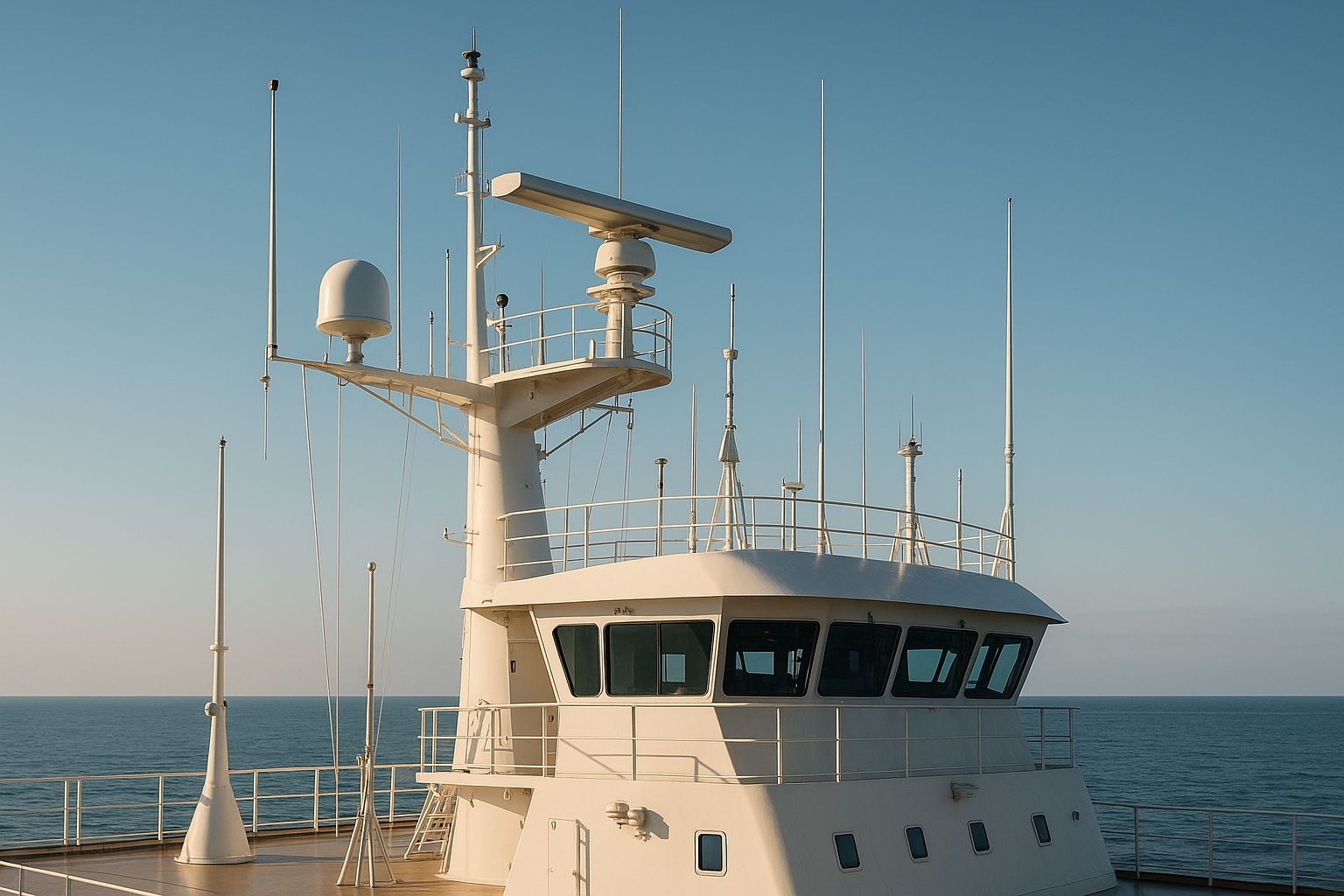
Modern ships need communication systems that go beyond basic radios. Whether for safety, efficiency, or passenger comfort, these systems must handle everything from high-speed internet to emergency alerts. Here’s a quick rundown of the eight key features every ship communication system should include:
- High-Speed Internet: Reliable satellite connections with speeds up to 220 Mbps for real-time operations and passenger satisfaction.
- Secure Protocols: Encryption and cybersecurity measures to protect sensitive data and meet regulations.
- Real-Time Data Sharing: Instant system integration for better decision-making and smoother operations.
- Emergency Response Systems: Automated alerts and tools like EPIRBs for faster rescues and compliance with safety standards.
- Onboard Calling & Messaging: Reliable tools for crew coordination and passenger communication.
- Video Calling & Telehealth: Real-time medical support and connectivity for passengers and crew.
- Integrated Guest & Crew Systems: Unified platforms for efficient service delivery and safety alerts.
- Regulatory Compliance: Systems designed to meet international maritime safety and communication standards.
These features ensure ships stay connected, safe, and efficient, meeting the demands of modern maritime operations.
How Do Maritime Vessels Communicate? – VSAT Systems Explained
1. High-Speed Internet Connectivity
High-speed internet is the backbone of today’s ship communication systems, keeping maritime operations running smoothly. Reliable satellite communication ensures vessels stay connected, even in the most remote areas. For example, NT Maritime offers impressive speeds of up to 220 Mbps for downloads, 40 Mbps for uploads, and latency as low as 99ms – providing the dependable connectivity modern ships require for critical functions.
Operational Efficiency
Fast internet has transformed how ships operate by enabling continuous vessel tracking, remote diagnostics, and real-time weather updates. These features improve coordination, streamline maintenance, and make route planning more efficient. Solutions like Starlink are now being installed to provide Wi-Fi on boats, reflecting the growing demand for high-speed internet across marine services like yacht automation and marine security systems.
2. Secure Communication Protocols
In the world of maritime operations, protecting ship communications is just as important as ensuring physical safety. With the increasing reliance on digital networks, strong security measures are essential to guard against unauthorized access and to counter the ever-changing landscape of cyber threats. These safeguards not only protect sensitive data but also support other critical onboard functions.
Safety and Security
Cybersecurity threats in the maritime industry are not hypothetical – they’re a growing reality. Ships face risks from hackers who may attempt to steal confidential data or disrupt essential operations. To combat these dangers, advanced cybersecurity measures are designed to create multiple layers of defense.
"Cybersecurity is a critical consideration in modern maritime communication, particularly in the naval context. With the increasing reliance on digital technologies, it’s essential to have robust communication security measures in place to protect the various internal communication networks from cyber threats." – Vitavox
Encryption plays a key role in securing maritime networks. By scrambling data during transmission, encrypted channels ensure that even if intercepted, the information remains unreadable to unauthorized individuals. NT Maritime employs advanced encryption standards to safeguard everything from routine operational messages to sensitive passenger data.
Some maritime environments require specialized solutions. For example, submarines and underwater vehicles often rely on engineered acoustic communication technologies to securely transmit data under challenging conditions, ensuring reliable and secure communication even in extreme environments.
Operational Efficiency
Secure communication protocols do more than just prevent cyberattacks – they also streamline operations. By protecting critical communication channels, these protocols allow crews to focus on their tasks without worrying about potential breaches, leading to smoother and more efficient operations.
Regulatory Compliance
As cybersecurity regulations continue to evolve, compliance becomes increasingly vital. Strong protocols not only protect against threats but also ensure that vessels meet strict federal and military standards. NT Maritime’s solutions are designed to align with these requirements, making them suitable for even the most sensitive operations.
3. Real-Time Data Sharing and Integration
Modern ships handle massive amounts of data, and ensuring smooth interaction between onboard systems and shore operations is essential. Real-time data sharing creates a unified network where navigation, engine performance, passenger details, and crew communications come together effortlessly. This interconnected system transforms standalone operations into a responsive communication network, enabling better efficiency, heightened safety, and higher-quality service.
Operational Efficiency
When ship systems share data instantly, decisions can be made faster and with greater precision. For example, bridge officers can monitor engine performance in real time while maintenance teams receive immediate alerts about equipment issues. This eliminates delays caused by disconnected systems.
Take NT Maritime’s communication platform as an example. It links passenger management systems with crew communication tools, automatically routing passenger requests to the right crew members based on their location and availability. At the same time, guest services dashboards are updated instantly. Ships with real-time data sharing also enjoy faster maintenance responses, reducing the risk of costly equipment failures and minimizing downtime during port stops. Additionally, by integrating navigation, engine, and weather data, ships can make routing decisions that optimize fuel use without requiring manual data transfers.
Safety and Security
Real-time integration enhances safety by enabling continuous monitoring across all systems. For instance, when weather sensors detect hazardous conditions, the data is immediately shared with navigation systems, crew alert networks, and passenger communication platforms. This ensures safety protocols are activated across all operations without delay.
Security also benefits from this integration. Emergency responses become faster and more coordinated. In a medical emergency, for example, the ship’s communication system can instantly connect with Telehealth services while notifying the medical bay, the bridge, and passenger management systems to prepare for potential itinerary changes – all within seconds.
Cybersecurity is strengthened as well. Integrated systems allow for unified monitoring, so if one network segment detects suspicious activity, the information is shared across all systems. This coordinated approach helps prevent isolated security threats from escalating into larger issues.
Passenger and Crew Experience
Real-time data integration doesn’t just improve operations – it elevates the experience for both passengers and crew. When passengers use onboard communication systems, their requests are automatically synced with crew schedules, inventory systems, and service delivery platforms. This results in quicker responses and more tailored service.
For the crew, having all essential information accessible through a single interface reduces stress and ensures no important details are overlooked. This streamlined approach improves job satisfaction and operational accuracy.
Passengers, too, benefit from this seamless connectivity. Video calls to shore-based services work without interruption, and onboard internet systems can adjust bandwidth allocation in real time based on usage and demand. The result? A smoother, more reliable experience where all systems work together to deliver top-notch service.
4. Emergency Response Systems
When emergencies arise at sea, every second matters. Reliable emergency response systems are essential for sending immediate distress alerts and coordinating rescue efforts. These systems must perform seamlessly, even in the harshest conditions, such as severe weather or equipment malfunctions.
Safety and Security
Emergency response systems connect ships to global rescue centers, ensuring help is always within reach. Modern systems, guided by GMDSS (Global Maritime Distress and Safety System) standards, rely on multiple communication channels like VHF radios, satellite links, and EPIRBs (Emergency Position-Indicating Radio Beacons) to ensure distress messages are delivered.
Automated distress alerting has transformed how emergencies are handled at sea. When activated, emergency beacons instantly send out crucial information, including GPS coordinates, vessel identification, and the nature of the distress, directly to maritime rescue coordination centers. This automation eliminates delays caused by manual processes, especially during chaotic emergencies.
Integrated telehealth services add another layer of safety, allowing ships to connect with shore-based medical professionals via video for real-time diagnoses and treatment advice. This feature is particularly vital during long voyages when the nearest port may be days away.
Two-way emergency communication provides a lifeline for detailed coordination. Unlike traditional mayday signals, modern systems enable real-time conversations, allowing rescue teams to gather critical information such as passenger counts, injury details, weather updates, and the best strategies for rescue. This two-way dialogue significantly improves the speed and success of rescue operations.
These advanced, automated systems ensure smoother onboard operations during emergencies, reducing confusion and enhancing response efficiency.
Operational Efficiency
For emergency systems to be effective, they must integrate seamlessly with onboard operations. A coordinated notification approach lets all departments – bridge, engine room, medical bay, and passenger services – activate their emergency protocols simultaneously, avoiding delays caused by manual communication chains.
Automated passenger and crew accountability systems further enhance efficiency. By using digital mustering tools, ships can track the locations of passengers and crew through devices like keycards. During emergencies, these systems instantly generate headcount reports and flag missing individuals, providing rescue teams with accurate data on who needs assistance.
To ensure communication remains uninterrupted, backup power systems, satellite links, and battery-operated devices are in place. This redundancy guarantees that distress calls and rescue coordination continue even during power outages or extended emergencies.
Regulatory Compliance
Emergency response systems are also governed by strict regulations to ensure their reliability. The International Maritime Organization (IMO) sets clear safety standards for communication equipment based on a ship’s size, route, and passenger capacity. Compliance with these standards is mandatory for all commercial vessels.
Regular maintenance checks are essential. Weekly radio tests, monthly EPIRB inspections, and annual system reviews confirm that all emergency communication channels are operational and that crew members are prepared to use them under pressure.
The SOLAS (Safety of Life at Sea) Convention outlines specific requirements for different types of vessels. For instance, passenger ships must have comprehensive systems like public address systems capable of broadcasting emergency instructions in multiple languages, along with two-way communication tools that allow passengers to request help from their cabins.
Passenger and Crew Experience
Beyond operational benefits, these systems play a critical role in reassuring passengers and crew during emergencies. Clear, multilingual emergency announcements ensure that passengers understand the situation and know what actions to take. Modern systems can automatically translate messages, making safety instructions accessible to everyone, regardless of language barriers.
For the crew, confidence grows when they trust the reliability of their emergency systems. Comprehensive training programs prepare them to respond quickly and efficiently, leading to calmer, more organized actions during real emergencies – a benefit for everyone on board.
Emergency systems also provide family notification features, allowing passengers to contact loved ones during extended delays or diversions caused by emergencies. This capability is particularly comforting during medical crises or severe weather events that require rerouting, helping to ease anxiety for both passengers and their families.
5. Onboard Calling and Messaging
Modern ships depend on onboard calling and messaging systems to keep crew, passengers, and shore contacts in constant communication. These tools handle everything from routine updates to urgent matters, ensuring operations run smoothly and everyone stays connected.
Operational Efficiency
Onboard communication systems play a critical role in keeping operations efficient and eliminating delays. For example, instant communication between the engine room, bridge, and housekeeping helps prevent bottlenecks that could disrupt workflow.
Features like integrated voicemail ensure important messages are captured and sent to the right departments without delay. Broadcast messaging allows entire teams to receive updates simultaneously, keeping everyone on the same page and focused on their tasks.
Additionally, app-based calling enables shore personnel to directly contact crew members. This speeds up tasks like technical consultations, supply coordination, and even personal communications with family, making operations more streamlined and responsive.
Safety and Security
These systems are vital for both routine safety and emergency situations. They enhance safety protocols by ensuring reliable communication and protecting sensitive data.
During safety drills or real emergencies, they enable coordinated responses across departments. For instance, security personnel can quickly contact medical staff, while bridge officers work with engine room teams to manage critical systems. Conference calling features allow multiple departments to collaborate in real time, ensuring swift and effective decision-making when it matters most.
Some systems also offer location-based calling, which allows supervisors to directly reach crew members in specific areas. This feature boosts operational security and ensures rapid responses to incidents. Encrypted communication channels add another layer of protection, safeguarding sensitive discussions about passenger safety, security issues, or operational challenges.
Passenger and Crew Experience
Reliable communication systems significantly enhance the onboard experience for both passengers and crew. For the crew, staying connected with family while at sea helps boost morale and maintain a sense of well-being.
For passengers, conveniences like cabin-to-cabin calling and messaging create a more enjoyable and modern travel experience. Support for multiple languages ensures that international crew members can communicate effectively, fostering a more unified and efficient work environment. Together, these features contribute to the seamless network that supports today’s maritime operations.
sbb-itb-bda822c
6. Video Calling and Telehealth Features
Passenger and Crew Experience
Modern video calling and telehealth services – powered by 5G, WiFi, and advanced satellite technology – are transforming onboard communication and medical care. These tools enable real-time video consultations with shore-based medical professionals, ensuring timely support during emergencies and fostering better communication for passengers and crew.
This enhanced connectivity allows for seamless video discussions with healthcare providers, improving access to medical advice while also supporting personal connections with family and friends back home. Commercial maritime broadband services ensure reliable voice and internet access, making these telehealth solutions both practical and accessible.
7. Integrated Guest and Crew Communication Systems
Integrated communication systems take onboard connectivity to the next level, creating a seamless link between guests and crew while improving overall operations.
Operational Efficiency
These systems make ship operations smoother by connecting all personnel and passengers through a single communication framework. By breaking down barriers between different communication tools, they ensure that everyone is on the same page.
For example, when a guest orders room service via their cabin interface, the request is instantly directed to the right department. At the same time, inventory systems and schedules are updated automatically. This reduces delays, avoids confusion, and keeps everything running efficiently. From housekeeping and dining to technical teams, everyone benefits from real-time coordination.
The systems also support onboard calling, messaging, and video communication, enabling crew members to manage tasks like maintenance and scheduling through a unified platform. With proper access controls in place, these tools ensure that sensitive operations stay secure while still being easy to manage.
Safety and Security
Integrated communication systems play a critical role in keeping everyone safe. During emergencies, they can send alerts to crew members, notify passengers through cabin interfaces, and even connect directly with emergency services onshore – all at the same time. This quick and coordinated response strengthens safety protocols.
Security is also enhanced with features that allow passengers to report incidents directly through their interfaces. Alerts are sent immediately to the relevant security staff, and automatic logs are created to meet compliance requirements. For crew members, secure channels make it easy to report safety concerns without risking sensitive information.
Access control features are another key aspect, ensuring that operational communications are kept separate from passenger-facing systems. This setup strikes a balance between maintaining security and enabling rapid responses when needed.
Passenger and Crew Experience
For passengers, these systems offer a user-friendly experience that feels as simple as using a smartphone. Through cabin touchscreens or personal devices connected to the ship’s network, guests can book services, make reservations, or contact crew members with ease.
Crew members also benefit from having all communication tools – like calling, messaging, voicemail, and video calls – consolidated into one interface. This eliminates the need to juggle multiple devices and simplifies their daily routines.
Additionally, the integration supports app-to-ship calls, allowing passengers to stay connected with friends and family onshore. Crew members, too, can use the same infrastructure to maintain communication during extended deployments, improving their overall connectivity and morale.
8. Maritime Regulations and Standards Compliance
Maritime regulations are crucial for ensuring that communication systems function reliably, especially in high-stakes situations. Ship communication systems must align with various regulatory frameworks while maintaining operational effectiveness.
Safety and Security
The International Maritime Organization (IMO) developed the Global Maritime Distress and Safety System (GMDSS) to ensure ships have specific communication capabilities tailored to their operating zones and vessel types. In U.S. waters, the Federal Communications Commission (FCC) oversees radio licensing, equipment certification, and station identification protocols.
To handle emergencies effectively, communication systems must include backup power and redundant pathways. This ensures distress signals can be transmitted over multiple channels without fail. Additionally, the International Ship and Port Facility Security (ISPS) Code requires stringent access controls, encryption, and audit trails to safeguard sensitive operational data.
These safety and security measures are not just technical requirements – they form the backbone of maritime compliance frameworks.
Regulatory Compliance
International conventions like the Maritime Labour Convention (MLC) mandate communication systems that are clear, multilingual, and accessible. This applies to both crew communication with shore facilities and passenger emergency instructions. Systems must also provide cost-efficient connectivity with tools for monitoring usage.
The Safety of Life at Sea (SOLAS) Convention sets standards for integrating communication systems with navigation and bridge equipment. It also requires detailed logs for all safety-related communications. Regular testing and certification ensure these systems meet SOLAS requirements.
Environmental regulations add another layer of responsibility, emphasizing the need for accurate reporting. Modern communication systems support this through reliable data transmission, helping ships meet environmental monitoring requirements.
Operational Efficiency
Building compliance into daily operations does more than ensure safety – it also boosts efficiency. Automated reporting features reduce administrative burdens while maintaining adherence to regulations.
With integrated systems, tasks like logging, record retention, and accessing documentation become seamless. This simplifies compliance audits and inspections by port state control authorities, saving valuable time.
When communication systems are connected to ship management platforms, compliance data flows smoothly across navigational, engineering, and administrative functions. This interconnected approach not only ensures regulatory adherence but also enhances the overall efficiency of ship operations.
Feature Comparison Table
Below is a detailed comparison of key features, outlining their primary benefits, limitations, and ideal use cases.
| Feature | Primary Benefits | Key Limitations | Best Use Cases | NT Maritime Solution |
|---|---|---|---|---|
| High-Speed Internet Connectivity | Supports real-time operations, enhances crew welfare, and boosts passenger satisfaction | Weather-dependent; involves high operational costs | Ideal for large vessels, passenger ships, and long voyages | Offers speeds up to 220 Mbps download, 40 Mbps upload, and <99ms latency |
| Secure Communication Protocols | Protects data, ensures compliance, and guards against cyber threats | Complex setup; requires specialized training | Best for government vessels and fleets handling sensitive data | Meets federal and military standards with encrypted network solutions |
| Real-Time Data Sharing | Improves decision-making, boosts efficiency, and reduces costs | Consumes significant bandwidth; demands system integration | Suitable for fleet management, cargo tracking, and weather monitoring | Fully integrated into NT Maritime’s digital communication platform |
| Emergency Response Systems | Enhances safety, ensures compliance, and reduces liability risks | Requires backup power systems | Essential for all vessel types to meet safety regulations | Modular emergency systems included in NT Maritime’s suite (contact for details) |
| Onboard Calling and Messaging | Streamlines crew coordination, improves efficiency, and controls costs | Limited to ship WiFi coverage; may face interference | Useful for daily operations and internal crew communication | Offers basic and advanced plans with calling, messaging, and voicemail options |
| Video Calling and Telehealth | Provides remote medical consultations, supports crew welfare, and connects families | High bandwidth usage; technically complex | Ideal for medical emergencies, crew retention, and passenger services | Integrated video calling and telehealth support for remote medical needs |
| Integrated Guest and Crew Systems | Enhances service delivery and streamlines operations | Requires integration with passenger management systems; higher upfront costs | Best for cruise ships, passenger ferries, and hospitality-focused operations | Includes hotel and guest systems with app-to-ship calling features |
| Regulatory Compliance | Ensures legal protection, operational authorization, and safety | Involves ongoing maintenance costs and regular audits | Required for all commercial vessels adhering to international standards | Provides secure, compliant communication aligned with federal and military regulations |
This table consolidates the unique strengths of each feature, offering a quick reference for decision-making.
Bandwidth needs differ across features. Basic options like calling and messaging use minimal data, while advanced tools like video calling and real-time data sharing demand much higher connectivity. High-speed internet serves as the backbone for advanced capabilities, including telehealth and integrated guest services.
Implementation complexity also varies. Basic tools are relatively simple to install, while integrated systems may require substantial upgrades and customization.
Cost considerations go beyond setup expenses, factoring in ongoing data usage and hardware investments. However, integrated systems often provide long-term savings by consolidating multiple functions. Scalability is another key factor, with basic features being easy to replicate across fleets, while advanced systems may need tailored configurations.
NT Maritime’s tiered services allow vessels to start with essential features and expand as operational needs evolve. This comparison underscores how integrated solutions enable safer, more efficient, and compliant maritime operations.
Conclusion
Modern maritime operations demand communication systems that go far beyond basic connectivity. The eight features highlighted in this guide are the building blocks for safer, more efficient, and forward-thinking ship operations. From high-speed internet that supports real-time coordination to emergency response capabilities that safeguard lives at sea, each element is essential to maritime success.
Safety is a top priority. Advanced systems enable quick responses during emergencies, facilitate seamless information exchange, and ensure crew members can call for help when needed. These technologies also improve distress alert visibility and enhance situational awareness, offering critical protection for both crew and cargo.
Efficiency is another key benefit. Reliable communication systems allow for smoother coordination between vessels, better transit planning, and streamlined operations through real-time data sharing. These capabilities translate into tangible operational improvements.
NT Maritime provides the infrastructure to make these benefits a reality. Their systems deliver up to 220 Mbps download speeds, 40 Mbps uploads, sub-99ms latency, and encryption, along with integrated telehealth and messaging services. This modular approach means vessels can start with core features and expand as needs grow – whether outfitting passenger ferries with guest communication systems or equipping government ships with secure, encrypted networks.
As the maritime industry embraces greater digitization and connectivity, investing in advanced communication systems is no longer optional – it’s essential for staying competitive and meeting regulatory standards. By adopting these eight key features, vessels can achieve the connectivity and safety necessary to thrive in today’s maritime landscape.
FAQs
How does high-speed internet connectivity boost efficiency on modern ships?
High-speed internet has become a game-changer for modern ships, boosting their efficiency through faster communication, instant data sharing, and real-time decision-making. Crews can quickly access vital updates, weather forecasts, and navigational information, streamlining operations and minimizing delays.
Beyond operational benefits, dependable connectivity enables remote monitoring and diagnostics of ship systems. This helps cut down on downtime and maintenance expenses. On top of that, it plays a key role in enhancing crew welfare by allowing them to stay connected with loved ones and enjoy onboard entertainment – positively impacting morale and productivity.
How are secure communication protocols implemented on ships, and why are they crucial?
Secure communication protocols on ships play a crucial role in maintaining smooth operations, safeguarding lives at sea, and complying with regulatory standards. These systems protect sensitive data, block unauthorized access, and ensure that critical messages – like distress signals or emergency instructions – are transmitted accurately and without delay.
Using encrypted systems and strong authentication methods, these protocols ensure the confidentiality and reliability of both ship-to-ship and ship-to-shore communications. This approach not only boosts safety but also enables quick, informed decision-making during real-time maritime operations.
How do integrated communication systems improve the experience for passengers and crew on ships?
Integrated communication systems are a game-changer for life onboard, benefiting both passengers and crew in meaningful ways. These systems bring together various tools and technologies, making communication smoother and more efficient for everyone.
For the crew, this means better coordination and faster responses. Real-time updates help streamline operations, allowing decisions to be made quickly and effectively. Passengers, on the other hand, enjoy perks like high-speed internet, easy access to entertainment, and seamless interaction with ship services. These features make the journey more comfortable and enjoyable.
By improving communication and accessibility, these systems create a safer and more pleasant experience for everyone onboard, turning maritime travel into something far more convenient and connected.