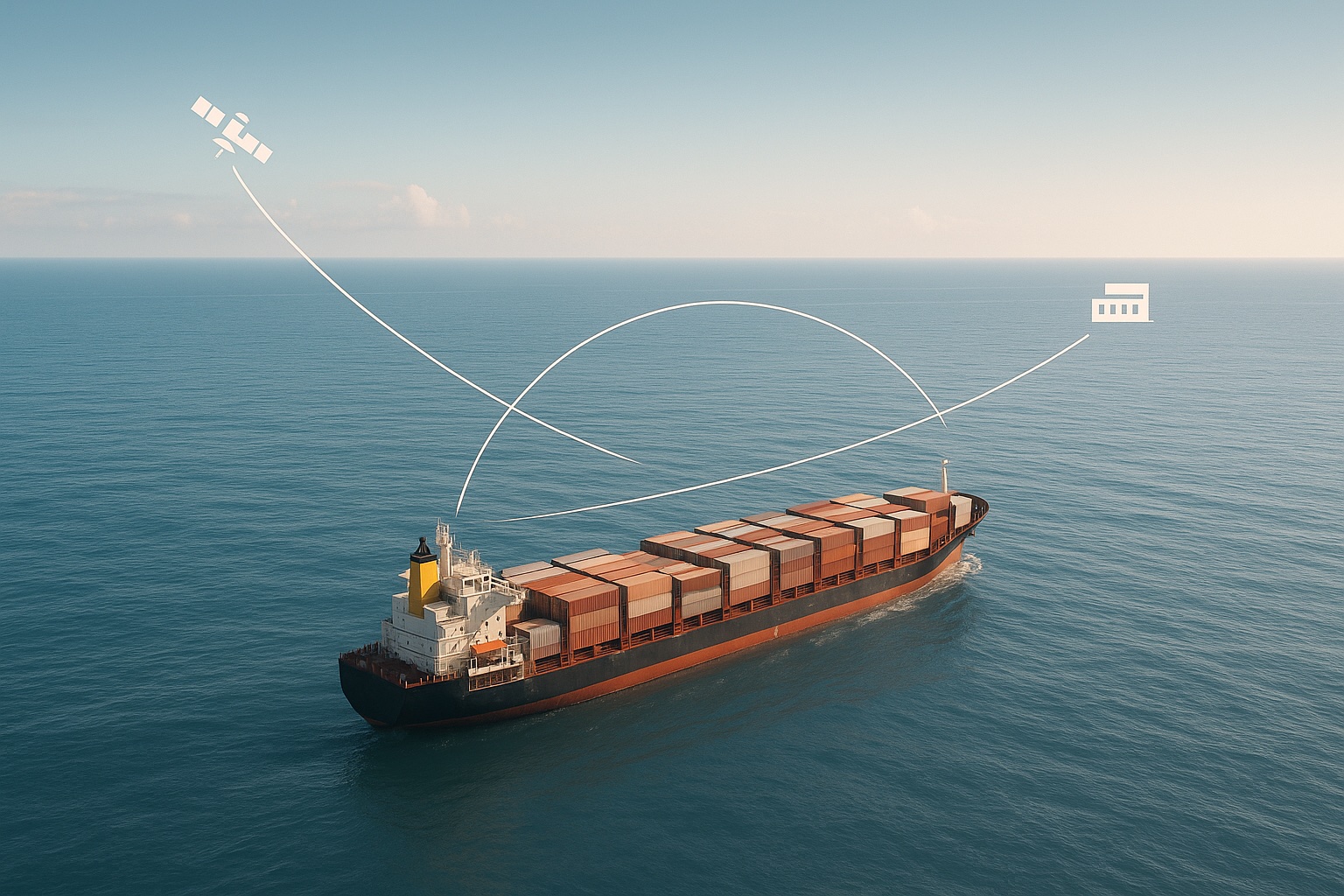

POS Systems for Cruise Guest Services

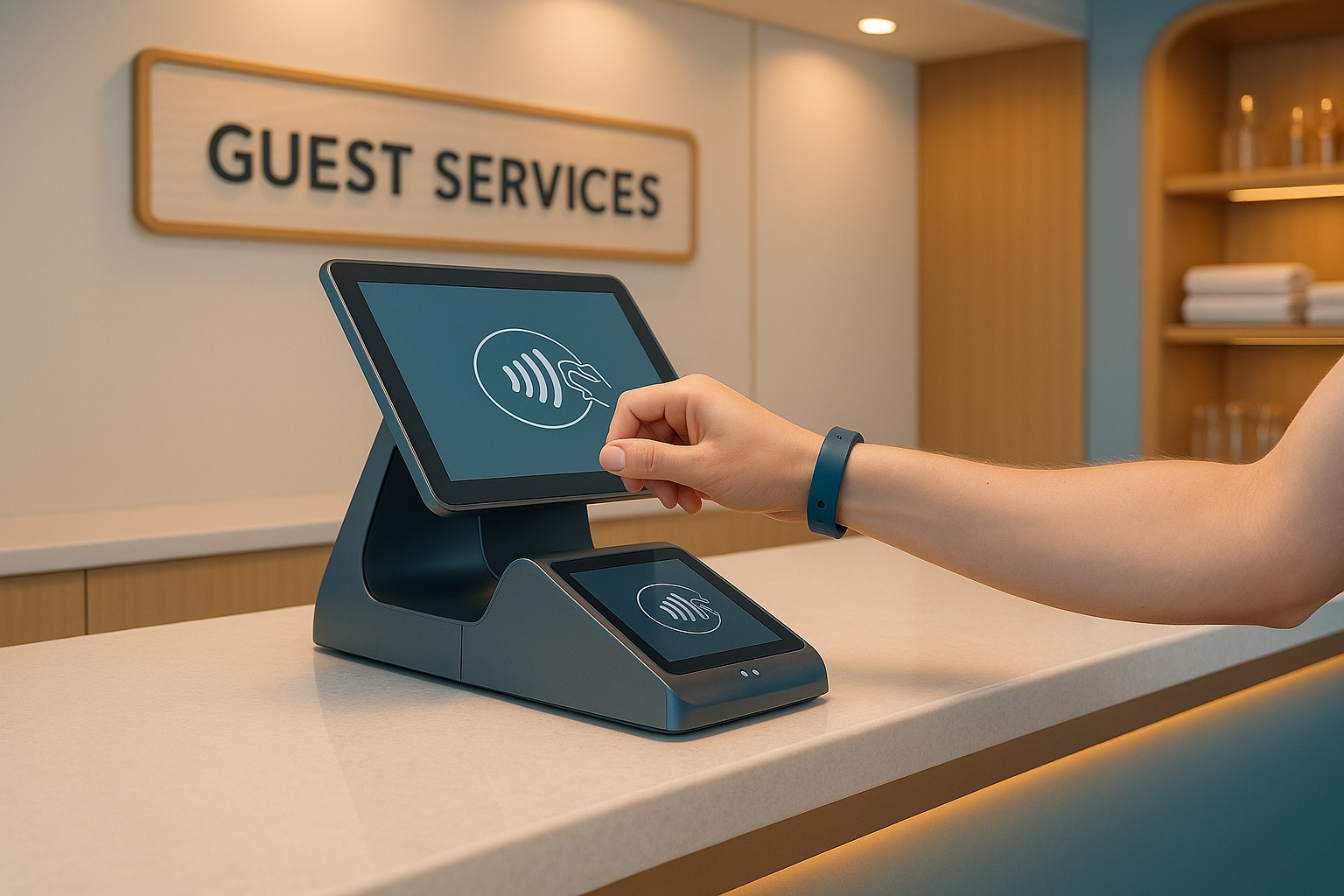
POS systems on cruise ships simplify transactions, link guest purchases to cabin accounts, and improve service across bars, restaurants, shops, spas, and excursions. These systems enable cashless payments via boarding cards or wearables, consolidating charges into a single bill. Integration with property management systems ensures accurate billing and personalized services, while offline functionality addresses connectivity challenges at sea. Features like mobile POS devices, self-service kiosks, and real-time inventory tracking enhance crew efficiency and guest satisfaction by reducing wait times, minimizing errors, and offering tailored experiences. Reliable onboard networks are critical to keeping these systems operational, with providers like NT Maritime supporting secure and high-speed communication. Future advancements may include AI-driven analytics and biometric payments, though challenges like data security and cost remain.
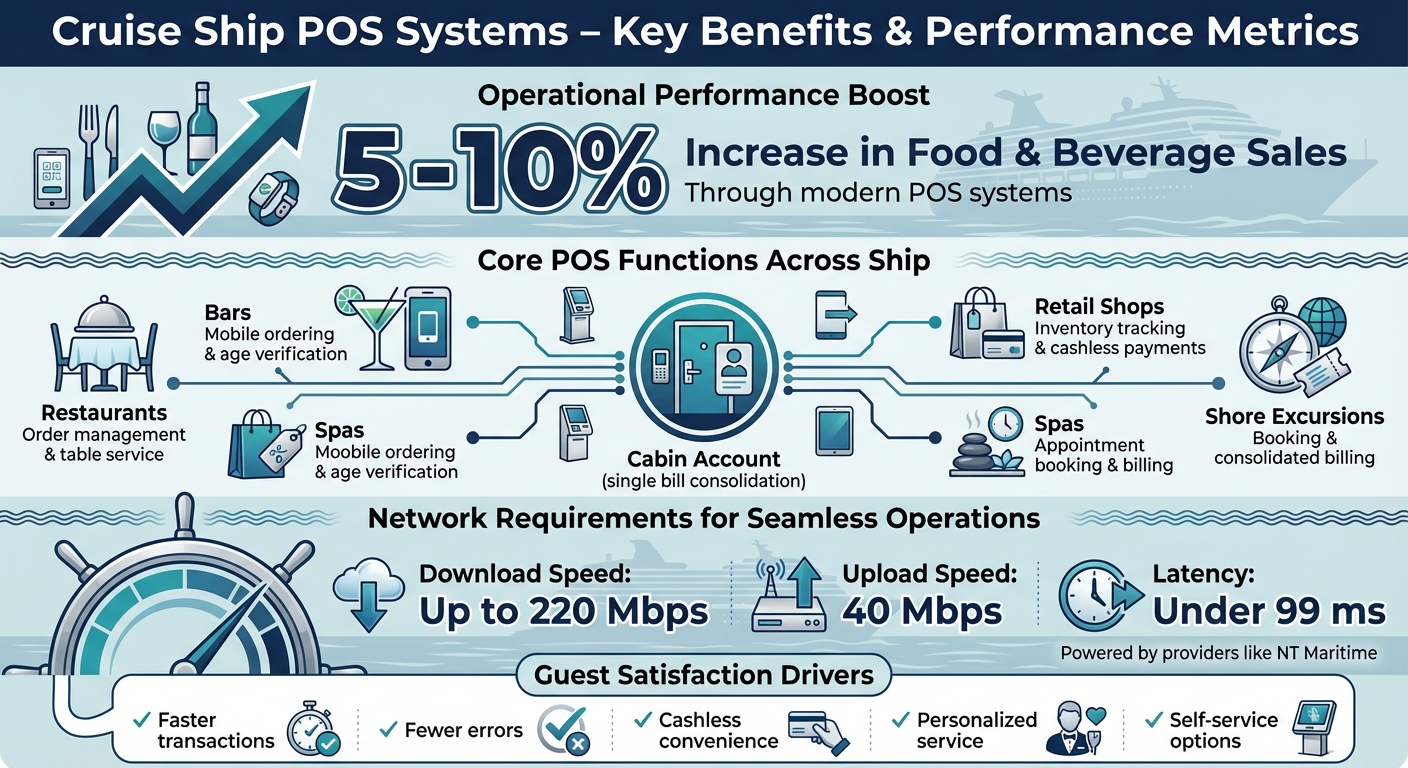
Key Benefits and Performance Metrics of Cruise Ship POS Systems

Key Benefits and Performance Metrics of Cruise Ship POS Systems

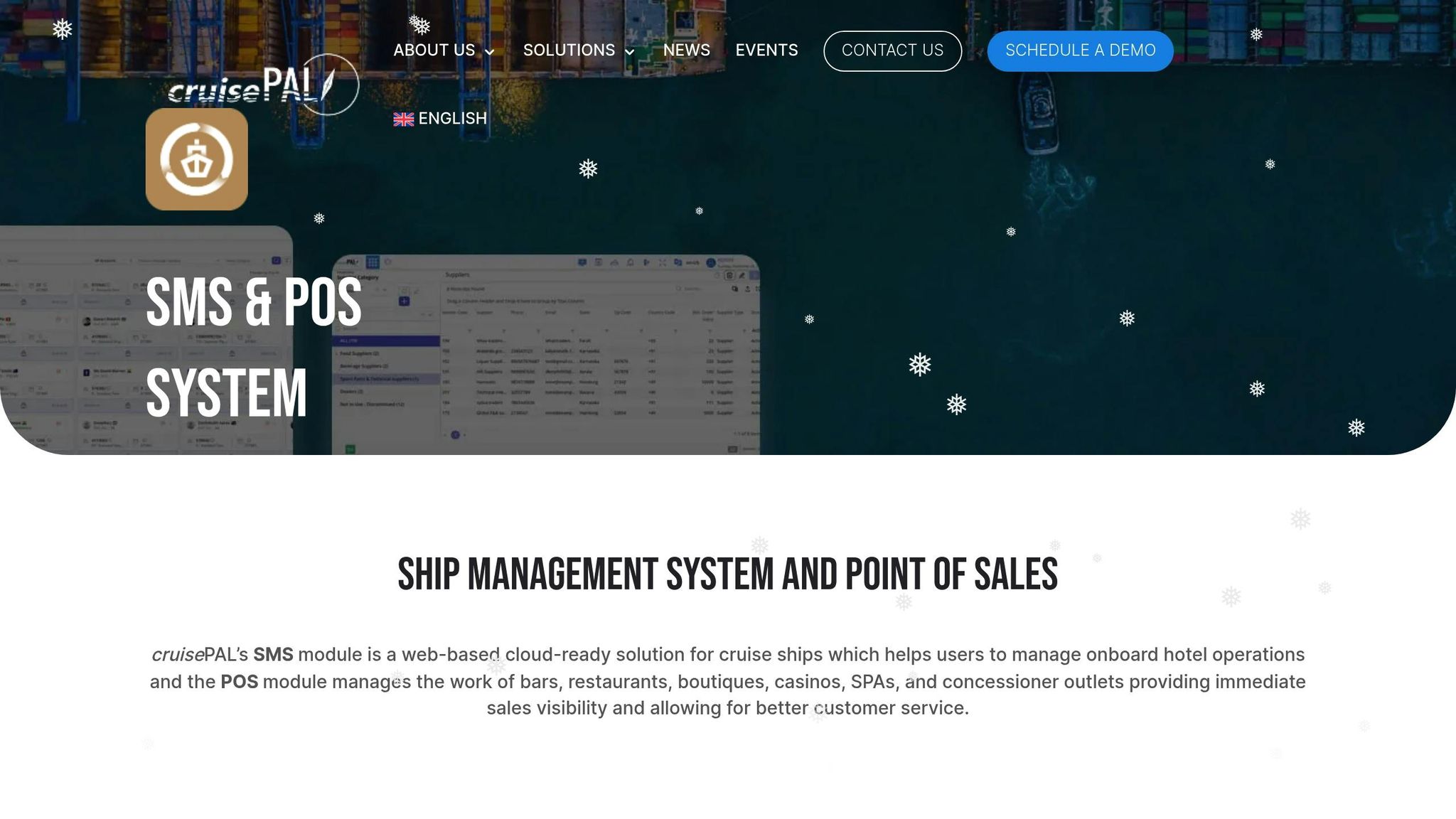
CruisePAL POS

How POS Systems Improve Cruise Operations

Modern POS systems handle a wide range of tasks, from managing orders and payments to tracking inventory and generating reports. These systems are vital across various onboard services, including restaurants, bars, retail shops, spas, and even shore excursions. Let’s dive into how these tools streamline operations, speed up transactions, and improve crew efficiency.

Faster Transactions and Fewer Errors

With mobile POS devices, crew members can take orders directly from guests – whether at a table or poolside – eliminating the need to visit a fixed terminal. Orders are sent instantly to kitchens or bars, which not only speeds up service but also minimizes mistakes. According to IBS Software, cruise lines using modern POS systems can boost food and beverage sales by 5–10% thanks to smoother processes and better upselling opportunities. Additionally, integrating dining POS systems with galley management software provides real-time updates, further reducing errors. Cashless billing simplifies transactions by automatically posting charges to a guest’s account, removing the hassle of currency exchange and even automating age verification for restricted items [7].

Better Crew Workflows

POS systems don’t just enhance guest interactions – they also improve how the crew operates. Mobile and tablet-based POS devices allow staff to check table availability, estimate wait times, and take orders without stepping away from guests. This streamlined approach is especially valuable during busy dining hours or embarkation. For example, tablet eCheckIn modules used at terminals and hotel lobbies enable staff to process guests more quickly, even offline, cutting down embarkation times and balancing workloads. Integration across POS modules ensures crew members can easily shift between service areas, reducing both training time and the likelihood of errors.

Inventory Tracking and Revenue Management

POS systems also shine when it comes to inventory and revenue management. Historical data from these systems helps cruise lines predict demand and analyze purchasing trends. Galleys, for instance, can use this data to estimate daily or cruise-specific food preparation needs, reducing waste while meeting demand. Real-time inventory tracking ensures that bars, shops, and spas maintain optimal stock levels, while sales data synced with headquarters enables centralized reporting. These insights allow cruise operators to make smarter decisions about purchasing, staffing, and menu updates, all of which contribute to a better guest experience [7].

How POS Systems Affect Guest Satisfaction

While improving operations is essential, the true success of a POS system lies in how it enhances the guest experience. Modern POS technology plays a key role in boosting guest satisfaction by speeding up transactions, minimizing errors, and offering more personalized service. When guests spend less time waiting and more time enjoying their cruise, they’re more likely to return. These advancements go beyond efficiency – they create a smoother, more enjoyable cruise experience through faster service and tailored interactions.

Service Quality and Convenience

Fast service is a cornerstone of guest satisfaction. Mobile POS devices allow crew members to take orders right at the table or even poolside, instantly relaying them to kitchens or bars. This ensures that food and drinks arrive quickly and with fewer mistakes. By cutting down on wait times and reducing order errors, modern POS systems make dining experiences smoother, encouraging repeat purchases. According to Agilysys, mobile POS significantly enhances service speed and boosts overall venue ratings, which directly impacts guest satisfaction.

When staff can stay with guests instead of constantly returning to fixed terminals, the interaction feels more personal and attentive. This not only improves guest experiences but also leads to better online reviews and higher tips. For U.S. guests used to the convenience of tap-and-go payments, cashless systems linked to stateroom cards or wearables eliminate the hassle of carrying wallets or dealing with currency exchanges [7].

Personalization and Loyalty Programs

Modern cruise POS systems collect detailed guest preferences – like favorite drinks, dining habits, allergies, and past purchases – that crew members can access instantly. This information allows for highly personalized service. For instance, a bartender might welcome a returning guest by suggesting their go-to cocktail, or a server could recommend gluten-free dishes when an allergy is flagged. Built-in "smart prompts" provide staff with tailored suggestions, making service feel thoughtful and seamless.

Loyalty program integration takes personalization even further. Guests can earn and redeem points, use onboard credits, and enjoy tier-specific perks directly at checkout. The POS system simplifies complex entitlements, like beverage package coverage, making the process smooth and hassle-free. This not only enhances the value of loyalty memberships but also provides cruise lines with valuable data to craft targeted offers that encourage repeat bookings.

Self-Service and Multi-Channel Options

Today’s travelers want more control over how and when they access onboard services. Self-service options powered by POS systems – like in-cabin TV ordering, mobile apps, and kiosks – let guests order meals, book excursions, and review bills on their own schedule, without waiting for staff. Some systems even allow meal pre-orders for specific times, helping guests coordinate dining with shows or port schedules.

These options appeal especially to tech-savvy guests and those who prefer minimal interaction. By enabling off-peak orders and spreading demand throughout the day, self-service options reduce congestion during busy periods and give guests more flexibility. Multilingual support on guest-facing screens and apps also helps international passengers navigate services with ease, reducing confusion and order errors [7]. For U.S. guests, clear currency formatting ($25.00), 12-hour time displays, and straightforward billing breakdowns on digital receipts help prevent disputes and build trust.

All of these features depend on a reliable onboard network. High-speed, secure connectivity is essential to keep mobile POS systems, guest apps, and in-cabin ordering running smoothly. Providers like NT Maritime ensure that even in challenging maritime conditions, these systems remain fast and dependable, supporting a seamless guest experience.

POS Integration with Cruise IT Systems

For a cruise POS system to function effectively, it must integrate seamlessly with both onboard and shore-based IT systems. When platforms like POS, property management, inventory, and communication systems are interconnected, cruise lines can provide faster service, minimize billing errors, and gain valuable insights into revenue and guest behavior across their fleet. This interconnectedness helps streamline operations and elevates the guest experience across all onboard services.

Connection with Property Management Systems

The integration of POS systems with a ship’s Property Management System (PMS) transforms every guest’s boarding card or wearable device into a universal payment method. Transactions are instantly posted to the cabin folio via the PMS, consolidating all charges into a single, unified bill. This setup enforces credit limits, supports split billing, and applies service charges or discounts automatically based on predefined rules. Guests can access detailed, time-stamped folios through kiosks, in-cabin TVs, or mobile apps. This level of transparency not only builds trust but also simplifies the settlement process at the end of the cruise.

Coordinating Shipboard and Shore Operations

Cruise operations rely heavily on synchronized data between the ship and headquarters. Onboard POS systems send detailed sales data, revenue by outlet, inventory updates, and guest spending patterns to shore-based systems. At the same time, headquarters provides the fleet with updated item catalogs, menus, pricing, promotions, tax rules, and configuration changes to ensure consistency across all ships.

Digital twin models allow for autonomous onboard operations, reconciling data later when connectivity improves. Synchronization typically happens when ships are docked or when satellite connections are strong, with systems prioritizing key data like master records and summarized sales. This coordination supports daily operations and strengthens the overall IT ecosystem. It also gives finance and revenue management teams a consolidated view of daily revenue, onboard spending per guest, and outlet performance. With these insights, shore-side teams can adjust pricing, launch targeted promotions, and optimize inventory based on historical consumption trends.

Network Reliability and Communication Infrastructure

All these integrations hinge on the availability of a secure, high-speed onboard network and dependable ship-to-shore communication. For shipboard POS systems, dedicated IP networks support both fixed and mobile POS devices. Quality of Service (QoS) policies ensure transactional data is prioritized over non-essential guest internet usage, while VLAN segmentation and firewalls help meet PCI-DSS security standards.

Providers like NT Maritime play a critical role in delivering the secure, high-availability communication networks that make these integrations possible. Their solutions combine satellite and hybrid links with VPNs, traffic prioritization, and encryption to safeguard data exchanged between onboard and shore systems. NT Maritime offers high-speed internet with download speeds up to 220 Mbps, upload speeds of 40 Mbps, and latency under 99 ms. Their networks can allocate dedicated, QoS-protected bandwidth for POS transactions, reducing the risk of disruptions caused by guest streaming or crew internet use. This ensures smooth transaction processing, timely data synchronization, and real-time access to guest information, no matter where the ship is located.

Future Developments in Cruise POS Systems

New Technologies in POS Systems

The next generation of cruise POS systems is set to embrace AI-powered platforms that can analyze guest behavior in real time. These systems aim to deliver dynamic pricing, tailored promotions, and precise recommendations. Imagine a system so intuitive that it predicts what a guest might want and enables crew members to make personalized suggestions at just the right moment.

Right now, most cruise lines rely on boarding cards as cashless payment tools[7]. However, the future may see a shift toward biometric payment systems, such as facial recognition or fingerprint scanning. This technology could simplify transactions at bars, restaurants, and onboard shops while minimizing the hassle of lost or forgotten cards. Of course, these advancements would need to address privacy concerns and comply with international data protection laws.

Mobile and self-service ordering options are already making waves, allowing guests to order through interactive TVs or mobile apps from the comfort of their cabins. Looking ahead, POS systems could integrate with smart cabin technologies, using sensor data and guest preferences to present timely offers – like discounts on spa treatments, exclusive dining experiences, or shore excursions. For these features to work seamlessly, cruise ships will need robust onboard networks, such as those offered by NT Maritime, to support real-time analytics and mobile POS functionality.

While these innovations are exciting, they also bring challenges that need further exploration.

Research Gaps

Despite the promise of these advancements, there are still unanswered questions about their long-term impact and security. For example, while some cruise lines report sales boosts of 5 to 10 percent, there’s limited research comparing different platforms or analyzing whether these gains are sustainable over time. Factors like ship size, itinerary, and passenger demographics could all influence these outcomes, but data on these variables remains sparse.

Another pressing issue is guest privacy. As POS systems gather detailed insights into purchasing habits, dietary choices, and spending patterns, questions arise about how this data is stored, protected, and used. This becomes even more complex when vessels operate under varying international data protection laws. Additionally, as POS systems integrate with other shipboard technologies like door locks and communication networks, they create more entry points for potential cyberattacks. Unfortunately, best practices for securing these interconnected systems in maritime settings are not yet clearly defined.

Finally, cruise lines would benefit from a thorough cost–benefit analysis of adopting advanced features like AI-driven analytics, biometric payments, and mobile POS systems. Such studies could help operators weigh the potential advantages against the financial and logistical challenges of implementing these technologies across diverse fleets.

Conclusion

Modern POS systems have become the backbone of cruise guest services, touching every revenue-generating area – from dining and bars to retail shops, spas, and shore excursions. Studies indicate that mobile POS platforms not only speed up transactions but also minimize errors and enhance crew efficiency. These improvements translate to a 5–10% boost in food and beverage sales, while also increasing guest satisfaction.

Beyond these operational perks, today’s POS systems connect seamlessly with tools like PMS, inventory management systems, and CRM platforms. This integration provides a comprehensive view of each guest and delivers real-time insights that fine-tune pricing, inventory, and promotions. At the same time, they streamline self-service options and simplify crew workflows.

However, none of this would be possible without reliable, high-speed onboard networks. These networks ensure POS systems can operate smoothly, even offline, and allow timely synchronization of ship-to-shore data. NT Maritime’s secure, high-bandwidth solutions meet these demands, maintaining functionality despite occasional satellite connectivity challenges. This solid infrastructure paves the way for the next wave of POS advancements.

FAQs

How do POS systems improve the guest experience on cruise ships?

Cruise ships rely heavily on POS systems to make transactions smoother and reduce wait times, allowing guests to focus on enjoying their vacation without unnecessary delays. Whether it’s ordering a drink or purchasing a souvenir, these systems ensure everything runs efficiently.

Beyond convenience, POS systems also help deliver a personal touch. By keeping track of guest preferences and purchase histories, they allow staff to offer services that feel customized to each individual. From seamless billing to quick access to onboard amenities, these systems play a big role in creating a hassle-free and unforgettable cruise experience.

What challenges come with using AI and biometric payments in cruise POS systems?

Integrating AI and biometric payment systems into cruise POS systems isn’t without its hurdles. One major concern is data security and privacy. These systems process sensitive personal information, making robust protection measures a must.

Another challenge lies in merging these advanced technologies with existing systems. This can be a tricky and time-intensive process, requiring careful planning and execution.

There’s also the issue of potential technical glitches. While not common, any system failures can disrupt operations and negatively affect the guest experience. Beyond the technical side, gaining passenger trust is crucial. Some may feel uneasy about how their data is being collected, used, or stored, making transparency and communication essential for acceptance.

How do cruise POS systems protect guest data and ensure privacy?

Cruise POS systems prioritize the security of guest data by employing encryption technologies that shield sensitive information during transactions. These measures ensure that data remains protected from potential threats.

To further strengthen security, these systems enforce strict access controls, allowing only authorized staff to handle critical information. This reduces the risk of unauthorized access and ensures data integrity.

Moreover, secure communication protocols are used to block any unauthorized attempts to intercept or compromise data. These safeguards not only protect guest information but also contribute to a safer and more enjoyable experience for everyone on board.
Dynamic Bandwidth Allocation for Cruise Lines

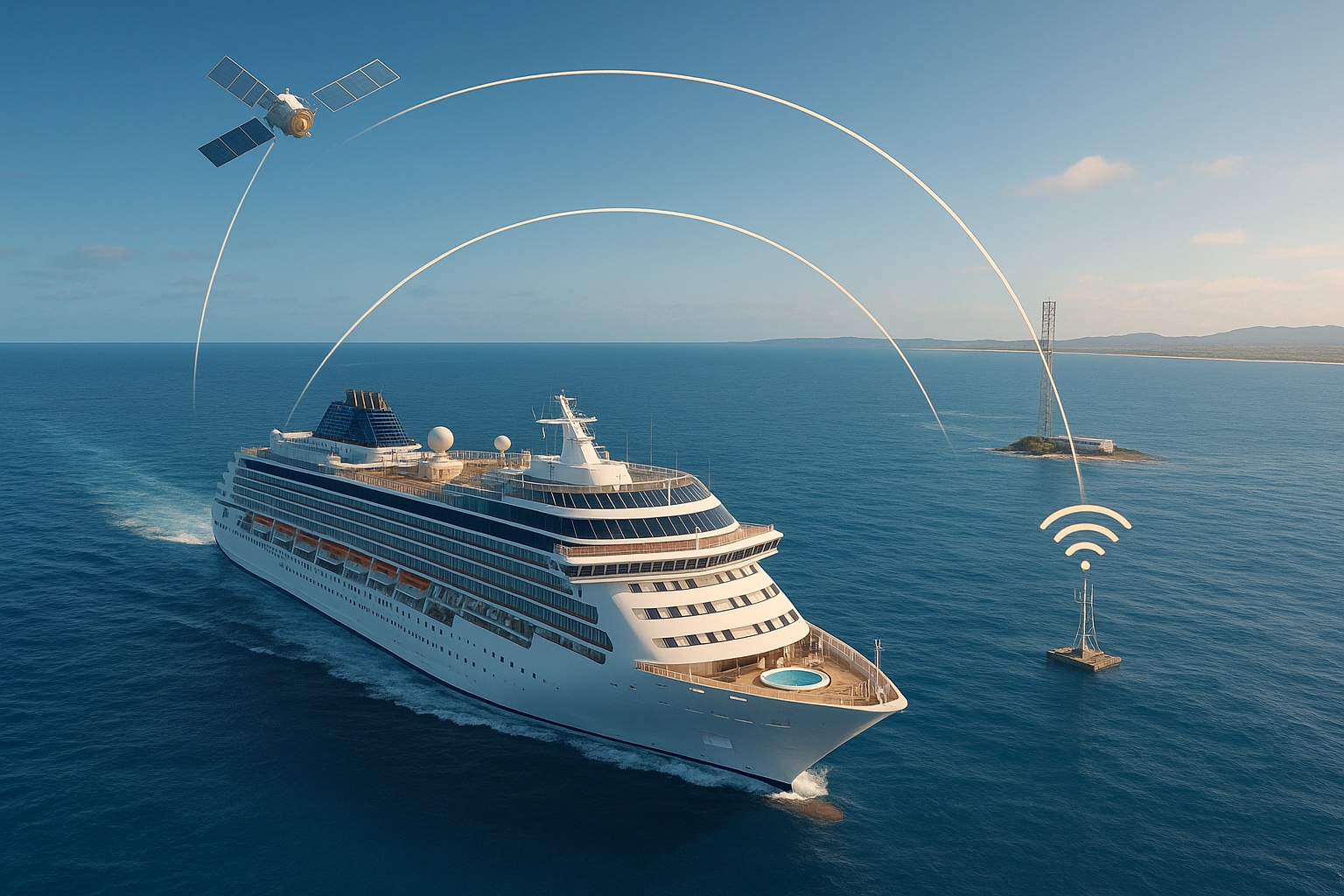
Cruise ships face unique internet challenges due to their reliance on satellite connections with limited capacity. Passengers expect fast, reliable Wi-Fi for streaming, video calls, and uploads, while ships also need bandwidth for critical operations and crew communications. Traditional fixed bandwidth systems fail to handle fluctuating demand, leading to slow speeds and service interruptions.

Dynamic bandwidth allocation solves this by using AI to monitor network traffic and adjust capacity in real-time. This ensures smoother internet for guests, reliable tools for crew, and uninterrupted ship operations – all without increasing bandwidth costs. Cruise lines like Norwegian Cruise Line Holdings have implemented these systems to balance upstream and downstream traffic, prioritize essential services, and share bandwidth across their fleets.

Key takeaways:

  • Real-time adjustments improve internet performance during demand spikes.
  • Fleet-wide bandwidth sharing prevents resource waste.
  • Priority-based allocation ensures critical systems always function.
  • Hybrid networks combine satellites, cellular, and in-port Wi-Fi for better connectivity.

Dynamic solutions not only enhance passenger satisfaction but also support essential ship functions and crew welfare.

Connectivity Challenges on Cruise Ships

Managing Thousands of Simultaneous Users

Cruise ships carry thousands of passengers and crew, all expecting reliable Wi-Fi to stay connected. Whether it’s streaming videos, uploading vacation photos, video chatting with loved ones, or scrolling through social media, everyone is vying for bandwidth on a satellite connection with limited capacity. Unlike land-based networks, which can expand infrastructure like fiber or cell towers to meet demand, ships are stuck with the satellite bandwidth they’ve purchased – and that doesn’t come cheap.

The challenge gets even tougher because usage patterns are far from predictable. For instance, after a port visit, hundreds of passengers might upload photos and videos to platforms like Instagram or cloud storage all at once, causing upstream traffic spikes that can overwhelm the network in minutes. On sea days, streaming services dominate bandwidth usage. Special events, such as live sports broadcasts or ship-wide announcements, can also create sudden surges in demand. Without smart management, these peaks can quickly max out the available bandwidth, leading to buffering, failed uploads, and dropped video calls. The fixed capacity of satellite connections simply can’t keep up with these fluctuating demands.

Problems with Fixed Bandwidth Policies

Traditional cruise ship networks often rely on static bandwidth splits to divide capacity between upstream and downstream traffic. For example, a network might allocate 20% of its capacity for uploads and 80% for downloads. While this setup works under normal circumstances, it falls apart when usage shifts unexpectedly. After an excursion, when passengers flood the network with uploads, the upstream allocation gets clogged while the downstream side sits underused, wasting precious satellite resources. By the time IT teams notice and adjust the settings, the demand has often already shifted again, leaving the network struggling to keep up.

Competing Priorities: Operations, Passengers, and Crew

Bandwidth on a cruise ship isn’t just about keeping guests connected. Ship operations rely on a steady connection for navigation systems, engine monitoring, security protocols, regulatory reporting, and financial transactions. Telehealth services, which often involve video consultations, need stable, uninterrupted bandwidth with low latency; any hiccup could force costly medical diversions.

Meanwhile, crew members depend on the network to stay in touch with their families, manage personal finances, and access company systems. These services are no longer seen as optional perks but as crucial for crew retention and welfare.

When all these demands compete for the same limited satellite connection, it creates a dilemma. Spikes in passenger streaming can delay critical telemetry data or disrupt Telehealth consultations. Cruise operators are left with tough decisions: limit crew access, compromise the guest experience, or adopt smarter bandwidth management systems that prioritize essential services without sacrificing entertainment.

Managing Multiple Network Types

Cruise IT teams juggle a mix of GEO, MEO, and LEO satellite links, alongside 4G/5G cellular connections near shore and in-port Wi-Fi or fiber. Each type of connection has its strengths and weaknesses – GEO satellites provide broad coverage but come with higher latency, LEO satellites offer faster speeds and lower latency, and cellular or in-port connections deliver the fastest performance but are only available close to land.

Managing these diverse network types is no easy task. IT teams must decide how to route traffic, blend connections, and account for varying costs and performance levels – all while dealing with constantly changing signal quality as ships move. If each ship operates independently with fixed capacity, one vessel might face severe congestion while another has unused bandwidth that can’t be shared. This inefficient setup not only wastes resources but also creates inconsistent experiences for guests across the fleet. The complexity of managing these networks highlights the need for a system that can dynamically adjust bandwidth based on real-time conditions.

Why Traditional Bandwidth Management Falls Short

Fixed Capacity Splits Create Waste

Traditional bandwidth management struggles to keep up with shifting demands. Unlike dynamic systems that adapt in real time, static capacity splits often leave satellite resources underutilized. For example, when demand shifts from general browsing to upload-heavy tasks like cloud syncing or video calls, fixed splits can’t adjust to meet the need. Cruise lines face a tough choice: pay for excessive bandwidth that might not always be used or risk poor service by under-provisioning. Norwegian Cruise Line Holdings discovered that fixed splits fell short for uplink-heavy needs, such as video conferencing. As one industry analysis pointed out, older connectivity solutions "lack the intelligence and adaptability to optimize bandwidth where and when it matters most."

Manual Adjustments Are Too Slow

When demand spikes suddenly – whether from video calls, streaming, or cloud syncing – manual bandwidth reconfiguration just can’t keep up. This reactive approach not only delays performance improvements but also adds extra work for IT teams. Cruise lines are left with two bad options: endure poor service during high-demand periods or pay for costly satellite bandwidth contracts to avoid potential bottlenecks. This outdated method limits the overall efficiency of the fleet and highlights the need for more flexible, responsive solutions.

Isolated Ship Networks Waste Resources

Another inefficiency arises from the isolated management of bandwidth on individual ships. Fixed allocations mean that if one ship is underutilizing its bandwidth while another faces high demand, resources go to waste. To avoid service disruptions, cruise lines often allocate bandwidth based on worst-case scenarios, leading to significant over-provisioning across the fleet. Cameron Lee, Senior Director of Onboard Revenue at Norwegian Cruise Line, noted that adopting dynamic technology allowed them to "manage our total bandwidth as one", delivering a better experience for passengers without increasing bandwidth contracts.

LAN Ho! Navigating Cruise Ship Networking

How Dynamic Bandwidth Allocation Works

How Dynamic Bandwidth Allocation Works on Cruise Ships

How Dynamic Bandwidth Allocation Works on Cruise Ships

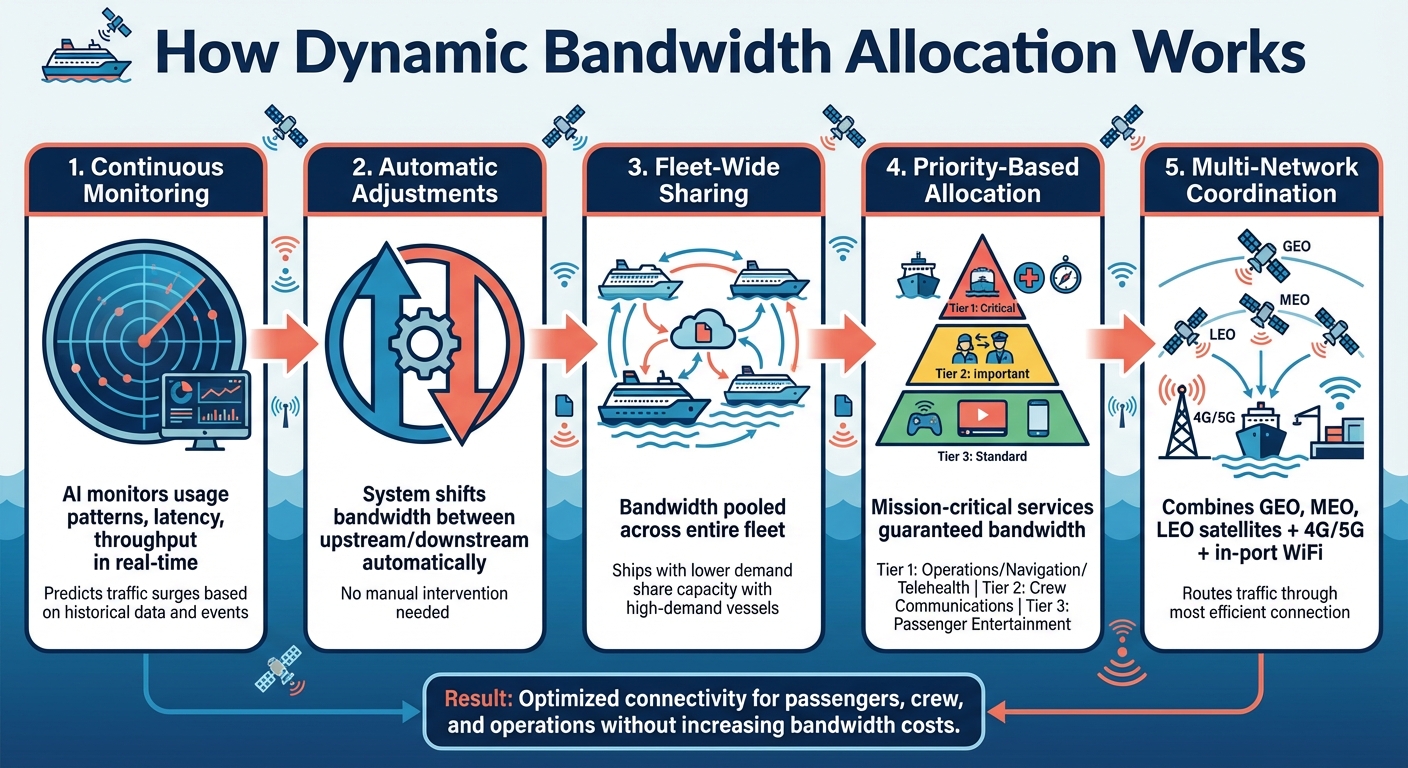
Continuous Monitoring and Traffic Prediction

Dynamic bandwidth allocation relies on real-time AI analytics to keep a close eye on usage patterns, latency, throughput, and application quality. By examining historical data, time of day, and scheduled events, the system can predict traffic surges. For example, it might anticipate a spike in upstream demand when passengers upload photos and videos after returning from port. This proactive approach ensures that congestion is avoided and critical applications, like Telehealth or crew communications, remain reliable.

With these insights, the system swiftly adjusts and redistributes bandwidth to match changing demands.

Automatic Upstream and Downstream Adjustments

Gone are the days of rigid bandwidth splits. Dynamic systems automatically shift resources based on real-time needs. If passengers are streaming videos or engaging in upload-heavy activities, the system reallocates bandwidth accordingly. Norwegian Cruise Line Holdings has adopted this technology across its fleet, allowing bandwidth ratios to adapt continuously. This improvement enhances connectivity for both guests and crew without requiring expanded bandwidth contracts.

Shared Bandwidth Pools Across the Fleet

Instead of assigning a fixed capacity to each ship, dynamic allocation enables seamless sharing of resources among vessels. Ships with higher demand receive additional capacity, while those with lower usage contribute their spare bandwidth to the collective pool. This approach minimizes waste and ensures a consistent experience for all users. By orchestrating bandwidth across the fleet, operators can efficiently manage total capacity without increasing contract limits.

Priority-Based Allocation by Application and User Type

Once bandwidth is pooled and distributed across the fleet, the system prioritizes allocation based on the importance of applications and user groups. Not all traffic is treated equally. Mission-critical services, such as operational systems, navigation data, and Telehealth, are guaranteed bandwidth. Crew communications, which require stable two-way connectivity, are prioritized over less essential passenger activities like social media browsing. This tiered system ensures that vital services perform optimally, even during peak usage, while maintaining a balanced experience for all users.

Coordinating Multiple Network Types

Modern cruise ships depend on a mix of connectivity sources, including GEO, MEO, and LEO satellites, as well as 4G/5G cellular networks and in-port Wi-Fi. Dynamic bandwidth allocation combines these diverse connections into a unified network, adapting to real-time conditions. It analyzes the performance of each connection and routes traffic through the most efficient option. For instance, low-latency LEO satellites handle real-time communications, GEO satellites manage bulk data transfers, and in-port Wi-Fi is utilized when docked. This integration ensures smooth coverage and efficient bandwidth use.

Together, these dynamic mechanisms work to deliver optimized connectivity, meeting the unique challenges of maritime environments.

Implementing Dynamic Bandwidth Allocation

Automatic Capacity Adjustments for Better Performance

Cruise operators use systems that automatically adjust bandwidth between upstream and downstream traffic based on real-time needs. For example, Norwegian Cruise Line Holdings has adopted this method to improve services like cloud synchronization and video calls without requiring extra bandwidth or manual adjustments. When passengers return from port visits and upload photos, the system reallocates unused downstream capacity to upstream traffic. Later, during peak evening hours when streaming spikes, it shifts capacity back to downstream usage. Onboard quality-of-service policies ensure latency-sensitive applications, like video calls, are prioritized, while bulk transfers are throttled during busy times. These dynamic adjustments, combined with fleet-wide resource sharing, further boost efficiency.

Sharing Bandwidth Across the Fleet

Fleet-wide bandwidth sharing treats satellite capacity as a centralized resource rather than assigning fixed allocations to each ship. For instance, when a ship docks and connects to terrestrial backhaul, its unused satellite bandwidth is redistributed to vessels at sea facing higher demand. Marlink’s system for MSC Cruises provides several hundred Mbps of shared capacity, dynamically allocated to meet varying seasonal and operational needs. A centralized orchestration system oversees usage, enforces policies, and ensures compliance with contractual limits.

Guaranteed Bandwidth for Critical Systems

To maintain reliability for essential services, operators reserve specific bandwidth for critical applications, using strict quality-of-service policies and guaranteed minimum rates for each vessel. When network congestion occurs, nonessential guest traffic is throttled first, ensuring uninterrupted access for priority services. Platforms also allow for instant bandwidth boosts via APIs, which is crucial for emergency Telehealth or remote maintenance needs. NT Maritime demonstrates this approach by integrating dedicated VLANs and prioritizing clinical endpoints, ensuring dependable connectivity for Telehealth and other mission-critical operations. These reserved capacities work seamlessly alongside hybrid network setups.

Combining Multiple Network Paths

A hybrid WAN approach blends various connection types to adapt dynamically to changing conditions. Satellite connectivity serves as the baseline, while terrestrial cellular networks and in-port Wi-Fi handle high-volume traffic at lower costs when available. Policy-based routing ensures critical real-time services use the most reliable connections, while bulk tasks like updates are directed to more cost-effective networks. Platforms also include automatic failover and load balancing, allowing traffic to shift seamlessly if a connection degrades. This creates a self-healing network. NT Maritime, for instance, integrates Starlink satellite service – offering download speeds up to 220 Mbps, upload speeds up to 40 Mbps, and latency under 99 ms – alongside onboard Wi-Fi and secure communication networks. This combination ensures consistent, cost-effective connectivity for passengers and critical operations alike.

How IT Platforms Support Dynamic Bandwidth Management

Unified Network and Communication Management

Maritime IT platforms bring together various connectivity sources – like satellite (LEO, MEO, GEO), 5G/LTE, in-port fiber, and onboard Wi-Fi – into one centralized system. This integration allows cruise operators to manage passenger internet, crew communication, and operational systems from a single dashboard. IT teams can prioritize bandwidth to ensure navigation systems and safety applications always have the capacity they need, while guest streaming and crew services use the remaining bandwidth. By consolidating control, operators can quickly reallocate resources to meet changing demands across the fleet. Real-time analytics provide insights into usage by application, user group, and ship location, helping operators identify congestion points and adjust policies without manually reconfiguring each vessel. This streamlined approach ensures critical services receive the bandwidth they require.

For example, NT Maritime’s platform combines communication tools – such as messaging, video calling, voicemail, and onboard calling – with secure operational networks and high-speed internet. It applies role-based policies to automatically prioritize essential services during peak usage, ensuring smooth communication for both guests and crew.

Reliable Bandwidth for Telehealth and Critical Services

Telehealth services, like remote consultations and diagnostics, rely on stable, low-latency connections. Any disruptions, such as jitter or packet loss, can interfere with medical assessments or delay urgent decisions. Dynamic IT platforms address this by instantly prioritizing bandwidth when telemedicine sessions begin. During periods of congestion, non-essential traffic is throttled to protect telehealth connectivity. This targeted management also ensures reliable communication for everyday needs, benefiting both passengers and crew.

NT Maritime’s platform integrates telehealth technologies with dedicated network paths to maintain consistent connectivity for remote medical consultations, even when thousands of passengers are streaming or uploading content. With speeds of up to 220 Mbps for downloads, 40 Mbps for uploads, and latency under 99 milliseconds, the system supports both routine telehealth appointments and emergency diagnostics without interruptions.

Stable Communication Tools for Passengers and Crew

Ensuring stable messaging, video calls, and voicemail during high-demand times requires smart quality-of-service policies. These policies recognize real-time communication protocols and assign them higher priority over less urgent data transfers. Modern platforms route time-sensitive communications through the most efficient network paths, maintaining reliable service quality.

NT Maritime’s communication solutions, which include integrated messaging, video calling, and voicemail over ship Wi-Fi, benefit from this dynamic routing. Whether using fiber in port or satellites offshore, the platform ensures dependable service that boosts guest satisfaction and crew morale. Centralized fleet-wide management also allows IT teams to monitor call quality, session stability, and service performance, enabling them to fine-tune policies based on real-time data.

Conclusion

Dynamic bandwidth allocation is revolutionizing how cruise ships manage connectivity, shifting from rigid, fixed policies to a smarter, demand-driven system. This approach continuously adjusts resources in real-time, ensuring smooth performance for both leisure and critical operations. Whether guests are uploading vacation photos or streaming their favorite shows during peak hours, this system ensures reliable Wi-Fi while operators maintain essential services and maximize the value of their satellite contracts.

But it’s not just about improving user experiences. Dynamic allocation also brings operational and financial advantages. By treating bandwidth as a shared, flexible resource across an entire fleet, it eliminates the inefficiencies of fixed policies. Automation powered by AI further reduces the need for manual IT intervention. A great example of this is Norwegian Cruise Line Holdings, which successfully implemented dynamic bandwidth management technology in 2023.

Modern solutions take it a step further by combining multiple connection types – satellites, cellular networks, and in-port fiber – to enhance both availability and reliability. These systems automatically pick the best connection path, balancing cost and performance. This ensures dependable connectivity for mission-critical tasks while maintaining a consistent experience for passengers and crew, no matter where the ship is.

NT Maritime is at the forefront of these advancements, offering sophisticated IT and communication solutions that bring dynamic bandwidth policies to life. Their platform integrates features like calling, messaging, video conferencing, and telehealth services, alongside secure networks and high-speed internet. With download speeds of up to 220 Mbps, upload speeds of 40 Mbps, and latency under 99 milliseconds, NT Maritime ensures seamless connectivity for both everyday needs and critical operations.

As passengers increasingly expect "onshore-quality" internet and ships introduce more digital services, traditional bandwidth management simply can’t keep up. NT Maritime’s cutting-edge solutions help cruise operators adopt dynamic bandwidth capabilities more quickly, reduce risks, and stay ahead of future demands. This smarter approach to connectivity not only supports new digital services but also improves crew well-being and enhances safety through data-driven operations.

FAQs

How does dynamic bandwidth allocation enhance internet connectivity on cruise ships?

Dynamic bandwidth allocation improves internet connectivity on cruise ships by smartly managing bandwidth in real time. This allows passengers and crew to enjoy smoother browsing, dependable video calls, and steady access to online services – even during busy periods.

By adjusting to fluctuating demand, this system reduces network congestion and ensures the available resources are used efficiently, creating a more reliable online experience for everyone on the ship.

How does AI improve connectivity on cruise ships?

AI plays a key role in improving connectivity on cruise ships by managing bandwidth allocation and forecasting network demand. It adjusts resources in real-time to keep communication running smoothly, even when usage is at its highest.

This smart system ensures consistent access to high-speed internet, onboard communication platforms, and other critical services, making life at sea more convenient and enjoyable for both passengers and crew.

How do cruise ships ensure reliable internet for passengers while maintaining critical operations?

Cruise ships rely on dynamic bandwidth allocation to handle internet usage efficiently. This system ensures critical operations – like safety protocols, navigation, and crew communications – get top priority. The leftover bandwidth is then made available for passengers.

This approach allows cruise lines to maintain essential functions while still offering passengers a dependable and enjoyable internet connection throughout their trip.

How Maritime Redundancy Keeps Ships Connected

Ships rely on redundancy to maintain communication and safety at sea, even during failures. Redundancy ensures backup systems are ready to take over instantly, keeping vessels operational in remote environments. Here’s why it matters:

  • Core Purpose: Redundancy duplicates communication and IT systems, enabling failover – an automatic switch to backups during issues like equipment failures or connection loss.
  • Key Benefits: It supports navigation, safety alerts (e.g., GMDSS), weather updates, and emergency services. It also ensures smooth operations, crew connectivity, and passenger services.
  • Challenges: Harsh marine conditions, power outages, and equipment failures can disrupt systems. Common issues include damaged cables, satellite interruptions, or overheating switches.
  • Solutions: Modern networks use designs like dual-star or ring topologies, failover mechanisms, and multiple satellite/terrestrial links (e.g., Ku-band, L-band) for reliability. Traffic prioritization ensures critical tasks remain unaffected during failovers.
  • Maintenance: Regular testing, monitoring, and crew training are vital to ensure redundancy systems work as intended.

Bottom Line: Redundancy is a safety net that keeps ships connected and compliant, minimizing risks and disruptions even in extreme conditions.

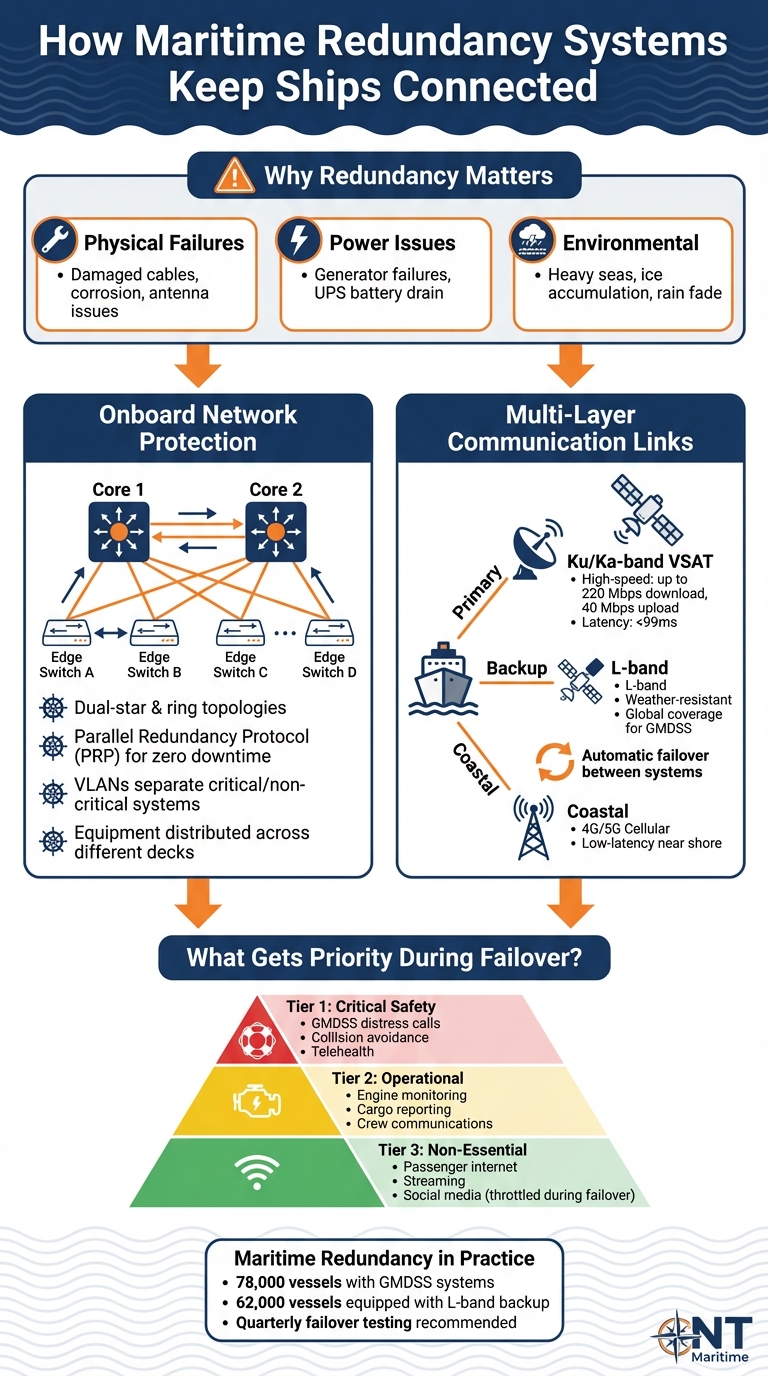
How Maritime Redundancy Systems Protect Ship Communications

How Maritime Redundancy Systems Protect Ship Communications

Risks and Challenges in Maritime Communication Systems

Maritime communication systems face unique challenges due to the harsh conditions of the marine environment. Physical infrastructure failures are particularly common. Cables can snap under stress, water intrusion can damage connections, and salt exposure accelerates corrosion. Antenna cabling on masts suffers from constant wind and vibration, while equipment racks are subjected to heat, humidity, and electromagnetic interference, all of which degrade network performance over time.

Power-related issues pose additional risks. Generator failures, tripped breakers, or drained UPS batteries can lead to complete outages of communication systems. When all critical systems depend on a single power distribution panel, a single fault can result in total connectivity loss. Environmental factors further complicate matters. Heavy seas can cause satellite antennas to lose their signal lock, ice accumulation in polar regions can block transmissions, and rain fade disrupts higher-frequency Ku and Ka-band links. However, L-band connections tend to perform better in adverse weather conditions. These challenges often manifest through specific, recurring failure scenarios.

Common Failure Scenarios

Failures frequently stem from overlooked vulnerabilities. For instance, a core switch overheating in a poorly ventilated rack can become a single point of failure. Similarly, unprotected cable routes through high-risk areas leave no fallback if damaged. Ships also encounter satellite signal interruptions when cranes or parts of the vessel’s superstructure obstruct antennas, or when severe weather hampers the tracking systems. While lower L-band frequencies are more resilient to atmospheric interference, higher bands are more susceptible to these disruptions.

Another common issue involves non-redundant power supplies. When critical communication equipment relies on a single UPS unit or power panel, an electrical fault can bring the entire system offline. Such failures not only disrupt essential equipment but also compromise the safety of the vessel and its operations.

How Failures Affect Safety and Operations

Communication failures can severely impact safety systems, particularly the Global Maritime Distress and Safety System (GMDSS), which relies on uninterrupted connectivity for distress alerts, safety broadcasts, and continuous monitoring. To meet SOLAS requirements, vessels must maintain multiple redundant communication systems, such as VHF, MF/HF, and satellite terminals, to ensure that no single failure compromises distress capabilities.

For passenger and cruise ships, communication outages can disrupt onboard services, leading to passenger complaints, compensation claims, and damage to the brand’s reputation. Offshore and specialized vessels face operational delays when remote support from shore-based engineers or real-time data exchange is interrupted, often resulting in higher day rates. Commercial cargo ships may encounter delays in port due to disruptions in electronic documentation, voyage reporting, or compliance systems.

Beyond these immediate impacts, shared networks for safety and non-safety functions create additional vulnerabilities. Congestion or cyber issues from passenger services can interfere with critical navigation and control systems, posing serious operational risks. Addressing these challenges is essential to maintaining the safety and efficiency expected in maritime operations.

Building Redundant Onboard Networks

To address potential risks and ensure uninterrupted operations, a well-thought-out network design is essential. This involves creating an architecture that avoids single points of failure and reduces recovery time, ensuring critical systems remain operational at all times. Achieving this requires duplicating key components – such as core switches, routers, and firewalls – and establishing at least two independent paths between critical endpoints and the network core. The result? Faster recovery and more reliable operations.

Network Designs for Redundancy

In shipboard environments, where space is limited, dual-star and ring topologies strike a balance between resilience and manageability. A dual-star design features two separate core switches connected redundantly to distribution and edge switches. If one core or uplink fails, traffic automatically reroutes through the other core, maintaining seamless connectivity. On the other hand, ring topologies create a continuous loop, allowing traffic to flow uninterrupted even if a single segment goes down. This self-healing design has been widely proven in industrial applications.

For mission-critical systems like propulsion, steering, and power management, Parallel Redundancy Protocol (PRP) offers an advanced solution. PRP ensures zero downtime by sending duplicate data frames over two separate LANs. The receiving system uses the first frame to arrive, guaranteeing uninterrupted connectivity even if one path fails. Meanwhile, for less critical systems – like crew Wi-Fi or passenger internet – link aggregation is a simpler yet effective method. By combining multiple physical links into one logical connection, it not only improves resilience but also boosts bandwidth between switches.

These strategies naturally lead to the segregation of critical and non-critical systems for added security and performance.

Separating Critical and Non-Critical Networks

Physical separation is ideal for critical systems, but when that’s not feasible, logical segmentation can provide robust alternatives. VLANs (Virtual Local Area Networks) and access control lists (ACLs) are key tools for isolating traffic on shared infrastructure. For instance, operational technology (OT) systems, bridge systems, crew IT, passenger Wi-Fi, and administrative functions can each operate on their own VLANs, ensuring that activity in one area doesn’t interfere with others. Firewalls and ACLs further enhance security by strictly controlling inter-VLAN communication, allowing only essential protocols to pass through. This prevents malware or excessive traffic from passenger networks from impacting critical systems like ECDIS, radar, or engine automation.

Equipment Placement Strategies

Designing a redundant topology isn’t just about network architecture – it’s also about where you place the equipment. Distributing redundant components across different physical locations is vital to protect against localized incidents like fires, flooding, or collisions. For example, the American Bureau of Shipping mandates alternate communication paths and network redundancy to ensure critical operations continue even if one network or server fails.

Best practices include routing independent network paths through separate cabling systems, power sources, and switch placements. This way, damage to one side of the vessel won’t disrupt all connectivity. Similarly, core switches, servers, and satellite modems should be placed on different decks and in separate rooms. Cabling should run through distinct trunks or trays to minimize the risk of a single event, like compartment flooding, taking out all connections. Dual power feeds from separate distribution boards, each backed by UPS systems, add another layer of reliability. This geographic and infrastructural diversity ensures that redundant systems remain operational even under challenging conditions.

Redundant Ship-to-Shore Connectivity

Having a reliable onboard network is just one piece of the puzzle. Ships also require multiple independent communication links to shore facilities to ensure connectivity remains intact if one link fails. This redundancy extends beyond onboard systems to critical ship-to-shore connections. The most effective setup combines various satellite bands – like Ku-band or Ka-band VSAT for primary connectivity, paired with L-band services such as Inmarsat FleetBroadband or Iridium Certus as a dependable backup – alongside terrestrial options like 4G/5G cellular when near coastlines. By layering these systems, ships can maintain uninterrupted external communication. If weather, equipment malfunctions, or satellite issues disrupt the primary connection, traffic automatically reroutes to a backup link, ensuring operations continue seamlessly.

Multiple Satellite and Terrestrial Connections

L-band satellites play a key role in maritime redundancy because their lower-frequency signals are less affected by rain fade and atmospheric interference compared to higher-frequency VSAT connections. While Ku-band and Ka-band offer high-speed connectivity – perfect for tasks like crew internet access, passenger streaming, and large data transfers – they can falter during severe weather. In contrast, L-band provides reliable global or near-global coverage, even in remote ocean areas, offering low-speed connectivity essential for distress signals, GMDSS messaging, navigational updates, and critical telemetry.

When ships are near the coast, terrestrial options such as 4G/5G cellular, microwave links, or port Wi-Fi provide cost-effective, low-latency alternatives. Advanced routers and SD-WAN appliances actively monitor all available connections for packet loss, latency, and jitter, dynamically routing traffic to the best-performing link. If the cellular signal weakens as the ship moves offshore, the system seamlessly switches back to satellite without interrupting communication.

Traffic Prioritization and Failover Policies

In any failover scenario, safety-critical traffic – like GMDSS distress calls, collision-avoidance updates, and Telehealth sessions – must always take priority. These services require guaranteed bandwidth and minimal latency, even when the system switches to a slower L-band link. Operational tasks, such as engine monitoring, cargo reporting, and crew-related communications, are given second-tier priority, with minimum bandwidth allocations and stricter rate limits during congestion. Meanwhile, non-essential activities like passenger internet browsing, streaming, and social media are deprioritized. When the network fails over to a low-bandwidth backup, these services may be throttled or temporarily suspended to ensure critical operations remain unaffected.

Failover mechanisms rely on health metrics to instantly reroute traffic, while hold-down timers prevent frequent switching between links. For instance, after traffic shifts from a failed VSAT connection to L-band, the system waits until the primary link remains stable for several minutes before switching back. Regular drills, such as simulating a complete satellite outage or deliberately overloading the network with passenger traffic, help verify that GMDSS messages and safety voice calls can still be completed within acceptable latency limits.

NT Maritime‘s Communication Solutions

NT Maritime

NT Maritime applies these principles to create practical, reliable solutions. Their integrated platform simplifies the complexity of managing redundant ship-to-shore links for onboard users. By combining multi-link architectures that bond or dynamically switch between satellite bands and terrestrial connections, NT Maritime ensures that services like voice calls, messaging, video conferencing, and Telehealth sessions are automatically routed through the best available connection.

Centralized Quality of Service policies ensure that safety and operational traffic are always prioritized over passenger usage. When primary links are functioning, NT Maritime delivers high-speed internet – up to 220 Mbps for downloads, 40 Mbps for uploads, and latency under 99 milliseconds. For government and military operations, NT Maritime’s networks are designed to resist cyber threats while supporting mission-critical communications with encrypted, real-time data exchange. This ensures that even in challenging conditions or during link failures, essential communication remains uninterrupted.

Maintaining and Testing Redundant Systems

Creating redundant networks is just the starting point; the real challenge lies in ensuring they work when needed. Regular testing and maintenance are essential to confirm that backups function as intended, and this only happens when crews actively verify failover capabilities.

Testing Failover and Recovery

Running failover drills is crucial to assess redundancy. Ships should simulate realistic failures at scheduled intervals – quarterly tests are a good baseline – by disconnecting network cables, shutting down primary switches, or disabling the main satellite link. These tests aim to confirm that critical operations, such as navigation data, engine monitoring, VoIP, and safety systems, continue with minimal disruption.

A well-structured test plan should evaluate both the switch to the backup system and the return to the primary system. For instance, after forcing traffic from a failed VSAT connection to an L-band link, teams should restore the primary connection and verify that traffic transitions back smoothly. During these tests, logging is essential – record switchover times, alarms, and any service interruptions. If critical systems fail to meet performance benchmarks (e.g., safety communications experiencing more than a one- to two-second delay), adjustments like configuration changes, hardware updates, or design reviews are necessary.

Testing alone isn’t enough. Continuous monitoring and preventive care are equally important for long-term reliability.

Monitoring and Preventive Maintenance

Ongoing monitoring helps detect issues before they escalate into outages. Tools like network monitoring systems or SD-WAN controllers should track metrics such as latency, jitter, packet loss, interface status, and throughput across all redundant links. Alerts for threshold breaches or link instability provide early warnings. SD-WAN controllers, in particular, conduct frequent health checks, which can be invaluable for identifying problems. Monitoring power systems and UPS units is also critical, as power failures are a common weak link.

Preventive maintenance schedules play a key role in avoiding simultaneous failures of primary and backup systems. Crews should regularly inspect cables, connectors, antennas, and environmental factors like temperature, humidity, and vibration that could affect network and communication equipment. Firmware and software updates should follow a structured schedule – typically semiannual or as recommended by vendors – using staged rollout and rollback plans to minimize risks. Replacing aging or high-risk components ahead of failure ensures redundancy remains effective.

Documentation and Crew Training

Testing and monitoring are only part of the equation. Comprehensive documentation and well-trained crews are essential for rapid, effective responses during incidents. Maintain up-to-date network diagrams that clearly outline primary and backup paths, VLANs, IP schemes, and equipment locations. Failover and recovery playbooks should include detailed, step-by-step instructions, escalation paths, and decision trees for common failure scenarios. Configuration baselines and change logs are equally important, as they allow engineers to revert to stable states and pinpoint when issues began.

Training should be tailored to varying crew responsibilities. Bridge and engineering watchkeepers need a basic understanding of redundancy systems, alarm meanings, and escalation protocols. Meanwhile, ETOs and IT officers require hands-on technical training to conduct failover tests, analyze monitoring dashboards, review log files, and safely isolate faulty equipment. Scenario-based drills, like simulating a satellite failure during critical Telehealth operations, prepare crews for high-pressure situations. These proactive measures ensure redundancy strategies are effective. NT Maritime supports these efforts by providing customized training packages that align with their managed SD-WAN and satellite platforms, helping crews understand exactly how their systems fail over and recover to maintain seamless onboard connectivity.

Conclusion

Key Takeaways

In today’s maritime landscape, redundancy isn’t just a luxury – it’s a necessity. With digital systems at the heart of ship navigation, safety, and operations, any outage can lead to serious safety, financial, and reputational consequences that operators simply can’t afford. To mitigate these risks, ABS requires backup systems to keep mission-critical operations running. This principle applies across the board: independent port and starboard LANs ensure that a single cable failure doesn’t disrupt control systems, while multi-layer satellite connectivity guarantees communication even during severe weather or equipment malfunctions.

The advantages of redundancy go beyond just peace of mind. From a safety perspective, duplicate GMDSS terminals and networks ensure uninterrupted access to distress and safety broadcasts, a compliance requirement under SOLAS for vessels over 500 gross tons. Operationally, high-availability systems reduce disruptions to essential functions like navigation, engine controls, and cargo operations, helping to avoid costly delays or diversions caused by equipment failures. Financially, while redundancy requires upfront investment, it reduces downtime, protects revenue, and lowers overall costs in the long run. With nearly 78,000 vessels subscribed to GMDSS and around 62,000 vessels equipped with L-band broadband for backup connectivity, the maritime sector has clearly embraced resilient systems as crucial for staying competitive and compliant.

However, redundancy is only effective if it’s properly tested, monitored, and understood. Systems that seem reliable on paper can fail in real-world scenarios if crews aren’t trained in failover procedures, monitoring tools miss early signs of degradation, or documentation isn’t up to date. Proactive investments allow operators to design robust systems, train personnel, and secure strong service-level agreements – avoiding the scramble to fix vulnerabilities after a crisis. These steps underscore why redundancy is more than just a technical feature; it’s a practical safeguard for modern maritime operations.

NT Maritime’s Commitment to Reliable Solutions

NT Maritime is dedicated to supporting the maritime industry with multi-layer redundant communication systems built around proven best practices. Their approach integrates secure, segmented onboard networks with high-speed satellite internet and dependable L-band failover systems. This ensures that navigation, safety protocols, and operational communications remain intact even when primary connections fail. Additionally, their services – like integrated voice, messaging, and Telehealth – continue to function seamlessly over backup links, ensuring compliance while improving the user experience.

FAQs

How does maritime redundancy benefit ship operations?

Maritime redundancy is a cornerstone of maintaining uninterrupted communication and IT services aboard ships. By integrating backup systems and fail-safes, it reduces the risk of downtime, ensures smoother operations, and keeps connectivity intact, even in tough conditions.

This level of reliability is crucial for several reasons: it boosts safety, ensures seamless communication for crew and passengers, and supports the ship’s daily activities. With dependable redundancy systems in place, vessels can remain connected regardless of their location on the globe.

How do ships stay connected during extreme weather?

Ships are equipped with redundancy systems to ensure communication stays reliable, even in extreme weather conditions. These systems incorporate multiple communication methods – like satellite, radio, and terrestrial networks – that seamlessly switch to a backup if one fails.

This multi-layered setup keeps communication steady and IT operations running smoothly, allowing crews to stay connected and maintain critical systems, no matter how challenging the environment gets.

How do redundancy systems ensure reliable communication on ships?

Redundancy systems play a crucial role in ensuring reliable communication by incorporating multiple backup protocols. These systems include failover mechanisms that automatically switch to alternative systems if one encounters a failure. This design helps maintain seamless operations without interruptions.

To keep these systems running smoothly, several practices are essential: conducting regular tests, maintaining hardware backups, and diversifying network paths. These steps are particularly important for safeguarding critical communication and IT functions, especially in demanding maritime environments.

Checklist for Maritime Telehealth Compliance

Maritime telehealth connects ships to healthcare providers for real-time medical support, but compliance with regulations is critical to avoid penalties and ensure crew safety. Operators must meet international and U.S. laws, like HIPAA, Maritime Labour Convention (MLC) 2006, and GDPR, while addressing cybersecurity risks and maintaining proper medical documentation. Key steps include:

  • Regulations: Follow MLC, IMO, HIPAA, and GDPR rules for secure medical care and data handling.
  • Technology: Use encrypted video platforms, electronic health records (EHRs), and satellite communications.
  • Cybersecurity: Implement encryption, multi-factor authentication, and breach protocols.
  • Training: Ensure staff are trained in telehealth tools, data privacy, and emergency procedures.
  • Audits: Conduct regular compliance checks and maintain audit trails for at least six years.

Staying compliant requires robust systems, trained personnel, and continuous monitoring of evolving regulations. The right tools and processes not only protect patient data but also improve operational reliability.

Telemedical service procedure as per ALRS volume for shipboard medical emergency

Key Telehealth Compliance Regulations

Maritime telehealth operates under a complex web of international and national regulations. Navigating these rules is crucial for ensuring legal compliance, protecting crew members, and reducing liability risks.

International Maritime Regulations

The Maritime Labour Convention (MLC) 2006 serves as the foundation for global maritime telehealth standards. Covering over 1.2 million seafarers worldwide, it sets minimum requirements for medical care at sea, increasingly emphasizing telehealth solutions to connect crews with qualified healthcare providers. Additionally, International Maritime Organization (IMO) standards require vessels to carry appropriate medical equipment and ensure crews have timely access to medical advice, often facilitated by telemedicine platforms. As a result, telehealth systems must meet stringent demands, including 24/7 availability, reliable connectivity in challenging environments, and proper medical record management.

U.S. Federal and State Telehealth Laws

U.S.-flagged vessels must adhere to both international standards and additional federal regulations. Key requirements include:

  • HIPAA Compliance: Governs the secure handling and transmission of patient data.
  • DEA Regulations: Oversee the prescribing of controlled substances via telehealth.
  • Medicare Rules: Impact vessels serving Medicare-eligible passengers or crew members.

Cross-state licensing adds another layer of complexity. Providers typically need licenses in the state where the patient is located during treatment. However, federal exceptions and the Interstate Medical Licensure Compact can simplify this process. Starting April 1, 2025, providers must document video capabilities, patient location, and the reasoning for using audio-only services. Additionally, state-specific rules may require distinct standards for patient consent, recordkeeping, and technology use, making it essential for maritime operators to adapt protocols as vessels move between jurisdictions.

Data Privacy and Cybersecurity Standards

For U.S. operations, HIPAA compliance is non-negotiable. This includes end-to-end encryption, secure data storage, and breach notification protocols. For vessels operating in European waters or involving EU citizens, GDPR imposes similarly strict privacy measures.

Non-compliance can lead to severe consequences, including hefty fines, legal action, and reputational damage. The FTC’s Health Breach Notification Rule also mandates timely consumer notifications in case of data breaches. Companies like NT Maritime offer secure communication platforms with encrypted, real-time data exchange, designed to meet these rigorous standards – especially critical for federal and military operations.

Emerging technologies bring additional transparency requirements. Providers must disclose the use of AI-driven tools, ensuring these meet clinical and security standards through certifications and audits. Increased oversight from regulatory bodies like the Office of Inspector General further underscores the importance of regular compliance audits to stay ahead of evolving rules.

The table below outlines key compliance requirements across various regulatory frameworks:

Regulation Type Key Requirements Applicability
MLC 2006 / IMO Medical care, credentialing, secure records International (all vessels)
U.S. Federal/State Laws Licensing, DEA regulations, Medicare, coding/billing U.S.-flagged vessels
HIPAA / GDPR Data privacy, cybersecurity, staff training U.S./International
Safer Seas Act (2024) Video surveillance, signage, reporting U.S. vessels (10+ overnight)

Required Telehealth Technologies and Communication Systems

To ensure effective telehealth compliance in marine environments, operators need a solid foundation of technology that aligns with regulatory standards. This means deploying reliable telehealth tools and communication systems tailored for maritime use.

Core Telehealth Tools

Key tools for telehealth include:

  • Secure video conferencing platforms: These must be HIPAA-compliant and capable of functioning even with fluctuating connectivity.
  • Electronic Health Records (EHR) systems: Designed to sync with shore-based facilities while supporting offline operations when needed.
  • Remote diagnostic equipment: Built to withstand the challenging conditions of marine environments.
  • Vital sign monitoring devices: These should integrate smoothly with EHR systems for seamless data management.

These tools are essential for providing round-the-clock access to remote medical professionals. They should also be portable and easy to use, especially during emergencies. Additionally, compatibility with the vessel’s existing communication systems and power infrastructure is non-negotiable.

Once the tools are in place, maintaining consistent and reliable connectivity becomes the next priority.

Reliable Communication Networks

Satellite connectivity forms the backbone of telehealth operations at sea, linking vessels to shore-based medical facilities. Modern satellite systems, such as Starlink, deliver impressive performance with download speeds reaching up to 220 Mbps, upload speeds up to 40 Mbps, and latency under 99 ms. This capability supports smooth video consultations and real-time data sharing.

Backup systems, like VSAT or 4G/5G networks, are essential to ensure communication continuity if the primary system goes down.

Integration with the ship’s IT infrastructure is another critical factor. Telehealth platforms must work seamlessly within the vessel’s network setup, which includes secure Wi-Fi, crew management systems, and safety protocols. Providers like NT Maritime specialize in solutions that align telehealth technologies with onboard communication systems, ensuring dependable connectivity and support.

Regular system testing and proactive bandwidth management are vital to pinpoint connectivity issues and prioritize medical communications during high-demand periods.

Cybersecurity Measures

Strong connectivity must be paired with robust cybersecurity measures to safeguard sensitive medical data. Key steps include:

  • End-to-end encryption and multi-factor authentication: These ensure secure data transmission and compliance with HIPAA for U.S. operations and GDPR for international waters.
  • Regular penetration testing and vulnerability scans: These help identify and address potential security gaps before they can be exploited.
  • Incident response protocols: Clear guidelines for containment, regulatory notifications, and recovery processes minimize downtime during a breach.

Ongoing staff training on cybersecurity best practices is equally critical, reinforcing the security of sensitive medical information and ensuring compliance with regulatory standards. Regular updates and vigilance help protect both patient data and operational integrity.

Clinical Protocols and Medical Documentation

Building on reliable telehealth technologies and strong cybersecurity measures, having clear clinical protocols and accurate medical documentation is crucial for ensuring compliance in maritime telehealth operations. These practices not only help deliver consistent care but also meet regulatory requirements across various jurisdictions.

Telehealth Consultation Protocols

Standardized consultation procedures provide a structured approach to delivering medical care remotely. Start each consultation by confirming the patient’s identity and obtaining informed consent for data use. Use triage protocols to prioritize cases and establish clear steps for involving specialists or arranging emergency evacuations. Key details to document include the locations of the patient and provider, consultation duration, communication methods, discussion points, risk evaluations, and any diagnostic tests performed. On cargo vessels without onboard healthcare staff, it’s essential to train at least two crew members in operating telehealth systems to assist with remote consultations effectively.

Medical Recordkeeping Standards

Managing electronic health records (EHRs) securely and ensuring they are accessible to authorized personnel is a cornerstone of compliance. For U.S. operations, HIPAA-compliant platforms with strong encryption and secure login protocols are mandatory. International operations must also align with the regulations of the vessel’s flag state and port states. During emergencies, real-time updates to medical records are vital, allowing multiple providers to access up-to-date patient information simultaneously. To prevent data loss during connectivity issues, offline-capable EHR systems and robust backup procedures are essential. Additionally, regulatory bodies are paying closer attention to telehealth documentation and billing practices, making meticulous recordkeeping even more critical.

Training and Credentialing

Thorough training and proper credentialing are key to maintaining compliance and ensuring high-quality care in maritime telehealth. Credentialing should include verifying active medical licenses, completing telehealth-specific training, and participating in ongoing education. This training should cover operating telehealth equipment, managing EHRs, safeguarding patient privacy, and responding to emergencies. Certifications must be regularly updated to keep pace with advancing technology and changing regulations. Crew members assisting with telehealth should also be trained in equipment setup, secure data handling, and basic emergency procedures. Maintaining detailed records of all training sessions, certification renewals, and competency evaluations not only demonstrates compliance but also supports continuous quality improvement. Properly credentialed teams enhance patient safety, which remains a top priority in maritime healthcare.

Compliance Monitoring and Continuous Improvement

Adhering to regulatory standards and keeping pace with technological protocols is just the starting point for telehealth operations in maritime settings. To stay compliant, continuous monitoring is essential. The regulatory landscape is always evolving, and new security threats emerge regularly. Without proper systems in place, even small oversights can escalate into serious violations, jeopardizing both patient safety and operational integrity.

Routine Compliance Audits

Regular audits are a cornerstone of any successful maritime telehealth program. Conducting these reviews quarterly ensures that regulatory requirements – like HIPAA, international maritime regulations, and internal company policies – are consistently met. These audits should cover key areas such as telehealth documentation, secure data transmission protocols, and staff training records.

Maintaining digital audit trails is equally important. These records should document telehealth activities, system changes, and data access logs. To meet HIPAA requirements, operators should retain these records for at least six years, ensuring they are readily available for inspections.

A notable example of the benefits of systematic auditing comes from the U.S. Coast Guard. In 2024, they introduced annual HIPAA training and routine telehealth audits for clinic staff. This initiative led to a 15% reduction in compliance violations and an improvement in patient experience metrics. Their program also included technology troubleshooting training and standardized telehealth orientation procedures, with results tracked through quality metrics and usage reports.

Common compliance gaps uncovered during audits include poor documentation of telehealth sessions, insufficient staff training, and incomplete audit trails. Addressing these issues often requires adopting electronic health record (EHR) systems, implementing regular training programs, and using automated tools to log user actions without manual input.

These audits also pave the way for testing system upgrades, ensuring any new implementations meet compliance standards.

Pilot Testing and Feedback

Introducing new telehealth systems without testing can lead to operational hiccups and compliance risks. Pilot testing on a smaller scale – such as deploying systems on a handful of vessels – helps identify potential challenges under real-world maritime conditions. This approach allows operators to address issues like satellite communication reliability and data security before rolling out the systems across the entire fleet.

Feedback from crew members and healthcare providers during pilot testing is invaluable. Surveys, interviews, and incident reports can shed light on usability and reliability issues that may not emerge during lab testing. For example, if multiple vessels report connectivity problems during emergency consultations, operators can enhance satellite systems before full implementation.

This feedback should focus on practical compliance concerns, such as difficulties accessing patient records during emergencies, secure data transmission problems, or challenges in documenting consultations. When systems are difficult to use, staff may resort to workarounds that compromise compliance, so addressing these issues is critical.

By incorporating lessons learned from pilot testing into training programs, system updates, and compliance checklists, operators can ensure smoother deployments. This iterative process not only strengthens compliance but also boosts system reliability across the fleet.

Once systems are refined and deployed, robust incident reporting and regular policy updates help maintain compliance over time.

Incident Reporting and Policy Updates

Quick reporting of system failures or security breaches is essential for minimizing risks. Reports should include details like the time of the incident, the nature of the issue, affected systems, and the immediate response taken.

Incident response protocols should clearly outline steps for containment, investigation, notification of affected parties, and, when necessary, regulatory reporting. Regular drills and training ensure crew members know how to respond effectively and report incidents promptly. This rapid response approach protects patient safety and reduces compliance risks.

Policies should be updated at least annually or whenever significant changes occur – whether in regulations, technology, or operational procedures. Immediate policy reviews might be triggered by new telehealth laws, changes to HIPAA requirements, or insights from incident reports and audits. For instance, the Office of Inspector General has recently increased its focus on telehealth compliance, particularly in areas like coding, billing, and documentation practices, making regular updates even more critical.

Continuous monitoring adds another layer of protection. Real-time tracking of system performance, user activity, and data access patterns can help detect potential compliance risks early. Automated alerts, for example, can notify operators of unusual activity or possible security breaches, enabling swift corrective actions.

NT Maritime offers a robust example of continuous monitoring in action. Their integrated systems provide real-time tracking of telehealth performance and secure communication networks. With automated logging capabilities and system performance monitoring, these solutions help maritime operators maintain compliance while ensuring secure data transmission across satellite networks. This dual focus on compliance and operational reliability is essential for the unique challenges of maritime environments.

Using Checklists and Tables for Compliance Verification

Checklists and comparison tables are excellent tools for breaking down the complexities of telehealth regulations into manageable steps. They help maritime operators systematically address compliance requirements across various jurisdictions, ensuring no critical details are missed. These tools not only simplify the process but also ensure consistency in meeting maritime telehealth standards.

Checklist for Regulatory Compliance

A thoughtfully crafted checklist can help navigate the intricate demands of telehealth regulations. Each item should be specific enough to confirm completion while covering all necessary regulatory aspects. Drawing from both international and U.S. frameworks, effective checklists provide clear, actionable steps for compliance.

Key items to include might involve verifying that telehealth platforms comply with HIPAA security standards, confirming that staff have completed role-specific training, and ensuring business associate agreements are in place with technology vendors. Documentation should have its own section, detailing the proper logging of telehealth encounters, secure storage of electronic protected health information, and maintenance of audit trails for at least six years.

Cybersecurity measures deserve particular attention in these checklists. Operators need to confirm the use of encrypted communications, conduct regular vulnerability assessments, and establish reliable data backup procedures. These steps are increasingly important as cyberattacks on healthcare providers, including telehealth platforms, continue to rise.

Recent guidance from the Office of Inspector General has emphasized telehealth compliance, particularly in areas like coding, billing, and documentation practices. Checklists should also include verification of provider credentialing for each jurisdiction, confirmation of payer coverage for telehealth services, and documentation of patient consent for remote consultations. Each completed item should be dated and signed to create a reliable audit trail.

Comparison Table for Compliance Requirements

Comparison tables are a practical way to highlight differences in regulatory requirements across jurisdictions. They allow operators to quickly identify overlaps between international maritime regulations and U.S. federal guidelines, as well as any additional state-specific steps that may be required.

For instance, a table might compare licensing requirements, showing how flag state mandates differ from U.S. state licensing and CMS regulations. It could also contrast technology standards, outlining differences between IMO secure communications requirements, HIPAA standards, and state-specific telehealth mandates. Here’s an example:

Requirement Type International Maritime U.S. Federal (Medicare) State/Commercial Payers
Licensing Flag state, IMO State license, CMS State license
Technology Standards Secure comms, IMO HIPAA, CMS HIPAA, state-specific
Documentation Medical logs, IMO Detailed encounter logs Varies by payer
Coding/Billing N/A POS codes, modifiers Varies by payer
Credentialing Flag state, IMO By proxy, CMS State, payer-specific

Documentation requirements often differ significantly between jurisdictions. For example, Medicare mandates specific place of service codes and modifiers, while commercial payers may follow entirely different standards. These tables should be updated regularly to reflect any regulatory changes, ensuring compliance efforts remain current.

Evaluating Telehealth Technology Platforms

When choosing telehealth technology platforms, operators must adopt a systematic approach to evaluation. Comparison tables can help assess platforms based on features, costs, and maritime-specific capabilities. Important criteria include HIPAA compliance, compatibility with satellite communication networks, robust encryption, and offline functionality – especially critical for maritime operations where connectivity can be unpredictable.

Other factors to consider include integration with medical devices, user training requirements, vendor support quality, and total cost of ownership. Some platforms may appear cost-effective initially but require extensive training or lack the support needed for maritime settings.

NT Maritime’s integrated communication systems serve as a strong benchmark for these evaluations. Their secure communication networks and telehealth technologies are designed specifically for maritime environments, offering features like real-time performance tracking and automated logging to meet compliance needs. When evaluating other platforms, operators should compare features such as satellite compatibility, cybersecurity measures, and overall reliability to ensure they align with maritime requirements.

Finally, ensure the vendor’s compliance with maritime regulations. Not all telehealth platforms are equipped to handle the unique challenges faced by maritime operators. It’s essential to verify that vendors can support compliance across multiple jurisdictions. Additionally, scalability is a key consideration – platforms that work well on a few vessels may not perform as effectively during larger deployments.

Conclusion: Maintaining Maritime Telehealth Compliance

Ensuring compliance in maritime telehealth is an ongoing process that demands vigilance and a willingness to adapt. The unique challenges of the maritime environment – like unreliable connectivity and ever-changing regulations – make this a particularly complex task.

At the heart of successful compliance are three key components: a strong technological foundation, active regulatory monitoring, and regular system updates. These elements work together to protect patient data and maintain seamless operations.

Technology plays a crucial role here. Tools like encrypted communication networks and HIPAA-compliant platforms are vital for meeting both U.S. and international standards. With cyberattacks on the rise, robust cybersecurity measures are no longer optional – they’re essential.

Keeping up with regulatory changes is equally important. Oversight agencies are paying closer attention to areas like coding, billing, and documentation. Staying updated with guidelines from the International Maritime Organization, CMS, and state regulations is a must to avoid compliance gaps.

Some maritime telehealth programs have already shown how effective compliance can lead to tangible results. Take, for example, a commercial shipping company that implemented encrypted video consultations and conducted routine audits. This approach not only reduced medical evacuations by 30% but also boosted crew satisfaction [2, 5]. This case demonstrates how compliance isn’t just about meeting legal requirements – it can directly enhance crew well-being and operational efficiency. Achieving such results also highlights the importance of ongoing staff training and regular system evaluations.

Continuous staff training and credentialing are critical as both technology and regulations evolve. Without them, even the best systems can fall short.

The maritime telehealth landscape is changing rapidly. Operators who establish clear protocols for audits, incident reporting, and continuous improvement will be better equipped to adapt while maintaining compliance.

Companies like NT Maritime are setting an example with their integrated communication systems tailored specifically for maritime needs. Their secure networks and telehealth technologies offer features like automated logging and real-time performance tracking, helping operators navigate compliance across multiple jurisdictions while ensuring reliable medical care at sea.

Building a sustainable telehealth program requires a proactive approach. By combining dependable technology, ongoing training, and diligent regulatory monitoring, operators can safeguard crew health and meet all legal requirements. For detailed steps, refer to the regulatory compliance checklist provided earlier in this guide.

FAQs

What are the key U.S. and international regulations maritime telehealth systems must follow, and how do they differ?

Maritime telehealth systems must navigate a complex web of U.S. and international regulations to ensure they operate safely, securely, and effectively. In the U.S., compliance with HIPAA (Health Insurance Portability and Accountability Act) is non-negotiable. This law safeguards patient data and ensures secure communication of health information. On the global stage, maritime operators are often required to follow IMO (International Maritime Organization) standards, which focus on vessel safety and operational protocols. Additionally, if these systems handle the data of European Union citizens, they must comply with the GDPR (General Data Protection Regulation) to protect privacy.

The key distinction between these regulations lies in their focus. U.S. laws like HIPAA are specifically designed to protect health information, while international standards such as those from the IMO take a broader approach, emphasizing overall safety and functionality. To deliver secure and dependable healthcare services at sea, operators must ensure their telehealth systems meet both U.S. and international requirements.

How can maritime operators ensure secure and reliable telehealth services onboard?

To deliver secure and dependable telehealth services at sea, maritime operators need communication networks built to handle the distinct challenges of the maritime environment. NT Maritime provides specialized IT and communication solutions tailored to meet these needs, focusing on both connectivity and cybersecurity.

Their offerings include high-speed internet, encrypted communication tools, and integrated systems for voice, video, and messaging. These features ensure that operators can provide uninterrupted telehealth services to both passengers and crew, even in the most remote ocean regions.

What steps should maritime operators take to ensure their telehealth systems comply with regulations?

To keep maritime telehealth operations in line with regulations, it’s essential to follow a systematic approach and prioritize regular audits. Start by pinpointing the regulations and standards that apply specifically to maritime telehealth. These might include rules around data privacy, secure communication systems, and patient safety protocols.

Once you’ve identified the requirements, evaluate your current telehealth systems to ensure they meet these standards. This means checking for secure data transmission, keeping software updated, and providing adequate training for onboard staff. It’s equally important to document all these processes thoroughly. Detailed records will not only help maintain compliance but also serve as evidence during inspections or audits.

For specialized support, NT Maritime provides secure communication technologies designed for maritime operations, helping simplify compliance efforts while boosting operational efficiency.

How Integrated Messaging Improves Cruise Operations

Integrated messaging systems are transforming communication on cruise ships, making operations smoother and safer. These platforms combine tools like instant messaging, voice/video calls, and push notifications into one interface, running on the ship’s Wi-Fi. This reduces costs, improves coordination, and enhances passenger experiences. Here’s how:

  • For Crew: Instant updates streamline tasks like maintenance, housekeeping, and emergency response. Group chats and real-time alerts improve efficiency without relying on outdated tools like walkie-talkies.
  • For Passengers: Guests can book services, get activity updates, and stay connected with companions through their devices. Personalized notifications enhance convenience while reducing frustration.
  • Safety: Targeted alerts and secure communication ensure quick responses during emergencies, improving overall safety.
  • Integration: These systems connect with tools like passenger management, POS, and crew scheduling, automating tasks and reducing manual errors.
  • Cost Savings: Using local Wi-Fi minimizes satellite communication costs, saving money while maintaining reliable connectivity.

Integrated messaging isn’t just about convenience – it’s a smarter way to manage both daily operations and emergencies, keeping passengers happy and crews efficient.

Norwegian Cruise Line Bans Walkie-Talkies, Alternatives, and Different Wi-Fi Packages

Core Features of Integrated Messaging Systems

Integrated messaging systems for cruise ships bring together various communication tools into a single platform, all running on the ship’s local network to ensure steady connectivity.

Key Functions for Cruise Operations

At the heart of any reliable cruise messaging system are its essential communication tools. These typically include instant messaging, group chats, voice calls, video calls, and push notifications, all designed to work smoothly over the ship’s Wi-Fi without relying heavily on expensive satellite connections.

  • Instant messaging is the go-to tool for quick coordination among crew members. For example, housekeeping teams can efficiently handle room turnovers, while maintenance staff can respond to urgent repairs faster than with traditional tools like walkie-talkies. This feature supports both private chats and department-wide conversations, ensuring that critical updates are shared immediately.
  • Group chats take collaboration a step further by enabling cross-department communication. For instance, event staff can coordinate dinner service schedules with the entertainment team, and guest services can quickly share passenger requests with housekeeping or concierge teams. This functionality fosters teamwork and keeps operations running smoothly.
  • Voice and video calls provide secure, high-quality communication for more complex conversations. Whether it’s crew-to-crew calls, integration with the ship’s PBX system, or guest services reaching out to passengers, these tools cover a variety of scenarios. Video calls are particularly useful for tasks like remote troubleshooting, medical consultations via Telehealth, or urgent discussions requiring visual input.
  • Push notifications and broadcast messaging ensure that critical updates – like safety alerts, schedule changes, or emergency instructions – are delivered instantly to the right people. Passengers also benefit from these features, using them to stay in touch with travel companions, share photos, schedule meetups, or easily connect with concierge services. Together, these tools not only streamline daily operations but also enhance emergency preparedness, a vital aspect of cruise operations.

Integration with Shipboard Systems

One of the standout features of modern messaging platforms is their ability to integrate with the ship’s existing systems. Instead of operating as isolated tools, they connect seamlessly with passenger management systems, crew scheduling tools, and operational dashboards, creating a unified communication network.

  • Passenger management integration automates notifications and personalizes communication. For example, when a guest books a dining reservation, the system sends automatic alerts to crew members while confirming the booking for the guest, cutting down on manual processes.
  • Crew scheduling integration ensures that messaging groups automatically adjust based on shift changes. As crew members clock in, they are added to relevant communication channels. When their shifts end, they are removed from operational groups but can still access general updates.
  • Point-of-sale (POS) integration enhances guest services and boosts onboard revenue. When passengers make purchases, the system can send tailored recommendations or promotional offers. It also keeps inventory updates in real time, helping retail staff coordinate with supply teams more effectively.
  • Operational dashboards provide managers with real-time insights into communication trends, response times, and system usage. This data helps optimize crew deployment and identify any bottlenecks that could affect ship operations.

These integrations create a communication system that not only supports daily tasks but also adapts to the dynamic demands of cruise ship operations.

Secure and Compliant Communication

Safety and compliance are non-negotiable when it comes to maritime communication systems. Cruise ships handle sensitive passenger data, financial transactions, and operational details that must be protected from cyber threats while adhering to strict maritime regulations.

  • End-to-end encryption ensures that all communications – whether between crew members or passengers – remain secure during transmission.
  • Onboard server deployment establishes a local communication network that continues to function even if satellite connectivity is limited, ensuring uninterrupted operations.
  • Cybersecurity measures are built to withstand potential threats, drawing on technologies originally developed for high-stakes environments like government and military use. For example, NT Maritime’s systems provide advanced security features that safeguard ship operations.
  • Regulatory compliance is achieved through features like detailed communication logs for reporting, support for emergency protocols required by international maritime law, and strict adherence to data protection standards. These secure networks also enable Telehealth services, allowing for private remote consultations and efficient coordination with onshore medical teams.

Improving Communication Between Crew, Passengers, and Operations

Integrated messaging systems bring crew and passengers closer together by creating a unified communication platform. This approach simplifies both daily operations and emergency protocols, making everything run more smoothly. Let’s explore how this technology improves coordination for both crew and guests.

Real-Time Coordination Among Crew

Quick decision-making is crucial onboard, and integrated messaging makes it happen by allowing crew members to instantly share information. Forget the hassle of walkie-talkies or hunting for supervisors – group chats and broadcast messages ensure updates reach the right people in seconds.

Take this scenario: a passenger reports an air conditioning issue in their cabin. With integrated messaging, guest services can immediately notify maintenance with the exact room and priority level. Instead of hours of back-and-forth phone calls, the problem is addressed in minutes, improving both efficiency and passenger satisfaction.

During emergencies, broadcast alerts and targeted messages ensure every crew member gets critical instructions without delay. This constant flow of information enables swift, coordinated responses, which are essential for keeping everyone safe.

Real-time communication also streamlines resource allocation. For example, kitchen staff can instantly notify dining room managers about menu changes, or housekeeping can update guest services on room availability. This eliminates bottlenecks and ensures resources are deployed exactly where they’re needed.

Passenger Communication and Services

Today’s cruise passengers expect the same level of convenience and connectivity they’re used to on land – and integrated messaging delivers. Digital concierge services allow guests to book dining reservations, schedule spa treatments, or request housekeeping directly from their smartphones or in-cabin devices. No more waiting in line or dealing with unnecessary frustration.

For instance, Royal Caribbean’s onboard messaging system lets guests chat directly with crew, get timely updates, and coordinate plans effortlessly. This not only boosts guest satisfaction but also enhances overall operational efficiency.

Personalized notifications keep passengers in the loop about dining schedules, weather updates, and port arrival times. Instead of relying on overhead announcements that may go unnoticed, guests receive targeted messages on their devices. The system can even suggest onboard activities based on their preferences, encouraging participation and driving extra revenue.

With BYOD (Bring Your Own Device) functionality, passengers can use their smartphones to stay connected throughout their trip. Solutions like NT Maritime’s apps allow unlimited onboard calls and messages via the ship’s Wi-Fi, ensuring guests can easily communicate with friends, family, and crew without incurring hefty fees.

Benefits of Centralized Messaging

Centralized messaging doesn’t just improve communication – it transforms it. By consolidating all communication into a single platform, it eliminates the confusion and errors that arise from juggling multiple systems. When everyone – from crew to passengers – uses the same platform, critical information is less likely to slip through the cracks, and response times improve significantly.

Having a real-time conversation history available for all relevant parties also reduces miscommunication. Problems are resolved faster and more accurately, thanks to this transparency.

For operations managers, the audit trail created by centralized messaging offers valuable insights. They can analyze response times, spot communication bottlenecks, and optimize crew deployment based on actual data instead of guesswork. This approach not only improves efficiency but also helps maintain compliance with maritime regulations.

Another major advantage is cost savings. By using the ship’s local Wi-Fi network instead of expensive satellite communications, cruise lines can slash communication costs. These savings can be reinvested into enhancing the guest experience across the fleet.

Finally, integrating messaging systems with other shipboard tools – like passenger management systems, crew schedules, and operational dashboards – creates a comprehensive view of operations. This integration ensures faster, more informed decision-making, helping staff address potential issues before they affect passengers.

Benefits and Efficiency Gains

Integrated messaging systems are a game-changer for cruise lines, offering measurable improvements in efficiency while cutting costs. These platforms not only streamline daily operations but also contribute directly to a cruise line’s financial performance.

Cost and Resource Efficiency

For cruise operators, satellite bandwidth is one of the most expensive aspects of communication. Integrated messaging platforms help minimize these costs by leveraging the ship’s local Wi‑Fi network for internal communication. Messages between crew members, passenger updates, and internal coordination all stay within the local network, reserving satellite bandwidth for crucial ship-to-shore communication. This approach eliminates the need for redundant systems like PA announcements, printed notices, or dedicated phone systems, simplifying operations and reducing expenses.

Automation further enhances efficiency by handling routine tasks such as dining reminders, port updates, and activity notifications. This reduces the workload for staff while ensuring timely and accurate communication.

By replacing traditional methods with these digital platforms, cruise lines can significantly lower costs and improve overall efficiency.

Comparison: Old Methods vs. Integrated Messaging

Here’s how integrated messaging stacks up against traditional communication methods:

Feature Old Methods (PA, Paper Notices) Integrated Messaging Platforms
Speed Slow, manual distribution Instant, digital delivery
Reliability Error-prone, often missed info Highly reliable, automated, and trackable
Scalability Limited by physical constraints Virtually unlimited through digital channels
Cost High due to labor and materials Lower with centralized, digital systems
Accessibility Location-dependent Accessible anywhere onboard
Personalization None Highly customizable and targeted messaging
Emergency Response Slow, manual processes Immediate, with automated alerts

The scalability of these platforms is a major advantage. Adding new passengers or crew members to the communication network is as simple as updating the system – no need for physical changes or additional resources.

Boosting Crew Productivity and Morale

The benefits of integrated messaging go beyond cost savings. These systems enhance crew productivity and morale by streamlining workflows. For example, when housekeeping can instantly notify maintenance about a room issue or kitchen staff can update servers about menu changes in real time, operations run more smoothly. This immediate communication reduces delays, minimizes frustration, and allows the crew to focus on delivering excellent guest experiences.

Digital messaging eliminates time-consuming tasks like walking across the ship to deliver a note or waiting for a response over the radio. With intuitive interfaces, staff can quickly adapt to the system, reducing training time and improving efficiency. Additionally, the digital audit trail these platforms create offers a clear record of communications and task completions, fostering trust among crew members and aiding in emergency preparedness.

NT Maritime’s integrated communication solutions highlight these advantages. Their secure, reliable messaging platforms operate seamlessly over ship Wi‑Fi, enabling unlimited onboard calls and messages. This ensures constant connectivity, helping cruise operators maintain smooth, cost-effective, and well-coordinated operations.

Improving Guest Experience and Safety

Cruise passengers today expect a mix of personalized service and dependable safety measures. Integrated messaging systems are stepping up to meet these demands by streamlining communication and emergency response into a single platform.

Personalized Guest Services

Modern messaging platforms are transforming how guests interact with cruise services. They provide tailored updates, digital booking confirmations, and personalized recommendations through in-cabin systems and cruise apps. For instance, passengers can easily book shore excursions, spa appointments, or dinner reservations directly through an app, receiving instant confirmations. NT Maritime’s integrated messaging platform takes it a step further, allowing guests to interact with concierge services, make reservations, and stay informed about schedule changes or special promotions – all from one convenient interface.

These platforms also enhance group communication, making it easier for families and friends onboard to stay connected. Whether organizing meetups, sharing photos, or simply keeping in touch, NT Maritime’s solutions enable unlimited onboard communication through the ship’s Wi‑Fi, without any extra fees.

AI-driven features add another layer of convenience by offering personalized activity recommendations and instant offers, encouraging guests to explore more of what the ship has to offer. While these services elevate the overall guest experience, they also play a critical role in improving safety and emergency preparedness.

Safety Alerts and Emergency Communication

Integrated messaging systems aren’t just about convenience – they’re also essential for keeping passengers safe. These platforms deliver instant, ship-wide alerts during emergencies like severe weather, medical incidents, or mandatory safety drills. Unlike traditional PA systems, they ensure passengers receive clear, reliable instructions no matter where they are on the ship.

NT Maritime’s technology unifies day-to-day service communication with emergency alerts, enhancing both operational efficiency and safety. Even in areas with limited connectivity, these platforms ensure passengers stay informed. For example, if a port call is delayed due to weather, guests receive timely notifications with updated schedules and alternative activity options. In critical situations, such as coordinated evacuations or muster drills, clear and immediate communication helps streamline response times and ensures passenger safety.

Additional Features for Guest Satisfaction

Integrated messaging platforms come with a range of extra features that enhance the cruise experience. For example, telehealth support allows passengers to access remote medical consultations while onboard. This is particularly useful for guests managing ongoing health issues or those needing quick medical advice during their trip.

Mobile-friendly features also let passengers manage their cruise experience directly from their devices. From viewing ship maps and checking activity schedules to contacting crew members, everything is accessible at their fingertips. This reduces reliance on physical guest service desks, making the experience more seamless.

High-speed internet is no longer a luxury – it’s an expectation. NT Maritime’s partnership with Starlink ensures reliable, high-speed connectivity throughout the voyage. Guests can make video calls, share their experiences on social media, and even stream their favorite shows, staying connected to their digital lives while at sea.

Additionally, NT Maritime’s solutions include secure networks, onboard calling, video calling, and voicemail systems that work together seamlessly. These features not only enhance guest satisfaction but also contribute to a safer, more connected cruise environment.

Conclusion: The Future of Cruise Communication

Key Takeaways

Integrated messaging systems are revolutionizing cruise operations by enabling real-time coordination among crew, passengers, and operations teams. This transformation not only improves safety and ensures compliance with maritime regulations but also elevates the guest experience through instant updates and tailored services. By centralizing communication, these systems reduce response times, minimize operational errors, and enhance crew productivity. Passengers benefit from seamless service coordination and immediate support, while safety alerts and secure communication logs meet the industry’s strict regulatory requirements. NT Maritime provides a high-speed, integrated messaging solution designed specifically for maritime needs.

These foundational improvements set the stage for even greater advancements in cruise communication.

The future of cruise communication is being shaped by emerging technologies that promise to take guest services and operational efficiency to the next level. AI-powered chatbots, for instance, are transforming guest interactions by automating common inquiries, offering multilingual support, and significantly cutting down wait times. This allows for more personalized and proactive engagement with passengers.

Predictive analytics is another game-changer, enabling cruise operators to anticipate passenger needs and optimize resources using real-time data. When combined with IoT integration, these tools allow for in-depth monitoring of ship systems and guest preferences, creating smarter and more responsive operations.

NT Maritime’s cutting-edge network infrastructure is perfectly equipped to support these innovations. Technologies like AI-driven chatbots and predictive analytics thrive on robust systems, and with edge deployments and on-device models becoming more prevalent, communication services can remain reliable even in areas with limited connectivity. As the cruise industry moves toward centralized fleet management and real-time data analytics, integrated messaging systems will continue to be the backbone of efficient operations and exceptional guest experiences across entire fleets.

FAQs

How do integrated messaging systems improve safety and emergency response on cruise ships?

Integrated messaging systems are a game-changer for improving safety and emergency response on cruise ships. They ensure smooth communication between crew members, passengers, and operations teams, making it easier to coordinate actions when time is of the essence.

These systems come equipped with tools like group messaging, voice calls, and automated alerts, enabling crew members to quickly share important updates – whether it’s evacuation instructions or safety guidelines. Passengers also stay in the loop, receiving real-time updates on their devices to help them remain informed and ready to act. By simplifying communication, these systems create a more secure and well-organized experience for everyone onboard.

What are the cost advantages of using integrated messaging systems over traditional communication methods on cruise ships?

Integrated messaging systems bring notable savings to cruise operations by replacing outdated and costly communication methods. These systems simplify interactions among crew members, passengers, and operations teams, leading to better resource management and fewer avoidable delays.

On top of that, they combine various communication tools into one platform, reducing expenses tied to hardware and maintenance. By boosting efficiency and cutting down on miscommunication, these systems not only save time and money but also improve the overall experience for everyone on board.
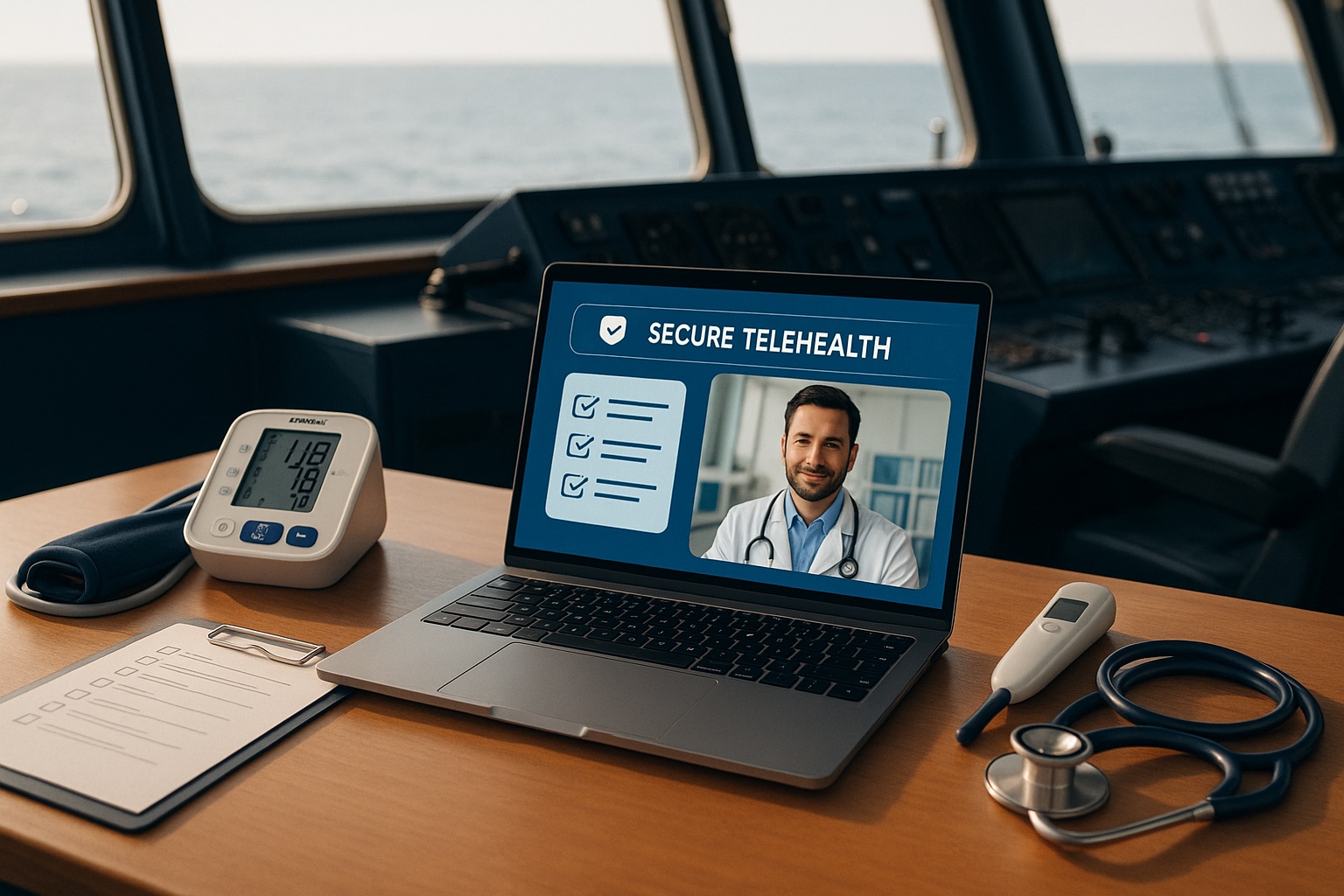
How do integrated messaging systems enhance communication and improve the cruise experience for passengers?

Integrated messaging systems simplify how passengers stay in touch with loved ones and fellow travelers during their cruise. These tools enable onboard calls, text messaging, and even group chats, making it easy to coordinate meetups, share updates, or just check in with ease.

With communication made so convenient, guests can spend more time enjoying their vacation while staying connected whenever they want.

Telehealth for Cruise Lines: Enhancing Emergency Careew Messaging Apps for Ships

Telehealth is transforming medical care on cruise ships. By connecting onboard medical teams with shore-based specialists in real time, it ensures expert care is available even in the middle of the ocean. Here’s what you need to know:

  • How It Works: High-speed satellite internet enables video consultations, teleradiology, and telecardiology. Medical data and imaging are securely transmitted to specialists onshore for immediate review.
  • Challenges: Connectivity issues, limited onboard medical staff, and costly evacuations highlight the need for telehealth solutions.
  • Key Provider: NT Maritime offers high-speed Starlink-powered internet (up to 220 Mbps download) and secure communication tools tailored for maritime needs.
  • Benefits: Faster diagnoses, reduced evacuation costs, and improved care for passengers and crew. Telehealth also supports mental health services and chronic condition monitoring.

Telehealth is reshaping cruise ship healthcare by improving access to specialists, streamlining emergency responses, and supporting both passengers and crew in remote environments.

Technology Requirements for Telehealth at Sea

Expanding on the earlier discussion about telehealth’s advantages, this section dives into the technical essentials for delivering reliable care in maritime environments. Cruise ships face unique challenges due to their remote locations, where traditional terrestrial networks are unavailable. As a result, advanced technology becomes a lifeline, especially during medical emergencies.

Satellite Internet and Connectivity Solutions

At the heart of maritime telehealth lies high-speed, low-latency satellite internet. Without a dependable connection, even the most sophisticated medical tools and systems can’t function effectively for remote consultations.

Modern satellite technologies have revolutionized telehealth at sea. For instance, NT Maritime’s high-speed satellite internet provides the bandwidth and performance necessary for real-time consultations. This includes video calls and the rapid transmission of medical imaging data, ensuring timely and accurate diagnoses.

Bandwidth needs vary based on the service. A simple voice consultation uses minimal data, while transmitting high-quality radiographic images demands significantly more. To ensure secure communications, Virtual Private Networks (VPNs) work alongside satellite internet, maintaining HIPAA-compliant data transmission.

Leading providers like Inmarsat’s Fleet Xpress and FleetBroadband prioritize medical traffic, ensuring emergency consultations remain uninterrupted even during high-usage periods. These connectivity solutions seamlessly integrate with onboard systems, creating a comprehensive telehealth network.

Integration with Shipboard Medical Systems

For telehealth to be effective, it must seamlessly integrate with a ship’s existing medical infrastructure. This involves more than just internet access – it requires systems that automatically manage patient data, diagnostic images, and clinical notes between the ship and shore-based facilities.

One critical component is Electronic Health Records (EHR) integration. For example, if a passenger experiences chest pain mid-ocean, shore-based specialists need immediate access to their medical history, current medications, and past test results. Modern telehealth platforms ensure this information syncs automatically, enabling continuous care no matter the location.

Other systems, like PACS (Picture Archiving and Communication Systems) and RIS (Radiology Information Systems), handle medical imaging. When a ship’s X-ray machine captures an image, these systems format it for transmission and integrate it with both onboard and shore-based records. Automation plays a key role here, as DICOM gateway nodes manage incoming notifications for consultations, ensuring that medical emergencies are handled swiftly without IT delays.

To address connectivity challenges, SeaSync hybrid technology provides a critical solution. This patented system synchronizes data incrementally, allowing telehealth platforms to remain functional even with limited bandwidth. If the satellite connection drops during a session, the system continues working locally and syncs the data once the connection is restored.

NT Maritime‘s Communication Tools

NT Maritime

After integrating onboard systems, reliable communication tools become essential for effective telehealth. NT Maritime offers a suite of solutions tailored for maritime environments, ensuring seamless coordination between ship and shore.

The backbone of NT Maritime’s telehealth support is a secure communication network that allows HIPAA-compliant consultations. These networks enable various communication methods, including onboard calling, messaging, video calls, and voicemail. This flexibility is crucial for medical staff to connect with specialists in different scenarios.

High-quality video calls are particularly transformative. NT Maritime’s systems enable video consultations over ship WiFi, giving shore-based specialists the ability to visually assess patients and observe symptoms that might be difficult to describe verbally. These video calls integrate directly with the cruise line’s passenger management system, ensuring telehealth becomes part of the overall onboard experience.

In addition to video, secure messaging offers encrypted communication channels for sharing follow-up questions, test results, or treatment updates. This ensures patient privacy while enabling ongoing collaboration between onboard teams and shore-based experts.

NT Maritime’s tools also support both app-to-app and app-to-ship connections, providing redundancy during emergencies. If one method fails, medical staff can quickly switch to another, ensuring uninterrupted communication. With an intuitive interface, the system minimizes the need for extensive training, allowing staff to focus on patient care rather than troubleshooting.

Finally, NT Maritime’s compliance with federal and military security standards ensures these systems meet rigorous requirements, making them suitable for use across government, military, and commercial cruise operations.

Telehealth Services for Cruise Ship Emergencies

Thanks to advanced onboard connectivity, cruise ships now offer telehealth services that significantly improve emergency medical care. These services bridge the gap between the ship’s medical team and shore-based specialists, creating a 24/7 safety net no matter where the ship is located. They work hand-in-hand with the communication technologies discussed earlier.

Common Telehealth Services

Telehealth on cruise ships includes several key services:

  • Teleconsultation: Real-time video or audio sessions with shore-based doctors for immediate diagnosis.
  • Teleradiology: Quick transmission of X-rays for expert review.
  • Telecardiology: Instant analysis of ECG results during cardiac emergencies.
  • Additional Services: Telepsychiatry and teledermatology address mental health and skin conditions, while remote patient monitoring tracks chronic conditions.

Cruise lines have increasingly embraced telehealth services like telepsychiatry and teledermatology to meet the needs of passengers and crew during long voyages. These services are particularly helpful for managing stress, mental health challenges, and skin issues that can develop during extended trips.

Remote patient monitoring adds another layer of care by using devices to track vital signs such as heart rate, blood pressure, and oxygen levels. This data is sent directly to shore-based medical professionals, allowing them to catch potential health problems early and intervene before they worsen.

All of these services contribute to smoother and more effective emergency response processes.

Emergency Response Workflows

Telehealth has redefined how cruise ships handle emergencies. When a medical issue arises, the process begins with an onboard assessment, followed by a secure video consultation with a specialist. This real-time connection eliminates delays, reduces unnecessary evacuations, and ensures accurate treatment decisions.

Some systems even offer virtual cabin visits, which are particularly useful during infectious disease outbreaks. These visits allow medical teams to provide care while minimizing direct contact, helping to contain the spread of illness.

Benefits for Crew and Passengers

Telehealth doesn’t just improve emergency care – it also enhances the overall well-being of both passengers and crew.

For passengers, having access to specialists while at sea reduces delays in treatment and ensures better outcomes. Knowing that expert care is just a video call away eases anxiety and makes the cruise experience more enjoyable.

For crew members, telehealth offers continuous health monitoring and mental health support. Some systems have served over 200 cruise ships and provided care to more than 120,000 crew members worldwide. This level of support improves morale, reduces stress, and ensures that crew members stay healthy during their time at sea.

Telehealth also brings operational advantages. Platforms like NT Maritime’s telehealth system help cut down on costly medical evacuations and ship diversions. By optimizing the use of onboard medical staff and minimizing disruptions to itineraries, these services save money and improve efficiency.

Ultimately, telehealth enhances safety for everyone on board. Immediate access to specialist care – without waiting for the next port or coordinating evacuations – ensures timely, effective treatment for medical issues, reducing risks and improving outcomes.
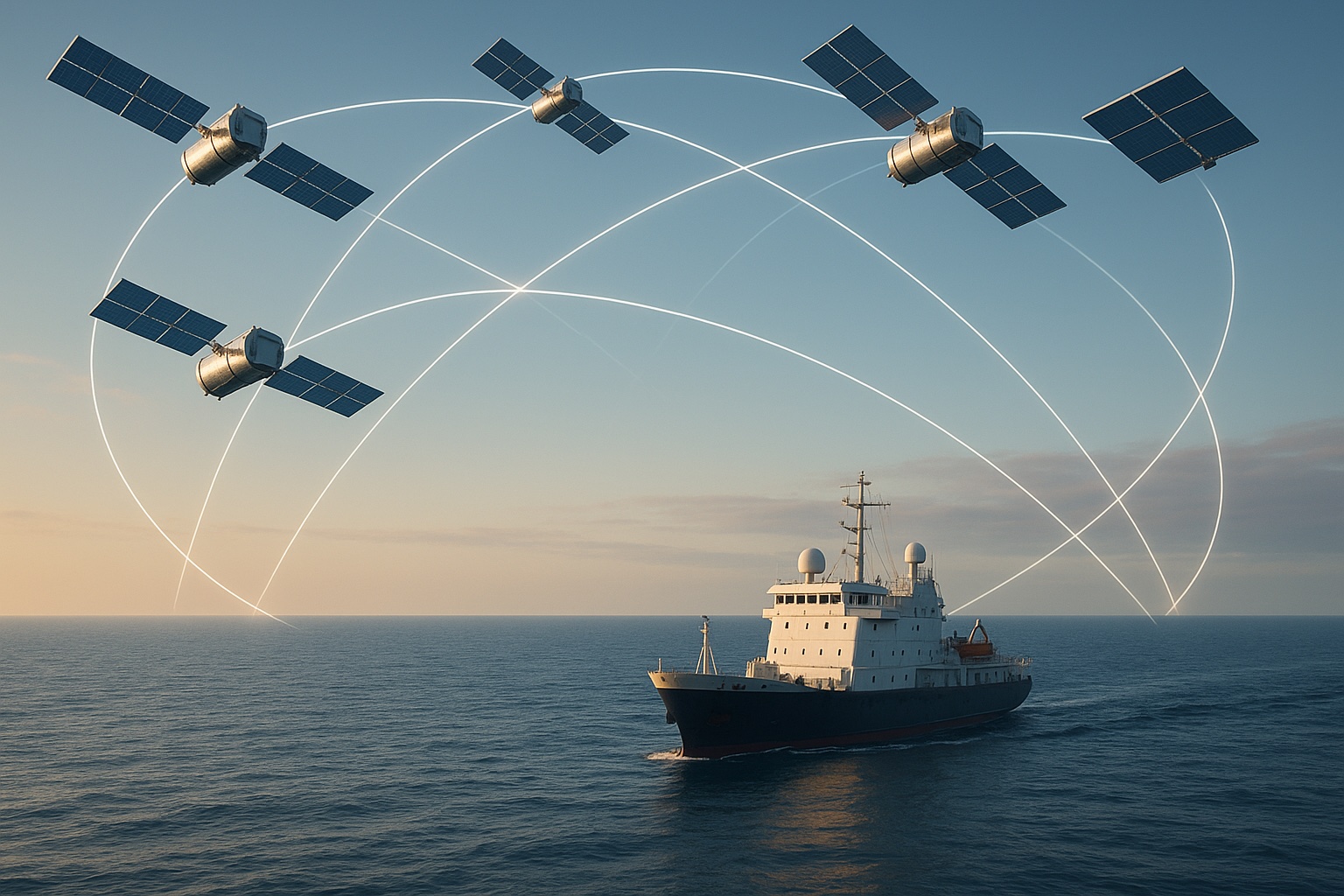
Best Practices for Telehealth Implementation

Bringing telehealth to cruise ships requires a strong foundation of reliable technology, secure systems, and a well-prepared medical team. Building on earlier discussions about connectivity and system integration, these best practices aim to fine-tune telehealth operations for smooth and effective implementation.

Technology and Operational Protocols

Cruise ships must allocate dedicated high-speed satellite bandwidth specifically for medical communications. This ensures uninterrupted connectivity during emergencies, where delays can be critical.

To meet U.S. healthcare regulations, ensure HIPAA compliance by using encrypted VPNs for data transfer, secure storage for medical records, and conducting regular security audits. Additionally, staff should receive ongoing training on privacy protocols to maintain compliance and protect patient information.

Seamless integration with onboard medical systems is another key factor. Telehealth platforms should connect with electronic medical records (EMRs), picture archiving and communication systems (PACS), and diagnostic tools to enable automatic data sharing. Assigning dedicated satellite bandwidth for emergency consultations ensures these systems function without interference.

Regular emergency drills are essential for preparing staff to handle telehealth scenarios. Medical teams should practice using telehealth hardware and software, managing remote monitoring devices, and following established protocols to handle high-pressure situations effectively.

Optimizing Telehealth During Emergencies

Managing bandwidth becomes critical during emergencies, as multiple systems compete for limited satellite connectivity. Cruise lines should prioritize telehealth traffic over non-essential internet use and establish clear communication protocols, such as using direct phone lines or encrypted messaging for critical cases.

Hybrid technologies, like SeaSync, can help by synchronizing data in smaller increments, ensuring care continues even when connectivity is spotty.

Redundancy planning is also vital. Backup communication channels, alternative satellite providers, and onboard capabilities act as safeguards against connectivity failures. Regular system testing helps identify and address vulnerabilities before they impact patient care.

Clear escalation protocols for urgent cases are a must. Medical teams need predefined steps for contacting shore-based specialists, prioritizing critical patients, and managing multiple emergencies at once. Collaboration with telehealth vendors ensures real-time IT support is available when technical issues arise during crises.

Telehealth vs. Traditional Emergency Care Comparison

Telehealth offers unique advantages compared to traditional shipboard medical care, particularly in situations requiring specialist input and rapid decision-making:

Feature Telehealth Emergency Care Traditional Shipboard Care
Specialist Access 24/7 remote access to multiple specialties Limited to onboard physician expertise
Response Time Real-time consultations with shore experts Immediate basic care; delays for complex cases
Data Integration Seamless EMR/PACS connectivity Manual, often paper-based records
Connectivity Requirements High-bandwidth satellite/VPN needed Lower connectivity requirements
Infection Control Enables contactless virtual visits Direct patient contact required
Cost Structure Higher upfront tech investment; lower long-term costs Lower tech costs; expensive evacuations
Scalability One specialist can cover multiple ships One doctor per ship limitation
Regulatory Compliance Requires HIPAA, CDC, and WHO standards Standard maritime medical regulations

This comparison underscores telehealth’s strengths in providing specialist access, faster response times, and scalability, while also highlighting the immediate care benefits of traditional shipboard medicine, which doesn’t rely on connectivity.

To evaluate telehealth’s effectiveness, cruise lines should track metrics like response times, patient outcomes, cost savings, and satisfaction levels.

Telehealth has undeniably transformed maritime emergency care, but it’s not without its hurdles. The ability of cruise lines to address these challenges and embrace new technologies will be key to delivering effective medical care at sea.

Tackling Connectivity and Scalability Challenges

One of the biggest obstacles for telehealth on cruise ships is maintaining reliable connectivity. Remote ocean locations and unpredictable weather can wreak havoc on satellite communications, especially during critical emergencies. Traditional satellite internet often struggles to handle the heavy data loads required for real-time medical imaging or consultations involving multiple specialists.

Thankfully, hybrid technologies and dedicated medical bandwidth are helping bridge these gaps. For instance, NT Maritime’s advanced Starlink-enabled satellite networks now provide high-speed, low-latency connections that are crucial for real-time consultations and seamless data sharing. This kind of connectivity ensures that medical teams can operate effectively, even in the middle of the ocean.

Scalability is another challenge, especially as cruise lines expand their fleets. Relying on the traditional model of having one doctor per ship can quickly become impractical and expensive. Centralized specialist networks offer an alternative, allowing a single shore-based expert to support multiple ships at once. With robust backend systems and automated case routing, this model ensures fast response times, even as fleets grow. Recent implementations have shown how telehealth can scale to support over 200 cruise ships and 120,000 crew members, providing comprehensive medical and wellness services across vast operations.

These advancements in connectivity and scalability are paving the way for cutting-edge diagnostic tools and continuous patient monitoring.

Advancements in Telehealth Technologies

Artificial intelligence (AI) is revolutionizing how diagnostics are handled aboard cruise ships. AI-powered tools can analyze ECGs, radiographs, and vital signs in real time, delivering preliminary diagnoses almost instantly. This is particularly valuable when connectivity is disrupted, as these systems can flag urgent issues and recommend immediate actions without waiting for shore-based input.

Wearable health monitors are also enhancing onboard care. These devices track vital signs, detect cardiac events, and monitor respiratory patterns, automatically alerting medical staff to critical changes. By integrating wearables with telehealth platforms, cruise lines can take a proactive approach to care, often identifying potential emergencies before symptoms escalate.

Together, AI diagnostics and wearable monitors are expanding the capabilities of onboard medical teams, ensuring that even during connectivity outages, vital signs and medical imaging can still be analyzed in real time.

Centralized specialist networks are also broadening the scope of care available at sea. From telepsychiatry to teledermatology, these networks provide access to specialized expertise without requiring ship diversions or passenger evacuations.

Looking ahead, the industry is moving toward intelligent telehealth ecosystems. These integrated solutions combine telehealth with features like quarantine management and contact tracing, creating a more comprehensive approach to maritime healthcare.

NT Maritime’s Vision for the Future of Telehealth

NT Maritime is addressing the infrastructure challenges that have long hindered maritime telehealth. Their secure communication networks prioritize medical data over general internet traffic, ensuring that emergency consultations remain stable even during peak onboard usage.

Their systems support a wide range of telehealth needs, from basic voice calls to high-definition video consultations and real-time data sharing. Passengers and crew also benefit from unlimited global calling and messaging through dedicated apps optimized for ship WiFi networks.

At the heart of NT Maritime’s approach is high-speed, low-latency internet powered by advanced satellite technologies like Starlink. This infrastructure eliminates the connectivity issues that once made real-time specialist consultations unreliable. It also supports emerging technologies like AI diagnostics and continuous monitoring through wearable devices.

NT Maritime’s strategy focuses on providing scalable, secure, and seamlessly integrated telehealth solutions. Their systems are designed to align with passenger management workflows while meeting strict federal and military compliance standards, ensuring that emergency responses are both effective and privacy-conscious.

Conclusion: Transforming Cruise Line Emergency Care with Telehealth

Telehealth is reshaping how emergency care is delivered on cruise lines. By leveraging secure communication tools and high-speed satellite connections, cruise operators can now connect passengers and crew with specialist medical expertise that was once inaccessible during ocean voyages. The results speak for themselves, underscoring the importance of integrated telehealth solutions, as explained earlier.

Pilot studies have shown how effective telehealth can be for maritime emergencies. Modern platforms allow for virtual consultations directly from cabins, reducing infection risks while maintaining high-quality care. These systems are no longer experimental – they’re operational across over 200 ships, supporting 120,000 crew members.

At the core of this transformation are secure and advanced networks. NT Maritime’s satellite technology, powered by Starlink, offers download speeds of up to 220 Mbps, upload speeds of 40 Mbps, and a latency under 99 ms. This ensures stable emergency consultations, even when onboard internet usage is high. These networks are designed for secure medical data transmission, adhering to strict HIPAA standards.

Telehealth also brings practical benefits. It cuts down on costly ship diversions, speeds up access to specialists, and reduces delays in treatment. Onboard care now works in tandem with broader specialist networks, creating a seamless system.

Key Takeaways for Cruise Line Operators

For cruise line operators looking to integrate telehealth, here are the key points to consider:

  • Invest in reliable telehealth infrastructure. High-speed satellite connections are essential for dependable emergency care. Partnering with providers experienced in maritime medical challenges is crucial.
  • Train onboard staff thoroughly. Effective telehealth systems require well-prepared crews and clear workflows. For instance, Atlantas Ship Management’s Telemedicine Digital Plus package, rolled out across its fleet in 2023, highlights how staff training and real-time video consultations can enhance care delivery.
  • Prioritize privacy and security. Systems must comply with data protection regulations through encrypted communication and secure storage. NT Maritime’s networks are specifically designed to meet these rigorous standards, ensuring reliability for emergency situations.

FAQs

How does telehealth help cruise ships respond faster to medical emergencies compared to traditional care?

Cruise ships now leverage telehealth to connect with onshore medical experts in real time, offering quicker diagnoses and treatment advice during emergencies. This approach eases the burden on the ship’s limited medical staff while ensuring both passengers and crew get expert care without unnecessary delays.

With telehealth tools, cruise lines can facilitate video consultations, securely share medical records, and even bring specialists into the conversation when required. This seamless communication not only speeds up response times but also helps improve medical outcomes during urgent situations at sea.

How is data privacy and security maintained during telehealth consultations on cruise ships?

Maintaining data privacy and security during telehealth consultations on cruise ships is a top priority. To achieve this, cruise lines use secure communication networks and implement end-to-end encryption for video calls and messaging. These measures ensure sensitive information stays protected. Plus, they comply with privacy regulations like HIPAA, which sets strict standards for handling personal health data.

On top of that, advanced IT solutions, such as those from NT Maritime, play a critical role. These systems include secure access controls, constant system monitoring, and regular updates to tackle potential security gaps. Together, these efforts not only safeguard passenger and crew data but also provide a hassle-free, confidential telehealth experience.

How do cruise ships maintain reliable telehealth services while operating in remote ocean regions?

Cruise ships operate in remote areas, making reliable connectivity a challenge. However, advanced communication solutions are bridging this gap to deliver dependable telehealth services. NT Maritime focuses on building secure, high-speed communication networks specifically designed for maritime settings. These networks support uninterrupted video calls, messaging, and real-time medical consultations, even during lengthy voyages across the ocean.

With the integration of modern telehealth technologies, cruise lines can offer passengers and crew access to quality healthcare from virtually anywhere. This not only boosts onboard safety but also provides peace of mind for everyone on board.
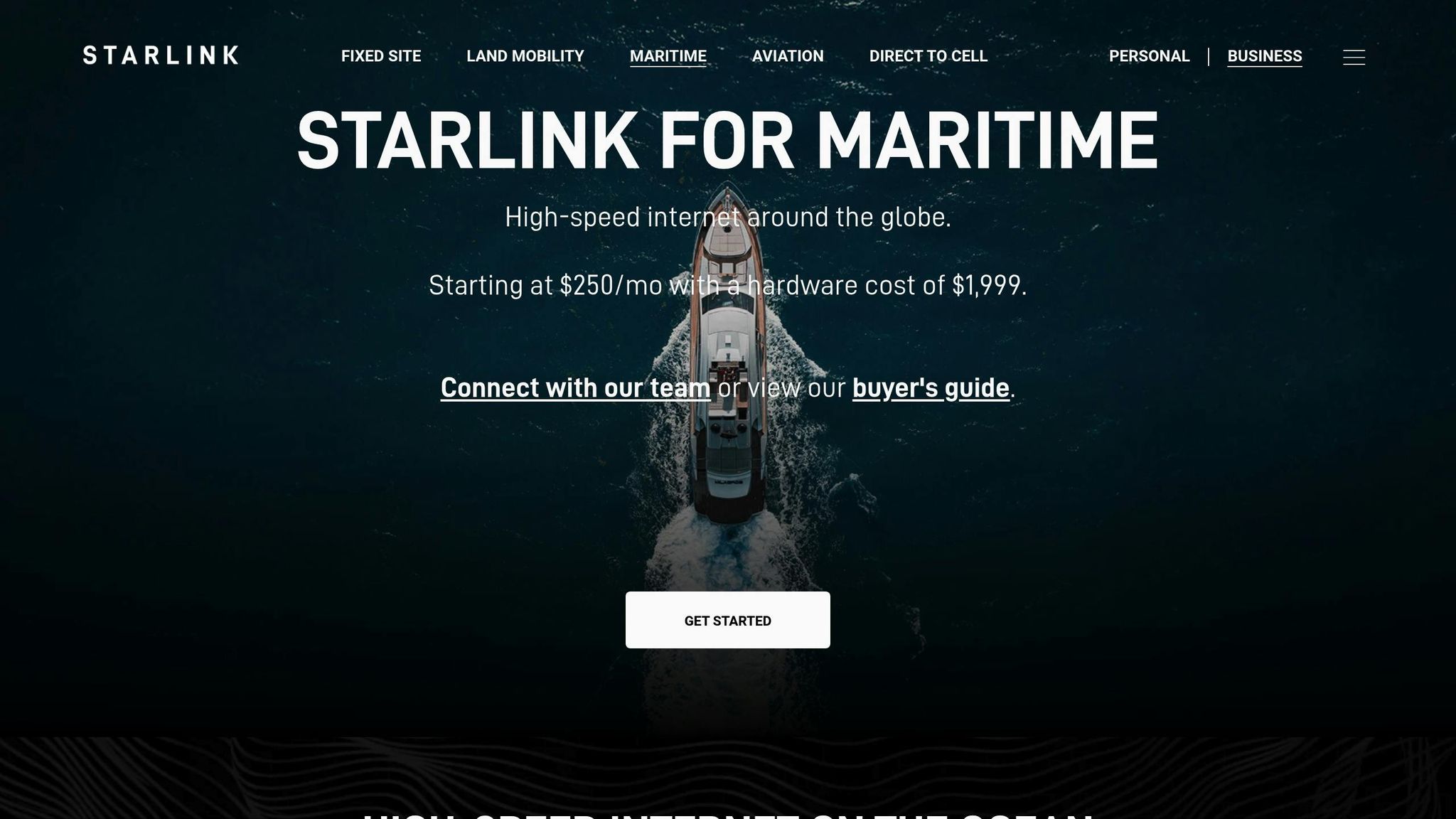
Ultimate Guide to Maritime Emergency Voice Systems

Reliable communication saves lives at sea. Maritime emergency voice systems ensure ships can send distress signals, coordinate rescues, and manage crises effectively. These systems include VHF and HF radios, satellite communication tools, sound-powered phones, and public address systems, all designed to function even during power outages. They comply with strict global safety standards like SOLAS, ensuring redundancy and independent power sources.

Key points to know:

  • VHF/HF radios: Short and long-range communication tools with distress alert features.
  • Satellite systems: Global coverage for remote areas.
  • Sound-powered phones: Operate without electricity for emergencies.
  • Regulations: SOLAS, U.S. Coast Guard, and FCC ensure system reliability.
  • Modern advancements: Integrated platforms now combine voice, video, and telehealth for faster response.

These systems are critical for handling fires, medical emergencies, security threats, and more. Regular testing, crew training, and proper maintenance ensure they work when needed most. Investing in these tools means better coordination, faster rescue efforts, and safer outcomes during maritime emergencies.

Core Technologies in Maritime Emergency Voice Systems

VHF and HF Radios

VHF radios, or Very High Frequency radios, are a cornerstone of short-range maritime emergency communication. They typically cover distances of 5–20 miles, depending on factors like antenna height and environmental conditions. Channel 16 (156.800 MHz) is the international frequency for distress, safety, and general calling, and it’s continuously monitored by the U.S. Coast Guard. For longer distances, HF (High Frequency) radios step in, capable of transmitting over hundreds or even thousands of miles – making them crucial for open ocean operations. Both VHF and HF radios are equipped with Digital Selective Calling (DSC), a feature that automates distress alerts by transmitting vessel identification and GPS coordinates, significantly cutting down response times.

The U.S. Coast Guard handles over 20,000 distress calls annually through these systems. However, only one HF voice distress frequency (4125 kHz) is actively monitored within the continental U.S., with additional coverage in Alaska and Guam. These radio systems form the backbone of maritime communication, setting the stage for other advanced tools.

Satellite Communication Systems

Satellite communication systems extend coverage far beyond what traditional radios can reach, making them indispensable for vessels operating in remote or polar regions. Since 2018, these systems have seen over 15% annual growth, reflecting their increasing importance in maritime operations.

Companies like NT Maritime leverage advanced satellite technologies, including Starlink, to provide high-speed, low-latency voice communications. This capability supports clear Voice over IP (VoIP) calls for emergencies and routine connectivity alike.

For federal and military use, satellite systems ensure secure, real-time communication that’s critical for mission success. Unlike VHF and HF radios, satellites operate independently of terrestrial infrastructure, making them a reliable option even in areas with limited radio coverage. This global reach and reliability make satellite systems an essential layer in maritime communication, especially for transmitting distress signals and coordinating with shore-based responders.

Internal Onboard Communication Tools

Onboard communication tools play a vital role in maintaining internal coordination during emergencies. Public Address (PA) systems, for instance, are designed to broadcast crucial instructions across a ship. These systems must meet IEC 60849 standards to guarantee clear audio, redundancy, and seamless integration with fire detection and alarm systems.

Sound-powered telephones are another key tool. They don’t rely on external power, ensuring communication remains functional during power outages.

Modern vessels often use integrated communication platforms that combine various technologies. NT Maritime’s solutions, for example, enable app-to-app calling, ship PBX integration, messaging, and video calls over onboard WiFi networks, allowing crew members to use their personal devices for secure, coordinated communication.

For noisy areas, communication stations should be equipped with sound-reducing booths to comply with regulations.

Technology Range Power Independence Key Emergency Features
VHF Radio 5–20 miles Ship power required Channel 16 monitoring, DSC alerts
HF Radio 100s–1,000s miles Ship power required Long-range DSC, global coverage
Satellite Systems Global Ship power/battery backup Voice/data anywhere, encrypted communication
Sound-Powered Phones Ship-wide No external power needed Reliable communication during power outages
PA Systems Ship-wide Ship power/battery backup Mass notifications, zone-specific alerts

"Ship emergency communication system"

Regulatory Standards and Compliance

Maritime emergency voice systems are built and operated within strict regulatory frameworks to ensure vessels can communicate effectively during critical situations. These regulations impact every detail, from the choice of equipment to how it’s installed, ensuring the systems function reliably when needed most. A key component of these frameworks is the SOLAS Convention, which lays out the international guidelines for emergency communication.

SOLAS Requirements for Emergency Communication

The Safety of Life at Sea (SOLAS) Convention serves as the cornerstone of international maritime communication protocols. It requires vessels to have dependable emergency communication systems, such as VHF, MF, and HF radios equipped with Digital Selective Calling (DSC), satellite Emergency Position Indicating Radio Beacons (EPIRBs), and backup power supplies to ensure functionality during emergencies.

A critical aspect of SOLAS is redundancy. Ships must have multiple methods of sending distress signals, typically using different technologies like VHF, MF/HF radios, and satellite EPIRBs. This ensures that if one system fails, others can still operate. Additionally, these systems must be able to function independently of the ship’s main power source, often relying on reserve energy like battery backups.

Modern vessels often integrate various communication tools – radio, satellite, and onboard systems – into a single platform. Companies like NT Maritime provide solutions that align with SOLAS requirements, offering systems that support DSC, EPIRB integration, and standardized communication protocols.

U.S. Coast Guard and FCC Guidelines

U.S. Coast Guard

In addition to international regulations, U.S. standards set forth by the Coast Guard and the Federal Communications Commission (FCC) impose additional requirements. The U.S. Coast Guard enforces regulations like 46 CFR 113.30, which outline specific standards for emergency communication systems on U.S.-flagged vessels. These systems must operate independently of the ship’s main electrical system, include separate circuits for talking and calling, and be installed in key areas such as the bridge, engine room, and fire control stations.

Strict installation standards ensure that communication stations remain accessible and protected during emergencies. For example, cabling in high-risk areas must meet fire resistance standards, and equipment must withstand environmental hazards. In particularly noisy or hazardous areas, features like soundproof booths or visual alarms are often added to improve usability.

The FCC also plays a vital role by requiring that all maritime radios used for emergency communication be type-approved and licensed. Since June 1999, all new radios must include DSC capability. Operators are required to obtain licenses and program their radios with a Maritime Mobile Service Identity (MMSI). VHF-FM Channel 16 serves as the internationally recognized distress frequency, which all vessels must monitor unless actively communicating.

To enforce compliance, the U.S. Coast Guard inspects thousands of vessels annually. Penalties for non-compliance can include fines, vessel detention, loss of certification, and heightened liability in the event of an incident.

IMO Standard Marine Communication Phrases

To overcome language barriers and ensure clear communication, the International Maritime Organization (IMO) developed the Standard Marine Communication Phrases (SMCP). This standardized vocabulary is critical for multinational crews, enabling clear and unambiguous transmission of distress calls, safety instructions, and coordination messages.

SMCP training is now a mandatory part of crew certification. Regular drills and training sessions ensure that crew members can use these phrases effectively, even under pressure. Many modern communication systems now incorporate SMCP protocols, further streamlining onboard and external communication.

Regulation Key Requirements Compliance Focus
SOLAS GMDSS equipment, redundancy, power independence International vessels, system reliability
USCG (46 CFR 113.30) System independence, strategic placement, fire safety U.S.-flagged vessels, installation standards
FCC (47 CFR Part 80) Equipment licensing, MMSI programming, operator permits U.S. maritime radio operations
IMO SMCP Standardized phrases, crew training, clear communication All international voyages

Design and Maintenance Best Practices

Ensuring emergency voice systems are well-designed and properly maintained is crucial for effective communication during maritime emergencies. A reliable system depends on redundancy, smart equipment placement, and consistent upkeep. Strategic station locations and robust protocols can make all the difference when seconds count.

Where to Place Communication Stations

Emergency communication stations should be installed in key areas across the vessel to ensure rapid access when needed. The bridge, as the central command hub, must have immediate access to systems like VHF radios, satellite phones, and internal announcement tools. Additional stations should be placed in critical locations such as the engine room, steering gear room, fire control station, and radar room, providing multiple access points during emergencies.

Fire control stations deserve particular attention, as they often act as coordination hubs during crises. Ensure these stations are equipped with easily accessible communication tools.

Outdoor equipment must be protected using NEMA or IP-rated enclosures, with isolation switches that can be operated directly from the bridge. For vessels operating in harsh conditions, it’s essential to position stations in areas shielded from salt spray, extreme temperatures, and mechanical vibrations. Placement should also account for vessel stability during heavy rolling or pitching to maintain functionality in all circumstances.

System Redundancy and Power Independence

A reliable emergency communication system must have independent power sources. These systems should operate separately from the vessel’s main electrical grid, with dedicated connections to the emergency bus and backup battery systems. Separate circuits for talk and call functions are critical to ensure that a single failure doesn’t compromise the entire system. Additionally, communication wiring should avoid high-risk areas like machinery rooms and galleys. If routing through such areas is unavoidable, fire-resistant cables must be used.

Backup handheld radios add another layer of redundancy. These portable devices should be strategically distributed throughout the vessel and regularly tested to ensure batteries are charged and systems are operational. Emergency communication systems must also meet the requirement of running for at least six hours on backup power, as mandated by SOLAS/GMDSS regulations.

Once redundancy and independent power are in place, regular testing is essential to confirm the system’s readiness.

Regular Testing and Crew Training

Even the most robust systems are only as effective as their maintenance and the crew’s ability to use them. Emergency communication systems should be tested monthly, with more frequent checks during high-risk voyages. Factory Acceptance Testing (FAT) ensures equipment meets standards before leaving the manufacturer, while Site Acceptance Testing (SAT) verifies functionality after installation.

Testing protocols should mimic real-life emergencies, assessing communication clarity, backup power transitions, and the functionality of visual indicators. Conduct monthly emergency drills to evaluate crew proficiency and system performance. These drills should emphasize the use of standardized phrases and proper emergency procedures. Regular practice not only keeps the crew prepared but also helps identify potential system issues early.

Detailed logs of testing, maintenance, and training activities are essential for both compliance and reliability. These records can highlight patterns that might indicate emerging problems and serve as proof of regulatory adherence during inspections.

Modern tools, like integrated platforms from NT Maritime, simplify maintenance by automating routine tests and providing real-time system monitoring. Such solutions streamline upkeep and help ensure all components remain operational and aligned with regulatory standards.

Modern Solutions and Integrated Systems

Advancements in design and maintenance have paved the way for integrated systems that improve emergency response at sea. Modern vessels now rely on unified communication platforms that bring together voice, messaging, video, and telehealth tools into one streamlined interface. This eliminates the need for switching between devices or channels during critical moments, fundamentally changing how crews handle emergencies.

Unified Communication Platforms for Maritime

Unified communication platforms merge various communication channels into a single, efficient system, enabling crews to respond to emergencies with greater speed and accuracy. By centralizing communication, these platforms minimize delays and reduce the risk of miscommunication when time is of the essence.

Take, for instance, a ship’s medical officer. They can simultaneously video call shore-based doctors, send updates to the bridge, and broadcast alerts to the crew – all through one system. This level of integration not only speeds up response times but also ensures that everyone involved stays on the same page.

Beyond speed, these platforms enhance situational awareness by consolidating all communication activities in one place. Emergency coordinators can monitor multiple channels, track the progress of responses, and maintain detailed logs for compliance and analysis. Features like real-time record-keeping ensure that all communications are documented, aiding in post-incident reviews and meeting regulatory requirements.

Modern cruise ships highlight the effectiveness of these systems, using them to send simultaneous alerts and conduct video consultations during emergencies. By streamlining communication, these platforms complement existing safety equipment, making overall response efforts more efficient.

NT Maritime‘s Role in Emergency Communication

NT Maritime

NT Maritime has developed integrated communication solutions tailored for maritime emergencies. Their systems work alongside traditional emergency protocols, boosting coordination between onboard teams and shore-based responders. These platforms include encrypted networks designed to meet the rigorous standards of cruise lines, government vessels, and military operations.

The company’s solutions offer a range of onboard communication features like calling, video calling, messaging, and voicemail, all optimized for seamless use over ship WiFi. These tools enable app-to-app communication and integrate with ship PBX systems, ensuring rapid internal coordination during crises.

A standout feature is NT Maritime’s telehealth capabilities, which allow medical staff to consult with shore-based specialists in real time. High-quality video transmission supports visual assessments and critical decision-making, even in the middle of the ocean.

The company also leverages high-speed satellite connectivity, ensuring reliable communication for video consultations and data-sharing, no matter how remote the location. For government and military vessels, NT Maritime offers additional layers of security with encrypted channels to protect sensitive information, meeting federal standards for mission-critical operations.

Emerging technologies are set to transform maritime emergency communication further. AI-powered systems are already being developed to detect distress signals, prioritize alerts based on urgency, and route calls to the right responders automatically. These systems can monitor onboard sensors and communication channels, identifying potential emergencies and initiating response protocols without human input.

Satellite technology is also advancing rapidly, with low-earth orbit (LEO) constellations delivering higher bandwidth, lower latency, and global coverage. This ensures consistent communication for telehealth and emergency coordination, even in the most remote areas.

Another exciting development is the use of wearable communication devices for crew members. These devices offer hands-free communication, transmit location data, and even monitor vital signs, helping detect distress before situations escalate.

Real-time language translation is becoming a key feature, allowing multinational crews and international rescue teams to communicate seamlessly. This is especially valuable during global operations where language barriers can complicate response efforts.

As systems grow more sophisticated, cybersecurity remains a critical focus. Future platforms will include advanced threat detection to ensure secure and uninterrupted communication during emergencies, even under cyber threats.

Industry reports show that over 90% of newbuild vessels now come equipped with integrated communication platforms supporting voice, data, and video. This widespread adoption underscores the importance of unified systems in enhancing maritime safety. These advancements continue to raise the bar for emergency response capabilities at sea.

Conclusion: Safety Through Reliable Communication

Maritime emergency voice systems are the cornerstone of safety at sea, enabling vessels to connect with rescue services and coordinate life-saving responses when every second matters. The combination of advanced technologies, strict regulatory standards, and proven best practices creates a safety net that safeguards crews and passengers across the globe.

A layered communication setup is critical. By integrating VHF, HF, and satellite systems, redundancy is built into the network, ensuring that if one channel falters, others are ready to carry vital distress signals. This multi-tiered approach significantly enhances reliability during emergencies.

Regulatory compliance is another pillar of system dependability. Standards like SOLAS, U.S. Coast Guard mandates, and FCC guidelines don’t just set baseline requirements; they ensure that emergency systems remain operational even when primary components fail. Features such as dedicated emergency channels further strengthen crisis management capabilities.

These regulations have a tangible impact on maritime safety. Data shows that vessels equipped with DSC technology and satellite EPIRBs experience quicker response times and higher survival rates. Additionally, the adoption of the Global Maritime Distress and Safety System (GMDSS) has led to a marked decrease in maritime casualties.

Unified communication platforms are also transforming emergency response. By integrating voice, messaging, video, and even telehealth services, these systems streamline coordination among crew members, medical teams, and rescuers, reducing delays and confusion during critical moments.

Routine maintenance and crew training are equally essential. Many equipment failures stem from misconfigurations or a lack of familiarity rather than technical faults. Regular system checks and crew drills not only ensure operational readiness but also help vessels meet regulatory standards more effectively.

Emerging advancements, such as low-earth orbit satellite networks and AI-driven emergency detection, promise to enhance global connectivity and response efficiency. Yet the fundamental principle remains unchanged: reliable emergency voice communication is the lifeline that ensures distress signals reach the right people at the right time, regardless of conditions or location.

Investing in dependable emergency voice systems is an investment in saving lives. It builds a resilient communication framework that enables swift rescues, protects valuable assets, and ensures the safe return of crews and passengers.

FAQs

What is the difference between VHF and HF radios, and when should each be used during maritime emergencies?

VHF (Very High Frequency) and HF (High Frequency) radios play distinct roles in maritime communication, particularly during emergencies.

VHF radios are best suited for short-range communication, typically covering distances of 20–30 miles. They excel in ship-to-ship or ship-to-shore communication and are highly dependable for line-of-sight transmissions. These radios are the go-to choice for distress signals in coastal waters, where their coverage is most effective.

HF radios, on the other hand, are built for long-range communication, capable of transmitting across hundreds or even thousands of miles. They rely on ionospheric reflection to carry signals over vast distances, making them indispensable for vessels operating far offshore or in remote regions where VHF signals can’t reach.

In essence, VHF radios are ideal for local emergencies and nearshore operations, while HF radios are essential for long-distance communication in open waters or international scenarios.

How do modern unified communication systems improve emergency response on ships compared to older technologies?

Modern unified communication systems are transforming how emergency responses are handled on ships by bringing together multiple communication tools into one cohesive platform. Unlike older setups, these advanced systems offer real-time voice, video, and messaging capabilities, enabling quicker and more efficient coordination when it matters most.

By simplifying communication among crew members, passengers, and onshore teams, these systems help minimize delays and improve overall awareness of the situation. Key features like automated alerts, secure networks, and reliable connectivity are crucial for maintaining safety and meeting maritime regulations. These advancements greatly enhance the ability to handle emergencies with speed and precision.

How can maritime emergency voice systems stay compliant with SOLAS and U.S. Coast Guard regulations?

To ensure that maritime emergency voice systems meet the standards set by SOLAS (Safety of Life at Sea) and the U.S. Coast Guard, there are a few important practices to keep in mind:

  • Stay informed on regulations: Keep up with the latest updates to SOLAS and U.S. Coast Guard rules. These guidelines often change to reflect advancements in safety measures and technology.
  • Inspect systems regularly: Perform routine tests and maintenance checks on emergency voice systems. This ensures they function properly and meet the necessary performance requirements.
  • Train the crew: Make sure all crew members know how to operate emergency voice systems efficiently and understand the regulatory requirements.
  • Use approved equipment: Install communication systems that meet or exceed the technical specifications set by SOLAS and the U.S. Coast Guard.

By following these steps, maritime operators can not only stay compliant but also enhance the safety of passengers and crew during critical situations.

Ultimate Guide to Satellite Bandwidth for Maritime IT

Satellite bandwidth is the backbone of modern maritime communication, enabling vessels to stay connected far from shore. With over 38,000 ships now equipped with broadband systems, the demand for reliable, high-speed connectivity at sea has grown significantly. Here’s what you need to know:

  • What It Is: Satellite bandwidth refers to the data capacity leased for communication between ships and satellites. It supports internet, voice calls, navigation, and more.
  • Why It Matters: It ensures safety (distress signals, weather updates), improves efficiency (fleet tracking, fuel monitoring), and enhances crew and passenger experience (Wi-Fi, entertainment).
  • Key Technologies: VSAT systems (Ku-, Ka-, C-bands), LEO satellites (low latency, faster speeds), and phased-array antennas are commonly used.
  • Bandwidth Allocation: Ships can choose shared or dedicated bandwidth, balancing cost and performance based on their needs.
  • Future Trends: LEO satellites are revolutionizing connectivity, with bandwidth capacity expected to grow sevenfold by 2034.

This guide dives into how satellite bandwidth works, its importance, and how to choose the right solution for your vessel.

How Do Maritime Vessels Communicate? – VSAT Systems Explained

Satellite Technologies and Bandwidth Allocation Methods

Maritime vessels rely on three main satellite technologies to maintain connectivity, each tailored to different operational needs and vessel types. Understanding these technologies, along with the methods used to allocate bandwidth, is crucial for making smart connectivity choices. Let’s break down the essentials.

Satellite Technologies Used in Maritime IT

VSAT systems are the backbone of maritime communications, operating across Ku-, Ka-, and C-bands. Each band serves specific needs:

  • Ku-band is popular among commercial vessels for its balance of cost and broad global coverage.
  • Ka-band delivers faster speeds, ideal for high-bandwidth activities like passenger Wi-Fi and video streaming.
  • C-band stands out for its reliability in harsh weather, making it a go-to for vessels in challenging environments.

LEO (Low Earth Orbit) constellations have revolutionized maritime connectivity. With latency as low as 20–40 milliseconds, they enable near real-time applications. By Q2 2025, over 26,000 ships were using LEO broadband services, with some providers offering download speeds up to 220 Mbps and upload speeds around 40 Mbps [4].

Phased-array antennas represent cutting-edge technology, dynamically tracking multiple satellites to ensure uninterrupted connectivity as vessels move through different coverage zones [4].

The choice of satellite technology often hinges on the vessel’s purpose:

  • Cruise ships lean toward LEO networks for high-speed passenger internet.
  • Cargo vessels typically use VSAT systems for cost-effective operations.
  • Military and government vessels often rely on C-band for secure and dependable connectivity.

Many vessels now adopt multi-orbit strategies, combining geostationary (GEO) and LEO systems to ensure backup connectivity and optimize performance in real time [4]. This approach ensures that connectivity aligns with operational demands, a principle also reflected in how bandwidth is allocated.

How Bandwidth Gets Allocated

Beyond choosing the right satellite technology, efficiently allocating bandwidth is key to optimizing performance. Maritime networks primarily use two approaches for bandwidth distribution, each with its own trade-offs.

Point-to-point technologies create dedicated links between a vessel and a satellite. This setup ensures consistent performance, making it ideal for mission-critical applications.

Point-to-multipoint technologies share bandwidth among multiple vessels within a satellite beam. While more cost-effective, performance can vary based on network congestion and demand.

The choice between shared and dedicated bandwidth significantly impacts both costs and service quality:

  • Shared bandwidth pools resources among users, offering an affordable option but with potential slowdowns during peak usage.
  • Dedicated bandwidth reserves capacity for a single vessel, guaranteeing stable performance for tasks like telemedicine or real-time monitoring, though it comes at a higher price.

Here’s a quick comparison of allocation methods:

Allocation Method Performance Cost Best For
Point-to-Point Dedicated Consistent High Mission-critical operations, large vessels
Point-to-Multipoint Shared Variable Low–Medium General communications, smaller vessels
Hybrid Approach Balanced Medium–High Mixed operational needs

The bandwidth game is rapidly changing. NGSO capacity, particularly from LEO satellites, is expected to grow from 286 Gbps in 2024 to 2 Tbps by 2034 – a sevenfold increase. This surge in capacity is driving down costs while improving performance across all allocation methods. Operators must weigh factors like user needs, application demands, route reliability, and data requirements to find the most effective and economical solution. The goal? To match current operational priorities while preparing for what’s next.

How to Maximize Bandwidth Usage at Sea

Getting the most out of satellite bandwidth while at sea requires a mix of technical fine-tuning, smart traffic management, and properly configured hardware. Maritime professionals can adopt a variety of methods to enhance connectivity, ensuring smooth operations and reliable communication – whether for critical tasks or day-to-day needs.

Methods to Improve Bandwidth Performance

One effective approach is adaptive coding and modulation (ACM), a technology that adjusts signal parameters in real time based on current link conditions. This is particularly useful in overcoming challenges like weather disruptions, as it helps maintain optimal throughput even when signal quality fluctuates.

Another tool is TCP acceleration, which tackles the inherent latency of satellite communications. By optimizing the transport protocol, it speeds up data transfers, making it especially effective for latency-sensitive applications such as video calls and real-time monitoring.

Then there’s HTTP prefetching, which anticipates user needs by loading web content ahead of time. This reduces perceived delays and works well for applications that consume a lot of bandwidth, such as streaming or large data transfers.

For example, a cruise line using HTS-enabled Ka-band VSAT saw a 50% increase in available bandwidth and a 30% reduction in latency after implementing these strategies. This allowed them to support reliable video streaming and telemedicine services for both passengers and crew.

Additionally, High Throughput Satellites (HTS) with spot beam technology offer a significant performance boost. These systems provide higher capacity and lower latency, making them ideal for handling the data-heavy demands of modern maritime operations.

These technical improvements set the stage for efficient traffic management, which is crucial for maintaining consistent connectivity.

Network Traffic Management and Segmentation

Once performance enhancements are in place, managing network traffic becomes the next priority. Smart traffic management ensures that critical applications always have the bandwidth they need. By segmenting the network and prioritizing traffic, operators can allocate resources to essential functions and prevent congestion.

For instance, traffic prioritization can ensure that navigation systems and safety communications take precedence over recreational internet use. This guarantees that vital operations remain unaffected, even during periods of heavy network demand.

A commercial shipping fleet demonstrated the effectiveness of this approach by implementing network segmentation and traffic prioritization. Even during peak passenger internet usage, the fleet maintained uninterrupted operational communications, highlighting how proper traffic management can balance competing demands.

Another component of traffic management is backup connectivity options. These systems provide redundancy through automatic failover mechanisms, switching to alternative satellite links or cellular networks when needed. Dynamic bandwidth allocation further enhances flexibility by adjusting resources in real time based on changing requirements.

Hardware Setup and Environmental Factors

The right hardware setup is essential for maximizing performance. Proper antenna installation and alignment are critical, as they ensure a clear line of sight to satellites. This becomes even more important on moving vessels, where surrounding structures and constant motion can disrupt signals.

Stabilized antennas play a key role here. These systems automatically adjust to maintain alignment with satellites, even as ships roll, pitch, or change course. For example, commercial vessels often rely on 1 to 1.5-meter stabilized Ku-band VSAT antennas, while smaller vessels use Ultra Small Aperture Terminals (USATs) for more cost-effective connectivity.

Additionally, marine-rated equipment is designed to withstand the harsh conditions at sea, including saltwater corrosion, high humidity, and extreme temperatures ranging from -20°F to 140°F. Such equipment typically features corrosion-resistant materials and sealed enclosures to protect against environmental damage, ensuring reliable performance in any weather.

To minimize downtime, remote diagnostics and updates allow technicians to troubleshoot and maintain systems without being physically present. Routine maintenance, including firmware updates and checks on antenna alignment and connection security, helps prevent issues before they arise.

Finally, it’s important to monitor environmental factors like weather and sea conditions, as these can heavily impact satellite signals. Operators should plan communication activities during favorable conditions and rely on backup systems to maintain connectivity during severe weather, ensuring uninterrupted service even in challenging circumstances.

How to Choose the Right Satellite Bandwidth Solution

Finding the right satellite bandwidth solution means balancing performance, cost, and your vessel’s specific operational needs. With NGSO (primarily LEO) capacity expected to dominate the market – growing from 85% in 2024 to 98% by 2034 – maritime operators are rethinking how they approach connectivity. Here’s a breakdown of the key factors to consider when aligning your connectivity needs with your operational priorities.

What to Look for in Satellite Bandwidth Options

When evaluating satellite bandwidth options, focus on the features that align with your vessel’s unique requirements.

Start with performance metrics like download/upload speeds, latency, and coverage. For example, a cruise ship catering to thousands of passengers will need a solution vastly different from what a small cargo vessel requires.

  • Latency: This is critical for real-time functions like video calls or telemedicine. LEO systems, with latency as low as 20–40 ms, are a game-changer compared to the 600+ ms typical of GEO satellites. These systems are ideal for time-sensitive applications [4].
  • Coverage: Your route dictates your coverage needs. While global coverage is essential for vessels on worldwide routes, regional solutions may work for coastal or ferry operations. LEO and multi-orbit solutions now offer near-global coverage, even in polar and remote ocean regions [4].
  • Hardware: Equipment requirements can vary. LEO systems often need sophisticated electronically steered antennas, while GEO VSAT typically uses traditional stabilized parabolic antennas. Factors like deck space, power availability, and installation complexity should influence your decision [4].
  • Security: For federal and military operations, robust encryption and cybersecurity are non-negotiable. Your solution must ensure secure data exchange for critical missions.
  • Service Integration: Seamless integration with onboard systems – like passenger management platforms or ship PBX – can enhance functionality. Features such as app-to-app calling and integrated WiFi messaging are valuable for both crew and passengers.

It’s also important to assess peak performance and reserve capacity. For example, a global cruise line opted for a C-band VSAT system on flagship vessels to ensure uninterrupted connectivity, despite higher hardware costs. Meanwhile, for regional ferries, they chose Ku-band spot-beam services with smaller antennas to strike a balance between performance and cost.

Satellite Technology Comparison

Understanding the strengths and limitations of different satellite technologies can help you make an informed choice:

Technology Data Rates Latency Coverage Hardware Requirements Best Use Cases
GEO VSAT Moderate to High 600+ ms Global (except polar regions) Stabilized parabolic antennas Backup connectivity, legacy systems, non–time-critical operations
LEO (e.g., Starlink) High (100+ Mbps) 20–40 ms Near-global, including polar areas Electronically steered/flat panel antennas Real-time operations, crew/passenger internet, IoT applications
MEO Very High (Gbps) 100–150 ms Regional/global Advanced tracking systems High-throughput enterprise applications

LEO systems, like Starlink, are rapidly gaining traction, with over 26,000 ships now using LEO broadband services. These systems provide speeds of up to 220 Mbps for downloads and 40 Mbps for uploads, with low latency – perfect for data-heavy, real-time applications [4].

While GEO VSAT is still relevant for backup connectivity and areas not fully covered by LEO systems, its market share is shrinking as NGSO solutions expand. Many operators are adopting multi-orbit strategies, combining GEO, MEO, and LEO technologies to ensure both reliability and enhanced performance.

The cost landscape is also shifting. In 2025, service revenues reached $1.27 billion for GEO VSAT and $745 million for LEO broadband [4]. With advancing technology, the total cost of ownership is dropping, and flexible contracts tailored to specific needs are helping operators manage budgets more effectively.

To choose the right solution, match your vessel type, route, and operational demands with the appropriate satellite technology. Cruise lines, for instance, need high bandwidth and low latency to handle large numbers of users, while federal and military operations may prioritize security and reliability. Looking ahead, scalability is crucial – NGSO bandwidth is expected to grow sevenfold, from 286 Gbps in 2024 to 2 Tbps by 2034, ensuring your investment can meet future data demands.

NT Maritime‘s Bandwidth Management Solutions

NT Maritime

NT Maritime provides tailored bandwidth management and communication solutions specifically designed to meet the unique challenges of maritime environments. Serving a $3.2 billion market with over 38,300 vessels relying on VSAT and LEO broadband services [4], the company delivers tools that enhance connectivity and operational efficiency at sea.

NT Maritime’s Communication and Bandwidth Services

NT Maritime offers high-speed internet with download speeds of up to 220 Mbps, upload speeds of 40 Mbps, and latency under 99 ms. This level of connectivity supports everything from crew communications to demanding applications like real-time video conferencing and telemedicine.

At the core of NT Maritime’s offerings are secure communication networks. These networks support a wide range of tools for both passengers and crew, including onboard calling, messaging, video calls, and voicemail systems. What makes NT Maritime stand out is their seamless integration of these services – passengers can access connected communication systems that are fully integrated with onboard management tools.

Passengers benefit from unlimited onboard calls and messages via a dedicated app, which also enables group messaging and photo sharing, creating a connectivity experience comparable to land-based vacations. The bring-your-own-device (BYOD) feature allows passengers to use their own smartphones and tablets over the ship’s WiFi, eliminating the need for specialized equipment.

For healthcare needs, NT Maritime’s Telehealth solutions offer remote medical consultations, real-time health monitoring, and secure transmission of medical data. These services ensure timely care for both emergencies and routine medical needs.

For government and military operations, NT Maritime provides secure communication systems designed to withstand cyber threats. These systems meet FIPS (Federal Information Processing Standards) and other maritime cybersecurity requirements, ensuring encrypted, reliable communication for mission-critical operations. These secure networks enable real-time data sharing while maintaining the highest levels of security.

How NT Maritime Improves Maritime IT Operations

NT Maritime enhances IT operations by optimizing bandwidth through dynamic allocation and real-time traffic management, ensuring critical functions remain uninterrupted even in challenging conditions.

Their approach includes traffic prioritization, network segmentation, and dynamic bandwidth allocation. Essential applications like navigation systems, safety communications, and Telehealth services are prioritized, while recreational internet and entertainment services are allocated bandwidth based on availability. This Quality of Service (QoS) model ensures smooth operation across all systems without congestion.

With real-time monitoring and analytics, NT Maritime keeps a constant eye on network performance. Their systems can detect potential bottlenecks before they disrupt operations, automatically reallocating resources or notifying IT staff to address issues. This proactive strategy minimizes downtime and ensures reliable service, even during periods of high demand.

A key strength of NT Maritime’s solutions is their ability to integrate seamlessly with existing shipboard infrastructure. Their systems support standard interfaces, allowing easy integration without the need for extensive modifications. This reduces installation complexity and limits operational disruptions during deployment.

Cruise lines using NT Maritime’s services report higher passenger satisfaction, thanks to reliable high-speed internet and communication tools. Government vessels benefit from secure, compliant networks that support critical missions and real-time data sharing. For crew members, access to video calls and messaging alleviates isolation during long voyages, improving morale and retention.

NT Maritime also employs redundant network designs to ensure service continuity. By using multiple satellite connections and backup protocols, they maintain connectivity even during adverse weather or equipment failures. This level of reliability is particularly important for vessels operating in remote areas where alternative communication options are limited.

Beyond connectivity, NT Maritime’s solutions contribute to operational efficiencies. Features like real-time weather and traffic data for optimized routing, predictive maintenance alerts, and fuel consumption monitoring help reduce costs. These capabilities directly enhance return on investment for vessel operators, with many reporting noticeable reductions in operational expenses through improved connectivity and data-driven decision-making. By maximizing satellite bandwidth, NT Maritime supports smoother and more efficient maritime IT operations.

Key Points About Satellite Bandwidth for Maritime IT

Over the last two decades, the maritime industry has seen incredible progress in satellite connectivity. Data speeds have skyrocketed, now reaching up to 128 Mbps and beyond. Compare that to the early Fleet 77 systems, which offered only minimal connectivity – this transformation has made satellite bandwidth indispensable for modern maritime operations.

The maritime satellite communications market has grown to an impressive $3.2 billion, fueled by global adoption. In Q1 2025 alone, 5,000 new vessels were equipped with broadband systems, showcasing the rapid pace of technological integration [4].

Non-geostationary satellite systems (NGSO), especially low Earth orbit (LEO) satellites, are now leading the market. These systems have surged from 85% market share in 2024 to a projected 98% by 2034. Why the shift? LEO satellites offer distinct advantages: lower latency, greater bandwidth, and enhanced global coverage – capabilities that traditional geostationary satellites just can’t match.

That said, bandwidth planning is essential for maritime operations. Ships must carefully balance bandwidth usage to meet operational needs, provide for crew welfare, and offer passenger services – all while keeping costs under control. Tailoring bandwidth allocation to the specific needs of each vessel type is key.

Advanced network management tools play a critical role here. Features like quality of service (QoS), traffic prioritization, and network segmentation ensure that vital communication channels remain uninterrupted.

The growing integration of IoT devices and cloud platforms is another major driver of bandwidth demand. From weather routing to predictive maintenance, vessels increasingly depend on real-time data exchange, making reliable satellite connectivity essential for smooth operations.

Looking ahead, multi-orbit connectivity is emerging as the next big step for maritime IT. By combining GEO, MEO, and LEO satellite networks, vessels can achieve maximum uptime and performance [4]. To stay ahead, maritime professionals need to invest in advanced shipboard antennas, implement strong traffic management systems, and work with providers who understand the complexities of maritime environments.

The future of maritime satellite bandwidth is bright. With NGSO bandwidth capacity expected to grow from 286 Gbps in 2024 to 2 Tbps by 2034, the industry is poised for groundbreaking innovations. This rapid growth underscores the importance of being proactive in bandwidth planning to keep pace with the demands of modern maritime technology.

FAQs

How can I decide if my vessel needs shared or dedicated satellite bandwidth?

Choosing between shared and dedicated satellite bandwidth boils down to your vessel’s communication needs and how you use data.

Shared bandwidth is a budget-friendly option, perfect for vessels with lighter data demands. It’s suitable for activities like browsing the internet or making occasional video calls. However, since the bandwidth is shared among multiple users, speeds can dip during busy times.

On the flip side, dedicated bandwidth offers steady, reliable speeds, making it the go-to choice for vessels with heavy data requirements. This is especially critical for cruise ships, government vessels, or operations that depend on essential systems like Telehealth or live video conferencing. While it’s more expensive, dedicated bandwidth ensures uninterrupted connectivity, which is vital for mission-critical tasks.

To decide, assess your vessel’s specific needs – consider the number of users, types of applications, and your budget. Not sure where to start? A maritime IT provider like NT Maritime can guide you toward the best solution for your operations.

What are the advantages of using a multi-orbit approach for maritime satellite connectivity?

A multi-orbit strategy taps into the strengths of various satellite orbits – geostationary (GEO), medium Earth orbit (MEO), and low Earth orbit (LEO) – to deliver dependable and efficient maritime connectivity. By combining these orbits, it ensures uninterrupted coverage, even in the most remote areas, utilizing the unique advantages each orbit offers.

For instance, GEO satellites are known for their wide coverage and stable connections, making them perfect for consistent communication needs. On the other hand, LEO satellites excel in providing lower latency and faster speeds, which are crucial for tasks like video calls or real-time monitoring. By integrating these orbit types, maritime operations can enjoy improved performance, greater adaptability, and dependable connectivity, even in the challenging conditions of open waters.

How can I maintain reliable satellite communication during bad weather at sea?

Reliable satellite communication during tough weather conditions hinges on using the right equipment, smart system setup, and vigilant monitoring. Start by choosing top-tier antennas and modems built to withstand rough seas and harsh weather. These devices are designed to keep connections stable, even in challenging environments like storms.

You can also manage bandwidth effectively by focusing on critical communications and reducing non-essential data usage when the weather takes a turn. Regular maintenance and inspections of your satellite equipment are essential to catch and fix issues caused by wear and tear before they disrupt service. For a more resilient setup, explore advanced maritime IT systems that include redundancy and failover features, ensuring your connection stays intact no matter the conditions.

VSAT vs Starlink for Ships: Full Comparison

Choosing between VSAT and Starlink for maritime internet depends on your vessel’s needs. VSAT offers broad global coverage and proven reliability, while Starlink provides faster speeds and lower latency, especially near coastal regions. Here’s a quick breakdown:

  • VSAT: Reliable for global routes, with slower speeds (1–50 Mbps) and high latency (600+ ms). Costs include $10,000–$60,000 for equipment and $500–$2,000 monthly fees.
  • Starlink: Faster (100–350 Mbps), lower latency (20–40 ms), and more affordable upfront ($2,500–$10,000). Coverage is growing but limited in polar and remote waters.

Quick Comparison

Feature VSAT Starlink
Latency 600+ ms 20–40 ms
Speed 1–50 Mbps 100–350 Mbps
Coverage Near-global Expanding, limited in some areas
Cost (Equipment) $10,000–$60,000 $2,500–$10,000
Monthly Fees $500–$2,000+ $250–$500

For cruise ships, Starlink’s speed is ideal, but VSAT remains a dependable backup. Cargo vessels often rely on VSAT for its reliability on major routes. Yachts may prefer Starlink for affordability near coasts, with VSAT for global travel.

A hybrid approach – using both systems – is often the best solution for uninterrupted connectivity.

Starlink

VSAT for Maritime Communication

VSAT has been a key player in maritime satellite communication since it debuted in 1986. Over the years, this technology has transformed from a specialized solution into a critical service that enhances crew connectivity and boosts operational efficiency for global shipping. Below, we’ll explore how VSAT works, its features, and the costs involved in maritime applications.

How VSAT Works

VSAT relies on geostationary (GEO) satellites stationed roughly 22,369 miles (36,000 km) above the Earth’s equator. These satellites stay aligned with Earth’s rotation, forming a stable communication link between vessels and ground-based networks. Data is transmitted from the ship to the satellite and then to a ground station, where it connects to the internet or private networks.

A stabilized antenna on the vessel continuously tracks the satellite, ensuring a steady connection even at speeds of up to 30 knots. This precise tracking is why VSAT is known for its high reliability. The system includes two main components: the Above Deck Unit, which houses the dish, tracking mechanism, and protective radome, and the Below Deck Unit, which contains the modem, router, and control systems.

VSAT Features and Capabilities

Maritime VSAT provides coverage anywhere with a clear view of the sky, making it suitable for international shipping routes, cruises, and offshore operations. Depending on the equipment and service plan, it can deliver data speeds ranging from 4 kbit/s to 16 Mbit/s.

One of VSAT’s standout strengths is its reliability, with uptime rates often exceeding 99.9%. Service Level Agreements (SLAs) ensure minimum speeds and predictable costs, helping operators manage their budgets effectively.

VSAT operates across three primary frequency bands, each with its own characteristics:

  • C-band (4–8 GHz): Known for its resilience in heavy rain, though it offers lower data speeds.
  • Ku-band (12–18 GHz): A popular choice that balances affordability and coverage, though rain can affect its performance.
  • Ka-band (26.5–40 GHz): Offers faster speeds, making it ideal for data-heavy applications, but its coverage can be less consistent under certain conditions.

However, VSAT does have its challenges. The distance to GEO satellites introduces a latency of about 250 milliseconds, with additional delays of 300 to 500 milliseconds due to protocol processing. These limitations are worth considering alongside its many advantages.

VSAT Costs and Installation

VSAT technology comes with a notable price tag. Basic systems start at around $10,000, while advanced setups can cost over $60,000. Installation typically adds another $5,000 to $10,000 to the total expense.

The size of the antenna plays a major role in both performance and cost. Most maritime VSAT antennas measure between 30 and 47 inches in diameter, while larger C-band systems can reach up to 94 inches. Bigger antennas generally offer better signal strength and faster data rates but require more deck space and structural support.

Monthly service fees usually range from $500 to $2,000 or more, depending on the data plan and SLA. Additionally, annual maintenance costs – covering routine inspections, software updates, and minor repairs – typically fall between $500 and $1,500.

Introduced in 2022, Starlink Marine leverages a network of low Earth orbit (LEO) satellites to reshape maritime communication. Unlike traditional VSAT systems that depend on far-off geostationary satellites, Starlink’s LEO setup brings a new level of efficiency to the table.

Starlink satellites orbit much closer to Earth – around 340 miles – compared to the roughly 22,000-mile distance of geostationary satellites used by VSAT. This proximity enables faster connections. Vessels connect to the nearest satellite, which then relays data through a network of ground stations, or gateways. As satellites move across the sky, the system ensures uninterrupted service by automatically switching connections through a process called handover.

The terminals use phased array antennas, which electronically adjust their beams to track satellites. Their flat-panel design minimizes wind resistance, making them well-suited for maritime conditions. These features are key to Starlink’s performance, which stands out in several areas.

Starlink delivers lower latency, making it ideal for real-time tasks like video conferencing and VoIP calls on ships. Download and upload speeds can vary depending on location and network conditions, but they often surpass those of traditional systems.

The network is continually growing, now covering many major shipping routes. However, coverage in polar regions remains limited for now. Local regulations in certain territorial waters may require terminals to deactivate temporarily, leading to occasional service interruptions. Additionally, heavy rain can sometimes weaken signal strength.

Starlink offers a compact terminal that’s quick to install and more affordable in terms of both hardware and labor compared to conventional maritime satellite systems. The terminal’s design allows for easy mounting, which reduces setup time and expenses.

Equipped with integrated GPS and gyroscopic stabilization, the system automatically adjusts to maintain optimal positioning, ensuring reliable performance even in rough seas. For added flexibility, vessel operators can pause connectivity when it’s not needed, which can help manage costs effectively.

When deciding between VSAT and Starlink for maritime communication, the difference in performance becomes clear when you look at key metrics. The core distinction lies in the satellite technology – VSAT relies on geostationary satellites (GEO), while Starlink operates with low Earth orbit (LEO) satellites. This fundamental difference has a big impact on performance.

Performance Comparison

The positioning of the satellites is a major factor in the performance gap. VSAT’s GEO satellites are positioned much farther from Earth compared to Starlink’s LEO satellites, which significantly reduces the signal travel time for Starlink.

Latency is where the difference really stands out. Starlink offers latencies between 20–40 milliseconds in most maritime regions and can reach up to about 100 milliseconds in more remote areas. On the other hand, VSAT systems typically experience latencies of 600 milliseconds or more. When it comes to download speeds, Starlink consistently delivers between 100–350 Mbps, often exceeding 200 Mbps. In contrast, VSAT usually provides speeds ranging from 1–10 Mbps, with premium plans offering up to 50 Mbps.

Here’s a quick comparison of these performance metrics:

Performance Metric Starlink Marine Traditional VSAT
Latency 20–40 ms (up to 100 ms in remote areas) 600+ ms
Download Speed 100–350 Mbps 1–50 Mbps

Coverage and Geographic Limitations

Understanding where each technology performs best is essential for effective route planning. These coverage characteristics, combined with earlier performance differences, highlight patterns that influence connectivity reliability across various ocean regions.

VSAT’s Broad Coverage

VSAT systems offer near-global coverage through geostationary satellites, making them a reliable choice along heavily trafficked maritime routes. With consistent service across vast areas, VSAT can provide connectivity virtually anywhere on Earth, as long as the satellite remains in view.

Starlink leverages a low Earth orbit (LEO) satellite network to reach remote locations. While the network is expanding with additional satellite launches, some gaps remain. Areas such as polar regions and certain international waters still experience limited coverage. Additionally, regulatory hurdles can impact Starlink’s availability in specific ports or territorial waters.

Regional and Physical Challenges

Both technologies require a clear sky view, which can be disrupted in crowded ports or confined anchorages. For instance, connectivity may falter when vessels are docked near larger ships or in tight spaces.

VSAT shines on traditional maritime routes, particularly those with high commercial traffic, offering dependable service between major ports. This makes it an ideal option for cargo ships following predictable paths. Starlink, on the other hand, is better suited for remote areas where conventional satellite systems often struggle, though its availability in less-frequented ocean regions is still inconsistent due to its ongoing deployment.

For operations in polar regions, both technologies face hurdles. VSAT’s geostationary satellites are limited by their positioning, making coverage in these areas more challenging. Starlink’s LEO satellites hold promise for improved polar connectivity as the network continues to grow, though its current service in these regions remains limited.

For maritime operators, choosing the right communication system is crucial to ensuring smooth operations at sea. Each technology comes with its own strengths and weaknesses, so understanding these is key to making the best decision for your vessel’s needs.

VSAT has long been a reliable option, offering consistent connectivity along major shipping routes thanks to its well-established infrastructure. On the downside, it comes with higher latency, which can be a challenge for real-time applications like video calls or live monitoring. Additionally, the upfront costs for installation and equipment are significant, and its slower data speeds may struggle with bandwidth-heavy activities.

Starlink, on the other hand, shines with its low latency, enabling activities like video streaming, online gaming, and real-time communication that feel similar to land-based internet. It also has a lower initial cost, making advanced connectivity more accessible. However, Starlink isn’t without its challenges. It has coverage gaps in international waters and polar regions, which could lead to service interruptions. Regulatory hurdles in territorial waters can also complicate compliance, and its limited track record in maritime settings means there’s less experience with long-term troubleshooting.

Technology Key Advantages Primary Disadvantages
VSAT Reliable connectivity, global coverage, established support systems High latency, expensive setup, slower data speeds
Starlink Low latency, fast speeds, affordable upfront costs Limited coverage in remote waters, regulatory issues, less maritime experience

Weather conditions also play a role in performance. VSAT’s geostationary satellites generally provide stable signals during storms, while Starlink’s multiple satellite connections help reduce weather-related disruptions.

When it comes to maintenance, VSAT systems often require professional technicians for repairs, which might mean a trip to port for major fixes. Starlink’s simpler hardware is easier to troubleshoot, though finding replacement parts in remote areas can be tricky. VSAT providers typically offer customizable packages with features like priority traffic routing, while Starlink sticks to straightforward pricing plans, which can appeal to smaller operators.

Another consideration is longevity. VSAT systems are known for their durability, with many operating effectively for years. Starlink, though rapidly expanding its satellite network, may require more frequent updates to keep up with its evolving technology. These differences can significantly impact long-term investment decisions.

Best Technology by Vessel Type

Each type of vessel comes with its own set of connectivity needs, shaped by factors like operational demands, passenger expectations, and budget constraints. Here’s a closer look at which maritime communication technology works best for various vessel types.

Cruise Ships and Passenger Vessels

Cruise ships have some of the highest connectivity requirements due to the sheer number of passengers expecting fast, reliable internet. These vessels need systems that can handle large bandwidth loads seamlessly.

In areas where Starlink is available, its low latency and high-speed internet can deliver a service comparable to what passengers experience on land. Cruise ships often use Starlink as their primary option for high-speed connectivity, with VSAT serving as a backup in regions where Starlink coverage is limited.

Cargo Vessels and Commercial Ships

For commercial shipping, reliability and cost-efficiency are key. These vessels rely on connectivity for essential tasks like navigation, weather updates, crew communication, and operational reporting.

VSAT remains a trusted choice for these ships, offering dependable service on major shipping routes and backed by global support networks at many ports. Its predictable costs and proven reliability make it ideal for mission-critical operations. However, for coastal cargo vessels operating closer to shore, Starlink may be a practical alternative. Its simpler setup and lower upfront costs are appealing, though its coverage is not yet suited for transoceanic routes.

Private Yachts and Leisure Vessels

Private yachts often seek a balance between performance and affordability when it comes to connectivity. Many yacht owners, especially those cruising in coastal waters or popular destinations, choose Starlink for its low latency and easy installation. Unlike VSAT, Starlink doesn’t require professional installation, making it a convenient option for many yacht owners.

For luxury superyachts that demand global coverage, VSAT is often the go-to choice. While it comes with higher costs and a more complex setup, it ensures reliable connectivity no matter where the vessel travels.

Vessel Type Recommended Technology Primary Considerations
Cruise Ships Starlink (with VSAT backup) High bandwidth demands
Cargo/Commercial VSAT Reliability and global coverage
Private Yachts Starlink (coastal) / VSAT (global) Cost-performance balance

Weather conditions can also influence connectivity choices. For instance, commercial vessels on tight schedules benefit from VSAT’s consistent performance during bad weather. On the other hand, recreational yacht owners might accept occasional weather-related interruptions in exchange for better day-to-day internet performance.

Conclusion

When deciding between VSAT and Starlink, it all comes down to the specific needs of your vessel and its operations. Each technology has its strengths, designed to address different aspects of maritime connectivity.

VSAT stands out for its global coverage and dependable performance, making it a go-to option for commercial and remote operations. While the upfront installation costs may be higher, its robust infrastructure and reliable support networks ensure consistent service, which can make it a worthwhile investment for global routes.

Starlink, on the other hand, offers low latency, impressive speeds, and simpler installation, making it ideal for vessels operating in coastal or regional areas. With its rapid network expansion and competitive pricing, Starlink is making high-speed maritime internet more accessible than ever.

For many operators, a hybrid approach works best: leveraging Starlink for high-speed connectivity where available and relying on VSAT as a backup for extended coverage. This strategy is particularly popular among cruise operators, as it combines the strengths of both systems to maintain uninterrupted service while optimizing performance.

Ultimately, the choice between these two technologies depends on your vessel’s operational scope and budget. Coastal operations may benefit more from Starlink’s cost and speed advantages, while global routes often require VSAT’s reliability and reach. It’s also worth considering the total cost of ownership rather than just the initial setup costs, as VSAT’s predictable pricing and established support can offer better long-term value for commercial fleets.

As maritime communications continue to evolve, it’s important to reassess your setup periodically. Both VSAT and Starlink are advancing rapidly, and staying flexible will help you adapt to future improvements. The best choice is one that meets your current needs while leaving room for upgrades as these technologies grow.

FAQs

When weighing VSAT against Starlink for maritime communication, there are a few critical aspects to keep in mind:

  • Speed and latency: Starlink often delivers faster speeds and lower latency, making it a strong option for activities like video calls or live-streaming. VSAT, while slower, remains dependable for tasks that don’t require real-time responsiveness.
  • Coverage: VSAT boasts global reach, even in remote waters, whereas Starlink’s coverage is still growing and might have gaps in certain regions.
  • Equipment and installation: Starlink’s hardware is generally smaller and easier to install, contrasting with the larger, more complex antennas needed for VSAT systems.
  • Cost considerations: Look at both upfront expenses (hardware and installation) and ongoing service charges. Starlink tends to be more affordable overall, though VSAT might be a better match for specific operational demands.

Ultimately, the decision should match your vessel’s communication needs, budget, and travel routes to ensure seamless and effective connectivity while at sea.

Using VSAT and Starlink together creates a powerful hybrid communication system that enhances connectivity for vessels. VSAT offers dependable, worldwide coverage via satellite networks, while Starlink delivers high-speed, low-latency internet in its coverage zones. By combining these two technologies, ships gain the advantage of VSAT’s extensive reach and Starlink’s faster speeds, ensuring reliable communication even in remote areas.

This setup is especially valuable for maritime operations that depend on uninterrupted internet access – whether for navigation, crew welfare, or passenger services. It also provides the flexibility to switch between networks based on factors like availability, performance, or cost, making it a versatile and efficient solution for today’s maritime communication challenges.

Using Starlink while navigating international waters comes with its own set of regulatory hurdles due to differing laws and agreements across countries. Although Starlink is built to provide global coverage, maritime operators must adhere to international regulations, such as those established by the International Telecommunication Union (ITU). On top of that, vessels operating close to a nation’s territorial waters may need to meet specific local licensing requirements.

To ensure compliance, it’s a good idea to consult legal or regulatory experts who can help verify that your Starlink usage aligns with the relevant rules – particularly when traveling through multiple jurisdictions. Keeping up-to-date with changes in maritime communication regulations can also help you sidestep potential complications.

How LEO Satellites Enable Low-Latency Internet at Sea

Low Earth Orbit (LEO) satellites are transforming internet access at sea by providing fast, reliable, and low-latency connectivity. Unlike older systems, LEO satellites orbit closer to Earth – under 500 miles – making them ideal for real-time applications like video calls, telemedicine, and remote diagnostics. This proximity reduces latency to just 70 milliseconds, compared to over 600 milliseconds for traditional geostationary satellites.

Here’s why LEO satellites are changing maritime connectivity:

  • Low Latency: Perfect for time-sensitive tasks like video conferencing and emergency communications.
  • High Speeds: Supports activities like 4K streaming and real-time data transfer.
  • Global Coverage: Reliable internet even in remote areas, including polar regions.
  • Improved Crew and Passenger Experience: Enables seamless communication, entertainment, and access to online resources.
  • Operational Efficiency: Supports predictive maintenance, weather routing, and IoT integration.

LEO systems rely on advanced constellations of satellites and specialized hardware like electronically steered antennas to maintain stable connections on moving ships. Providers like OneWeb and Telesat are leading the charge, making high-performance maritime internet more accessible.

LEO satellite technology is reshaping maritime operations, improving communication, safety, and overall connectivity at sea.

Starlink Maritime

Benefits of LEO Satellites for Maritime Internet

LEO satellites are revolutionizing how ships stay connected by providing fast, low-latency internet that improves operations, enhances crew well-being, and elevates passenger experiences worldwide.

Low Latency for Real-Time Applications

With latency as low as 70 ms, LEO satellites enable real-time applications like telemedicine and remote equipment diagnostics. This near-instant response time allows for high-quality video consultations with medical professionals or onshore engineers, ensuring quick problem-solving before minor issues turn into major expenses.

For the crew, this low-latency connection means better communication with loved ones through video calls, helping to maintain morale during extended periods at sea.

High-Speed Data Transfer

LEO satellite networks deliver impressive speeds, making even the most data-demanding activities possible. For example, Intelsat‘s FlexMaritime service offers download speeds up to 100 Mbps and upload speeds up to 10 Mbps. This level of connectivity supports smooth 4K video streaming for entertainment and training, as well as real-time transmission of critical sensor data for predictive maintenance.

Fast and reliable data transfer also streamlines operations. Crews can access training materials and safety briefings instantly, while real-time data enables adjustments to weather routing, fuel efficiency, and other key operational metrics. These capabilities not only enhance safety but also help reduce costs.

Global Coverage and Reliability

One of the standout features of LEO satellite networks is their ability to provide seamless connectivity across the globe, even in areas where traditional systems fall short. Ships remain connected no matter where they are, from busy shipping lanes to the most remote parts of the ocean.

LEO satellites also excel in polar regions, where geostationary satellites often struggle. Networks like OneWeb’s constellation ensure reliable service even in Arctic waters, a crucial advantage for research vessels, government operations, and the growing Arctic tourism industry.

Additionally, the constellation-based design of LEO networks allows for automatic handoffs between satellites, ensuring uninterrupted service as vessels move across coverage areas. This reliability supports everything from streaming and gaming to social media and video calls, keeping crew and passengers connected wherever they go.

These capabilities make LEO satellites a game-changer for maritime connectivity, setting the stage for more advanced onboard systems to fully harness their potential at sea.

Technical Requirements for LEO Connectivity at Sea

Setting up LEO satellite connectivity on a ship isn’t just about installing equipment – it’s about preparing for the unique challenges of the maritime environment. Ships face constant motion from waves, weather, and navigation, so the hardware must be tough and capable of keeping up with fast-moving satellites.

Hardware and Equipment

At the core of any LEO satellite system at sea is the electronically steered array (ESA) or active electronically steered array (AESA) antenna. These antennas rely on electronic beam steering rather than mechanical movement, allowing them to track multiple LEO satellites quickly and stay aligned with their orbits as they race across the sky. In contrast, traditional parabolic antennas struggle to keep up with such rapid movements, especially on a moving vessel. ESA and AESA antennas solve this problem by electronically adjusting for the ship’s pitch, roll, and yaw, ensuring a stable connection even in rough waters.

Beyond the antenna, ships need rugged modems, satellite terminals, and network systems designed to withstand harsh maritime conditions. These components must resist saltwater corrosion, extreme temperatures, and constant vibrations, forming a reliable foundation for maintaining high-speed connectivity.

Integration With Onboard Infrastructure

Once the hardware is installed, the next step is integrating it with the ship’s existing network systems. The satellite terminal connects to the vessel’s LAN, supporting onboard Wi‑Fi, crew tools, and passenger networks. Network management systems play a crucial role here, prioritizing data traffic and implementing cybersecurity measures like end-to-end encryption, secure authentication, and network segmentation to safeguard sensitive information.

For passenger ships, integration goes further. It connects to passenger management systems, enabling features like app-based calling, video chats, and messaging. BYOD (Bring Your Own Device) functionality ensures passengers and crew can use their personal devices seamlessly over the ship’s Wi-Fi. Additionally, linking the satellite system with the ship’s Private Branch Exchange (PBX) system allows onboard communication apps to work with the vessel’s internal phone network and even make calls to shore. This creates a unified and efficient communication setup.

Operational Considerations

Ensuring continuous LEO satellite coverage requires careful operational planning. Antennas need an unobstructed line-of-sight to the sky, so they must be positioned away from structures that could block signals. Automatic handovers between satellites are also critical as ships move through different coverage zones. While LEO networks are designed to handle these transitions smoothly, onboard systems must be configured correctly to support this functionality. To enhance reliability, having backup connections, such as GEO satellites or 4G/LTE nearshore, is highly recommended.

Regular maintenance is key. Antennas need periodic checks, and system software requires updates to stay current. Crew members should be trained to handle basic troubleshooting, and 24/7 technical support from service providers ensures quick resolution of more complex issues. Ground station support is equally important, as it relays data between the ship and terrestrial networks. Monitoring satellite health and keeping an eye on coverage maps can help anticipate potential service gaps.

Power management is another critical factor. While modern LEO systems are built to be energy-efficient, ships must have enough power generation capacity and backup systems to maintain connectivity during emergencies or equipment failures.

Maritime Applications of LEO-Enabled Internet

LEO satellite technology is changing the game for maritime operations, offering applications that were simply out of reach with traditional satellite systems. Its high-speed, low-latency connectivity directly enhances crew welfare, passenger experiences, and maritime safety.

Improving Crew Welfare

Life on the open sea can feel isolating, especially during long stretches away from home. LEO satellite internet bridges that gap by enabling real-time communication with loved ones through video calls and instant messaging. Beyond staying connected, it also provides access to entertainment and training resources through smooth streaming and online platforms. Virtual wellness tools and mental health apps become easily accessible, offering critical support during extended voyages. These advances in connectivity not only improve life for the crew but also set the stage for better passenger experiences.

Better Passenger Experiences

Today’s travelers expect seamless internet access, even at sea. LEO satellites deliver high-speed connectivity that supports 4K video streaming, online gaming, and uninterrupted video calls.

NT Maritime takes this a step further with its passenger communication solutions. Their technology allows passengers to stay connected with unlimited calls and messages via dedicated apps. Group messaging features make it easy to share photos and plan meetups. As NT Maritime explains:

Their "robust technology allows guests to enjoy a cruise vacation with the ability to enjoy communication and connectivity among friends and family on their cruise just as they would if they were on a land‑based vacation".

LEO connectivity also makes telehealth consultations a reality, enabling passengers to receive real-time medical advice from shore-based doctors – an essential feature for longer voyages. This reliable connectivity also supports critical safety and operational needs.

Supporting Safety and Operations

Safety at sea depends on constant and secure communication, and LEO satellites provide the always-on connectivity modern systems demand. Ships equipped with LEO technology can act as "floating data centers", continuously sending performance data to shore-based teams. This enables predictive maintenance, identifying potential issues before they escalate.

Real-time monitoring also improves security and navigation. Advanced identification systems benefit from LEO’s low-latency connections, which are particularly valuable in remote or challenging environments.

In emergencies, LEO connectivity allows ships to quickly share detailed information with rescue coordination centers, ensuring faster and more effective responses. High-quality video communication further supports real-time guidance from shore-based experts.

Cybersecurity also gets a boost with LEO systems, which enable encrypted, reliable data exchanges that meet compliance standards and withstand cyber threats. The integration of IoT devices becomes more practical, with sensors transmitting data on engine performance, cargo conditions, and more. This level of connectivity significantly enhances safety and operational efficiency, showcasing how LEO technology is reshaping maritime operations across the board.

NT Maritime: Using LEO Satellite Technology for Maritime Connectivity

NT Maritime

NT Maritime leverages LEO satellites to provide dependable, high-performance connectivity at sea. By combining advanced satellite technology with practical maritime solutions, they create a robust digital environment for both commercial and government operations. Below, we explore their solutions, performance capabilities, and system integration.

NT Maritime Solutions Overview

NT Maritime offers a range of IT and communication tools tailored for maritime settings. Their services include secure communication networks, tools for crew and passenger connectivity, and telehealth support. These enable features like onboard calling, messaging, video calls, and voicemail, all optimized to function smoothly over ship Wi-Fi. For government and military clients, NT Maritime ensures secure, encrypted communications that meet stringent federal and military standards, safeguarding against cyber threats.

Their solutions cater to both commercial cruise operations and critical government missions, delivering reliable connectivity across diverse maritime applications.

High-Speed and Low-Latency Connectivity

NT Maritime’s integration of LEO satellite technology achieves download speeds up to 220 Mbps, upload speeds up to 40 Mbps, and latency under 99 milliseconds. These speeds represent a significant leap from traditional maritime internet options, offering fiber-like performance even in the middle of the ocean.

This high-speed connectivity unlocks possibilities that were previously out of reach. Real-time applications like video conferencing, telemedicine, and remote diagnostics become practical and efficient. The low latency is particularly valuable for time-sensitive activities, such as emergency communications or live monitoring of operations.

The technology behind these speeds includes electronically steered array (ESA) antennas. These compact, flat antennas are designed to track fast-moving LEO satellites and work seamlessly with onboard systems like routers, modems, and secure Wi-Fi networks. This setup ensures that high-speed internet is distributed efficiently throughout the vessel.

Integrated Communication Systems

NT Maritime’s communication systems extend beyond basic internet access, creating a fully connected digital ecosystem onboard. Their solutions support various communication types, such as App-to-App and App-to-Ship calls, integrating smoothly with existing vessel communication infrastructure.

For passengers, NT Maritime offers tools to stay connected via unlimited calls and messages using dedicated apps. Group messaging features make it easy to coordinate activities and share updates. These systems can also be customized to align with a cruise line’s branding, enhancing the overall guest experience.

For crew members, the high-speed connectivity provides more than just communication. It enables video calls with loved ones, access to entertainment platforms, and participation in online training programs, significantly boosting morale and addressing retention challenges in the maritime industry.

Security is a top priority, particularly for government and military clients. NT Maritime ensures encrypted voice and data transmission, secure onboard networks, and advanced cybersecurity measures to meet defense-level requirements. Their integration process prioritizes critical applications, ensuring uninterrupted connectivity essential for maritime operations.

NT Maritime’s systems are designed to integrate seamlessly with existing onboard IT infrastructure. They are compatible with LAN/Wi-Fi networks, VoIP systems, and ship management platforms, ensuring minimal disruption during installation while maximizing the benefits of LEO satellite connectivity across all aspects of vessel operations.

The Future of Maritime Connectivity With LEO Satellites

LEO satellites are revolutionizing maritime connectivity. What was once a world of limited, high-latency connections is quickly transforming into one where fiber-like internet speeds are becoming the norm – even in the middle of the ocean. This shift is reshaping how ships operate, improving crew morale, and enhancing passenger experiences. It’s also opening doors for advanced technologies like real-time data processing and autonomous operations.

But these satellites offer far more than just faster internet. LEO systems support real-time analytics, predictive maintenance, and even autonomous navigation. Thanks to their low-latency and high-speed capabilities, ships can now send operational data instantly to shore. This allows onshore teams to monitor performance in real time and address potential issues before they escalate.

Key Takeaways

LEO satellites bring three major advantages to the maritime world:

  • Ultra-low latency: With response times around 70 milliseconds, real-time applications are now possible.
  • High-speed data transfer: Download speeds can reach up to 100 Mbps, with uploads hitting 10 Mbps – ideal for bandwidth-heavy tasks.
  • Global coverage: These satellites even provide connectivity in polar regions, redefining what’s possible for maritime communication.

This enhanced connectivity also enables the integration of IoT systems and AI-powered analytics across entire fleets. As satellite constellations like Telesat’s 198-satellite Lightspeed network grow, these solutions are becoming more reliable and cost-efficient.

NT Maritime’s Role in Advancing Connectivity

NT Maritime is at the forefront of this technological leap, using LEO satellite capabilities to transform maritime operations. Their approach goes far beyond basic internet access, addressing both operational needs and the well-being of those onboard. With download speeds reaching up to 220 Mbps, upload speeds up to 40 Mbps, and latency under 99 milliseconds, NT Maritime delivers cutting-edge performance. These capabilities support advanced applications like high-definition video conferencing and real-time remote diagnostics.

Security is another critical focus. NT Maritime ensures robust protection against cyber threats through secure communication networks. By integrating onboard services – such as calling, messaging, video conferencing, and voicemail – with LEO connectivity, they provide communication experiences that rival those on land.

Looking ahead, NT Maritime’s dedication to innovation ensures they’re ready to embrace the next wave of LEO advancements. Their strong partnerships with major cruise lines and government clients position them to lead the industry in adopting next-generation maritime connectivity solutions.

FAQs

What makes LEO satellites ideal for providing low-latency internet at sea compared to traditional geostationary satellites?

LEO (Low Earth Orbit) satellites orbit much closer to Earth compared to traditional geostationary satellites. This shorter distance means data signals have less ground to cover, leading to lower latency. In simple terms, internet connections become faster and more responsive – something that’s especially important for real-time activities like video calls or online teamwork.

What sets LEO satellites apart is their network setup, often referred to as a constellation. This arrangement provides wider and more dependable coverage, even reaching remote areas over the ocean. For maritime use, this is a game-changer, delivering high-speed internet access to passengers and crew, no matter where their journey takes them.

What equipment is needed to set up LEO satellite internet on a ship?

To get LEO satellite internet up and running on a ship, you’ll need specific hardware designed to connect with low Earth orbit satellites. This setup generally includes a compact satellite antenna that can track LEO satellites in real-time, a modem to process satellite signals, and networking equipment like routers to share the connection across the ship.

Installing this system involves carefully aligning the antenna and integrating it with the ship’s existing communication systems. Working with a provider such as NT Maritime can simplify this process, ensuring the equipment is properly configured to deliver fast, low-latency internet access for both passengers and crew.

How do LEO satellites enhance maritime safety and operational efficiency?

LEO (Low Earth Orbit) satellites are transforming maritime operations by delivering high-speed internet with minimal delay. This technology enables real-time communication and data sharing, which plays a key role in safer navigation, accurate weather monitoring, and swift emergency responses.

From an operational standpoint, LEO satellite connectivity enhances IT systems, ensuring smooth communication between ships and onshore teams. This leads to better coordination, streamlined logistics, and access to essential tools like Telehealth services and secure networks, benefiting both passengers and crew members.