
Reliable communication saves lives at sea. Maritime emergency voice systems ensure ships can send distress signals, coordinate rescues, and manage crises effectively. These systems include VHF and HF radios, satellite communication tools, sound-powered phones, and public address systems, all designed to function even during power outages. They comply with strict global safety standards like SOLAS, ensuring redundancy and independent power sources.
Key points to know:
- VHF/HF radios: Short and long-range communication tools with distress alert features.
- Satellite systems: Global coverage for remote areas.
- Sound-powered phones: Operate without electricity for emergencies.
- Regulations: SOLAS, U.S. Coast Guard, and FCC ensure system reliability.
- Modern advancements: Integrated platforms now combine voice, video, and telehealth for faster response.
These systems are critical for handling fires, medical emergencies, security threats, and more. Regular testing, crew training, and proper maintenance ensure they work when needed most. Investing in these tools means better coordination, faster rescue efforts, and safer outcomes during maritime emergencies.
Core Technologies in Maritime Emergency Voice Systems
VHF and HF Radios
VHF radios, or Very High Frequency radios, are a cornerstone of short-range maritime emergency communication. They typically cover distances of 5–20 miles, depending on factors like antenna height and environmental conditions. Channel 16 (156.800 MHz) is the international frequency for distress, safety, and general calling, and it’s continuously monitored by the U.S. Coast Guard. For longer distances, HF (High Frequency) radios step in, capable of transmitting over hundreds or even thousands of miles – making them crucial for open ocean operations. Both VHF and HF radios are equipped with Digital Selective Calling (DSC), a feature that automates distress alerts by transmitting vessel identification and GPS coordinates, significantly cutting down response times.
The U.S. Coast Guard handles over 20,000 distress calls annually through these systems. However, only one HF voice distress frequency (4125 kHz) is actively monitored within the continental U.S., with additional coverage in Alaska and Guam. These radio systems form the backbone of maritime communication, setting the stage for other advanced tools.
Satellite Communication Systems
Satellite communication systems extend coverage far beyond what traditional radios can reach, making them indispensable for vessels operating in remote or polar regions. Since 2018, these systems have seen over 15% annual growth, reflecting their increasing importance in maritime operations.
Companies like NT Maritime leverage advanced satellite technologies, including Starlink, to provide high-speed, low-latency voice communications. This capability supports clear Voice over IP (VoIP) calls for emergencies and routine connectivity alike.
For federal and military use, satellite systems ensure secure, real-time communication that’s critical for mission success. Unlike VHF and HF radios, satellites operate independently of terrestrial infrastructure, making them a reliable option even in areas with limited radio coverage. This global reach and reliability make satellite systems an essential layer in maritime communication, especially for transmitting distress signals and coordinating with shore-based responders.
Internal Onboard Communication Tools
Onboard communication tools play a vital role in maintaining internal coordination during emergencies. Public Address (PA) systems, for instance, are designed to broadcast crucial instructions across a ship. These systems must meet IEC 60849 standards to guarantee clear audio, redundancy, and seamless integration with fire detection and alarm systems.
Sound-powered telephones are another key tool. They don’t rely on external power, ensuring communication remains functional during power outages.
Modern vessels often use integrated communication platforms that combine various technologies. NT Maritime’s solutions, for example, enable app-to-app calling, ship PBX integration, messaging, and video calls over onboard WiFi networks, allowing crew members to use their personal devices for secure, coordinated communication.
For noisy areas, communication stations should be equipped with sound-reducing booths to comply with regulations.
| Technology | Range | Power Independence | Key Emergency Features |
|---|---|---|---|
| VHF Radio | 5–20 miles | Ship power required | Channel 16 monitoring, DSC alerts |
| HF Radio | 100s–1,000s miles | Ship power required | Long-range DSC, global coverage |
| Satellite Systems | Global | Ship power/battery backup | Voice/data anywhere, encrypted communication |
| Sound-Powered Phones | Ship-wide | No external power needed | Reliable communication during power outages |
| PA Systems | Ship-wide | Ship power/battery backup | Mass notifications, zone-specific alerts |
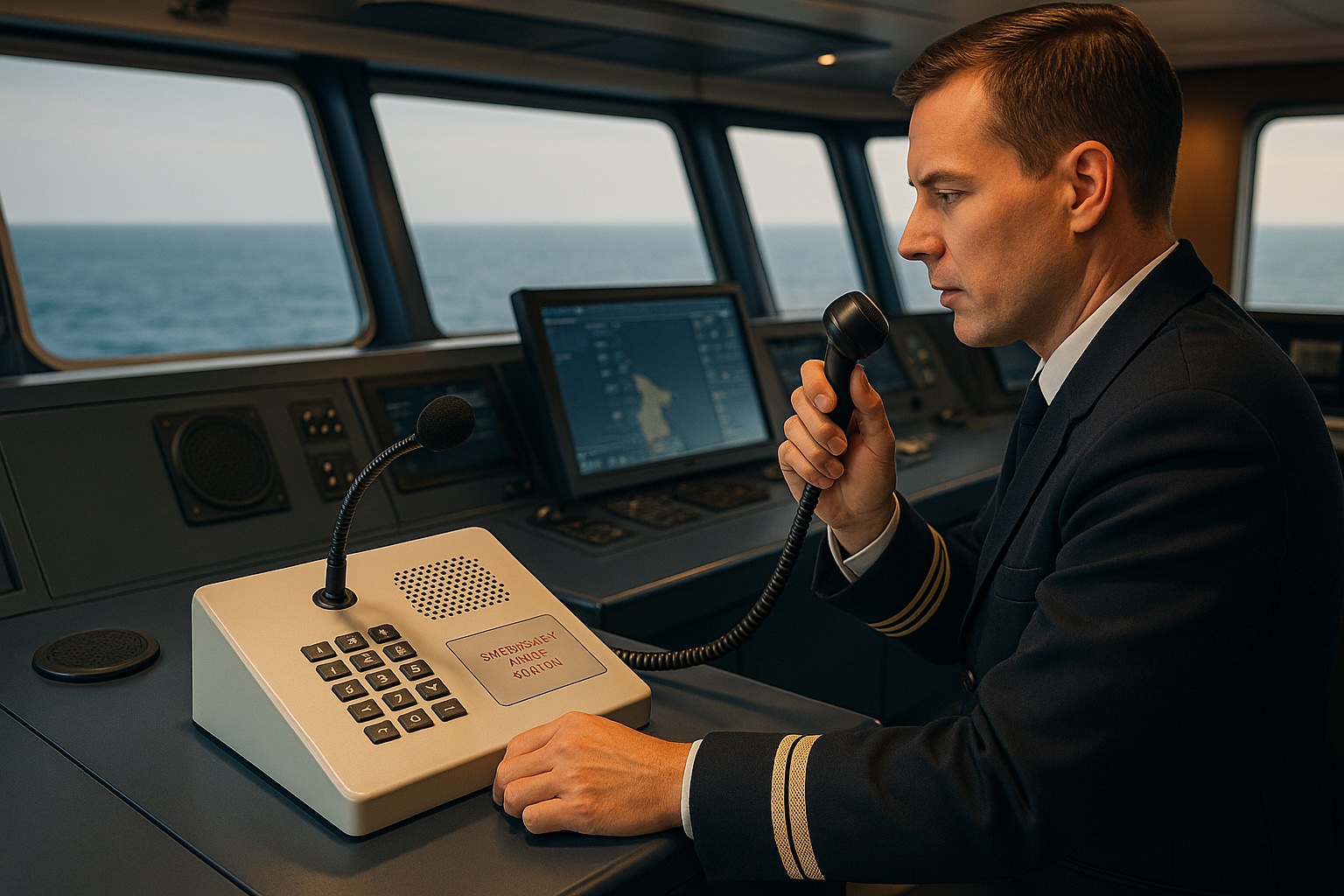
"Ship emergency communication system"
Regulatory Standards and Compliance
Maritime emergency voice systems are built and operated within strict regulatory frameworks to ensure vessels can communicate effectively during critical situations. These regulations impact every detail, from the choice of equipment to how it’s installed, ensuring the systems function reliably when needed most. A key component of these frameworks is the SOLAS Convention, which lays out the international guidelines for emergency communication.
SOLAS Requirements for Emergency Communication
The Safety of Life at Sea (SOLAS) Convention serves as the cornerstone of international maritime communication protocols. It requires vessels to have dependable emergency communication systems, such as VHF, MF, and HF radios equipped with Digital Selective Calling (DSC), satellite Emergency Position Indicating Radio Beacons (EPIRBs), and backup power supplies to ensure functionality during emergencies.
A critical aspect of SOLAS is redundancy. Ships must have multiple methods of sending distress signals, typically using different technologies like VHF, MF/HF radios, and satellite EPIRBs. This ensures that if one system fails, others can still operate. Additionally, these systems must be able to function independently of the ship’s main power source, often relying on reserve energy like battery backups.
Modern vessels often integrate various communication tools – radio, satellite, and onboard systems – into a single platform. Companies like NT Maritime provide solutions that align with SOLAS requirements, offering systems that support DSC, EPIRB integration, and standardized communication protocols.
U.S. Coast Guard and FCC Guidelines
In addition to international regulations, U.S. standards set forth by the Coast Guard and the Federal Communications Commission (FCC) impose additional requirements. The U.S. Coast Guard enforces regulations like 46 CFR 113.30, which outline specific standards for emergency communication systems on U.S.-flagged vessels. These systems must operate independently of the ship’s main electrical system, include separate circuits for talking and calling, and be installed in key areas such as the bridge, engine room, and fire control stations.
Strict installation standards ensure that communication stations remain accessible and protected during emergencies. For example, cabling in high-risk areas must meet fire resistance standards, and equipment must withstand environmental hazards. In particularly noisy or hazardous areas, features like soundproof booths or visual alarms are often added to improve usability.
The FCC also plays a vital role by requiring that all maritime radios used for emergency communication be type-approved and licensed. Since June 1999, all new radios must include DSC capability. Operators are required to obtain licenses and program their radios with a Maritime Mobile Service Identity (MMSI). VHF-FM Channel 16 serves as the internationally recognized distress frequency, which all vessels must monitor unless actively communicating.
To enforce compliance, the U.S. Coast Guard inspects thousands of vessels annually. Penalties for non-compliance can include fines, vessel detention, loss of certification, and heightened liability in the event of an incident.
IMO Standard Marine Communication Phrases
To overcome language barriers and ensure clear communication, the International Maritime Organization (IMO) developed the Standard Marine Communication Phrases (SMCP). This standardized vocabulary is critical for multinational crews, enabling clear and unambiguous transmission of distress calls, safety instructions, and coordination messages.
SMCP training is now a mandatory part of crew certification. Regular drills and training sessions ensure that crew members can use these phrases effectively, even under pressure. Many modern communication systems now incorporate SMCP protocols, further streamlining onboard and external communication.
| Regulation | Key Requirements | Compliance Focus |
|---|---|---|
| SOLAS | GMDSS equipment, redundancy, power independence | International vessels, system reliability |
| USCG (46 CFR 113.30) | System independence, strategic placement, fire safety | U.S.-flagged vessels, installation standards |
| FCC (47 CFR Part 80) | Equipment licensing, MMSI programming, operator permits | U.S. maritime radio operations |
| IMO SMCP | Standardized phrases, crew training, clear communication | All international voyages |
sbb-itb-bda822c
Design and Maintenance Best Practices
Ensuring emergency voice systems are well-designed and properly maintained is crucial for effective communication during maritime emergencies. A reliable system depends on redundancy, smart equipment placement, and consistent upkeep. Strategic station locations and robust protocols can make all the difference when seconds count.
Where to Place Communication Stations
Emergency communication stations should be installed in key areas across the vessel to ensure rapid access when needed. The bridge, as the central command hub, must have immediate access to systems like VHF radios, satellite phones, and internal announcement tools. Additional stations should be placed in critical locations such as the engine room, steering gear room, fire control station, and radar room, providing multiple access points during emergencies.
Fire control stations deserve particular attention, as they often act as coordination hubs during crises. Ensure these stations are equipped with easily accessible communication tools.
Outdoor equipment must be protected using NEMA or IP-rated enclosures, with isolation switches that can be operated directly from the bridge. For vessels operating in harsh conditions, it’s essential to position stations in areas shielded from salt spray, extreme temperatures, and mechanical vibrations. Placement should also account for vessel stability during heavy rolling or pitching to maintain functionality in all circumstances.
System Redundancy and Power Independence
A reliable emergency communication system must have independent power sources. These systems should operate separately from the vessel’s main electrical grid, with dedicated connections to the emergency bus and backup battery systems. Separate circuits for talk and call functions are critical to ensure that a single failure doesn’t compromise the entire system. Additionally, communication wiring should avoid high-risk areas like machinery rooms and galleys. If routing through such areas is unavoidable, fire-resistant cables must be used.
Backup handheld radios add another layer of redundancy. These portable devices should be strategically distributed throughout the vessel and regularly tested to ensure batteries are charged and systems are operational. Emergency communication systems must also meet the requirement of running for at least six hours on backup power, as mandated by SOLAS/GMDSS regulations.
Once redundancy and independent power are in place, regular testing is essential to confirm the system’s readiness.
Regular Testing and Crew Training
Even the most robust systems are only as effective as their maintenance and the crew’s ability to use them. Emergency communication systems should be tested monthly, with more frequent checks during high-risk voyages. Factory Acceptance Testing (FAT) ensures equipment meets standards before leaving the manufacturer, while Site Acceptance Testing (SAT) verifies functionality after installation.
Testing protocols should mimic real-life emergencies, assessing communication clarity, backup power transitions, and the functionality of visual indicators. Conduct monthly emergency drills to evaluate crew proficiency and system performance. These drills should emphasize the use of standardized phrases and proper emergency procedures. Regular practice not only keeps the crew prepared but also helps identify potential system issues early.
Detailed logs of testing, maintenance, and training activities are essential for both compliance and reliability. These records can highlight patterns that might indicate emerging problems and serve as proof of regulatory adherence during inspections.
Modern tools, like integrated platforms from NT Maritime, simplify maintenance by automating routine tests and providing real-time system monitoring. Such solutions streamline upkeep and help ensure all components remain operational and aligned with regulatory standards.
Modern Solutions and Integrated Systems
Advancements in design and maintenance have paved the way for integrated systems that improve emergency response at sea. Modern vessels now rely on unified communication platforms that bring together voice, messaging, video, and telehealth tools into one streamlined interface. This eliminates the need for switching between devices or channels during critical moments, fundamentally changing how crews handle emergencies.
Unified Communication Platforms for Maritime
Unified communication platforms merge various communication channels into a single, efficient system, enabling crews to respond to emergencies with greater speed and accuracy. By centralizing communication, these platforms minimize delays and reduce the risk of miscommunication when time is of the essence.
Take, for instance, a ship’s medical officer. They can simultaneously video call shore-based doctors, send updates to the bridge, and broadcast alerts to the crew – all through one system. This level of integration not only speeds up response times but also ensures that everyone involved stays on the same page.
Beyond speed, these platforms enhance situational awareness by consolidating all communication activities in one place. Emergency coordinators can monitor multiple channels, track the progress of responses, and maintain detailed logs for compliance and analysis. Features like real-time record-keeping ensure that all communications are documented, aiding in post-incident reviews and meeting regulatory requirements.
Modern cruise ships highlight the effectiveness of these systems, using them to send simultaneous alerts and conduct video consultations during emergencies. By streamlining communication, these platforms complement existing safety equipment, making overall response efforts more efficient.
NT Maritime‘s Role in Emergency Communication
NT Maritime has developed integrated communication solutions tailored for maritime emergencies. Their systems work alongside traditional emergency protocols, boosting coordination between onboard teams and shore-based responders. These platforms include encrypted networks designed to meet the rigorous standards of cruise lines, government vessels, and military operations.
The company’s solutions offer a range of onboard communication features like calling, video calling, messaging, and voicemail, all optimized for seamless use over ship WiFi. These tools enable app-to-app communication and integrate with ship PBX systems, ensuring rapid internal coordination during crises.
A standout feature is NT Maritime’s telehealth capabilities, which allow medical staff to consult with shore-based specialists in real time. High-quality video transmission supports visual assessments and critical decision-making, even in the middle of the ocean.
The company also leverages high-speed satellite connectivity, ensuring reliable communication for video consultations and data-sharing, no matter how remote the location. For government and military vessels, NT Maritime offers additional layers of security with encrypted channels to protect sensitive information, meeting federal standards for mission-critical operations.
Future Trends in Maritime Emergency Communication
Emerging technologies are set to transform maritime emergency communication further. AI-powered systems are already being developed to detect distress signals, prioritize alerts based on urgency, and route calls to the right responders automatically. These systems can monitor onboard sensors and communication channels, identifying potential emergencies and initiating response protocols without human input.
Satellite technology is also advancing rapidly, with low-earth orbit (LEO) constellations delivering higher bandwidth, lower latency, and global coverage. This ensures consistent communication for telehealth and emergency coordination, even in the most remote areas.
Another exciting development is the use of wearable communication devices for crew members. These devices offer hands-free communication, transmit location data, and even monitor vital signs, helping detect distress before situations escalate.
Real-time language translation is becoming a key feature, allowing multinational crews and international rescue teams to communicate seamlessly. This is especially valuable during global operations where language barriers can complicate response efforts.
As systems grow more sophisticated, cybersecurity remains a critical focus. Future platforms will include advanced threat detection to ensure secure and uninterrupted communication during emergencies, even under cyber threats.
Industry reports show that over 90% of newbuild vessels now come equipped with integrated communication platforms supporting voice, data, and video. This widespread adoption underscores the importance of unified systems in enhancing maritime safety. These advancements continue to raise the bar for emergency response capabilities at sea.
Conclusion: Safety Through Reliable Communication
Maritime emergency voice systems are the cornerstone of safety at sea, enabling vessels to connect with rescue services and coordinate life-saving responses when every second matters. The combination of advanced technologies, strict regulatory standards, and proven best practices creates a safety net that safeguards crews and passengers across the globe.
A layered communication setup is critical. By integrating VHF, HF, and satellite systems, redundancy is built into the network, ensuring that if one channel falters, others are ready to carry vital distress signals. This multi-tiered approach significantly enhances reliability during emergencies.
Regulatory compliance is another pillar of system dependability. Standards like SOLAS, U.S. Coast Guard mandates, and FCC guidelines don’t just set baseline requirements; they ensure that emergency systems remain operational even when primary components fail. Features such as dedicated emergency channels further strengthen crisis management capabilities.
These regulations have a tangible impact on maritime safety. Data shows that vessels equipped with DSC technology and satellite EPIRBs experience quicker response times and higher survival rates. Additionally, the adoption of the Global Maritime Distress and Safety System (GMDSS) has led to a marked decrease in maritime casualties.
Unified communication platforms are also transforming emergency response. By integrating voice, messaging, video, and even telehealth services, these systems streamline coordination among crew members, medical teams, and rescuers, reducing delays and confusion during critical moments.
Routine maintenance and crew training are equally essential. Many equipment failures stem from misconfigurations or a lack of familiarity rather than technical faults. Regular system checks and crew drills not only ensure operational readiness but also help vessels meet regulatory standards more effectively.
Emerging advancements, such as low-earth orbit satellite networks and AI-driven emergency detection, promise to enhance global connectivity and response efficiency. Yet the fundamental principle remains unchanged: reliable emergency voice communication is the lifeline that ensures distress signals reach the right people at the right time, regardless of conditions or location.
Investing in dependable emergency voice systems is an investment in saving lives. It builds a resilient communication framework that enables swift rescues, protects valuable assets, and ensures the safe return of crews and passengers.
FAQs
What is the difference between VHF and HF radios, and when should each be used during maritime emergencies?
VHF (Very High Frequency) and HF (High Frequency) radios play distinct roles in maritime communication, particularly during emergencies.
VHF radios are best suited for short-range communication, typically covering distances of 20–30 miles. They excel in ship-to-ship or ship-to-shore communication and are highly dependable for line-of-sight transmissions. These radios are the go-to choice for distress signals in coastal waters, where their coverage is most effective.
HF radios, on the other hand, are built for long-range communication, capable of transmitting across hundreds or even thousands of miles. They rely on ionospheric reflection to carry signals over vast distances, making them indispensable for vessels operating far offshore or in remote regions where VHF signals can’t reach.
In essence, VHF radios are ideal for local emergencies and nearshore operations, while HF radios are essential for long-distance communication in open waters or international scenarios.
How do modern unified communication systems improve emergency response on ships compared to older technologies?
Modern unified communication systems are transforming how emergency responses are handled on ships by bringing together multiple communication tools into one cohesive platform. Unlike older setups, these advanced systems offer real-time voice, video, and messaging capabilities, enabling quicker and more efficient coordination when it matters most.
By simplifying communication among crew members, passengers, and onshore teams, these systems help minimize delays and improve overall awareness of the situation. Key features like automated alerts, secure networks, and reliable connectivity are crucial for maintaining safety and meeting maritime regulations. These advancements greatly enhance the ability to handle emergencies with speed and precision.
How can maritime emergency voice systems stay compliant with SOLAS and U.S. Coast Guard regulations?
To ensure that maritime emergency voice systems meet the standards set by SOLAS (Safety of Life at Sea) and the U.S. Coast Guard, there are a few important practices to keep in mind:
- Stay informed on regulations: Keep up with the latest updates to SOLAS and U.S. Coast Guard rules. These guidelines often change to reflect advancements in safety measures and technology.
- Inspect systems regularly: Perform routine tests and maintenance checks on emergency voice systems. This ensures they function properly and meet the necessary performance requirements.
- Train the crew: Make sure all crew members know how to operate emergency voice systems efficiently and understand the regulatory requirements.
- Use approved equipment: Install communication systems that meet or exceed the technical specifications set by SOLAS and the U.S. Coast Guard.
By following these steps, maritime operators can not only stay compliant but also enhance the safety of passengers and crew during critical situations.