


Satellite bandwidth is the backbone of modern maritime communication, enabling vessels to stay connected far from shore. With over 38,000 ships now equipped with broadband systems, the demand for reliable, high-speed connectivity at sea has grown significantly. Here’s what you need to know:
- What It Is: Satellite bandwidth refers to the data capacity leased for communication between ships and satellites. It supports internet, voice calls, navigation, and more.
- Why It Matters: It ensures safety (distress signals, weather updates), improves efficiency (fleet tracking, fuel monitoring), and enhances crew and passenger experience (Wi-Fi, entertainment).
- Key Technologies: VSAT systems (Ku-, Ka-, C-bands), LEO satellites (low latency, faster speeds), and phased-array antennas are commonly used.
- Bandwidth Allocation: Ships can choose shared or dedicated bandwidth, balancing cost and performance based on their needs.
- Future Trends: LEO satellites are revolutionizing connectivity, with bandwidth capacity expected to grow sevenfold by 2034.
This guide dives into how satellite bandwidth works, its importance, and how to choose the right solution for your vessel.
How Do Maritime Vessels Communicate? – VSAT Systems Explained
Satellite Technologies and Bandwidth Allocation Methods
Maritime vessels rely on three main satellite technologies to maintain connectivity, each tailored to different operational needs and vessel types. Understanding these technologies, along with the methods used to allocate bandwidth, is crucial for making smart connectivity choices. Let’s break down the essentials.
Satellite Technologies Used in Maritime IT
VSAT systems are the backbone of maritime communications, operating across Ku-, Ka-, and C-bands. Each band serves specific needs:
- Ku-band is popular among commercial vessels for its balance of cost and broad global coverage.
- Ka-band delivers faster speeds, ideal for high-bandwidth activities like passenger Wi-Fi and video streaming.
- C-band stands out for its reliability in harsh weather, making it a go-to for vessels in challenging environments.
LEO (Low Earth Orbit) constellations have revolutionized maritime connectivity. With latency as low as 20–40 milliseconds, they enable near real-time applications. By Q2 2025, over 26,000 ships were using LEO broadband services, with some providers offering download speeds up to 220 Mbps and upload speeds around 40 Mbps [4].
Phased-array antennas represent cutting-edge technology, dynamically tracking multiple satellites to ensure uninterrupted connectivity as vessels move through different coverage zones [4].
The choice of satellite technology often hinges on the vessel’s purpose:
- Cruise ships lean toward LEO networks for high-speed passenger internet.
- Cargo vessels typically use VSAT systems for cost-effective operations.
- Military and government vessels often rely on C-band for secure and dependable connectivity.
Many vessels now adopt multi-orbit strategies, combining geostationary (GEO) and LEO systems to ensure backup connectivity and optimize performance in real time [4]. This approach ensures that connectivity aligns with operational demands, a principle also reflected in how bandwidth is allocated.
How Bandwidth Gets Allocated
Beyond choosing the right satellite technology, efficiently allocating bandwidth is key to optimizing performance. Maritime networks primarily use two approaches for bandwidth distribution, each with its own trade-offs.
Point-to-point technologies create dedicated links between a vessel and a satellite. This setup ensures consistent performance, making it ideal for mission-critical applications.
Point-to-multipoint technologies share bandwidth among multiple vessels within a satellite beam. While more cost-effective, performance can vary based on network congestion and demand.
The choice between shared and dedicated bandwidth significantly impacts both costs and service quality:
- Shared bandwidth pools resources among users, offering an affordable option but with potential slowdowns during peak usage.
- Dedicated bandwidth reserves capacity for a single vessel, guaranteeing stable performance for tasks like telemedicine or real-time monitoring, though it comes at a higher price.
Here’s a quick comparison of allocation methods:
| Allocation Method | Performance | Cost | Best For |
|---|---|---|---|
| Point-to-Point Dedicated | Consistent | High | Mission-critical operations, large vessels |
| Point-to-Multipoint Shared | Variable | Low–Medium | General communications, smaller vessels |
| Hybrid Approach | Balanced | Medium–High | Mixed operational needs |
The bandwidth game is rapidly changing. NGSO capacity, particularly from LEO satellites, is expected to grow from 286 Gbps in 2024 to 2 Tbps by 2034 – a sevenfold increase. This surge in capacity is driving down costs while improving performance across all allocation methods. Operators must weigh factors like user needs, application demands, route reliability, and data requirements to find the most effective and economical solution. The goal? To match current operational priorities while preparing for what’s next.
How to Maximize Bandwidth Usage at Sea
Getting the most out of satellite bandwidth while at sea requires a mix of technical fine-tuning, smart traffic management, and properly configured hardware. Maritime professionals can adopt a variety of methods to enhance connectivity, ensuring smooth operations and reliable communication – whether for critical tasks or day-to-day needs.
Methods to Improve Bandwidth Performance
One effective approach is adaptive coding and modulation (ACM), a technology that adjusts signal parameters in real time based on current link conditions. This is particularly useful in overcoming challenges like weather disruptions, as it helps maintain optimal throughput even when signal quality fluctuates.
Another tool is TCP acceleration, which tackles the inherent latency of satellite communications. By optimizing the transport protocol, it speeds up data transfers, making it especially effective for latency-sensitive applications such as video calls and real-time monitoring.
Then there’s HTTP prefetching, which anticipates user needs by loading web content ahead of time. This reduces perceived delays and works well for applications that consume a lot of bandwidth, such as streaming or large data transfers.
For example, a cruise line using HTS-enabled Ka-band VSAT saw a 50% increase in available bandwidth and a 30% reduction in latency after implementing these strategies. This allowed them to support reliable video streaming and telemedicine services for both passengers and crew.
Additionally, High Throughput Satellites (HTS) with spot beam technology offer a significant performance boost. These systems provide higher capacity and lower latency, making them ideal for handling the data-heavy demands of modern maritime operations.
These technical improvements set the stage for efficient traffic management, which is crucial for maintaining consistent connectivity.
Network Traffic Management and Segmentation
Once performance enhancements are in place, managing network traffic becomes the next priority. Smart traffic management ensures that critical applications always have the bandwidth they need. By segmenting the network and prioritizing traffic, operators can allocate resources to essential functions and prevent congestion.
For instance, traffic prioritization can ensure that navigation systems and safety communications take precedence over recreational internet use. This guarantees that vital operations remain unaffected, even during periods of heavy network demand.
A commercial shipping fleet demonstrated the effectiveness of this approach by implementing network segmentation and traffic prioritization. Even during peak passenger internet usage, the fleet maintained uninterrupted operational communications, highlighting how proper traffic management can balance competing demands.
Another component of traffic management is backup connectivity options. These systems provide redundancy through automatic failover mechanisms, switching to alternative satellite links or cellular networks when needed. Dynamic bandwidth allocation further enhances flexibility by adjusting resources in real time based on changing requirements.
Hardware Setup and Environmental Factors
The right hardware setup is essential for maximizing performance. Proper antenna installation and alignment are critical, as they ensure a clear line of sight to satellites. This becomes even more important on moving vessels, where surrounding structures and constant motion can disrupt signals.
Stabilized antennas play a key role here. These systems automatically adjust to maintain alignment with satellites, even as ships roll, pitch, or change course. For example, commercial vessels often rely on 1 to 1.5-meter stabilized Ku-band VSAT antennas, while smaller vessels use Ultra Small Aperture Terminals (USATs) for more cost-effective connectivity.
Additionally, marine-rated equipment is designed to withstand the harsh conditions at sea, including saltwater corrosion, high humidity, and extreme temperatures ranging from -20°F to 140°F. Such equipment typically features corrosion-resistant materials and sealed enclosures to protect against environmental damage, ensuring reliable performance in any weather.
To minimize downtime, remote diagnostics and updates allow technicians to troubleshoot and maintain systems without being physically present. Routine maintenance, including firmware updates and checks on antenna alignment and connection security, helps prevent issues before they arise.
Finally, it’s important to monitor environmental factors like weather and sea conditions, as these can heavily impact satellite signals. Operators should plan communication activities during favorable conditions and rely on backup systems to maintain connectivity during severe weather, ensuring uninterrupted service even in challenging circumstances.
sbb-itb-bda822c
How to Choose the Right Satellite Bandwidth Solution
Finding the right satellite bandwidth solution means balancing performance, cost, and your vessel’s specific operational needs. With NGSO (primarily LEO) capacity expected to dominate the market – growing from 85% in 2024 to 98% by 2034 – maritime operators are rethinking how they approach connectivity. Here’s a breakdown of the key factors to consider when aligning your connectivity needs with your operational priorities.
What to Look for in Satellite Bandwidth Options
When evaluating satellite bandwidth options, focus on the features that align with your vessel’s unique requirements.
Start with performance metrics like download/upload speeds, latency, and coverage. For example, a cruise ship catering to thousands of passengers will need a solution vastly different from what a small cargo vessel requires.
- Latency: This is critical for real-time functions like video calls or telemedicine. LEO systems, with latency as low as 20–40 ms, are a game-changer compared to the 600+ ms typical of GEO satellites. These systems are ideal for time-sensitive applications [4].
- Coverage: Your route dictates your coverage needs. While global coverage is essential for vessels on worldwide routes, regional solutions may work for coastal or ferry operations. LEO and multi-orbit solutions now offer near-global coverage, even in polar and remote ocean regions [4].
- Hardware: Equipment requirements can vary. LEO systems often need sophisticated electronically steered antennas, while GEO VSAT typically uses traditional stabilized parabolic antennas. Factors like deck space, power availability, and installation complexity should influence your decision [4].
- Security: For federal and military operations, robust encryption and cybersecurity are non-negotiable. Your solution must ensure secure data exchange for critical missions.
- Service Integration: Seamless integration with onboard systems – like passenger management platforms or ship PBX – can enhance functionality. Features such as app-to-app calling and integrated WiFi messaging are valuable for both crew and passengers.
It’s also important to assess peak performance and reserve capacity. For example, a global cruise line opted for a C-band VSAT system on flagship vessels to ensure uninterrupted connectivity, despite higher hardware costs. Meanwhile, for regional ferries, they chose Ku-band spot-beam services with smaller antennas to strike a balance between performance and cost.
Satellite Technology Comparison
Understanding the strengths and limitations of different satellite technologies can help you make an informed choice:
| Technology | Data Rates | Latency | Coverage | Hardware Requirements | Best Use Cases |
|---|---|---|---|---|---|
| GEO VSAT | Moderate to High | 600+ ms | Global (except polar regions) | Stabilized parabolic antennas | Backup connectivity, legacy systems, non–time-critical operations |
| LEO (e.g., Starlink) | High (100+ Mbps) | 20–40 ms | Near-global, including polar areas | Electronically steered/flat panel antennas | Real-time operations, crew/passenger internet, IoT applications |
| MEO | Very High (Gbps) | 100–150 ms | Regional/global | Advanced tracking systems | High-throughput enterprise applications |
LEO systems, like Starlink, are rapidly gaining traction, with over 26,000 ships now using LEO broadband services. These systems provide speeds of up to 220 Mbps for downloads and 40 Mbps for uploads, with low latency – perfect for data-heavy, real-time applications [4].
While GEO VSAT is still relevant for backup connectivity and areas not fully covered by LEO systems, its market share is shrinking as NGSO solutions expand. Many operators are adopting multi-orbit strategies, combining GEO, MEO, and LEO technologies to ensure both reliability and enhanced performance.
The cost landscape is also shifting. In 2025, service revenues reached $1.27 billion for GEO VSAT and $745 million for LEO broadband [4]. With advancing technology, the total cost of ownership is dropping, and flexible contracts tailored to specific needs are helping operators manage budgets more effectively.
To choose the right solution, match your vessel type, route, and operational demands with the appropriate satellite technology. Cruise lines, for instance, need high bandwidth and low latency to handle large numbers of users, while federal and military operations may prioritize security and reliability. Looking ahead, scalability is crucial – NGSO bandwidth is expected to grow sevenfold, from 286 Gbps in 2024 to 2 Tbps by 2034, ensuring your investment can meet future data demands.
NT Maritime‘s Bandwidth Management Solutions
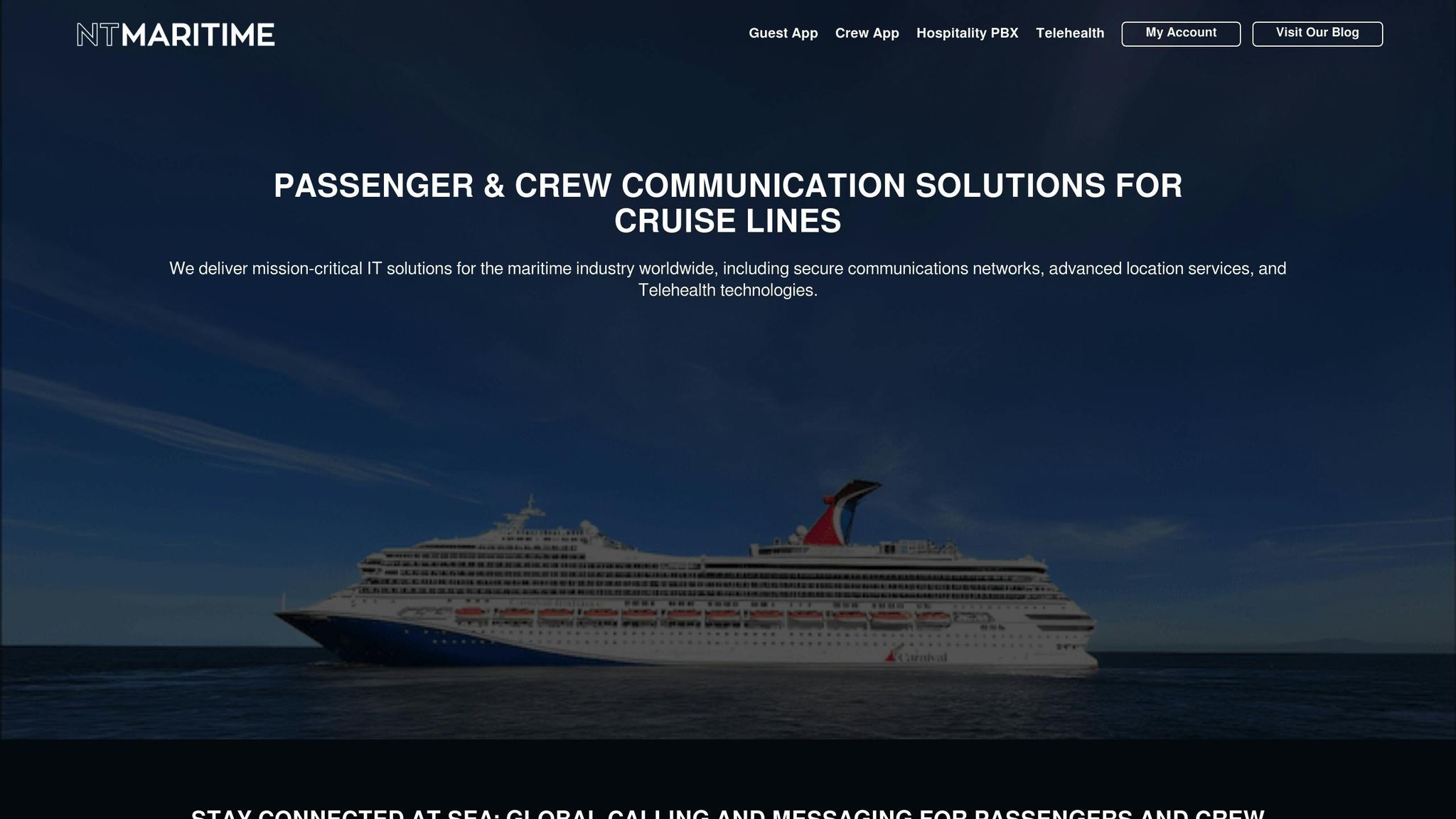
NT Maritime provides tailored bandwidth management and communication solutions specifically designed to meet the unique challenges of maritime environments. Serving a $3.2 billion market with over 38,300 vessels relying on VSAT and LEO broadband services [4], the company delivers tools that enhance connectivity and operational efficiency at sea.
NT Maritime’s Communication and Bandwidth Services
NT Maritime offers high-speed internet with download speeds of up to 220 Mbps, upload speeds of 40 Mbps, and latency under 99 ms. This level of connectivity supports everything from crew communications to demanding applications like real-time video conferencing and telemedicine.
At the core of NT Maritime’s offerings are secure communication networks. These networks support a wide range of tools for both passengers and crew, including onboard calling, messaging, video calls, and voicemail systems. What makes NT Maritime stand out is their seamless integration of these services – passengers can access connected communication systems that are fully integrated with onboard management tools.
Passengers benefit from unlimited onboard calls and messages via a dedicated app, which also enables group messaging and photo sharing, creating a connectivity experience comparable to land-based vacations. The bring-your-own-device (BYOD) feature allows passengers to use their own smartphones and tablets over the ship’s WiFi, eliminating the need for specialized equipment.
For healthcare needs, NT Maritime’s Telehealth solutions offer remote medical consultations, real-time health monitoring, and secure transmission of medical data. These services ensure timely care for both emergencies and routine medical needs.
For government and military operations, NT Maritime provides secure communication systems designed to withstand cyber threats. These systems meet FIPS (Federal Information Processing Standards) and other maritime cybersecurity requirements, ensuring encrypted, reliable communication for mission-critical operations. These secure networks enable real-time data sharing while maintaining the highest levels of security.
How NT Maritime Improves Maritime IT Operations
NT Maritime enhances IT operations by optimizing bandwidth through dynamic allocation and real-time traffic management, ensuring critical functions remain uninterrupted even in challenging conditions.
Their approach includes traffic prioritization, network segmentation, and dynamic bandwidth allocation. Essential applications like navigation systems, safety communications, and Telehealth services are prioritized, while recreational internet and entertainment services are allocated bandwidth based on availability. This Quality of Service (QoS) model ensures smooth operation across all systems without congestion.
With real-time monitoring and analytics, NT Maritime keeps a constant eye on network performance. Their systems can detect potential bottlenecks before they disrupt operations, automatically reallocating resources or notifying IT staff to address issues. This proactive strategy minimizes downtime and ensures reliable service, even during periods of high demand.
A key strength of NT Maritime’s solutions is their ability to integrate seamlessly with existing shipboard infrastructure. Their systems support standard interfaces, allowing easy integration without the need for extensive modifications. This reduces installation complexity and limits operational disruptions during deployment.
Cruise lines using NT Maritime’s services report higher passenger satisfaction, thanks to reliable high-speed internet and communication tools. Government vessels benefit from secure, compliant networks that support critical missions and real-time data sharing. For crew members, access to video calls and messaging alleviates isolation during long voyages, improving morale and retention.
NT Maritime also employs redundant network designs to ensure service continuity. By using multiple satellite connections and backup protocols, they maintain connectivity even during adverse weather or equipment failures. This level of reliability is particularly important for vessels operating in remote areas where alternative communication options are limited.
Beyond connectivity, NT Maritime’s solutions contribute to operational efficiencies. Features like real-time weather and traffic data for optimized routing, predictive maintenance alerts, and fuel consumption monitoring help reduce costs. These capabilities directly enhance return on investment for vessel operators, with many reporting noticeable reductions in operational expenses through improved connectivity and data-driven decision-making. By maximizing satellite bandwidth, NT Maritime supports smoother and more efficient maritime IT operations.
Key Points About Satellite Bandwidth for Maritime IT
Over the last two decades, the maritime industry has seen incredible progress in satellite connectivity. Data speeds have skyrocketed, now reaching up to 128 Mbps and beyond. Compare that to the early Fleet 77 systems, which offered only minimal connectivity – this transformation has made satellite bandwidth indispensable for modern maritime operations.
The maritime satellite communications market has grown to an impressive $3.2 billion, fueled by global adoption. In Q1 2025 alone, 5,000 new vessels were equipped with broadband systems, showcasing the rapid pace of technological integration [4].
Non-geostationary satellite systems (NGSO), especially low Earth orbit (LEO) satellites, are now leading the market. These systems have surged from 85% market share in 2024 to a projected 98% by 2034. Why the shift? LEO satellites offer distinct advantages: lower latency, greater bandwidth, and enhanced global coverage – capabilities that traditional geostationary satellites just can’t match.
That said, bandwidth planning is essential for maritime operations. Ships must carefully balance bandwidth usage to meet operational needs, provide for crew welfare, and offer passenger services – all while keeping costs under control. Tailoring bandwidth allocation to the specific needs of each vessel type is key.
Advanced network management tools play a critical role here. Features like quality of service (QoS), traffic prioritization, and network segmentation ensure that vital communication channels remain uninterrupted.
The growing integration of IoT devices and cloud platforms is another major driver of bandwidth demand. From weather routing to predictive maintenance, vessels increasingly depend on real-time data exchange, making reliable satellite connectivity essential for smooth operations.
Looking ahead, multi-orbit connectivity is emerging as the next big step for maritime IT. By combining GEO, MEO, and LEO satellite networks, vessels can achieve maximum uptime and performance [4]. To stay ahead, maritime professionals need to invest in advanced shipboard antennas, implement strong traffic management systems, and work with providers who understand the complexities of maritime environments.
The future of maritime satellite bandwidth is bright. With NGSO bandwidth capacity expected to grow from 286 Gbps in 2024 to 2 Tbps by 2034, the industry is poised for groundbreaking innovations. This rapid growth underscores the importance of being proactive in bandwidth planning to keep pace with the demands of modern maritime technology.
FAQs
How can I decide if my vessel needs shared or dedicated satellite bandwidth?
Choosing between shared and dedicated satellite bandwidth boils down to your vessel’s communication needs and how you use data.
Shared bandwidth is a budget-friendly option, perfect for vessels with lighter data demands. It’s suitable for activities like browsing the internet or making occasional video calls. However, since the bandwidth is shared among multiple users, speeds can dip during busy times.
On the flip side, dedicated bandwidth offers steady, reliable speeds, making it the go-to choice for vessels with heavy data requirements. This is especially critical for cruise ships, government vessels, or operations that depend on essential systems like Telehealth or live video conferencing. While it’s more expensive, dedicated bandwidth ensures uninterrupted connectivity, which is vital for mission-critical tasks.
To decide, assess your vessel’s specific needs – consider the number of users, types of applications, and your budget. Not sure where to start? A maritime IT provider like NT Maritime can guide you toward the best solution for your operations.
What are the advantages of using a multi-orbit approach for maritime satellite connectivity?
A multi-orbit strategy taps into the strengths of various satellite orbits – geostationary (GEO), medium Earth orbit (MEO), and low Earth orbit (LEO) – to deliver dependable and efficient maritime connectivity. By combining these orbits, it ensures uninterrupted coverage, even in the most remote areas, utilizing the unique advantages each orbit offers.
For instance, GEO satellites are known for their wide coverage and stable connections, making them perfect for consistent communication needs. On the other hand, LEO satellites excel in providing lower latency and faster speeds, which are crucial for tasks like video calls or real-time monitoring. By integrating these orbit types, maritime operations can enjoy improved performance, greater adaptability, and dependable connectivity, even in the challenging conditions of open waters.
How can I maintain reliable satellite communication during bad weather at sea?
Reliable satellite communication during tough weather conditions hinges on using the right equipment, smart system setup, and vigilant monitoring. Start by choosing top-tier antennas and modems built to withstand rough seas and harsh weather. These devices are designed to keep connections stable, even in challenging environments like storms.
You can also manage bandwidth effectively by focusing on critical communications and reducing non-essential data usage when the weather takes a turn. Regular maintenance and inspections of your satellite equipment are essential to catch and fix issues caused by wear and tear before they disrupt service. For a more resilient setup, explore advanced maritime IT systems that include redundancy and failover features, ensuring your connection stays intact no matter the conditions.